Windows add beauty to your home. They allow natural daylight to stream in and frame outdoor views. In addition to their aesthetic features, windows can be a significant source of heat transfer.
When sunlight passes through a glass pane into a room, the light hits objects inside (think: floor, carpet, couches, walls), and those surfaces absorb the energy and turn it into heat that struggles to pass back out through the window. The heat becomes trapped inside the room, making it hotter and driving up the cost to cool your home.
The question becomes: how do you keep the aesthetic appeal of the natural sunlight and outside views while mitigating the effects of the sunlight on energy costs? Fortunately, the answer lies in a type of glass that can deliver beautiful light while simultaneously reducing heat transfer. This kind of glass is called Low Emissivity, or Low-E, glass.
What is Low-E Glass?
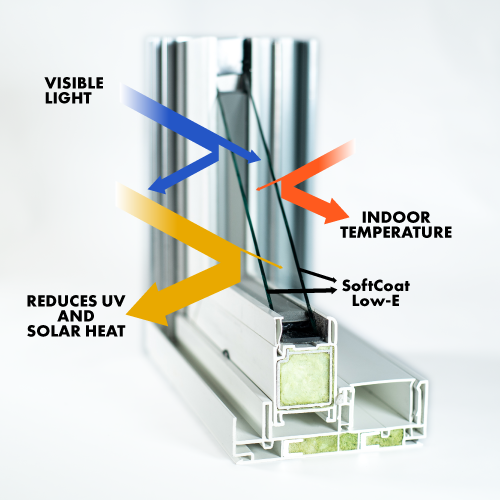
Low Emissivity glass (often shortened to Low-E glass) is a clear glass that has been treated with an invisible metallic oxide coating. This coating reduces the amount of infrared heat and ultraviolet (UV) radiation that enters a home, improving the window’s insulating properties. In colder months, the coating also reflects heat back into the house, which keeps the indoor temperature more stable and reduces the strain on your heating, ventilation, and air conditioning (HVAC) system.
How Does a Low-E Coating Work?
Low-E coating works because it uses a microscopically thin and transparent layer of metal to reflect thermal infrared energy while letting daylight pass through. The coating is so thin, in fact, that it’s thinner than human hair. It allows the light visible to human eyes to pass through the glass while reflecting the heat back. Essentially, because of something called emissivity, Low-E glass reflects much of the infrared and UV light but behaves like glass for light we can see.
What Emissivity Means
In thermal engineering, emissivity refers to the ratio of energy radiated from a material’s surface, compared to a completely black surface. Low-E glass is covered with a metallic coating, causing its surface to have a reduced emissivity, or less thermal energy radiation and heat transfer. Glass with less heat transfer is better insulated. Visible light still passes through, while much less heat moves through the glass.
Hard-Coat vs. Soft-Coat Low-E
There are two types of coating used to create Low-E glass that affect thermal performance and durability.
A hard coat, or pyrolytic coat, is applied to the glass during production while the glass is still hot. This creates a strong chemical bond making the glass exceptionally durable. It is tough, scratch resistant, and can handle many weather conditions. Hard-coat glass typically has a higher emissivity and often has a faint haze to its appearance. Overall, this glass coating is a more practical choice in extremely cold environments with cool to mild summers.
A soft coat is applied to glass that is already cooled and pre-cut. This coating is more delicate, so it’s sealed between the panes of an insulated glass unit to keep it intact for years. Soft-coat glass offers better thermal insulation, with lower emissivity and clearer views.
Universal Windows Direct uses soft-coat technology, a strong choice for solar control. Get a free window quote to see how Low-E windows can help modernize your home.
Benefits of Low-E Windows
Low-E windows offer many benefits, from cost to comfort. They are more energy efficient, can help reduce costs over time, and help protect floors and furniture from sun damage.
Lower Heating and Cooling Costs
In warm weather, Low-E glass reflects the heat from outside so that it can’t get in. It also reflects harmful UV rays. As the seasons change and the weather cools outside, it helps homes keep their warmth from heating systems inside. With Low-E windows, your home requires less cooling and less heating from your HVAC system, reducing energy usage and saving money over time. With standard glass, your heating and cooling system may run longer, which can add wear and repair costs over time.
Many Low-E windows meet Energy Star requirements, which means that according to the U.S. Department of Energy (and depending on your location), they help save roughly $71-$501 per year. Additionally, potential homebuyers are increasingly focused on energy-efficient homes. Energy-efficient windows can be a selling point, since many buyers look for features that lower energy use.
Year-Round Comfort
The coating on Low-E windows helps keep rooms from overheating in the summer and helps hold in warmth in the winter. The temperature in your home stays more even from season to season, so you may find yourself adjusting the blinds, curtains, and thermostat less often.
UV Protection for Floors and Furniture
Low-E glass can help extends the life of your furniture, floors, and interior fabrics. The metallic oxide coating reduces the number of harmful UV rays entering through the window, which usually fade objects in your home. Curtains, couches, artwork, throw pillows, and even floors and nearby furniture can keep their color longer.
Less Condensation
Homeowners frequently encounter the problem of condensation in colder weather. The cold air outside meets the warm air inside, creating the right conditions for condensation (water droplets) to form inside the home, on the glass. Excess condensation over time can even damage the window casing. Low-E glass can help reduce this problem by keeping the inner pane warmer.
See Which Windows Fit Your Climate
Explore energy-efficient window packages from Universal Windows Direct and compare options built to keep your home comfortable in every season.
Are There Disadvantages to Low-E Glass?
There can be disadvantages to Low-E glass, most of which depend on your climate and whether you’re building new or replacing existing windows. If you use the wrong coating, Low-E glass benefits can backfire and increase heating bills. Make sure you have the right type of coating for your climate. Low-E coatings can be noticeable, especially on large windows, next to standard glass, or in certain lighting and bright sky conditions. Because Low-E glass requires a more complex manufacturing process and has stricter quality control, it has a higher initial cost than other windows. Low-E glass may not be the best fit when new windows need to match existing ones, and in very cold climates, the wrong coating can block helpful solar heat.
Low-E Glass vs. Tempered Glass
Low-E glass, with its thin, metallic oxide coating, reflects infrared and UV light and improves thermal insulation. Tempered glass is stronger against impact, safer if broken, and can handle high temperature shifts and thermal stress. Tempered glass is better if you are concerned with the safety of your windows (for example, windows on a first floor or at garden level, shower windows, or windows that need to meet certain building codes). The good news is that you can have both! Glass can go through the tempering process and be treated with a Low-E coating, giving you stronger, energy-efficient windows.
How Low-E Works with Argon Gas and Multiple Panes
Argon gas can fill the space between panes of Low-E glass to create a more effective thermal barrier. Low-E coating blocks radiant heat, but argon gas blocks conductive and convective heat, meaning it slows down the physical movement of heat passing through the air gap between panes. Multiple panes create a physical barrier and internal space that separates indoor and outdoor environments. Used all together: Low-E glass blocks much of the radiant heat transfer, and argon gas in the space between the panes slows the heat that tries to travel through the window.
Combining Low-E glass with multiple panes and argon gas reduces heat loss even more, keeping your home better insulated.
How to Spot Low-E on a Window Label
New and energy-efficient windows are typically required to come with a temporary National Fenestration Rating Council (NFRC) Label that shows performance ratings as well as manufacturer information.
The U-Factor measures the overall rate of heat transfer through the window and can be found in the top left box of the label. If the temporary sticker is gone, you can check for a permanent label between the glass panes on a spacer bar or in the frame tracks.
In the box to the right of the U-Factor, you’ll find the Solar Heat Gain Coefficient rating, or SHGC. This measures how much of the sun’s heat passes through the window. The lower the number, the better it blocks solar heat
Can You Add Low-E Film to Existing Windows?
People commonly want to know if it’s possible to apply a Low-E coating to the regular glass window they already have. While Low-E films are available on the market for an installer or homeowner to install, these films often lead to disappointment and frustration. They are easy to damage and visible as film on the window, compared to Low-E glass. These do-it-yourself window films don’t last as long as factory-applied Low-E coatings. Cheaper Low-E films are easily scratched and damaged and far less effective over time.
Is Low-E Glass Worth It?
Low-E glass is a highly desirable window choice that provides beautiful, cost-effective replacement windows. And soft-coat, Low-E glass is durable. You can clean your windows with total confidence that the coating will remain intact since it is sealed between the glass layers and cannot be wiped off or scratched. While it has a higher initial cost, it can lower energy costs over time, add appeal when you sell, and keep your interior comfortable and protected.
More energy-efficient windows can help other systems and appliances run more efficiently in your home. Because the coating on Low-E windows reflects outdoor heat away and reflects indoor heat back into the home, your heating and cooling systems may see less wear and tear. You may find that you are calling your technician less often for maintenance and repairs.
Choose Energy-Efficient Windows Built for Your Climate
If you’re considering installing or replacing your windows, you might be surprised at the choices available to you. Whether you’re investing in your forever home and want to make it efficient and comfortable, or you’re thinking about the future and the possibility of selling, Low-E glass is a smart choice. The right Low-E coating depends on your climate and how much heating and cooling your home needs.
Universal Windows Direct serves multiple locations across different climates. Find out if you are in our service areas and which energy-efficient windows fit your climate.
Get Honest Numbers for Your Home
Wondering what Low-E windows would cost for your house? A free, no-pressure consultation with Universal Windows Direct gives you real pricing and a clear look at your options.
Frequently Asked Questions About Low-E Glass
Low-E (low emissivity) glass is an energy-efficient window glass that features a microscopically thin, nearly invisible coating designed to regulate heat transfer. The coating reflects heat while still allowing natural light to pass through, helping keep your home cooler in the summer and warmer in the winter. By reducing the amount of heat that enters or escapes through your windows, Low-E glass can improve indoor comfort, lower heating and cooling costs, and help protect furniture, flooring, and other interior furnishings from fading by blocking harmful UV rays.
Low-E windows can:
– Improve energy efficiency
– Lower heating and cooling costs
– Reduce hot and cold spots near windows
– Block harmful UV rays that can fade furniture, flooring, and décor
– Increase indoor comfort throughout the year
Yes. The two most common types are:
Passive Low-E glass: Designed to allow more solar heat into the home, making it a good choice for colder climates.
Solar Control Low-E glass: Designed to block more of the sun’s heat, making it ideal for warmer climates and homes with significant sun exposure.
The best option depends on your climate, the direction your windows face, and your energy-efficiency goals. Homeowners in colder regions often benefit from passive Low-E glass, while those in warmer climates typically see better performance from solar control Low-E glass.
Only slightly. Modern Low-E coatings are designed to let in plenty of natural daylight while filtering heat and UV rays. Most homeowners notice little to no difference in the appearance of their windows.
Yes. Low-E glass can block a significant portion of the sun’s ultraviolet (UV) rays, helping reduce fading and sun damage to furniture, carpets, hardwood floors, artwork, and other interior finishes.
Many homeowners find that the long-term energy savings, improved comfort, and protection from UV damage make Low-E glass a worthwhile investment. In addition to lowering utility bills, it can also enhance the overall performance and value of your windows.