Dry Dock 4 Modernization
Dry Dock 4 Modernization
Portsmouth, Virginia
Client: W.F. Magann Corporation
Market Sector: Federal / Defense Infrastructure
Role: Construction Materials Testing & Special Inspections Partner
Client Need
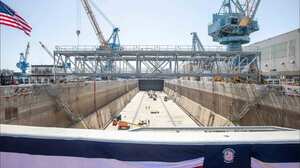
As one of the first major infrastructure recapitalization projects undertaken through the U.S. Navy’s Shipyard Infrastructure Optimization Program (SIOP), the Dry Dock 4 Modernization project was designed to extend the operational life of a historic naval asset while upgrading its structural, mechanical, and utility systems to support modern nuclear-powered submarines, including Ohio-class, Virginia-class, and future Columbia-class vessels.
Originally commissioned in 1919, Dry Dock 4 has served as a critical component of Norfolk Naval Shipyard for more than a century. Aging infrastructure, including deteriorated reinforced concrete, obsolete pumping equipment, aging caisson systems, and outdated utility networks, required significant rehabilitation to ensure the facility could continue supporting the Navy’s evolving mission requirements. Due to the project’s scale, historical significance, and aggressive construction schedule, W.F. Magann Corporation required a trusted testing and inspection partner capable of maintaining quality control across multiple concurrent work areas while supporting strict federal construction standards.
How We Helped
UES provided construction materials testing and special inspection services throughout the modernization of Dry Dock 4. Our Contractor Quality Control support included construction materials testing, sampling, and inspection services associated with grading, utilities, deep foundations, mass cast-in-place concrete, marine concrete, masonry, structural steel, and non-destructive testing.
Special inspection services included concrete, soils, masonry, structural steel, deep foundations, and asphalt. UES worked closely with W.F. Magann Corporation and the project owner to support the schedule-driven, 36-month construction program while helping maintain quality assurance and compliance with project specifications.
Through consistent field presence and responsive coordination, UES helped verify the quality and performance of critical infrastructure improvements while supporting the successful modernization of one of the Navy’s most historically significant dry dock facilities.
Project Highlights
- One of the first major projects completed under the U.S. Navy’s Shipyard Infrastructure Optimization Program (SIOP)
- Historic dry dock originally commissioned in 1919
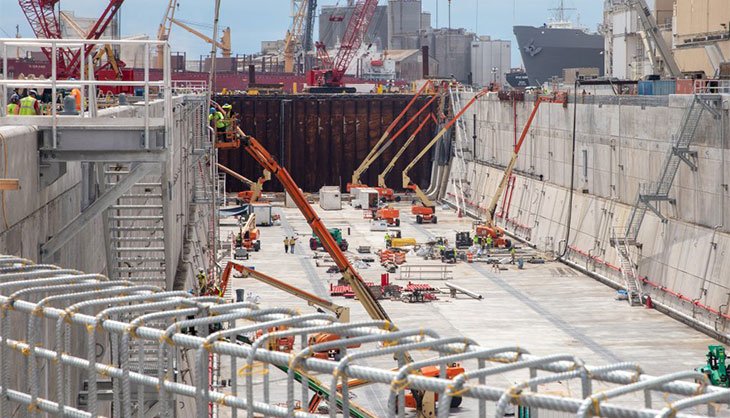
- Approximately 1,012 feet long, 144 feet wide, and 40 feet deep
- Removal and replacement of approximately 2.5 feet of deteriorated concrete from the dry dock floor
- Reconstruction of approximately 2 feet of concrete from dock sidewalls
- Installation of a new dry dock caisson system
- Restoration and modernization of the dock pump well
- Replacement of major mechanical and electrical equipment
- Upgrades to approximately 2,300 linear feet of dockside utility services
- Historic preservation documentation completed in accordance with federal preservation requirements
Client & Community Impact
UES is proud to have supported the modernization of a critical piece of the nation’s naval infrastructure. The rehabilitation of Dry Dock 4 extended the service life of a historic facility while enhancing Norfolk Naval Shipyard’s ability to support current and future generations of nuclear-powered submarines.
Beyond preserving a significant piece of American military and engineering history, the project established a foundation for future shipyard modernization efforts nationwide under the Navy’s Shipyard Infrastructure Optimization Program. Through comprehensive testing and inspection services, UES helped deliver infrastructure improvements that strengthen national defense readiness, improve operational efficiency, and preserve an asset that has supported the U.S. Navy for more than 100 years.