CEPP EAA Reservoir A2 Foundation
CEPP EAA Reservoir A2 Foundation
Palm Beach County, FL Central Everglades
Client: Forgen Odin JV, Bauer Foundation, and Harry Pepper & Associates
Market Sector: Water Infrastructure
Role: Geotechnical Engineering & Materials Testing Partner
Client Need
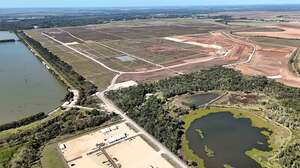
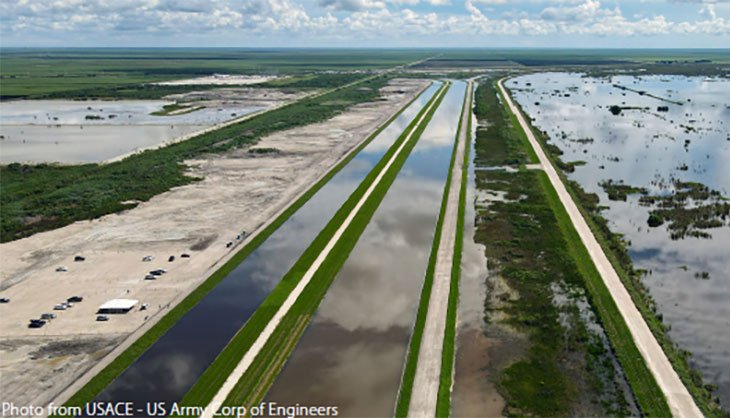
As part of the Central Everglades Planning Project (CEPP), the EAA Reservoir A2 Foundation project was developed to support one of the most significant water infrastructure and ecosystem restoration initiatives in South Florida. The reservoir encompasses approximately 10,500 acres with 240,000 acre-feet of storage capacity and includes a 37-foot embankment designed to retain water depths of up to 23 feet.
The project also required construction of a 17.3-mile soil bentonite cutoff wall beneath the levee system to support long-term water retention and environmental performance objectives. Due to the project’s scale, accelerated construction schedule, and strict U.S. Army Corps of Engineers specifications, the client team required an experienced geotechnical and materials testing partner capable of supporting complex field operations, quality control, and data management activities across multiple concurrent work fronts.
How We Helped
UES provided geotechnical engineering and materials testing services for the CEPP EAA Reservoir A2 Foundation project. Our team supported foundation preparation activities that included exposing the top of weathered limestone, dental cleaning operations, and controlled low-strength material (CLSM) placement to address solution voids and cap preparation beneath the levee system.
UES also performed verification coring of the soil bentonite cutoff wall, including coring of 100 PSI soil bentonite with a required 95% recovery rate to verify compliance with stringent project specifications. To support the accelerated schedule—which reduced the anticipated construction duration by approximately four years—UES established an on-site laboratory staffed by six technicians while coordinating services across four branch offices to maintain adequate project coverage.
The project required continuous collaboration with contractors working simultaneously across four active construction headings, as well as strict adherence to U.S. Army Corps of Engineers standards and comprehensive reporting requirements through an integrated data management system.
Project Highlights
- Reservoir Size: Approximately 10,500 acres
- Storage Capacity: 240,000 acre-feet
- Levee System: 37-foot embankment supporting 23-foot water depth
- Cutoff Wall:3-mile soil bentonite cutoff wall beneath levee system
- Foundation Preparation:
- Weathered limestone exposure
- Dental cleaning operations
- CLSM placement for solution void remediation
- Services Provided:
- Geotechnical engineering
- Materials testing
- Verification coring and quality control testing
- Technical Challenges:
- 95% recovery requirement during soil bentonite verification coring
- Accelerated schedule reducing approximately four years of construction time
- Concurrent contractor operations across four active work headings
- Coordination across four UES branch offices
- Compliance Requirements: Strict U.S. Army Corps of Engineers specifications and integrated project data management reporting
Client & Community Impact
UES is proud to support a transformative water infrastructure project that plays a critical role in restoring and protecting the ecological health of the Everglades. The Central Everglades Planning Project is designed to improve natural water flow, depth, and duration throughout the central and southern Everglades while increasing water storage, treatment, and conveyance south of Lake Okeechobee.
Annually, the project is expected to move approximately 210,000 acre-feet of water south from Lake Okeechobee while supporting restoration efforts within Everglades National Park. By helping ensure the quality, integrity, and long-term performance of critical reservoir infrastructure, UES contributed to a project that supports environmental sustainability, water resource management, flood resiliency, and the long-term preservation of one of the nation’s most significant natural ecosystems.