
This investigation involved 0.8 miles of 6 inch asphalt pavement over a four lane road. After the placement of the asphalt, the city engineer became concerned about the quality and wanted the pavement removed and replaced. The concern resulted from the reported laboratory tests on the asphalt properties. The city engineer’s primary concern was that the laboratory tests on the mat samples as reported indicated the asphalt concrete did not meet the design gradation on several occasions.
In light of the city’s concern, MEA, a UES Company, was selected to investigate if these were any problems with the placed asphalt pavement.
Our investigation included:
- Reviewing the relevant specifications (which primarily consisted of the state highway asphalt pavement requirements)
- Analyzing of the lab test results
- Performing and evaluation Falling Weight Deflectometer (FWD) results
Using the laboratory tests on sample cores, the in-place asphalt was investigated and evaluated for gradation, density, and asphaltic concrete tolerance.
One important feature of the data reported by the testing agency was the extremely small sample size used to determine the aggregate size distribution.
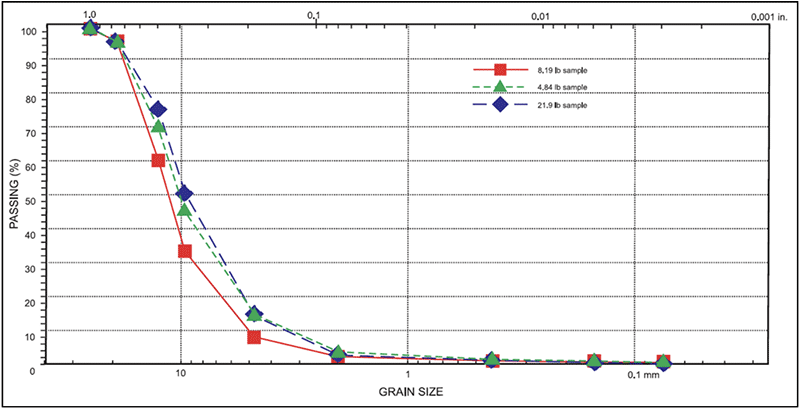
One possible reason behind this could have been instrument capacity and sample limitations which resulted in using a smaller than specified sample size. Nevertheless, the whole lot of samples should have been combined and reported in order to obtain a representative distribution of aggregate sizes. This was demonstrated by testing 3 different sample sizes of the aggregate for grain size. The results are shown in Figure 1. These results, as expected, indicated that the grain size distribution varied with the sample size of the same aggregate product.
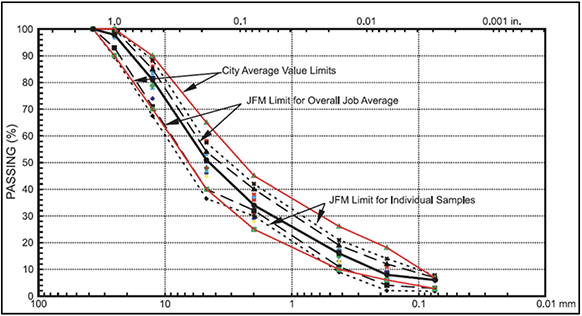
Individual grain size results from the testing agency were randomly combined by date. These cumulative test results, which still don’t meet the standard size by any means, are compared to the city’s requirements in Figure 2. As can be seen in this figure, despite the fact that the cumulative samples are still small, the aggregate essentially meets the city’s tolerances.
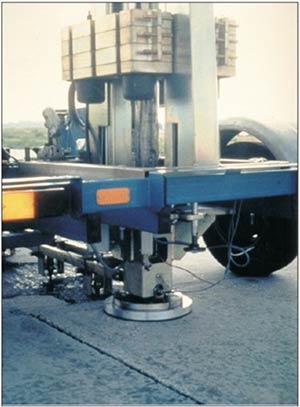
Also, based on the test results provided by the testing agency, the asphalt content, density, and the Hveem Stability Number all met the City’s requirements. The Hveem Stability Number is a measure of the stability of the installed asphalt pavement. Falling Weight Deflectometer (FWD) tests were also carried out to further support stability values of the pavement and to assess the deformation level when applying a standard load of 9,000 lbs.
In summary, the project involved concerns from the city on the quality of the asphaltic concrete based on the reported testing results. MEA investigated the city engineer’s concerns regarding the pavement quality and found that the reported testing results misrepresented the actual pavement conditions. The pavement was found to meet the appropriate standards.