A battery is the part of a solar system that earns its keep when the grid is expensive, unstable, or simply unavailable. Knowing how to maintain solar batteries helps protect the backup power and utility-bill control you invested in – without turning you into the system’s full-time technician.
For most modern home and business battery systems, maintenance is less hands-on than people expect. The batteries manage much of their own charging, cooling, and safety. Your role is to keep the system’s environment suitable, pay attention to its performance, and bring in qualified service when something changes. A little attention goes a long way, and a lot of tinkering can go the other way.
Start With the Battery Type You Have
Maintenance needs depend on battery chemistry and the way the system was designed. Most newer residential and commercial storage systems use lithium-ion batteries, commonly lithium iron phosphate or similar chemistries. These are sealed systems with built-in battery management controls. They do not need water, terminal cleaning, or routine equalization charges.
Older solar systems may use flooded lead-acid batteries, especially in off-grid properties, agricultural applications, or legacy backup systems. These require more direct care because electrolyte levels, corrosion, ventilation, and charging settings matter. Sealed lead-acid batteries require less routine handling than flooded models, but their condition still needs periodic review.
The owner’s manual and installer documentation should identify the battery type, warranty requirements, operating temperature range, and any maintenance schedule. If those documents have gone missing somewhere between the garage filing cabinet and the holiday decorations, a qualified solar service provider can help identify the equipment.
Keep the Battery’s Space Clean, Dry, and Cool
Heat is one of the most common enemies of battery longevity. California sunshine is excellent for producing solar energy, but a battery enclosure that traps excessive heat can shorten battery life and reduce performance. A garage, utility room, exterior wall, or equipment shed should remain clear of clutter and allow the system to ventilate as designed.
Do not stack boxes, garden tools, feed bags, or storage bins around the battery. Aside from restricting airflow, blocked access makes it harder to spot warning lights, leaks, damaged conduit, or pest activity. The space should be dry and protected from direct water exposure. If you see moisture where it does not belong, do not ignore it.
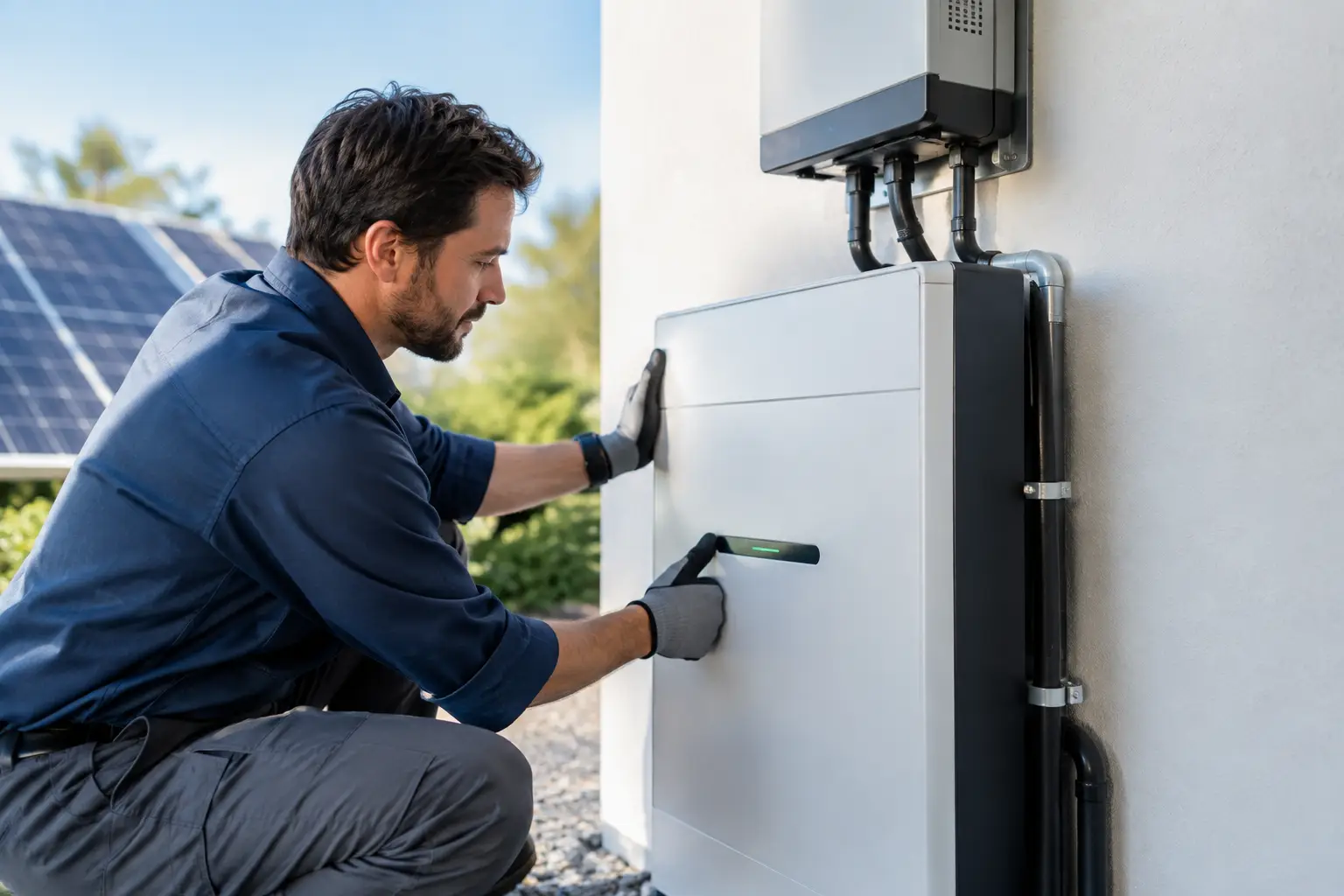
For outdoor equipment, look occasionally for physical damage after severe weather, landscaping work, or construction activity. Check that equipment doors and covers are secure, but do not open sealed battery cabinets unless the manufacturer or service technician instructs you to do so. Modern storage equipment contains high-voltage components. Curiosity is useful. Reaching inside an energized battery cabinet is not.
Give Special Attention to Temperature
A battery system may reduce its charging or discharging output when temperatures are outside its preferred range. That is usually a protective response, not a failure. Still, recurring high-temperature alerts or noticeably reduced capacity during hot weather deserve a call to your installer.
Indoor garage installations can get surprisingly hot in inland Central Coast communities. Good system design accounts for the location, but ventilation changes, added insulation, new equipment, or a garage remodel can affect the environment around the battery. Mention the battery system before making major changes to the area.
Use the Monitoring App, but Do Not Obsess Over It
Most current battery systems include an app or online portal that shows solar production, household consumption, battery charge level, grid use, and backup status. Checking it periodically is one of the simplest ways to catch a problem early.
You do not need to inspect the graphs every morning with coffee. A monthly review is often enough for a system operating normally, along with a check after a power outage or unusually high utility bill. Look for changes that do not match the season or your property’s energy use. For example, the battery may no longer charge fully on sunny days, its stored energy may disappear unusually quickly, or the system may show repeated fault messages.
Keep expectations realistic. Battery capacity and solar output naturally vary with weather, temperature, household loads, and programmed backup settings. A battery that supports essential loads during an outage will last longer than one asked to run air conditioning, electric resistance heat, pool pumps, and every appliance at once. Backup duration is as much about what you use as the size of the battery.
Operate the System Within Its Intended Settings
Battery storage is typically configured to meet a specific goal: backup protection, reduced peak-period utility use, solar self-consumption, or a combination of all three. Avoid changing operating modes or reserve settings casually. A setting that appears to increase bill savings could leave too little stored energy for an outage. On the other hand, holding a large backup reserve year-round may limit the energy available to offset costly evening electricity.
The best setting depends on your utility rate plan, outage risk, electrical loads, and priorities. A coastal home with infrequent outages may choose a different reserve than a rural property where outages can last longer. A business with sensitive equipment may place more value on continuity than on squeezing out every possible kilowatt-hour of rate savings.
If your system has a backup-loads panel, know what it serves. During an outage, use electricity thoughtfully. Turn off nonessential loads and avoid starting multiple large appliances at the same time. This is not about sitting in the dark. It is about giving the battery a fighting chance to carry the loads that matter most.
Schedule Professional Inspections When They Make Sense
Lithium battery systems generally do not need frequent preventive service, but an occasional professional inspection is worthwhile, particularly after the warranty starts, after a major electrical change, or when the system has experienced repeated outages or alerts. A technician can review system logs, firmware status, electrical connections, ventilation, mounting hardware, communications, and backup operation.
For commercial, agricultural, and public-sector systems, regular inspection may be more valuable because the stakes and loads are higher. Battery performance can affect operations, refrigeration, pumping, communications, security, and critical equipment. A planned service visit is easier to manage than an unexpected interruption.
Flooded lead-acid batteries need a more structured schedule. Depending on usage and manufacturer guidance, this may include checking electrolyte levels with proper personal protective equipment, adding only the recommended water, inspecting terminals for corrosion, confirming ventilation, and verifying charging parameters. These tasks should be performed by someone trained to work safely around batteries and DC electrical systems.
Watch for Signs That Need Prompt Service
A battery system should operate quietly and predictably. Contact your installer or qualified service provider if you notice recurring error messages, unusual odors, swelling, discoloration, liquid leakage, excessive heat, damaged wiring, tripped breakers that will not reset, or a sudden and persistent drop in backup performance.
Do not attempt to repair battery wiring, replace internal components, or override safety messages. The same goes for repeated breaker trips. Resetting a breaker once may be appropriate if your system documentation says to do so, but a breaker that trips again is reporting a problem, not asking for a stronger reset.
If there is smoke, fire, or immediate danger, move people away from the area and call emergency services. Tell responders that the property has solar and battery storage equipment. After the situation is safe, contact your solar provider for next steps.
Protect the Warranty and Plan for the Long Term
Battery warranties often cover a set number of years, a guaranteed energy throughput, or a minimum retained capacity. They also contain operating conditions and exclusions. Keep installation records, warranty documents, monitoring access details, and service notes in one accessible place. This makes future troubleshooting, property sales, and warranty claims much easier.
A battery will not retain its original capacity forever. Like a vehicle battery or any hard-working piece of equipment, it gradually ages. The goal is not to stop that process. The goal is to get predictable, valuable service for as long as the system was designed to provide it.
For property owners who want a local set of eyes on system performance, Solarponics can help assess battery behavior, maintenance needs, and changes in how the system supports your energy goals. Good battery care is mostly practical: give the equipment a suitable home, understand what it is designed to do, and ask for help before a small concern becomes a dark-house surprise.