A summer outage is a quick way to find out which comforts matter most. For many California homeowners, air conditioning is near the top of the list. So, can batteries run air conditioners? Yes – a properly designed home battery system can run an AC unit. The more useful answer is that runtime, comfort level, and cost depend on the air conditioner, the battery’s power and capacity, other household loads, and whether solar can recharge the system during the day.
A battery is not a magic extension cord for the entire house. It is a stored-energy resource that needs to be assigned thoughtfully. With the right design, it can keep a home safe and comfortable through an outage while also helping reduce expensive utility usage during high-priced periods.
Can Batteries Run Air Conditioners During an Outage?
Yes, but not every battery can start or sustain every air conditioner. Central air systems are among the largest electrical loads in a home. A typical central AC may draw roughly 3,000 to 6,000 watts while operating, and it can require a much larger burst of power when the compressor starts. Larger homes, older equipment, and inefficient ductwork can push that demand higher.
That startup demand is often the first design challenge. A battery must have enough continuous output to run the unit and enough surge capability to start it. Some systems use a soft-start device on the compressor, which reduces the startup spike and can make battery backup more practical. It does not make an air conditioner tiny, but it can make the difference between a system that starts reliably and one that does not.
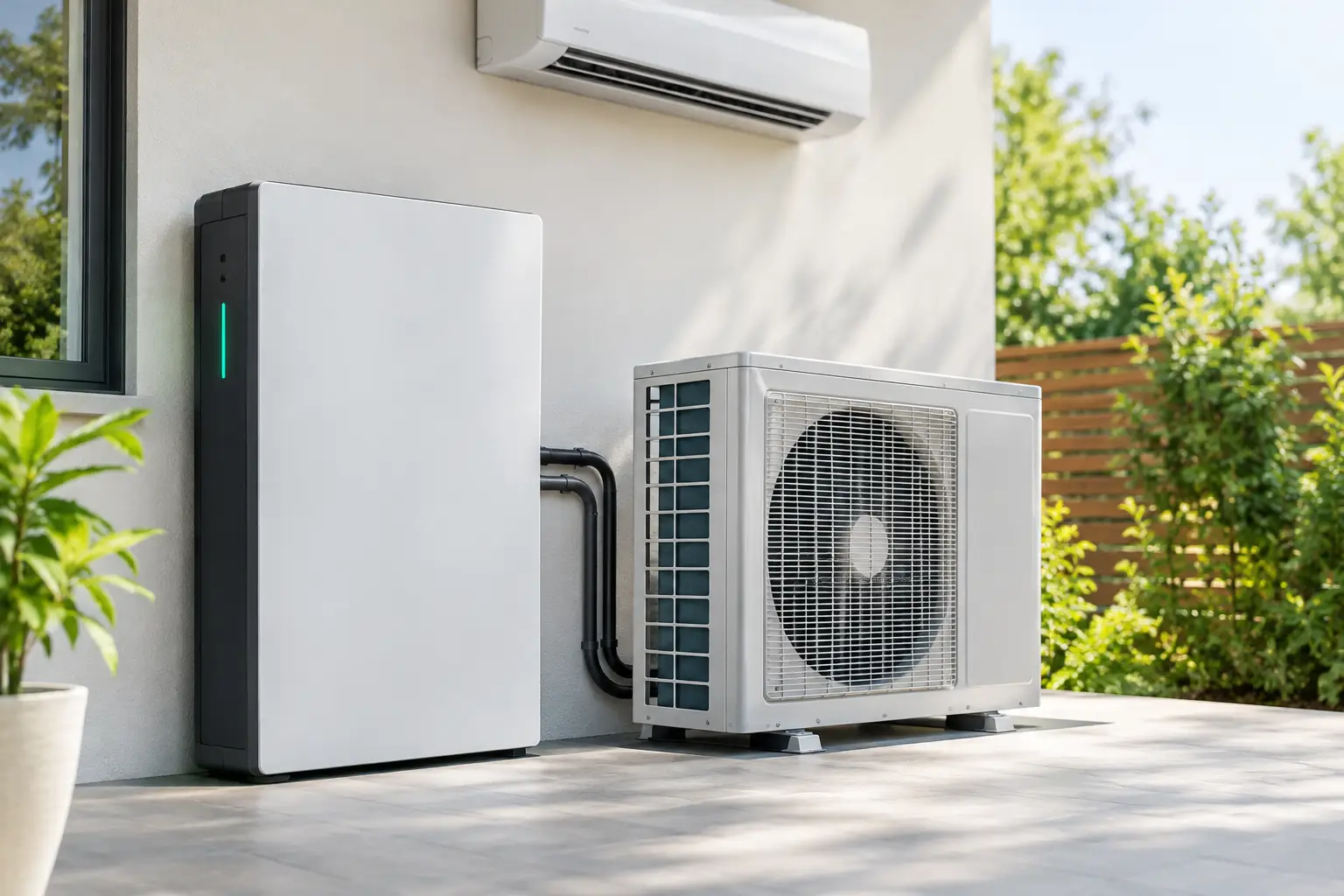
Heat pumps, ductless mini-splits, and high-efficiency variable-speed HVAC equipment are often better matches for battery backup than older single-stage central units. They generally ramp their output instead of switching on at full blast, which can lower peak demand. The specific equipment matters far more than a rule of thumb pulled from the internet.
Power and Capacity Are Different Jobs
Battery conversations can get confusing because two numbers matter, and they answer different questions.
Power, measured in kilowatts (kW), is the rate at which a battery can deliver electricity. It determines whether the battery can handle the AC compressor, refrigerator, lights, well pump, and other loads at the same time.
Capacity, measured in kilowatt-hours (kWh), is how much energy the battery stores. It determines how long those loads can run. Think of power as the width of a hose and capacity as the amount of water in the tank. A wide hose is useful, but the tank still empties if water keeps flowing.
For example, a 10 kWh usable battery running an air conditioner that averages 3 kW would not provide three hours of cooling in real life if the refrigerator, internet equipment, lighting, pool equipment, and other circuits are also operating. Battery and inverter losses also use a small share of stored energy. The actual result might be much shorter – especially on a hot afternoon when the AC has to work hardest.
That is why the best question is usually not, “How long will my battery run my air conditioner?” It is, “Which loads do I need to operate, at what level, and for how long?”
What Backup Runtime Looks Like in Practice
There is no honest one-size-fits-all runtime estimate. Still, the following scenarios show why design choices matter.
A battery system may support a bedroom mini-split, refrigerator, internet equipment, a few lights, and essential outlets for much of an evening, especially when cooling is set moderately. The same stored energy could disappear quickly if it is asked to run a large central AC at a low thermostat setting while the rest of the home operates normally.
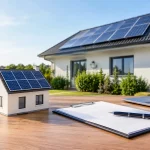
During a daytime outage, solar can change the picture. Solar panels may power household loads directly and recharge batteries with surplus production. On a clear Central Coast day, that can extend cooling significantly. But solar production falls late in the afternoon, exactly when AC demand often rises. Smoke, marine layer conditions, winter weather, roof orientation, and seasonal sunlight also affect production. A battery-backed solar system should be designed for real operating conditions, not just the sunniest hour of the year.
For longer outages, many homeowners choose a managed approach: cool the house during solar-producing hours, close blinds and doors, raise the thermostat a few degrees overnight, and reserve stored energy for essential loads. It is not glamorous, but neither is sweating through a utility outage because the pool pump was still running.
Whole-Home Backup vs. Essential-Load Backup
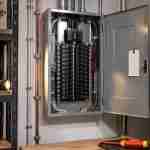
The configuration of the electrical system is as important as the battery itself. Essential-load backup powers selected circuits, such as refrigeration, lighting, communications, garage access, medical equipment, and certain outlets. It can be a practical, cost-conscious choice for a household that does not need to operate central air conditioning during every outage.
Whole-home backup is designed to support most or all of a home’s electrical panel. It can provide a more normal experience, but it requires careful load management. Even a whole-home system has limits. Large electric resistance heaters, electric dryers, ovens, spa heaters, pool pumps, and EV chargers can consume battery energy fast. A well-designed system may automatically manage or shed certain loads so that critical equipment, including AC when desired, remains available.
For commercial, agricultural, and public-sector properties, the same principle applies at a larger scale. The goal may be protecting refrigeration, communications, irrigation controls, animal-care systems, or critical operations rather than powering every circuit. Clear priorities make a battery system more useful and more financially sensible.
How to Make Air Conditioning More Battery-Friendly
Reducing cooling demand is often less expensive than adding another battery. Before sizing storage, look at the building and the HVAC equipment. Good insulation, sealed ducts, shade on west-facing windows, clean filters, and a maintained system all reduce the energy needed to stay comfortable.
Thermostat settings matter, too. Setting the temperature a few degrees higher, using ceiling fans, and concentrating cooling in occupied rooms can meaningfully extend backup time. Ductless mini-splits are especially useful in some homes because they allow room-by-room cooling rather than conditioning the entire house.
A soft-start device may help a compatible central AC unit start on battery power. Replacing an aging HVAC system with high-efficiency equipment can have an even bigger impact, although that decision should be based on comfort, reliability, and long-term operating costs – not battery compatibility alone.
Battery Backup Also Has a Bill-Saving Role
Backup power gets the attention because outages are memorable. Yet batteries can also provide value on ordinary days. In California, utility rates often cost more during late-afternoon and evening periods, when solar production is declining and household demand is rising. A battery can store surplus solar energy and use it later, reducing reliance on the grid during those higher-cost hours.
The economics depend on a property’s utility, rate plan, solar production, energy use, and storage goals. For some households, resilience is the main reason to invest. For others, daily bill management and protecting against changing rates are equally important. Most projects are strongest when both benefits are considered together.
Start With an Energy Assessment, Not a Battery Guess
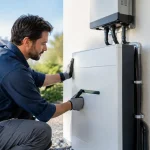
The right system begins with real usage data and a conversation about priorities. An experienced designer will review the home’s electrical service, HVAC specifications, recent electricity use, solar production if applicable, outage concerns, and the circuits that matter most. They can also identify equipment that may need a soft-start device or load controls.
Solarponics helps Central Coast property owners design solar and battery systems around practical goals, whether that means keeping a mini-split and refrigerator operating overnight or supporting a broader whole-home backup plan. The design should account for permits, utility requirements, equipment compatibility, and the long-term way the property actually uses energy.
If air conditioning is a priority, plan for it early and be specific about the level of comfort you expect. A battery can absolutely run an air conditioner, but a system designed around your home, your loads, and your outage plan will deliver far better results than a battery chosen by its nameplate alone.