Nutrient DWS
An MCP Server that enhances your AI assistant with powerful PDF processing based on the Nutrient Document Web Service (DWS) Processor API.
Features
- 📄 Document Creation: Merge PDFs, Office docs, and images
- ✏️ Editing: Watermark, rotate, flatten, redact, and more
- 🔄 Format Conversion: PDF ⇄ DOCX, images, PDF/A support
- ✍️ Digital Signing: Add PAdES standards-compliant signatures
- 🔍 Data Extraction: Extract text, tables, or structured content
- 🔒 Security: Redaction presets, password protection, permission control
- 👁️ Advanced OCR: Multi-language, image and scan recognition
- 🗜️ Optimization: Compress files without quality loss
Use Cases
- A legal team using AI to automatically redact sensitive information from large batches of documents
- Financial advisors generating personalized reports by merging data with templated PDFs
- HR departments streamlining onboarding by having AI assistants compile and digitally sign employee documents
- Marketing teams using AI to extract data from competitor PDFs and generate comparative reports
How to Use It
1. Sign up for a Nutrient DWS API key at nutrient.io/api
2. Install Node.js (e.g., brew install node on macOS)
3. Configure Claude Desktop:
// claude_desktop_config.json
{
  "mcpServers": {
    "nutrient-dws": {
      "command": "npx",
      "args": ["-y", "@nutrient-sdk/dws-mcp-server", "--sandbox", "/your/sandbox/directory"],
      "env": {
        "NUTRIENT_DWS_API_KEY": "YOUR_API_KEY_HERE"
      }
    }
  }
}
4. Restart Claude Desktop
5. Add documents to your specified sandbox directory
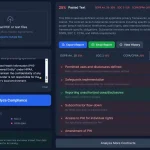
6. Instruct Claude to process documents (e.g., “redact all PII from secret.pdf”)
FAQs
Q: Can I use this server on Windows or Linux?
A: Currently, the Nutrient DWS MCP Server only supports macOS.
Q: How does the sandbox mode enhance security?
A: Sandbox mode restricts file operations to a specific directory, preventing unintended access or modifications to files outside this designated area. This is crucial for maintaining data integrity and security when working with sensitive documents.
Q: Where are processed files saved?
A: Processed files are saved to a location determined by the AI assistant. If sandbox mode is enabled, the output will be within the sandbox directory. You can guide the AI on where to place output files using natural language instructions.
Latest MCP Servers
Terminal
Cloudflare
Comet
Featured MCP Servers
Microsoft Work IQ
Better Icons
Apify
FAQs
Q: What exactly is the Model Context Protocol (MCP)?
A: MCP is an open standard, like a common language, that lets AI applications (clients) and external data sources or tools (servers) talk to each other. It helps AI models get the context (data, instructions, tools) they need from outside systems to give more accurate and relevant responses. Think of it as a universal adapter for AI connections.
Q: How is MCP different from OpenAI's function calling or plugins?
A: While OpenAI's tools allow models to use specific external functions, MCP is a broader, open standard. It covers not just tool use, but also providing structured data (Resources) and instruction templates (Prompts) as context. Being an open standard means it's not tied to one company's models or platform. OpenAI has even started adopting MCP in its Agents SDK.
Q: Can I use MCP with frameworks like LangChain?
A: Yes, MCP is designed to complement frameworks like LangChain or LlamaIndex. Instead of relying solely on custom connectors within these frameworks, you can use MCP as a standardized bridge to connect to various tools and data sources. There's potential for interoperability, like converting MCP tools into LangChain tools.
Q: Why was MCP created? What problem does it solve?
A: It was created because large language models often lack real-time information and connecting them to external data/tools required custom, complex integrations for each pair. MCP solves this by providing a standard way to connect, reducing development time, complexity, and cost, and enabling better interoperability between different AI models and tools.
Q: Is MCP secure? What are the main risks?
A: Security is a major consideration. While MCP includes principles like user consent and control, risks exist. These include potential server compromises leading to token theft, indirect prompt injection attacks, excessive permissions, context data leakage, session hijacking, and vulnerabilities in server implementations. Implementing robust security measures like OAuth 2.1, TLS, strict permissions, and monitoring is crucial.
Q: Who is behind MCP?
A: MCP was initially developed and open-sourced by Anthropic. However, it's an open standard with active contributions from the community, including companies like Microsoft and VMware Tanzu who maintain official SDKs.