
100%(10)100% found this document useful (10 votes)
116K views208 pagesExpansion 1
Uploaded by
Gabriel Raposo MendesCopyright
© © All Rights Reserved
We take content rights seriously. If you suspect this is your content, claim it here.
Available Formats
Download as PDF or read online on Scribd
100%(10)100% found this document useful (10 votes)
116K views208 pagesExpansion 1
Uploaded by
Gabriel Raposo MendesCopyright
© © All Rights Reserved
We take content rights seriously. If you suspect this is your content, claim it here.
Available Formats
Download as PDF or read online on Scribd
a
wares
ii
Senior Writers
‘Anthony James Rosenberg
Daniela Aguiar Hughes
‘Marcos Frasson Ruiz
Sérgio Luis Monteiro da Silva
Director of Education
‘Marcelo Augustus de Souza Barros
‘Managing Editor
Carina Nogueira Cerboncini
Editor
Maria Rita Corréa Vieira
Editorial Asistants
‘Ana Carolina Alburquerque de Lima
Danielle Carvalho
Grazyna Anna Bonomi
Proofreaders
‘Ana Lucia de Mello Lemos Carrie!
Elcio Camilo Alves de Souza
Enrique Luis Melone
Susan Banman Silec
Series Design
Design Divertido
Graphic Design
Fajardo Ranzini Design
lustrations
Marcos Guilherme
Photographs
Shutterstock and Thinkstock
‘Audio Production
Spectrum Estidio
Printing Supervisor
“Arthur Costa de Souza
For New CNA Expansion 1 every effort has been made to trace
allthe copyright holders bur if any have been inadvertently
‘overlooked, the publishers will be pleased to make the necessary
amendments at the fst opportunity
All rights reserved. No part ofthis book may be reproduced, stored
‘na recrieval system, or transmitted in any form or by any means.
electronic, mechanical, photocopying recording or otherwise,
without the prior permission in writing of the publishers,
1st edition ~ 1s prine
Printed by Pancrom
‘edo tavernacionais de catalogucto ma Fublicacte (CIF)
(Canara Brasileira do Livro, SP, Brasil)
Tedices pore cattlogo sistemitico:
CNA
Inglés Definitivo
(© Copyright Edicora CNA - 2015
“Todos 0s direitos reservados 3
Editora CNA Cultural Norte Americano SIA.
CNP) n° 58062779/0001-50
Rua Coronel Oscar Porto, 800 - Paraiso
(04003-004 - S40 Paulo/SP
‘wrwwenacombr
CHORE CHOCOCHOCSCOCHCOLCCECHECECECECOCOCCEOOCECS®O
>DOdDOPIPIOIIDIDOIIAIIPIIOIDIADIIAPIDADDD WD OMA RR
CNA EXPANSION is a two-level English course for basic earners, The aim of the course is to make English
enjoyable and tension-free. iis intended as a practical and natural approach to teaching English to basic
learners and emphasizes listening and speaking skils
(CNA EXPANSION is based on a sec of principles which underlie is structure and activites. Ina nutshell, these
principles are
‘A view of language which proposes that language is a means of communication and that to communicate is
to interpret, express, and negotiate meaning and that in order to be able to communicate properly in a foreign
language, speakers should reach communicative competence (Savignon, 1991).
‘A view of teaching which is organized around the steps of engaging students in the task by providing them
with che language items to be worked on, studying that language in a way that students become familiar with it,
and activating their knowledge by experimenting with what they have learned (Harmer, 2008)
‘A view of learning which advocates that knowledge is constructed by means of interaction with the other
participants in the learning process (ie. students, teacher, materials, context) and therefore that students are
co-responsible for their learning (Vygotsky, 1978).
‘A view of culture that not only encourages students to bring to class their cultural background and share it
with their classmates, ut also promotes the exploration and discovery of other cultural contexts.
Aview of social responsibility which is coherent with the educational belief that a language course should
‘g0 beyond teaching the foreign language only and that the teaching/learning process is also a means to offer
students a chance to reflect and act on their role as citizens oftheir communities and the worl.
‘Aview of the teacher's role which is based on the belief that teachers play a key role in the success of the
teaching/learning process and therefore they should take itnto their hands to make informed decisions
‘concerning the best way to make use of the material and other resources available.
ciasstessons | 33 @
‘Student's Learning Pack
lass Lessons
‘Audio Files (online)
Activity Book
Information Gap Activities
Grammar Tips
Web Lessons
CNANET
Class Lessons
‘The Class Lessons are made up of eight lessons
which mainly focus on the development of speaking,
listening, and reading skills, supported by activities
that specifically focus on linguistic input (grammar,
vocabulary, functions, and pronunciation). The book
starts with a special unit — the Starter Unit ~ which
will provide students with useful language to be used
throughout the course. Units 4 and 8 are dedicated
to review material studied in the previous units.
Audio Files
The Audio Files for the listening comprehension
© __ XKtivtesin the Class Lessons are available on CNA
INET and can be downloaded for further practice.
‘The Audio Scripts can be found at the end of the
Teacher's Pack.
} 4 | CNAEXPANSION1
‘Teacher's Pack
Class Lessons
‘Audio Files (CD)
Activity Book
Information Gap Activities
Grammar Tips
Resource Pack
Audio Scripes
€ ¢
S@eeeeeeeee <
€
Activity Book
© the Activity Book offers students stimulating and
varied practice of the material studied in class,
Grammar Tips
ach uni hasa set of grammar tips with more
© detailed explanations of the grammar items studied
in the unit. Activities and their answer keys are also
available for those students who want extra practice.
Teacher's Pack
‘The Teacher's Pack contains detailed suggestions
© _ onhow to teach the course, answer keys to the
lass lessons activities, transcripts ofthe listening
‘comprehension activities, and reduced pages of the
Class Lessons.
Resource Pack
Flaschards, cue cards, and supplementary materials are
available in the Resource Pack These materials are
meant to add diversity and to enrich the lessons.
©
Web Lessons
© _The Web Lessons are online activities which
provide students with further practice of the
contents studied in class.
>PDIPIPOIPAIIIIIAIOAIIIIIIAIPIIIDDS
oy
CNA EXPANSION 1 js organized in thematic
Units consisting of activities which have specific characteristics,
and goals coherent with the broad objectives of the unit and the materia,
‘Speaking
‘These activities aim at providing students with opportunities to practice the new language items in context.
‘The activities encompass both more controlled and freer practice. Before students scart interacting, your
job isco set the scene so that they understand the language to be practiced/used and the context of
production. During interaction, you are not expected to interfere, unless students require your help or
there is a communication breakdown.
Listening
‘The purpose of the listening comprehension activities is to clevelop students’ strategies and techniques to deal
with the language in ies aural form. It is very important to prepare the students for the diferent tasks through
pre-istening activities such as exploring visual cues, eliciting information related to the topic to be listened to,
‘and making predictions. These will activate their previous knowledge and will help them better perform the
{ask It is also important to remind students that the objective of the activites is not to understand each and
‘every word, but rather to listen for the information necessary co do the task
Reading
‘The approach to the teaching of reading is similar to that used for the teaching of listening. That is, the main
goal ofthese activites is ro develop students’ strategies and techniques to deal with the written language. Pre-
reading activities such as exploring visual cues and making predictions are crucial to ease the students’ way into
the text. Bear in mind that the objective ofthe reading comprehension activities is not to understand each and
‘every word, but rather to find the information necessary to do the tasks that follow the reading passage.
Weiting
The focus of the writing activities i to develop students’ abilities co produce texts which they are likely 0
‘need in real life. A process-oriented approach which aims at valuing not only students’ final product but also
reflecting on the process of production of the texts is used.
Vocabulary
‘The focus ofthese activities isto expand students’ lexical repertoire. Activities inthis section lead students to
se the words in context so that they serve as tools forthe speaking, listening, and reading activities, From the
start, students should be encouraged to take risks to develop techniques such as guessing and inferring to deal
with the new words.
Language Awareness
‘These activities are primarily meant to guide students to realize how che target language works. Students are
stimulated to build hypotheses on how the language works and then experiment with them. As.a result, the
activities are not only meant to develop students’ understanding ofthe way the language works, but also to
inctease their critical and autonomous thinking skills.
6 | CNA EXPANSION 1
eceoooeoee
eeeec
@eeeeeeeecaeaeeoeocoe@oaeeeoacoaeeee
Pronunciation
“The main goal of these activities is to develop students’ awareness of English sounds and intonation patterns.
“Therefore, students will be exposed to the phonetical and phonological aspects of the language which are seen
as more challenging, The assumption is that, by working on them, students’ speech will become more natural
Game
‘Games provide students with natural opporcunities for using language for real purposes as well as for
enjoyment. Your job during these activities i to guarantee that students understand the rules of the game and
the language to be practiced/used. You should also keep control ofthe situation, especially ifit involves groups
cor teamwork,
Information Gap Activities
‘These activities have been specially written to provide students with authentic opportunities to communicate.
[As the name says, the activities require that students interact so that information can be exchanged and the
“missing gaps" can be filed. Careful instructions on how to perform these activities should be given so that
the information gap element is not ruined - often the activities require that one student should not see his or
her partners card ~ and students understand what conversation isto be carried out. Therefore, some language
elicitation and modeling may be required. tis also highly advisable that you spend a few minutes when the
activity is over talking to students about what they found difficu as well as finding ouc if anyone wanted to say
something but did not have the necessary language to do so. This may also be a good moment to go through
mistakes students may have made and carry out remedial work.
Feedback Time
“The focus of the Feedback Time is to give students the opportunity co recapitulate the contents studied.
Students should be encouraged to go through the unit and produce samples of the maceral studied and carry
‘out some self-evaluation of their progress. This isan important moment to discuss with the whole group what
can be done to develop their commmand of the content studied and the tools available to do that.
What else could you say?
“The What else could you say? boxes offer students different language components to express the same
communicative functions. Students thus expand and diversify their communicative repertoire, I is important
to show students that they can say the same thing indifferent ways. However, you should use your discretion
1s to decide how far to explore and demand the use of such language. For example, if you see that your
students already know and can use the target language in the activity, you may decide to explore the ones in
the corresponding What else could you say? box. These boxes are useful too when there's alittle extra time and
you think students would benefit from further practice.
>3333HSOSOS8HHH00HHHH8888H888H988H8OSE
cuassisssons | 7 @
When in
Being polite
of ips
+ Tale
and dreams
Communicative goals
+ Bxchanging personal
+ Talking about pas events
+ Reviewing language previously
coflering accepting and
refusing hel excusing
‘oneself apologing paying
compliment, making small voce
talk making invatons and
suggestions accepting or reusing
them aranging place and time
‘omee:allina pole way
Reading
+ Being polite,
Studying abroad
Communicative goals
+ Talking about study abroad
programs
+ Giving opinions on school subjects
+ Making comparisons
+ Talking about requirements and
prohibitions
Vocabulary
+ Schoo! subjects
+ Language related to expressing
‘opinions (adjectives and
icensiies)
Language Awareness
+ Equal comparisons
Reading
+ Types of study abroad programs
Pronuné
+ Silent eter in be allowed to
®
‘Communicative goals
+ Talking about diferenc kinds
bout peoples inceests
+ Recommend kinds of tips
based on peoples interests
+ Taking abour annoying seuators
+ Kinds of tips
+ Language related to waveling:
hotels and airports
Rome...
+ Getting through an arpoet possiblity
eal wchcagreeing and + Talking abou + Talking aboue furure
dlsagresing. ving opinions commendations and Possitiies
Language Awareness
Rea
Putting it all
together
Communicative goals
+ Reviewing language
previously dale with: talking
about necessies and
enmendations, making
parsons expressing degrees
of possiblity, eling stories, and
asking forgiving caification
when listening to stories
Listening
+ Comparing the profile of applicanes
fora summer ob asa waite
Reading
+ Old wives rales. Or noe?
©
Believe it or not
Communicative goals
+ Teling stoves
+ Asking for Clarification
+ Talking about depres of
Vocabulary
+ Transiional words
* Vocabulary related to old
Language Awareness
+ Conditional clauses (First
+ Thetuth about hing
Writing
+ Wi
1 scary story
©
crazy
‘Communicative goals
+ Discusing the benefit of
psychotherapy
Vocabulary
+ Adjectives related to describing
people's personalities
+ Adjectives related ro fear
+ Language related to manias and
strange habs
Language Awareness
+ Modal perfect (should have +
pase participle)
+ Modal to express possibly
and probability
Reading
Putting it all
together
ive goals
+ Reviewing language previously
deale with stating conditions
and their consequences. and
talking about possiblities
Communi
Speaking
+ Seudyinga graph, icerpreing
and talking abour it
Listening.
+ Expressing regret and talking
about things you should have
Everyone's alittle
+ Tallin about people personalities
+ Boresing ere and talking about
things youshouid have done
Commu
+ Talking abour what scares you
and what makes you anwious
+ Talking about possibies
+ Searching the brain forthe roots
Let the
imagination fly
goals
+ Taking about TV shows
+ Seating conditions and thet
+ Tallng about plans in the near
fuure
«+ Describing RPG charactersand
1g stories about cher
Vocabulary
+ Language used to tak about TV
shows and series
+ Language related to RPG
characters and games (fantasy-
related words)
+ Expressions related to differenc
degrees of possibiliey
Language Awareness
+ Second conditional
Reading
+ Interview with a famous movie
director
Grammar Tips.
Resource Pack.
Activity Book
Audio Scripts
My city, my
country, my world
‘Communicative goals
Describing cites and caking
about them
Asking for and giving directions
Talking about what considered
polite and impalte behavior in
Language Awareness
+ Less and fewer
+ Indirect embedded) questions
Pronunciation
+ Stressed words
Vocabulary
+ Reading numbers (yeas,
population sae ete)
+ Vocabulary relaced co
describing cities
Reading
+ Cities inthe world (London, New
York, Pari, Madri, ete)
+ Seoul Metropolitan Subway
page 107
page 125
page 139
.page 153
page 193
[Link] | 9
Communicative Goals
+ Exchanging personal
information
Talking about past events
Reviewing language
previously deat wth
agreeing and disagreeing,
Biving opinions, offering,
accepting and refusing help,
excusing oneself, apologizing
paying a compliment,
making small talk, making
invitations and suggestions,
accepting or efusing them,
and arranging place and time
to meer, allin a polite way
+ Discussing ways of being
poli
¢ SPEAKING
+ Books closed. introduce yoursel,
ask students’ names and welcome
the class to the new course. Explain
how the materials work (diffrent
parts) and what is expected from
the students (involvement, efforts
to speak only English, homework,
Web Lessons et).
= —=
=e
10 | CNAEXPANSION 1
Books open. Divide students into
pairs and draw their attention to
the chart on the first page. Explain
that they must interview their
classmate by asking complete
{questions and filing in che chart
with the information
Elicit some questions and
possible answers based on the
first prompt. Make sure students
underscand that they must
formulate the questions. Give
students about 10 minutes and
‘move around the room to check
their performance.
+ When they're done, have each
person or some volunteers
Introduce their classmates by
providing the information they
found out about their classmates.
‘SPEAKING
+ Books open. As link back to the
previous activity explore some
answers about the topic “has said
(or done something embarrassing
recently” in Activity 1a and ase
what students would do/did in a
similar situation. Ask f students
normally apologize when things
like these happen,
+ Give students about § minutes
tomatch the sentences and their
respective pictures in their books,
individually, Monitor cheir work and
when they are done, ask ther to
compare their answers before you
check them with the whole lass.
+ Students should then continue the
conversations with a cassmate,
Offer help when necessary.
+ Asa follow-up iftime allows,
you may ask some volunteers co
Perform a conversation o the dass
ey
SCHOOSCSOHOHOHSOOSHOHOHOHOHSHOOSOHOSHCHCHOCOOCOOCOCCOECS
»
>PODOPPFIPPIIOPAPOPPAP POP AAO DIPAIPP>PDPPP DADA DAADADD?D
° LISTENING
(rack)
oye)
+ Books open. Elicit che kind of
things that make a person sound.
polite. For example: Could | ask
{you a few questions? Provide other
examples if necessary
+ Pair students up and give them S
‘minutes to look at the pictures
and try to guess what they
think people are saying taking
into consideration their facial
expressions and the context
+ When they finish the activity, elicit
conclusions.
+ Go over the chart in Activity 35
and ask students to listen to five
‘conversations and decide which
‘communicative function each
conversation refers t,
+ Ask students to compare their
answers with a classmate’.
Encourage them to use the
statements provided in Activity
*» Being polite... ...
3. Walk around the room and,
offer help when needed.
+ When students are done, eicic
conclusions and check answers
with the whole cass
ciasstessons | 1 @
e
GAME + Books open. Explain chat students
should choose either the green or
the orange way. Then, cell chem
10 take turns following the path
according to the color they've
‘chosen. Note chat sometimes
‘more than one direction is
Possible, so students ae free to
choose either way,
+ Organize students in pais and give
them about 10 minutes ro play the
game. Monicor their performance.
+ If time allows, students can be
given the chance to play it again
this time taking the other way.
i
e
R
i
ners perme ‘Accept
adc
senwerensoe ——> Refuse
!
!
Refuse and |
nwnye— cfrseis, —_» Accept
explain why Sus |
Seeeeeeeeoeceeetcoeecoeeeneecoaceenoeoeneaenececeoaece
»
PPOPPOPOPPPPPIPIIPAPPDPPAPAPPAAAOPADIPA PAPA ADA DADIDID
READING
Goals
+ Books open. Ask students to recall
«situation in which someone was
‘extremely rude, even though they
‘were trying to help. Prompt with
ideas such as:helping someone to
cross the road: helping someone
to carry their bags offering their
seat t0 someone.
Being polite. .....
Individually, ask students to read
the sentences and decide ifhey
believe they are True or False
Give them about 3 minutes.
+ When they are done, pair up
students and ask them to
compare their answers
+ In order to check their work,
ask them to read the text. Elcc
conclusions and check answers
with che whole cass
+ In the same pairs or as a class,
depending on how much time
you've go lft ask students to
discuss the questions in Activity
Sb, Move around the room
to check ther performance.
When students are done, elicit
conclusions
ae
ne
| ———— er
| . aire |
a |
| Rue O | © |
wea Oo |
Know.
SPEAKING
‘Communicative Goals
+ Talking about different kinds
of trips
Talking about people's
E incerests and dreams
+ Recommending kinds of trips
based on people’ interests
Getting through an aitport
a
+ Books closed. Ask if students
usually travel on their vacation and.
+ Talking about | thekind of place they ike to go to
recommendations and + Books open. Ask students to
necessities analyze the picture and talk to
+ Talking about annoying
situations
their classmates about one trip
they've taken. Go over the topics
and elicit possible questions
and answers. Draw atcention to
the fact that students may also
include some other topics they
find interesting. Ask students
to work in pairs and give them
about 5 minutes to perform the
activity. Be around to help in case
students need,
‘Asa follow-up, ask for volunteers
{to share some information they
found out about their classmates.
SOeQeeeeeeeaeeeheeeee e
@eeeeec
33D DTT23T2R2TDIFFHIFIHIFFFZIIIFDSIS DDI?
“When in Rome... «+++ + 4
VOCABULARY + Tell students they will work in
pairs ¢o match the pictures and
their correct names. Note there's
a blank chart for students to ili
with a different kind of tip.
(Check answers and ask students to
repeat the new words.
Then, cell students they must go
‘over Activity 2b. Ask them to fill
in che chare with the kinds of trips
under the verb that goes with i.
+ Books open. Ask students what + When students are done, elicit
kind of trip they talked about in conclusions,
the previous task. If they don't
know, say they'll see some kinds of
oor
‘Asa follow-up, ask students to
identify che kind of trip they've
‘tips and then they muscidentify taken based on the information
sven in Activity 1. Make sure they
Use verb+trip,
which one refers to the trip they
mentioned.
(wacko)
ove
* Books open. Pair students up, ask
them to study che words and
Circle the stressed one.
+ Ask students to share ther answers,
Play the audio CD and check
answers with the whole class.
oe PRONUNCIATION g GAME
corey
Books closed. Divide students
into pairs and explain Scudents
A will think of a kind of tip
and Students B will ask “yes/no”
questions to try to guess what iti,
If necessary choose a student and
‘Bie an example. Walk around
while students perform the activity
When they are done, ask students
{0 exchange roles.
eS,
Cex JC:
Js.
16 | CNAEXPaNsiON1
eo USTENING
(erace04)
Goats
+ Books open. Before you play the
audio, explore the pictures. As a
class, ask students to guess the
kind of crip these people will alk
about,
+ Play the audio twice, The first
‘ime ask students to identify che
kind of trip according to each
‘conversation. Play che audio. Make
sure students share their answers
before you check them wich the
whole class
+ The second time, explain they
should listen and check if che
people in each conversation have
‘he same or a different opinion
about the topic.
+ Check answers with the whole
class.
PSCHSHOHSEHOEOOCHOOCOHOCOHEHOCEHCOOOCEOE EEE SE
09 33D3323D232RF3H}HHF}IFIIFIIIIFHDIIDIIP
SPEAKING
fom
+ Books open. Explain students
will study the inforrmation in the
speech bubbles and suggest a trip
When in Rome... - -
aking into consideration people's
dreams and interests. Go over the
‘example and the What ee could
you say? box.
‘Model the example in their books
‘with a student and divide students
ico pairs. Monitor the activity
Aer students do the activity,
‘check answers with the whole
class
+ Asa follow-up, ask them what wip
they would recommend to some
of the people.
When in Rome.
BBE
LANGUAGE AWARENESS + Ask students ro Activity 76 SPEAKING
individually. Make sure they use
verb followed by ingin all the
ram ‘examples. Encourage them co
create a sentence on their own
(number four). Mave around
the room to check students’
performances. As students wil
reed these sentences forthe
following activicy, make sure they
+ Books open. Ask students to dnt see each other's work co
analyze the expressions in Activity Keep the information gap.
6 50 they can answer Activites 7a
andb. + Books open, Say students wil work
+ Ask students to compare their in pais to ead their sencences
“answers before you check them from Activity 6 and their pairs
‘wich the whole class, should come up with a suggestion
of akind of tip based on their
incerests. If necessary, model
the activity with a student (you
should say the sentences about
yourself and ask a student ro
suuggest a kind of trip). Walle
around the room to check
students’ performances,
= + Asa follow-up, ask some students
tate gmptoneyy hip {0 say what their partner’ interests
coment innate Tips are and the suggestion given.
Qrermeninsnrie
ore
aaa ‘SPEAKING
_ sa e
+ Rooks dosed. Askstudens
— * what they normaly do to plan
Sener eneenaeam: a trip. Ask if they like to check
Imagaznes te nee or oer
‘source to get information about
ome theplce
+ Books open. Go over the
‘questions and make sure students
understand them. Organize
students in pairs and give
them some time to discuss the
‘questions. Monitor students’
performances.
+ When finished, go over the
answers with the whole class,
D1 norsent
18 | CNAexPANSION 1
SCHSCHHOCHCCHOLCELOHOOCLOOCCECOHEOCEOEO EEE
>IFIFIIOPIIPI—PIPPPIOID IAP DODODAODPODDODODIDDIID
e LISTENING
oye
+ Books open, Before you play the
audio, explore the picture with
students. Elicit what they think the
telationship between the people
in the picture is
Play the audio ewice. The fist cime
students should listen for general
comprehension, explain they will
ccheck the topics mentioned in the
‘conversation, Pay the audio and.
olicit answers
+ Move to Activity 10c and ask
students to identify fic was Lucy
(or Fiaz who said each of the
+ After they do it individually, cll
‘hem co share their answers and
play the audio for the second time
so students can check their work.
+ Pair students up and tell them to
discuss the questions in Activity
10.
Or
When in Rome...
e ‘SPEAKING
GOAL
+ Books open Ask students 10
match the sentences s0 they make
sense
+ Give ther some time to do the
activity and move around to offer
help whenever necessary
+ When finished in pairs ask
seudents to share their answers.
Go over the example in Activity
Tb.
+ When students are done, elicit
conclusions
When inRome.......|
Sire nnetereetotneaen eae
| Oder mone
| Gm Ooms Onna
| Cun Om Om |
Om One
cl sare elf ee mer, Ya ae chek
(== — Oe
SSSeacnt Om Ge
he
Ses ve On
| 2 Opn tceeremany connate
| i elpecweterarweameta aos
SPEAKING
oo
Here are some suggestions 10 use
the ifclause to give suggestions.
Choose one of them depending.
‘on your class profile
Suggestion 1: In groups, come up
with other pieces of advice,
Suggestion 2: In groups, students
will play a competition game to
‘come up with as many suggestions
as they can ina given time.
Suggestion 3: In groups, students
will come up with pieces of advice
for travelers, using copies such
as: religion food/eating habits/
places/_)
Choose one of the suggestions
and explain how the activity
works. Move around the room to
check students’ work.
ue
mee)
See page 109 of
the Teacher’
Pack for
nstructions.
eee
= F
ha oe ans
hie
es
ecm
— hornet om
20 | CNAEXPANSION1
MMe le
SPEAKING
GoaLs
‘Ask students to work in pairs and
give them some time to discuss
‘what the pictures represent in
Activity 13a. When students are
done, elicit ideas,
Move on to Activity 136. Say
students will now see the formal
names of these steps and ask
them to use the verbs in the chart
to complete chem, Walk around
the room to check students
performances.
When they are done, elicit
‘conclusions and check answers
with the whole class. At this point,
you can even go back to the
pictures in Activity 133 co illustrate
some of the steps,
Ask students to, individually, put
the steps in the order chey think
is more logical. Remember not to
‘correct right away once students
will read a text in Activity 13¢ 10
check their answers,
‘Ask students to read the text
about airports, compare with
their answers and change what
they find necessary, Tell them to
compare their answers before you
check them with the whole clas.
Go over the questions in Activity
13d and depending on the time,
do i as a class or divide students
into pais
When finished, elicit conclusions.
@eeeoec
eeeeeeeece ce
eeecec
@eeeeaeeeee
€
>
9393233339233 33H33TRF3323333333R333339
“When in Rome...» « «+ + +
READING + Books open. Start by exploring
the pictures. Ask students what
they expect to find in each type
fom of accommodation. Predict
vocabulary with them and have
them read the descriptions and
match them and the pictures.
Help students with vocabulary if
necessary and monitor their work
+ Ask students to compare their
answers before you check them
Books closed. Ask students what with the whole pip,
kind of accommodation they
prefer when they crave. Note they
are not supposed to know any
specific names at this point.
ST
22 | CNAexPANSION1
S@eeeeeeec
9980089889 3998S9H3H8HEF3F3HHHH5HH339
When in Rome...
SPEAKING + Divide students into pairs and give
them some time to discuss the
situations provided, Be around to
een offer help when needed
+ When students are done, elicit
conclusions.
+ Books open. Have students
rank the features in arder of + Books open. Ask students what
importance. kind of accommodation is the
best ifthey cravel wich kids. Elicit
ideas and go over the examples
in che book eliciting which of
them express suggestions and
necessities. -
+ Organize scudenes into pairs and
ask them to share their answers,
Then, check answers.
+ Asa follow-up, elicit what che
favorite feature in the classi,
Omens { Qe tps
aun Oreorseonnpeing Otome
Qremme — Qumgnnns Gee
Qe Ga BT
Oa Gece Oman
Semen Sor Sor
Qtr
Qe
Ormemenatina
24 | cNaexpansiont
ce
@eeeec
cece
S®OCeCC CeCe SEE
>>>IrPrIIIII—II—IIPIIIAO IPI PDP POPP IIIIIIID
e LANGUAGE AWARENESS
roy
Books open. Draw students’
attention to the sentences in
Activity 16and ask them 10
identify the words in bold and
‘what they indicate.
+ Give students about 5 minutes
and have them complete Activity
17a individually.
+ When students finish the activity,
ask them to share their answers
before correction,
+ Gover Activity 176 and
have them choose the correct
alternative.
“+ When students are done, elicit
‘conclusions and check answers
with the group.
See page 110 of
the Teacher’
Pack for
LISTENING
cre)
+ Books open. Ask students what
are the best and worst aspects of
traveling, Elicit vocabulary.
+ Before you play the audio, explore
the pictures and ask students
what they think happened to each
Play the audio twice. The first
time students should listen and
answer the questions. Walk around
the room co check students’
performances.
‘When finished, go over the answers
with the whole group.
Play the audio again and ask
students to check the expressions
they heat, Note that the sentences
students read in the activity
and the ones they listen t0 in
the conversation are slightly
different. They are variations of
the exponents used ro talk about
annoying situations.
‘Ack students to share their answers
before correction.
1 eet rnd help eye a6
SCeikoocm vdieo ay
OES wat fn
»-When in Rome... « - »
+ Go on to lester d. Arrange students
in pairs and give them some time
to put the expressions in the
right categories, Offer help when
needed.
+ When students are done, elicit
conclusions and check answers
with the whole cass.
When in Rome.
ciasstessons | 25 @
find out how their classmaces feel
in those situations. Give students
‘some time and move around the
room to check their performances
When finished, go over the
answers with the whole group.
+ Asa follow-up, ask some
volunteers to share their work
GAME
Sitang on a bench,
+ Books open. Individually, cll
students to complete the
sentences with an expression
according to their opinion,
+ Explain scudents will talk toa
classmate about these situations
Draw their attention co the
‘example and encourage them t0
ask follow-up questions in order to
ore
+ Books closed. Make copies of the
cards available in che Resource
ed i
f Sratterdaenmaioerat oat
»
4
i.
=
r
e
fo.
ft
ee ht ie, =
os
+
*
n
a
D 22) casos
26 | cna expansion
Pack page 141, Siting on a bench,
‘Ask students t0 work in pairs and
Be a sec of cards to each pai, See
topic for the conversation. They
should each draw one eard out
ata time and try to use it in the
conversation. The fst student to
use the expression on his/her card
is the winner of thae round, Walk
amongst students to check their
work
+ Sec more topics until chey have
used all the cards,
‘Suggested Topics:
Camping
Hostels
Airport
‘Traveling with kids
e
+ Books open. Organize the class
in groups of 3 or 4, Tell chem
they wil travel together and
‘must choose the kind of trip
they will take and decide all he
other detail. Go over the topics
they must consider and elicit
the kind of language they will
eed to discuss this. Encourage
them to use the language worked
on inthis unit. Give students
about 5 minutes. Monitor their
performances
+ When finshed, elcic answers.
SPEAKING
core
eecececcececececceoeeceeccececcecececeeces
0333333322233 33323333333333333333333)
g FEEDBACK TIME
foro
+ Books open. Go through the
‘communicative functions listed
‘and encourage students ro come
Up with the corresponding,
exponents. Ask them to rate their
skills developments related to each
When in Rome... «+++ ++
lone of them. They may refer to
the specific language content in
the unit. Lower their anxiecy by
making sure they are not being
evaluated during this task. This isa
powerful resource as long as they
‘understand its purposes.
+ After the fist couple of units, you
‘may want to have students work
in pairs on this task, Monitor the
‘activity aval imes and offer help
if necessary.
+ When they are done, have them
share with their classmates their
‘most meaningful findings about
their own learning process. Discuss
questions related to study habits,
and the importance of keeping up
‘with the language through Web
Lessons, Grammar Tips sections
and so on.
ciasstessons | 27 @
Communicative goals
+ Teling stories
+ Asking for clarification
+ Talking about degrees of
E possibly
+ Talking about future
possibilities
SPEAKING
fee
+ Books open. Pair students up and
ask them to look at che picture
and discuss the questions. Go
over the questions and make
sure students understand them
Moye around the room and help
whenever necessary
+ SST TT Rat
2. apse glint nis
28 | cNAEXPANSION1
+ When students are done, elicie
conclusions. Rememier not to
Correct the activity now as students
will listen to the story to check if
their predictions were correct.
eeeececcacceen«
eeeec
€
€
Believe it or not---»-+-
© steve previous thoughts Eicc conclusions + Asa follow-up, go over the 2 last
beer students do the activig. {questions and eli students
urban legends and ask students
ort to identify the one chat best Answers
represents che story they have
just heard Bc answers and ask
why chey believe that isthe best
picture to illustrate the story. Ask
if they have heard this story before
and iFichad the same end. Make
sure it's a short discussion,
«Play the audio again so students
‘can do Activity 2b. They wil
choose the correct options about
the story. Ask students to compare
+ Books open. Ply the audio twice: their answers before you check
‘The first time students should them with the whole class. Make
listen for general comprehension sure students understand these
conce they should compare the celerents are normally present
information leamed with their ‘when telling stores
on Qu Orme
ae pres | eee
>>> >IF>F®I—PI®III—®AIPI>OPIOIIIDOIPODODDIOIIIDD
VOCABULARY so they can puc the story inthe
correct order Students should
doit individually. Ask students to
GOALS :
compare their answers before you
‘check them with the whole clas.
‘Ask students to fillin the blanks
With the appropriate connector to
complete the story. Divide students
into pats so they can do the
activity. Move around the room to
help students in case they need i
+ When students are done, elicc
conclusions and check ther
answers with the whole class. Clear
doubts by substituting the new
+ Books open. Ask students if they ‘words for more usual connectors.
know something about The For instance, however for but
‘Mothman urban legend. Elicit + For Activity 3b, make copies of the
answers and tell students they carc in the Resource Pack (page
will ead about it. Ask them 10 142) and pair scudents up. Make
Pay attention to the sequence sure each pair has the 2 pictures
the events in this story happened and a die. One of the pictures,
Suman serene,
Doren nopepneniee ea eens
swore eng tere eas
maven
\ pegetengion ca NEE wre oe
Set eereerrnaenmeom
will provide students withthe
connector that mus: be used. The
ther one wil give chem elements
that must be included inthe story.
Both, connectors and elements
are numbered so students can
associate them withthe number
they oc from roling the die
Explain they should rol the die
twice: one forthe connector and
the other one for the element.
Explain scudenes will continue a
story Stacie by writing on the
board it was a cold winter night
‘or some other sentence you find
Your group will enoy starting a
Story fom. This way, students
‘rust cake turns to Continue it
‘Monitor their performances
+ Asa follow-up, ifime allows,
ask students to tll cheir story
the class so they can vote for the
best one
See page 111
of the Teachers
Pack for
g PROCESS WRITING
[oor
+ Books open. Par students up and
ask them to answer the questions.
Set atime limit of 4 or § minutes
for the rask. When students are
done check their answers with the
whole group. Ics imporcant to
raise students’ awareness to che fact
that when they write text, hey.
should have a clear purpose and
a sense of audience. The purpose
and the audience are going to
define the genre, and language
to be used. Explore through the
{questions the rext features. After
‘you have explored the text with
‘the whole group, assign che task in
the Activity Book.
Seeeeceeceeecccsconeeooccencececeecoeceeceneenes
>IFIIIII>PAPIIIOAPIPAIPAO PDO P POPPA DDO DIIDIIID
CS
g SPEAKING
cot
+ Books closed, Tell sudents to work
in pairs and ask them co eel their
favorite scary story, Its important
to encourage them to tell any kind
of story in case they dor't feel
‘comfortable with the scary ones.
\Walk around the room to check
their performances.
“+ When students finish the activity
ask some volunteers to share some
‘of the stories they were told
¢ eo USTENING
(ak)
ooytey
+ Books open. Pair students up and
ask ther to read the stories and
decide if they'e true, false or if
they'e still unsolved. Explain chs
isa competition and the pair that
has more correct answers wll be
the winner.
+ Go over the expressions “That cant
be tue, “That might be true” and
“Thac must be ue" and elicit the
degree of pesibilty they express.
Help ther reach an agreement.
Let students do the acivey and
imonitor while they perform i
+ When they ae done, ask one
student from each pai swap
bbooks with one from the other
pair and open the discussion to the
‘ass. Encourage students 0 use
the new functions to express their
thoughts. Dont correct the activity
right away once students wil isten
to the audio to check ther work
+ Play the audio and ask students
to correc their answers. Note
that the answers wont be so clear
* Believe it or not... ....
‘once students will listen toa small
paragraph talking about [Link],
they'll have to listen for the main
idea. Pause after every story and
tlic what they got from it. Ask
‘questions co help students come
to an answer. Check what pair
is the winner by asking them to
correct their classmate’ answers.
Go over the questions in Activity
Se and make sure students
Understand them,
+ When they are done, elicie answers
Bolleve itor not
@000 000088
00 a0 RO RAO
e READING
+ Books open. Ask students if they
can identify when someone i,
telling ale. Elicit possible gestures
that indicate when a person is
Tying. Ask students to laok at the
pictures in their books and try to
imagine by looking at the features
of che people whether they are
lying or teling the truth, Divide
students into pairs so they can
share their work,
Sepa echt
‘ryan
D 22) mremneons
32 | cNAEXPANSION1
+ In order to correct the aetivity,
ask students to read the text
The truth about lying so they
can check if their guesses were
‘correct. Walk around the room
to check students’ performances.
‘When students are done, elicie
conclusions and check answers
with the whole class.
NOTES: According to the site
hetp:fiwwwpolicevibecom/body-
language-can-you-tel-if someone:
's-lying/, when telling the euch,
people tend to nod (picture 1) or
lean the head (picture 7) when
speaking, it means the expression
matches the verbal scaremene.
Also, when one says the truth, he
‘normally stares (picture 3) instead
‘of blinking a lot. Besides, they use
their body in a not limited way,
the movements are more natural
and spontaneous.
+ Divide students into pairs and ask
them to discuss the questions in
Activity 7.
+ When students are done, elicit,
conclusions.
€
SOCOSHSOCCOSCHSSHOCOHOSOHOCECOOCHOOCOCECECOC EE
t@ crvecccccceccccccccccscces
‘The TRUTH about LYING
} load
>> IFIFIIPI—>P>II>PI>POPOPP DOPOD OPP ODDDIDIDD
cuasstessons | 33 @
¢g SPEAKING
+ Books open. Prepare some cards in
advance (one that says "True story”
land another one that says "Fake
story") and organize students in
pairs. Make sure each one of them
has two cards. Explain one of the
students should choose a topic
fromm the list in the book and pick
card (instruct chem co be careful
so hither partner cant see what
isnt) Then chey must follow the
2 all
Phrase on the card and tell a true
fake story. Go over the What eke
could you sa? box and moeivate
students t0 use the functions in
it to tel the story and to ask for
clarification about i. The idea is
‘hat his/her partner guesses about
the veracity of ie (elicit some of the
Features from Activity 7 so they can
“analyze” their classmate’s reaction
‘when teling the story). Make
sure students use che functions
fromm the beginning ofthe class
to express degrees of possibilty
emphasize them when you go
lover the What else could you say?
box). Walk around the room ro
check students’ performances.
‘Make sure students exchange roles.
Walk around the roam to check
students’ performances,
ee t
(etude
=
‘Asa follow-up, you may ask
students ifthe guesses about the
veracity ofthe story were correct.
and what they based them on,
‘Also, you can ask chem ro share
some of their stories.
se
1 epee Aad
el
> peared
34 | CNA EXPANSION 1
Seveereeeceeocorcooeecfoereeeeceeceoeneneense
239333323232 F323F3HTFFRTFFFIFHHN3ITDIIIIIID
SPEAKING
oye
«+ Books open. Divide students into + Goon toleterb and ask students
pas and ask them co name the to,indivdualy, match the sentences
items in the pictues around, Organize students in pairs and ask
Dawa spidergram on the board chem ro share thei answers. Make
and use the words they say 0 Sure students use the functions in
Complete it Help when necessary. Activity 8b. Call thei attention to
Elicit answers and check them the pronunciation (especialy off
with the whole class. and wil)
«+ Ask students what these words + Asa class, motivate students to
have in common and what they discuss the questions in Actvity Sd
refer to, Finally ask them to
contribute with other items. Help
them in case they dont know
how to say them in English
es
‘Boliove t oF not
Onaeienccamee
emacs
Treanor coterie
vreeeesees «Believe it or not----
eo PRONUNCIATION sentences. Walk around the room
to check students’ performances,
each + When students are done,
élicic conclusions and check
foe pronunciation with the whole
class
LANGUAGE AWARENESS
ye
+ Books open. Pair students up and
ask ther to practice saying the
first wo sentences.
+ Play the audio and ask students
tolisten and compare the
pronunciation of the “will” they
heard with their work, Draw + Books open, Ask students to
their attention to the contracted complete the sentences using the
four of ‘wll Ack students to ‘words in the chart
do the same with the rest of the + When chey are finished, ask
2 ell,
6 1G Nea toes ie,
2 tm gb iportnn sll ge
3 tat nportom ene — sili noe
Steere — Bag re oan
3 eat enor, sal bey
pg onvtnyorht cals et
Sit pree ai coemeen
Sanne eo | Tips
" |Ommeteum [@aenaee
ilewenes
D2 | cen:
36 | CNAEXPANSIONT
students to share their answers in
pairs.
+ Move on to Activity 11b. Ask
students to study the senences in
Activity 11a carefully so they can
notice the correct verb tense that
{goes in each of the clauses.
+ When students are done, ec
conclusions
+ Goon to Activity 1icand ask
students co write one example about
themselves. Make sure they don't
start the sentence with the fiause
+ When students finish the activity,
elicit conclusions.
+ In Activity 11d, ask students to
‘choose the correct option about
the function, Draw their attention
to the fact that they can also, later,
refer to the grammar
HOHSHCOOOCOHOCEOCOOOOHOOOOOCOOCOOCEOOOOEEE
>>I IIII>IP>PFINI>PIII>A AOD POOP PDD DIIDI DID
e GAME
fos
‘Material needed: a sheec of paper
for each pair of students
+ Books closed. Pair students up,
allow them some time and ask
them to write down as many
superstitions and old wives’
tales as they can. Explain this isa
‘competition and che winner will
be che pair that is able to write
‘more sentences. Note that forthe
sentence to be considered correct,
ic must be grammatically correct,
it must make sense and it mustrit
be repeated (students can't use
the ones discussed during cass).
Walk around the room to check
students’ performances. When
time’ up elicit ideas and check
their answers with the whole
class (make sure they participate
“judging” che sentences and the
score). Sum up the points to see
which paris the winner
+ Asa follow-up, askif they believe
TThave ever tried any of the
superstitions and old wive's tales
mentioned,
See page 112
Pea
ED Paci ior
© uns
ea
+ Books open. Before you play the
audio, sk students to read the
ff the Teachers
‘quotes in the book and discuss
whether they agree with them or
rot. Walk around the room to
check students! performances,
+ When students are done, go over
the answers
+ Say students wil isten to a guru
talking about ways to lead life on
‘TV. Have them predict what hell
say, Divide students into pairs
and ask ther to complete the
sentences in Activity 13b orally
‘Then, play the audio and have
them complete the sentences
according to what they hear.
‘Ask them co check their answers
asa group and ask students
ifthey believe those are good
suggestions
+ Draw their attention to Activity
3c and explain that Cynchia
vseeesees-Believe it or not: ++ +++
needs to make a decision and is
calling the guru on the TV show
to talk abour her possibilities. Tel
them hey will listen and complete
the rable.
+ When students finish the activicy
ask them to share their answers
with a classmate and elicit
conclusions, Finally, ask chem to
add one more possibility for each
of the sicuations.
Asa follow-up ask what they
think her decision was.
Oe
Believe R or nol
e SPEAKING
eons
* Books open. Pair students up and
explain one studene will choose
‘one of the topics and think about
its consequences. He/She wil tell
‘that to his/her partner without
saying the verb he/she chose,
Student 8 will guess the action
based on the information given by
Student A and vice-versa,
+ Mode! the activity with a student.
Example,
As Ifyou do this, your
journeys wil be more
comfortable bu youll ako
be stuckin trafic lot.
8 This wll happen if buy
aca.
Ay hac’ right
phen mtn pe
ue sh died fhe
$e ltt man ah
So sh haf di nts
oes
Gost he tls of as
aes
deb he ty
$ent mt he neste
print man na ings
as ig © hr fae
ech a dng ha ne ps
38 | CNAEXPANSIONT
o
SCOHSHOLEEOLOCOOCLSSCECHCCOOLOOOOL OOOO:
a
>>> IFII>PO®PIIP>P>OIIIO ODDO PO DPODOIDO ROD DDIDDDD?D
GAME
(oye
Books open Divide students into
small groups (3 to 5 people in a
group) and provide them with a
die. Tell them every time they land
fon a square, chey have to read the
sentence our loud and continue it
\Wite che following example on the
board: “If it start raining after clas,
1 geta ride with my colleague.”
Tell students that ifthey make a
mistake, they need to go back two
squares. Go over the example with
students, Draw their attention
to the pronunciation of the
contracted forms.
+ Monitor students’ work. Make sure
students pronounce the contracted
‘and the negative forms correctly
+ Asa wrap-up, elicit some answers.
* Believe it or not---...
cinssusssons | 39 @
gS SPEAKING
+ Books open Elicit some of the
functions worked on during the
Unit. Organize students in pairs
and, briefly, go over the pictures
‘and elicit some possible language.
If possible, bring some tealia (for
‘example, decks of cards) to cass to
‘make the activity more interesting,
‘Move around the room to monitor
students’ performances
+ When students are done, elicit
conclusions.
2 eels
40 | CNA EXPANSION 1
SCOHOHOOCHEHOHOHCOOOOCHOOHOECOOCEEHOOOOOCOOCOE ES
)
>>> >>IIII—II>I—PIIII®APIDOIIO IPOD DODD DD
§ FEEDBACK TIME
+ Books open. Go through the
‘communicative functions Isted
and encourage students co come
Up with the corresponding,
exponents. Ask them ro rate their
skills developments related to each
‘one of them. They may refer 10
the specific language content in
the unit, Lower their anxiety by
oo ses e000 00000+Believe it or not... ..
‘making sure they are not being.
‘evaluated during this task This isa
powerful resource as long as they
lunderstand ics purposes
«+ After che fist couple of units, you
‘may want to have students work
in pairs on this task. Monitor the
activity at all times and offer help
if necessary
+ When they are done, have them
share wich thei classmates their
‘most meaningful findings about
their own learning process. Discuss
{questions elated to study habits and
the importance of keeping up with
the language through Web Lessons,
Grammar Tips sections and so on.
=" 8 £09 0.8
== Ee al
I
‘igen
a
cus | 37 OF
cuasstessons | 41 @
SPEAKING
Caen
ee
Brera
arenes
to flunk out
Ou ted
Dats
42 | CNAEXPANSION1
>>PIIIIIVI>AIIIIPDIPPAIA PIP POOP IDO IIIIIID
VOCABULARY
Corey
+ Before the class, reer to Resource
ack, page 145 of this book and
make enough copies of the cards
for Activity 2c
+ Books open. Elicit some of the
school subjects students already
know. Ask them to look at the
pictures in Activity 2a and write
the name of the school subject
under it. There are some letters
to help them. Pair students up
so they can share their answers.
Check their work
+ Move on to Activity 2b. Ask
students to listen to the audio so.
they check the pronunciation of
‘these words. Do number 1 with
students so they know what they
have to do. Ask students ro share
their work and correct it
+ Move on to Activity 2c. Explain
that students wil be in groups of
and one pair will play against
the other. Give one member of
fone of the paitsa card (that can't
be seen by his/her partner); hel
she will have co say one word
(that cant be a compound noun
fr a sentence) that is not on
the list and that is related to the
school subject he/she's got. His/
her partner has one chance to say
the right subject. f he/she doesnt
get it, one studenc from the other
pair can say another word so his!
her partner (who can't see the
card either) should try co get the
correct subject. Students go on.
until somebody gees the correct
Studying abroad. - - -
word. Paits exchange roles and
receive another cat.
Before starting the game, tell
seudents they can't say derivative
‘words, for instance, ifthe subject
is Physics, they cant say Physicion,
Physical Also, cell students they
can't mention names (of people,
places, books, ete). As this isa
‘competition game, ask students to
keep score and to make sure the
ther pair is following the rules.
‘Asa vatiation to the game, instead
of just saying words, you may ask
students to explain the subject
‘without mentioning the words in
the card,
Answers
puttct
demiray |) BroodL
©, timrneneeremnnnentnn
ciassurssons | 43 @
oO LISTENING + Then, ask students to listen to
these people talking about their
(ack) school lfe and cornplete the
‘charts with the school subject that
is mentioned. Have them check
the person's opinion (positive or
egative) and wrice down some
‘words/expressions they heard that
helped them identify che school
subject. Make sure their answers
are consistent.
+ Have students share their answers
and check them with the whole
group.
arr
+ Books open, Ask students to look
at the pictures and say whar they
think these people wil talk about.
Explore the pictures a litle bit and
encourage students to come up
with adjectives to describe these
people's personality,
2 eel
cor
em at
44 | CNAEXPANSION 1
‘SPEAKING
oye)
+ Books open, Explain char students
will choose words from the
boxes to give their opinion about
the school subjects by using
an adverb and an adjective. Go
‘over the example. Make sure
students underscand what they
are supposed to do. Go over the
expressions in the What else could
yu say? box and make sure they
reply appropriately when their
classmates give their opinions
by agreeing or disagreeing with
them. Show them that cheres
also a blank space in case they
want to add a new word in any
of the categories. Divide students
into pairs, Give them some time
to perform the activity and
‘move around the roam to check
students! performance.
Asa follow-up, ask some students
to report their findings. Also,
encourage them to explain ¢
‘opinions on the subjec:s,
©eeececeeceecocoeeoceevccececeeceaccececes
»>”>D
eee)
e
‘SPEAKING
foe
college to the cla
them to compare their schools
cusstessons | 45 @
SPEAKING who went abroad to study or if
they have ever received a foreign
Par ieondicesa
‘When they are done, go over the
+ Books closed. Asa link back to answers with the whole group,
the previous class, ask students Elicit opinions from different
if they had any fiends at school students
5 ell
bal
Ha
46 | CNAEXPANSION!
€
eee
€
>>> IIIIIIIIVII—PITDI~OPPD PPA DIIIIPIIIID
© urn the country people are talking
about 2s wel a their opinion
trae) about it Play the audio and have
students complete the chart, Ask
students to compare their answers
before you check them with the
whole class.
oy
+ Draw students’ attention t0
‘Aetiviey 7b and ask students
to discuss itn the same pairs.
‘Walk around the room to check
students’ performance,
+ When students finish the activity,
elicit conclusions.
re
+ Books open. Pair students up and
ask them to listen and to identify
soos 22020020 Studying abroad:
Studying abroad.
ciasstessons | 47 @
SPEAKING + Explain to them they should take
‘urns saying their answers and the
correct statement (in case they
coe ‘considered a sentence wrong)
+ Cotrect che activity with the whole
class. Ask stuclents to keep score
ifthe pair got che T or F correct,
they should score 1 poin. if chey
rewrote the False starements
correctly, cheyll get 1 more point.
The winner is the pair thar has
Scored more points.
Books open. Divide students
into paits and ask ther to take
the quiz, Make sure students try
to-correct the sentences they
considered Fake.
Allow them some time to do the
activity, When they' done, cll
‘hem to get together with another
pair to compare their answers.
—— el
pms ne Mesh hee ad
Ebonete
Panties ic macho
ee S
eemamioin” i da cotton
seca neme
So...
tong cunt ine
seacsenmenen oe
Samepe etn ce
48 | CNAEXPANSION
eeeeeee
€
cCceecee
€
eeeec
eeeeec
€
€
72222 dF7D27H7HPPIIFIIFI®I>IIII DD IDD DDD?
LANGUAGE AWARENESS
+ Books open. Pair up students and
give them some time to go over
the sentences in Activity 9a, When
they/re done, quickly go over the
sencences and check whether
students understood all of them.
Invite them to share with the
‘group what was discussed in the
pairs
+ Move on to Activity 9b and tell
students to clasify the fragments
by refering back to the sentences
in Activity 9a. Ask them to do.
this individually and then check
their work in pairs. When they
ate done, check the answers with
the group and concept check
+s ssss60 Studying abroad... J
by asking students to come up
with dflerene sentences using the
fragments they analyzed
+ Goon to Activity 9 and ask
seudents co complete the
sentences using only a. oF not
as... 0 express ther opinions.
‘Monitor students performance
Ask students to share their
answers before you check them
‘with the whole clas.
+ Then, move onto Activity Sd and
explain that they must talk about
the topics using comparatives
Superlatives, 2s. as and rots. as
to express ther opinions about
them. Call thei attention to
the What ee could you say? box
‘with diferenc opcons and give
examples if necessary Ifyou find
your group will have diffielty in
doing it as itis proposed, write
the beginning of some senvences
‘on the board and ask students to
complete ther Here are some
suggestions
People who study abroad
weeny
Not wearing uniforms at schoo!
Going to private schools is
+ When students finish the activity,
elicit conclusions.
Sd
Diecrm-teymet
aed
cuasstessons | 49 @
‘SPEAKING
foo
* Books open. Use the cue “studying
abroad rom the previous activity
asa link, Tell students they will
have the opportunity to study
abroad, but before they go they
should talk to their partner and
decide on the best alternative
based on the information they
hhave on their cards.
+ Pair students up and give each of
them a card (to be found on TB's
I
50 | CNA EXPANSION
Resource Pack, page 146). Make
sure students in the same pair
have a different card, Note that
the cards concain different profiles
so the idea i chat each student
chooses a place that matches his/
her interests,
+ Give ther some time to study the
cards and the info graphic and,
then. ask them to negotiate until
they make up their minds about
only one place to vist. Encourage
them co use comparative,
superlative and as. forms to
talk about the characteristics of
each country and to convince
their partner
+ Asa wrap-up activity ask what
features they took into consideration
[Link] to an agreement,
GAME
Books open. Divide students into
Pairs or groups of 3. Give each
Pair o group a die (ifhey'e giant
sized, all che better) Explain they
should chrow the die and make a
sentence using 2 noun from the
first char, the adjective from the
second chart that corresponds
to the number an the die and a
noun from the third chart.
Students must take turns throwing
the dice and making sentences,
Encourage them ¢o add their own
ideas to the ls.
+ Ifyou want to make it more
challenging, students may throw
the dice for each column to pick
the topics and the adjectives to
‘compare. f you do so ask them to
number the words inthe frst and
third charts.
Walk around the room, check
students’ performance and offer
help when necessary: When they
are done, go over the answers wich
the whole group.
PC Ooeo ooo LOCH LL LECCE CC CCE EEL CECE EE CES
>333F3TF7FRF7FF7FFI9FFIFIFIISPPODIOIDDIDIDIDD
*** Studying abroad... . «
READING + Books open, Pair students up and they talk, walk around the room,
ask them ro match the types of monitor their work and offer help
sei programs and their definitions when necessary.
as Walk around the room to check + When students are done, elicit
students’ performance. Before conclusions.
you check them with the whole
class, ask students to compare
their answers. You may want (0
carry out some chorus repetition
of the wordsfexpressions 50
students will feel more confident
when talking abour the programs.
+ Move on to the questions in
+ Books closed. Ask students what Activity12b and make sure
kinds of program abroad they students understand them. In the
know and ifthey know someone same pais, allow students some
who has ever taken parc in one, time to discuss the questions. As
Ree poe ee
OSes
f
|
é
[eee ste
Tiewirotetirtime | Siartheadventureet | its time to
‘tral abroad! ‘ietime now! onyour
‘ered gon teens
ee
ciasstessons | 51 @
© usteninc
eats
+ Books open. Elicit what questions
they would ask a travel agenc if
they were considering studying
abroad, Pair seucents up and give
al
es
‘See
1: eee
2 satay tint
1 nme ane
+ Tellthem they'llisten toa
+ Then, move on ta Activity 136, and
Sf
them 5 minutes so they can come
Lup with ideas. Ask chem co share
their thoughts and point out
‘what the most frequently asked
questions would be
ry
Conversation berween a travel
agent and a client and they shoul!
Answer the questions in the chart
ive them some time to read
them and clarify any doubts, Play
the audio CO and ask students
to answer the questions about
the trip. Ask them to share their
answers and check them with the
have students answer the question,
Have them share their work.
Lj
See page 114
the Teacher’
Peat
ei
e ‘SPEAKING
[oe
* Pair students up and ask chem to
—
| 52 | CNAEXPANSION1
create a different (from the ones
in Activity 12) type of program
abroad. They should consider the
-opics worked on in the previous
activity and “sell ic to their
classmates,
+ Ask students to walk around
the room asking and giving
information about their program,
+ Asa wrap-up activity, students
may share which programs they
ought” and why,
Seeeeee
eeeec
cee
@eeeeeec
Studying abroad... ---
° LISTENING Students should say a sentence
using che language to talk about
seks 19002 Fequirements/prohibitions. To do
50, go over the Wihat else can you
say? box and the example so they
know what to da, Monitor while
students do the activity
+ Haye students listen to the audio
CD and compare their answers
with a classmate. Encourage them
to use the examples to do so.
+ Go over their work. Ask students
to say what the prohibitions are in
each picture.
OL
oye
+ Asa class ask students to look
at the picture and describe
it Elicit what the women are
possibly talking about, Go over
the questions and play the audio
so they can answer them. Have
ther repeat the conversation if
necessary.
+ Asa wrap-up activity, encourage
‘students to discuss the question in
Activity 16
‘Ask students to share their answers
‘and check their work wich the
whole group. ‘studying abroad
ery gor, Tl
Speed. wt!
e SPEAKING =
[oe
‘Ask students to describe what is
‘going on in each of the picuures.
When they're done, ask them
to say what they think che girl
is allowed/not allowed to do.
>>> 7FIIIIIIIII®IIII AIR PDI DOOD DDDDDD?D
é
i
r
i
i
i
oe PRONUNCIATION:
(rack 2)
+ Ask students to listen to the
sentences and circle the silent
leccer in the words in bold in each
ye
See page 115,
of the Teachers
Pack for
oe
instructions
of them. Have students share their GAME
answers. Check their answers.
+ Asa wrap-up activity. ask students
to. come up with asentence about
something they are (not) allowed
to do at school/work/home. Pay
attention co their pronunciation
and correct it if necessary
eo
1 ett th
2 warrantied
3 warped
1 Yaa ee dari
5 oer y
54 | cNaexPaNsion1
Tips
Explain thar students will play
TicTac-Toe. For each space there's a
different topic
Note there are 2 topics missing,
so make sure they complete
them with their own ideas
before starting the game. The
first student to play must say a
Fequirement/prohibtion relaced
to i Ifthe sentence is correct
and makes sense, he/she scores a
Poine. Then, student 2 continues
the game.
Note there ate 2 games, sa the
idea is that each student stares
playing once.
SPEAKING
ove
Pair students up and have them
create a set of requirements/
prohibitions about the school
Of their dreams. In case the class
profil is more adult, have them
talk about the school they think
‘hould be better for the future
‘generations. Give them some time
and monitor their work while
they do the activity. Help when
necessary. Have students present
their work to che class
+ IFtime allows, as a follow.
up discuss the viability and
‘consequences of some of the ideas
mentioned,
+ Asa vatiation to this activity you
can ask students to seta list of
Prohibitions from the point of
view of
~ employees to the boss
society to the president
kids to their parents
SeoeoeooecoececoloeoceHoeocenocenenneecEecs
++©*5= Studying abroad... |
>> 227277 IIFI®II~II>I®A>®AIFIIPPOOPADDODDIDIDD?D
FEEDBACK TIME
coe
+ This is the time to raise students!
awareness towards their
develapment in the course Itis*
very important co ask students
to complete this feedback, not
only for the teacher to know
‘more about his/her students!
development but also for students
to reflect on their own learning I
is ideal that students do ths since
the early stages of their course
so they can develop a sense of
autonomy and responsibilty for
their learning,
Go over the topics af the feedback
‘one by one co make sure students
know what is ro be done. Tell
them to write the corresponding
‘examples under each topic.
Students complete individually
Then, they can compare with &
partner
Check the examples with the
‘whole class Explain to students
that itis OK ifchey couldnie excel
imal the topics, but iti important
for them to continue studying. Tel
them that that is the reason why
they have the homework and web
lessons to do. In case you notice @
topic isnot so clear, prepare some
review activities based on it
co
a
‘cigeita
gape
‘gat ty
cies
1
1
‘Studying abroad.
o,.o,.8
Bae)
cuasstessons | 55 @
Communicative goals
+ Review talking about
necessities and
recommendations
+ Review making comparisons
+ Review telling tories, asking
for and giving clarification
when listening to them
+ Review expressing degrees of
possibiliey
56 | CNAEXPANSIONT
¢ SPEAKING
+ Books open. Draw scudents’
attention to che pictures and ask
them to discuss the pros and
cons of working abroad in one of
these occupations, Pair them up,
give some time and have them
Perform the activity. Ask students
{0 share answers
+ Then, move on to Activity 1b, Tell
them chey have an opportunity
to work abroad in one of the
Activities in the pictures and that
they should choose one and ask
for advice to his/her classmate,
Encourage them to use the
language in the What else could
‘you say? box.
©
e
e
©
>
>>I IPFIFII®I®I~—>I>III>OPPII DODO DOD DDD DD
teeseseeereesceresesevecsenereees es sButting It all Logethers +++. j
"4 oO LISTENING + Go over Activity 2cand ask
Students co discuss the questions
ack 23) in paits Asa wrap-up activity,
have them report their partners
ae answers.
Od
+ Draw students’ attention co the
profiles and the pictures. Have
them listen and match. Then,
correct itas a group.
+ Go over to Activity 2b and have
them work in pairs and compare
the applicants co choose the one
that best fis the position of waiter
Encourage paits to share their
conclusions.
“Carin dmencnsoeraecomn aati
SS, gaan
pena m
ciassessons | 57 @
GAME
+ Draw student’ attention to the
first line of the story Ask them
how they could complece it,
Divide the class in 2 groups and
give each of them a card from
the Resource Pack, page 147, Tell
them they have to continue the
story by using the five elements in
their cards, but that they should
also add other elements so that
Seeker eres
——
pormcoemapaca
amon
the other team has a difficult time
finding oue the five mandatory
elements in their cards. Before
they start the activity, review some
of the useful language leamed
throughout the unie such as
connectors and elements used
when telling stories language
used to ask for clarification and
for more details when listening to
stories; adverbs co give opinions.
‘Make a quick review by asking,
students to come up with
‘examples and let them perform
the activity. When they finish
creating the story, pai stucents
up. Each pair should have one
student from group A and one
student from group B. They will
tell each other the stories they
came up with, and as they listen
aes meen,
58 | CNA EXPANSION
they should try co identify what
the mandatory elements in each
other’ stores ae.
‘As a wrap-up activity, ask different
Pairs to share thei stories,
READING
+ Draw students’ attention to
the sentences in Activity 4,
Have them check True or False
individually and then compare
their answers wich a partner,
Encourage ther co say: That can't
be true. That must be true, ete
+ When they are done, ask them
{0 read the text to check their
answers, Correct the activity with
the whole group and draw their
attention to the questions in
‘Activity 4c. As a wrap-up activity,
ask some pairs co share thei
opinions with the class.
COS
SOCHOHEOOCSCCOCEHOCCHOHLLCLOCOOOCOOOCOO LOE CEI
>> >III>FII>P>FI—ID>AD®IIII®> APO DOPOD DODIIDIDD
Old wives" tales. Or not?
vera pin rater
ah en yt Bae
SSE penne eee
ceri
Somme: Retr
De ices enter ane ht
soe ariel son reaceneeneaa
reeerecaecttees St
Diasec BS meme ns ed a
retiree
See icra pearance
Sees Seem
Dinceeereetats Sicnctormwenes
acer em Saale a,
Re serteny cucebeaiagant
Sc a
Soltis gee
ERC teaser eto
Farce ee
Jee Rieter,
apace ghee ne
at conte om
patient
oun a a ae
‘Communicative goals:
+ Talking about people's
Personalities
+ Expressing regret and talking
about things you should
have done.
+ Discussing the benefits of
psychotherapy
E+ Talking about whar scares
you and what makes you
60 | CNAEXPANSION1
¢ SPEAKING
yt
+ Books open. Scart by exploring the
images and ask students to give
opinions about them,
+ Tellthem everyone has a "thing"
Something funny or strange about
them. Mention something like this
about yourself so students will be
more relaxed vo talk about it
Give scudents some time to fil
‘ut the chart in their books. The
charts for their own reference, so
i's OK if they write down a single
word as long as ic helps them
remember what to say,
+ When they are done, azk all seudents
‘0 walk around in cackeal format
and talk to each other about what
they chose for each category
+ Asa wrap-up, invite students to
report what they have learned
about their classmates,
@eeec
@eeeeeeoeecoeoocee
ce
*** Everyone's a little crazy: --«
O wstenine + Move on to Activity 2b and call
students’ attention to the fact
hs 24 a0 25) that qualities can be either good
for bad. Play the audio and give
Students some time to complete
the chart. When they are done, ask
them to check their work in pairs
before you check the answers with
the group. Make sure students are
familiar with che words and clarify
any doubts chey may have.
+ Move on t0 Activity 2c and follow
the exact same procedure asin
+ Pair up students and give them Activity 2b.
some time ro discuss the pictures
and predict what cheyll hearin the Bee '
‘conversation, Elcic from the paits
what they think the fight fs about.
xe
-
-
a
-
a
-
a
a
a
a
-
-
-
-
-
a
-
a
-
-
-
a
a
-
-
-
a Qstiner nem inpr inet
- —
ee ——
- ve.
PH ca)
a oe Fie a
sud? apie
aoe fas}
a she seat -
-
- Oemecipatermanenttntnn mannan
a cmon | @
-
e ciasstessons | 61 @
VOCABULARY
yu
+ Betore the clas refer ro Resource
Pack page 149 ofthis book and
Prepare as many sets of cards 2
‘needed Cards shouldbe printed on
both sides of the page.
* Pair up students and ask them to
ddo Activity 3a. Tell them to guess
the answer whenever they're not
sure about the meaning of the
word. When they are done, check
the answers with the group and
clarify the meaning of the words
they're nor sure about,
+ Move on to Activity 36. Organize
seucents into small groups and
hand each group a set of cards
All the cards must be placed with
the definioons facing up (and the
‘words facing down). Suudents will
‘ake turns pointing 2 the cards and
saying whae word chae definition
Corresponds to. The car is removed
fiom the table and the student
Scores point iFhe/she ges ie right
Carry on the activity uni there are
no card left. Ac the end, the seudent
with the most points isthe winner,
oe
See page 116
of the Teacher's
Pack for
eon
VG
es
a
©
Q
Q
o
®
3
o
o
Q
5
=
>
D 20) cxcommens
62 | CNA EXPANSION!
GAME
fore
+ For this activity you are going to use
the same sec of cards from Activity
3b. Before stating the Activity select
nly the cards wich bad qualities,
Distribure one card to each
student and pair them up. Explain
thatall students are mad at cheir
partners, and the reason is the
word on their cards, and now they
are going to have a big argument
about it. Thar’ not al though
During the activity, you are going
Co give them new cards, and they
will hve to include that piece of
information into the conversation
as naturally as they can,
+ Give them some time te come
up with a story and then carry
out the activity: Wait a couple of
‘minutes and then walk around the
class distributing extra cards to all
students (one a a tir). ideally, they
should have around 30r 4 cards
each atthe end of the activity
+ Wrap up by electing the bese ight
SPEAKING
ore
* Books closed, Ask students to write
fon a pece of paper cwo of their
qualities, but one has to be ale.
+ Seudents will ell each ocher stories
that justify che qualities they
‘wrote. Each time they tela story,
their partners will have to guess
what the lies are
+ Cary out the activity in cockeall
format and make sure students
have atleast wo or three different
interactions,
+ Wrap up by electing the class's
best fake story,
SOCHHSCHOOLHCLLCOLLCLOOEOE CEE OC OOEEEOE
>
3993933323333 R3R2FHHTEI233333F333339
ge SPEAKING ‘own examples. When they are
done. invite students to share thee
= sentences with the group.
su + Pair up students and move on to
‘Activity 6. Cive them some time
to talk about the items in che cask
and then open the discussion to
the whole group.
oe LISTENING
+ Books open. Explore the dictionary
‘entry with students and make sure
they understand the meaning of racks 26304 7)
the words, Also take the chance to
‘explore peculiarities of the genre ae
and make sure they are familar
with ehe way words ae explored
in dictionaries: sylable division,
‘word stress, pronunciation, and
soon.
Give students some time t0
+ Books closed. Stare by askin
ccomplece the entry with their dd
students iF they've ever had.
Everyone's a little crazy-- +--+ {
psychotherapy. Ask their opinion
about it and focus on che possible
benefits.
+ Books closed. Tel students they'll
Tscen co a wornan calking to her
psychologist about something
very stupid she did, Tell therm to
listen and write down her regrets.
1+ Move on to Activity 7b and play
the audio again so students can
Circle the expressions used.
Sd
Everyone's ait crazy
ciasstessons | 63 @
LANGUAGE AWARENESS
e
GOAL
Books open. Pair up students and
‘ive them some time co go through
the sentences in Activity 8,
+ Check the answers and ask
students to either circle or
highlight what che sentences they
DID NOT check have in common,
which isthe modal should have.
Give students some time to
answer the questions in Activity
88 and check their work. At
this point, you might be able to
concept check the use of should
have by asking students to come
up with a couple of sampie
sentences. If they are not able to,
provicle some examples of your
‘Move on to Activity 8c and give
students some time to write their
Sentences, Wrap up by asking
students to read their sentences to
the group. At this point, you can
use delayed correction if necessary
coy
Waitin seri
(Dt tt a
ave teen core
aoe,
Grn sermeyntrv
64 | CNAExPaNSiON1
{
500590 0550055000 500093 530999880399)?
Everyone's a little crazy
g ‘SPEAKING 8 SPEAKING
an eae
+ Books closed. Ask students
ift they know any famous
+ Books closed. Tell seudents psychologists. They are very likely
sometimes we do stupid things fo mention Freud, s0 g0 on and
And mention a few examples of ‘mention the other three quoted
your own to lower their anxiety. in the activity. Feel ree to give
“Ten, ask students to come up ther some basic background
with other examples (real or information on each one.
Ficional) of stupid ideas. + Books open Organize students in
+ Books open. Tell students they trios and give chem some time to
dre going totalkabout the most read and discuss the quotes. When
Seupid ching they ve ever done (or they are done mite the ros ro
‘one of them). Pair up students and share their opinions with the group.
0 over the information they'll
need to get from each other. Elicit
from students what questions they
can use to get the information
required.
Give students some time to
incerview each other. When they
are done, wrap up by inviting the
pairs co report the highlights of
their conversation. = : 4 \C
he most stupid
thing’l ever did probably
i, 2
© Ustenine * Check the answers and pair up «Tell students all the sentences,
students so they can compare in Activity 12a are related to or
rah their answers and discuss whether extracted from Activity 11. Ask
‘hey agree with the psychologist them to quicky go over them
ornot. and make sure they know whae
they mean,
+ Tell students they will have to
relate the sentences with the 4
ideas in the box (ability, possibility,
probability, obligation). Make sure
‘they can distinguish the differenc
ideas (possibilty and probabilicy
g LANGUAGE AWARENESS tond co get mined up) ond ace
+ Books open. Ask students to read,
the statements in Activity Ta and
mark them True or False, Make
sure they are comfortable with the
vocabulary in them.
+ Play the audio so students ean
listen to the interview and check
the sentences again according to
hac the psychologist says,
=
eo oe
them to match each sentence t0
com ‘one of these ideas.
+ Check their work
Answers
Arment cet mate ayn r
4 Syuateat necsmntname neva temuton -
Ds ren ato mney saa sce,
@rco eoon panes peo
Dorey etsy ner
@rnte mate on tees peony
Denman tenn sche raat
Qe eye esa acnlam
Dovanceur niin rsinemn
Der arts ommon sean,
Dez emma
66 | CNAEXPANSION1
SSloHCLLECSCHLOCCO HOCH SCCCOCOOCOOCC EEOC ECE
»
3333323323333 333332333333333333333339
+ Move on to Activity 12b. Ask
them co compare the two blocks
of sentences and ask them what
the difference between them is
Teach them the word “blunt” and
explain the sentences on the right
and on the left have the same
basic information, but the ones on
the left ae blunt. Ask them ro use
the sentences asa reference and
‘complece the chart. Give them
some time to complete the task
and then check their work.
* Everyone's a little crazy------ }
Move on to Activity 12¢ and ask
students to rephrase the sentences
rmodalizing che language in them.
Give them some time to do the
task and, thery check their work
Or
VOCABULARY
ote
+ Books closed, Write the word
‘manias" on the board and make
sure students understand its
‘meaning, Tell ssudents some of
your manias and encourage them
to share some of their own,
68 | CNAEXPANSION1
+ Books open. Ask studer
over the lis in Activ
make sure all statements are clear
to them. Then, pair them up and
ask them to number the manias
from 1 t0 9, where number 1 is the
strangest one.
‘+ Move on to Activity 13b and give
students some time to discuss
the questions in small groups
When they are done, ask each
BF Up t0 report their opinions to
the whole class
SP FIPIIII—FPIVPII—APP IAP IPI DIDI IID I DDD
8 SPEAKING
+ Books open, Organize students into
small groups and go over the topics
to be discussed. Remind them this
~***""* Everyone's a little crazy------ «
isa sensitive topic and tell them
they cannot be blunt with each
‘other Aiko, call their attention to
the suggestions in the box.
Give students some time to
discuss the topics. Walk around
the class and offer help only if
necessary. Take nates of their
‘mistakes 30 you can carry out
delayed correction after the task is
completed.
Everyone's a ite crazy
1 verse mrer enti
1D. rsmwoi tant
cinssurssons | 69 @
+ Books open. Par up students and
ask ther o go over the comic
strip and discuss the questions
about it
+ Wrap up by opening the
discussion initiated in pairs to the
whole group,
70 | CNAEXPANSION1
©
©
-
7 >FIIFIVPIII—II>AI>AIADOPAIAIIOP OPAPP DDIIID
Everyone's a little crazy-
mixed up,
+ Books open. Ask students to read,
the text and mark the sentences
“rue oF False. Also, ask them to
tue the text co check whether the
answers they gave in Activity 16a
‘were coherent or not
READING are OK. Do not correct students
in case they get the two ideas
+ Books closed. Write the question
hae’ the difference berween
fear and anxiety?" on the board
and discuss it with the whole
‘group. At this point, all answers
in
cursstessons | 71 @
VOACABULARY
Cott
+ Books open. Tell students there are
many ways of saying you're afraid
and ask them eo tik al
in the lise char relace to
Optionally, you may cell
I the words
this idea,
I'he
‘When they are done, check the
answers and madel pronunciation
of the new words by ca
chorus repetition,
Ove
Goss
Once
Goon
rm
imtnien
72 | CNAEXPANSION 1
e
+ Books open, Tell
are going to ince
dents they
few each other,
Go over the topics and elicit the
{questions they
Use to find out
Onna
Prem
ons
Ontos
Groin
+ Pair up students and give therm
some time to carry out thei
+ Wrap up by inviting each pair to
e GAME
oy
+ Organize students
share with the group what theyve
leamed about each other
and get students to cll you what
they think is happening. Follow
up with a brief group discussion
about scary stories: who likes,
them, who doesn't, who enjoys
telling these stories, and so on,
all
‘groups and tell chem they'll rake
turns telling scary scores. While
doing this, they should use as
much of the new vocabulary
as they can. Optionally, you
may curn off the lights and give
‘out flashlights for some extra
ambiance. Just make sure this
isnt going to disturb any of you
students,
Give them some time to tell their
stories and wrap up by asking
students to choose the best ones.
>>> 2IIIII—IIVI®I—II—PIIIIIPDDDDHOIDIIID
FEEDBACK TIME ‘one of them. They may refer to
the specific language content in
the unit. Lower their anxiety by
ore
‘making sure they are not being
evaluated during this task This 6
powerful resource as long as they
Understand is purposes.
«After the first couple of units, you
‘may want to have students work
in pairs on this task. Monitor the
activity at all times and offer help
if necessary
+ When they are done, have chem
share with their classmates their
most mearingful findings about
+ Books open. Go through the their own learning process
‘communicative functions listed Discuss questions related to study
‘and encourage students to come habits, and the importance of
Lp with the corresponding, keeping up with the language
fexponents Ask them to rate their through Web Lessons, Grammar
‘kils developments related to each _Tips sections and so on,
ss eye ee)
| ‘an mel
Syne
arent
* Everyone's a little crazy- +--+»
|
|
|
|
Communicative goals:
+ Talking about TV shows
+ Stating conditions and their
consequences
+ Talking about plans in the
rear future
E+ Describing RPG characters
and creating stories about
them
+ Talking about possibilities
‘mistakes (0 review later
+ Get feedback from class. Review
any mistakes,
SPEAKING + Move around the room to help
if necessary. Take notes on any
oe
+ Books open. Form pairs or groups.
Tel students they are going to talk
about their favorite TV program
(only one). Tell chem co consider
the questions in the book and
draw their attention to the “What
be could you say?” box.
74 | CNAEXPANSION1
“e
e
e
.
e
e
e
©
e
e
©
~-
e
o
e
©
o
e
~
e
e
e
©
30 27dTIFIFIPIII®ADDII®O>PI>ODPPODDDIDDIDD
»>,>D9
VOCABULARY
+ Books open. As. nk co the previous
activity tell students thar they will
Tow see some peoples opinions on
different types of shows.
+ Tell students chey'll have to find
inthe comments words chat
“255555 Let the imagination fly: ++.»
correspond to the defmitions in + Form pairs or groups and have
the char. Model the frst one with students discuss the questions in
the group and give them some ‘Activity ¢. Move around the room
time to find the words and, then, to help if necessary, Take nates
to check their work in pairs. When
they are done, check their work
and clarify any doubts they may
still have about the words.
+ Move on to Activity 2b and give
students some time ro fil in the Answers.
sentences, Move around the
room to help if necessary. Take
notes on any mistakes to review
later. When they are done, ask
students to share their sentences
with the group.
fon any mistakes and, f necessary,
‘carry out delayed correction ance
the activity i finished,
SS a=
uta OL rmnsmengetcl AB) rosaries pale
ie AES SS atta as
. o
ead op EO tere rie 4 ag
eres mene neem mse
acy Ginsu Be mmemetomnite I
tna omens
cursstessons | 75 @
oO LISTENING board and do this actviey with
books closed. The series Waking
rick) Zombies" mentioned inthe audio
passage isa clear reference 10 the
aa drama "The walking dead” Fee
free to explore thisif the group
profile allows i.
+ Move on to Activity 3b and ask
students to predict what they think
they'l hear in the conversation
+ Explore the picture briefly and based on the questions they!
conganize students neo small have to answer. You can hep
s70Ups to discuss the questions. if them by asking questions such
necessary gocover the questions _as"How many people are there
to make sure students are in this conversation?" or "What
comfortable with them. Pay are they talking about” or even
Particular attention 0 the use “What show do you think they re
cof move" in he third question, watching” Pla the audio so
which may bea bit unusual ro seudents can answer the questions.
your students. You may want to. Give them some time to check
Provide your own pictures In chat ther workin pas and then
ase, write the questions on the correct the activity with the’ group.
Tag yee a nal madi
0S
er
2 Yeadon ie eto en
* Peppered mo ep atc ne
5 "ema hit ea en al i a
——- Tips
76 | CNAEXPANSION1
LANGUAGE AWARENESS
[oe
Call students’ attention to the
conversation fragments in Activity
4a and ask them to highlight
the condition in each sentence.
Ifnecessary,revsi the concept
‘of condition and consequence
covered previously with the
1st conditional, When they are
done, ask students to check their
work in pairs and correct the
activity with the group. DO NOT
give them the rules for che 2nd
condicional
+ Move on to Activity 4b and ask
students to answer the questions
based on the consequences.
Check their work when they're
done.
+ Move on to Activity 4c and ask
students co complete the chart
with all the possible choices.
Check their work when they are
done,
Seeeeeee ce c

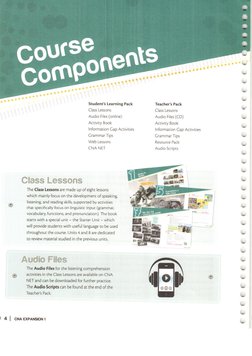
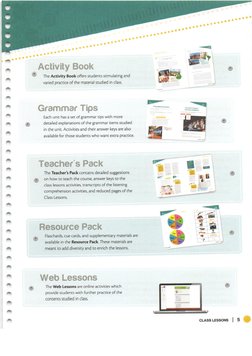
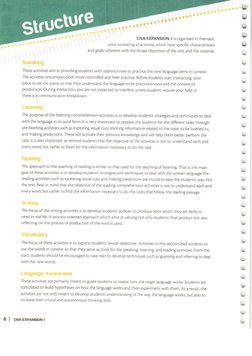
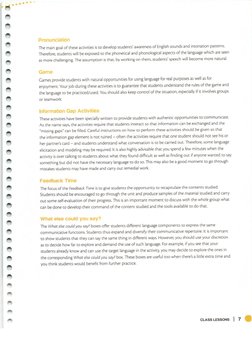
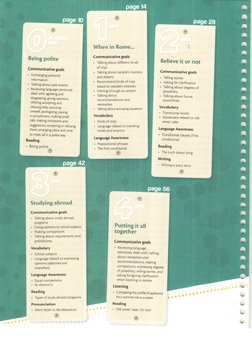
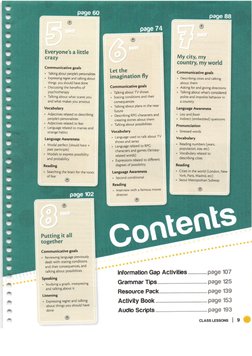
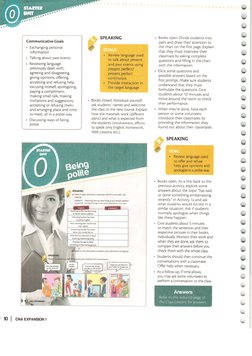
You might also like
- CNA Progression 2 - Pack de Provas - Type A82% (11)CNA Progression 2 - Pack de Provas - Type A14 pages
- Pre-Advanced 2 - Written Tests A e B - Gabaritos100% (8)Pre-Advanced 2 - Written Tests A e B - Gabaritos4 pages
- CNA Live Class - Intermediate 2 - CNA Progression 2 - Activity Book - Unit 1100% (2)CNA Live Class - Intermediate 2 - CNA Progression 2 - Activity Book - Unit 13 pages
- Pre-Advanced 2 - Final Written Test - Tipo B75% (8)Pre-Advanced 2 - Final Written Test - Tipo B6 pages
- GABARITO Advanced 1 - Midterm Written Test - Type A - Answer Key100% (2)GABARITO Advanced 1 - Midterm Written Test - Type A - Answer Key1 page
- Pre-Advanced 1 - Midterm Written Test - Tipo B100% (2)Pre-Advanced 1 - Midterm Written Test - Tipo B4 pages
- Pre-Advanced 1 - Final Written Test - Tipo B100% (3)Pre-Advanced 1 - Final Written Test - Tipo B5 pages
- Pre-Advanced 1 - Espansion 1 - Final Oral Test100% (1)Pre-Advanced 1 - Espansion 1 - Final Oral Test4 pages
- Midterm Oral Test: Adventures & House Renting100% (1)Midterm Oral Test: Adventures & House Renting4 pages
- CNA Live Class - Intermediate 2 - CNA Progression 2 - Activity Book - Unit 250% (2)CNA Live Class - Intermediate 2 - CNA Progression 2 - Activity Book - Unit 23 pages
- CNA Live Class - Master in English 1 - New CNA Platinum 1 - Activity Book - Unit 1No ratings yetCNA Live Class - Master in English 1 - New CNA Platinum 1 - Activity Book - Unit 13 pages
- CNA Fast 3 - Midterm Written Test - Type B - 1No ratings yetCNA Fast 3 - Midterm Written Test - Type B - 16 pages
- New Cna Platinum 1 Final Written Test - Type A Answer Key: Eading and Se of Nglish Istening Ctivity100% (2)New Cna Platinum 1 Final Written Test - Type A Answer Key: Eading and Se of Nglish Istening Ctivity1 page


