Independent Royal Navy news and analysis

The evolution of UK nuclear submarine reactors and Rolls-Royce’s central role
Rolls-Royce Submarines is expanding its reactor production and workforce to support the Royal Navy’s next generation of nuclear submarines and the AUKUS partnership. This technical briefing outlines the evolution of UK naval reactor design, the company’s central role, and the growing industrial effort at Raynesway.
Royal Navy evaluates rotary wing UAS for anti-submarine warfare role
Certo Aerospace successfully demonstrated ASW detect, locate and track capabilities to the Royal Navy using the Capstone rotary wing UAS. The trial highlights how uncrewed systems could play a more significant role in extending the RN’s reach in the underwater battlespace.
Practical, scalable and proven – Oceanus medium-sized uncrewed surface vessels
Zero USV’s Oceanus12 has moved from concept to credible operational platform, with a larger 17-metre variant now in development. For the Royal Navy, the question is no longer whether such vessels work, but how they might be integrated into operations alongside existing and future warships
Royal Navy demonstrates enduring skill deterring a Russian undersea operation
Specialist Russian submarines have been detected operating in and around British waters, prompting a coordinated response to track and deter potential threats to critical infrastructure.
Royal Navy monitors shadow fleet vessels but Russian naval escort complicates boarding dilemma
Royal Navy warships and aircraft have been activated repeatedly in recent days to monitor Russian naval activity in UK waters, reflecting a sustained increase in traffic through the Channel and North Sea at a time of heightened tension over sanctions enforcement.
The Royal Navy’s reputation takes a battering
Among other scattergun criticisms of the UK, President Donald Trump has said: “You don’t even have a navy. You’re too old and had aircraft carriers that didn’t work.” Here, we consider how his remarks contain elements of truth, but the wider picture is more nuanced.
Royal Navy personnel numbers increase, but experienced strength declines
RN recruitment continues to show signs of recovery, but the latest MoD figures underline a more stubborn problem – a further decline in trained strength that is eroding frontline effectiveness.
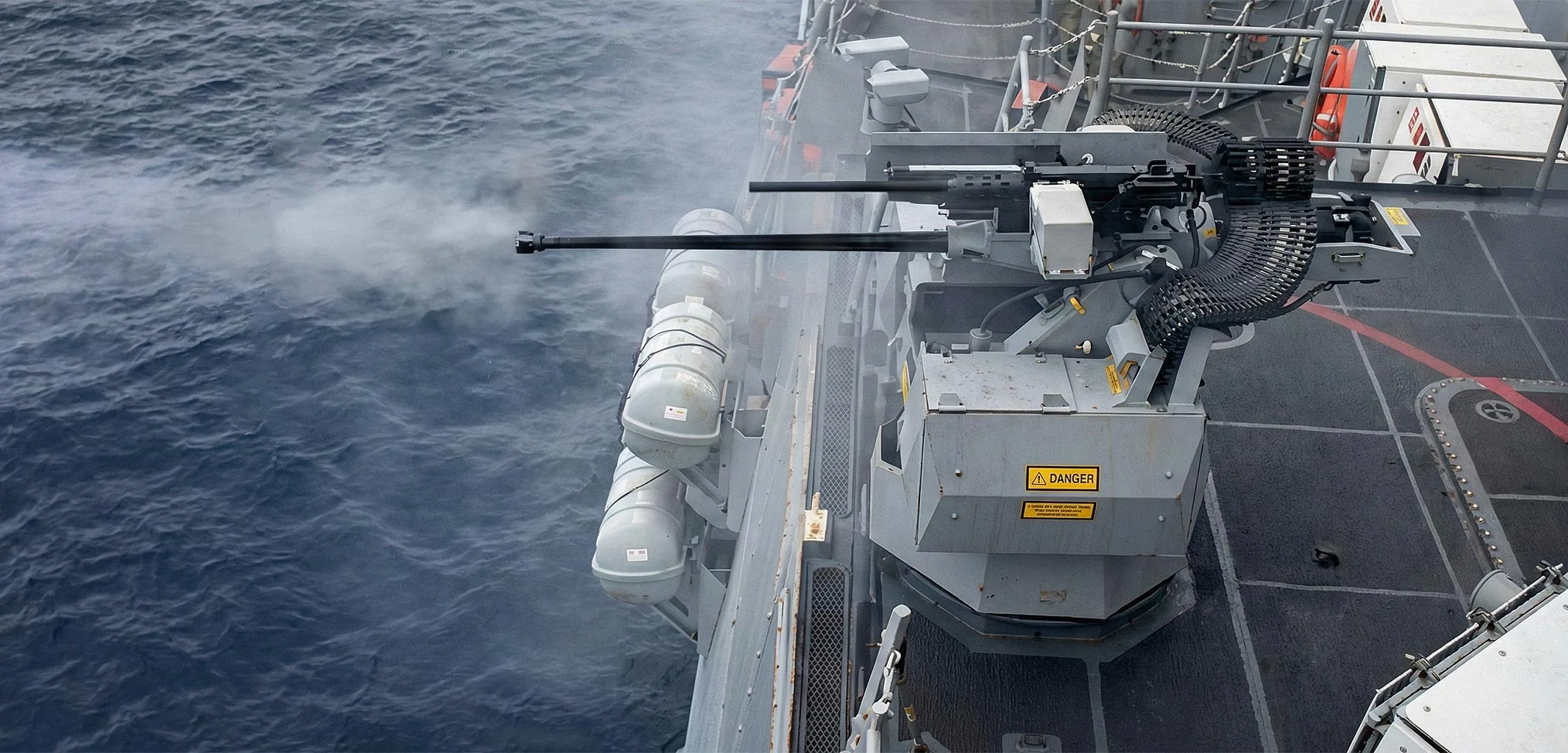
In focus: MSI-DS sovereign UK medium calibre gun mount development
MSI Defence Systems has provided the Royal Navy with lightweight, automated weapon mounts that have become a standard feature across much of the fleet. As a sovereign UK capability with a consistent export record, the company provides adaptable gun systems that bridge traditional close-range defence and the growing demands of countering asymmetric and uncrewed threats.
Royal Navy accelerates shift to uncrewed ocean data gathering
The RN has signed a contract with Teledyne Marine for advanced uncrewed sensing systems. The move signals further momentum behind the transition from traditional survey ships to distributed, persistent data gathering across the North Atlantic and beyond.