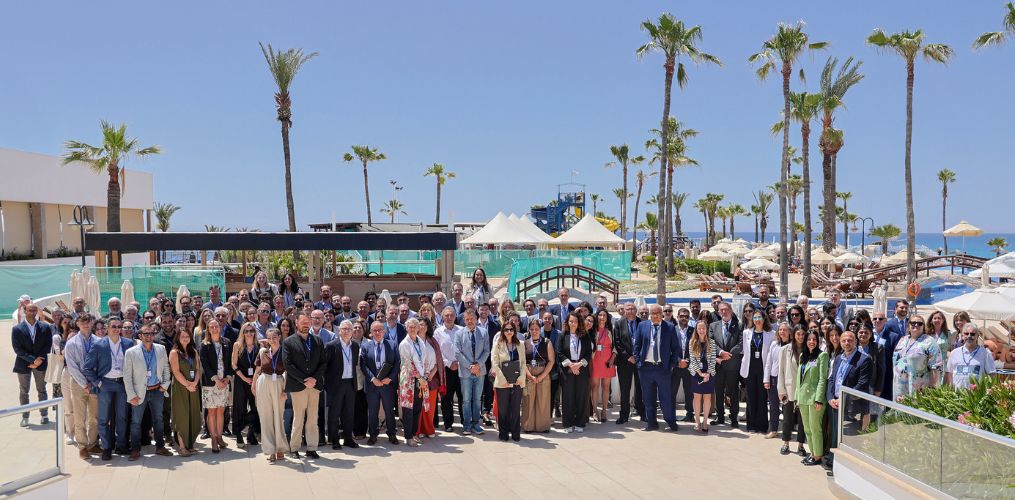
Sign the Crete Declaration
Download it here
for the scientific community
the e-Science Infrastructure for
Biodiversity and Ecosystem Research
Metadata Catalogue
of Resources & Services
Access and use the resources and services for biodiversity and ecosystem researchers made available through our catalogues.
RESTORE4Cs Policy Briefs #6 and #7: Coastal Wetlands Indicators and Social Acceptability
The RESTORE4Cs project has published two more Policy Briefs that add to the 5 previously published by the consortium: https://www.restore4cs.eu/resources/policy-briefs/. Policy Brief #6 "European Coastal Wetland Indicators: A proposal for monitoring policy processes across space and time", offers a practical approach to track the status, trends, and policy performance of Europe's coastal wetlands. In fact, despite covering less than 0.6% of the European landscape, coastal wetlands provide important benefits to the environment, such as carbon storage, protection from storm, regulation of water flows. They also filter pollutants, and support a diversity of threatened species. In order to protect and preserve...
WoRMS Top Ten Marine Species of 2025: nominations open!
WoRMS, the World Register of Marine Species, opens again the nominations for the Top Ten Marine Species of 2025, with the objective to highlight to the wider public the discovery of numerous new marine species made every year, and the crucial job of taxonomists. In fact, the release of the list coincides with the World Taxonomist Appreciation Day, 19 March. The 2024 edition winners spanned the tree of life, from worms to isopods to anglerfish (learn more here: https://www.marinespecies.org/worms-top-ten/2024). This year, nominations will be collected via this online form: https://form.vliz.be/en/form/worms-top-ten-2025-nomination. In order to be eligible for nomination, the species must...
New paper analyses patterns and drivers of subterranean biodiversity hotspots
LifeWatch Slovenia members Magdalena Nǎpǎruş-Aljančič and Tanja Pipan (Karst Research Institute - ZRC SAZU) co-authored a new, open-access article in BioScience, titled "Patterns and Drivers of Subterranean Biodiversity Hotspots across the Globe". The study maps global subterranean biodiversity hotspots, highlighting the exceptional richness of the Dinaric Karst. In fact, the extreme environment of caves hosts a surprising number of aquatic and terrestrial species that are highly specialised for these habitats: no eyes and pigments, elongated appendages, elaborate extraoptic sensory structures make these species unique in the world, and extremely rare. Starting from recently published lists of such invertebrate and vertebrate cave-limited species, the researchers mapped hotspots of...
From science to society: Marine SABRES in Fairs lands in Pisa
Marine SABRES in Fairs will make its next stop in Pisa on 14 January 2026, bringing the project’s results and resources to the University of Pisa. The initiative aims to engage students, researchers, and citizens in exploring how Marine SABRES connects science, policy, and society to protect marine ecosystems and foster a sustainable blue economy. The event will take place within the third round of stakeholder consultations, hosted by the Marine SABRES project and organised by HuFoSS (Hummel Foundation for Sustainable Solutions) and the University of Pisa. The meeting represents an important moment of dialogue with local actors and experts,...
How to turn data into impact: meet LifeWatch ERIC’s new CTO – Part two
In November 2025 LifeWatch ERIC welcomed its new Chief Technology Officer, Anne Fouilloux, to guide its technological strategy and ensure alignment with global advances in biodiversity and ecosystem research across Europe. In this second part of our two-part interview, we asked her about her vision on how to turn data into impact, and how to break down silos and enable cross-discipline, cross-border collaboration. If you missed it, you can read Part 1 here, where we focused on Anne’s experiences that shaped her work, real-life examples from her previous roles, and how these influence her approach as CTO. Anne, you once...
Tracking sharks in the North Sea
Researchers from the Flanders Marine Institute (VLIZ) and the Research Institute for Agriculture, Fisheries and Food (ILVO) are tagging sharks in the Belgian part of the North Sea to gain insights on their habits. With the support of LifeWatch Belgium and the European Tracking Network (ETN), data gathered through this work might help guide targeted protection and management actions. By implanting small acoustic transmitters into sharks, researchers are in fact able to track their movements across borders (read this article to see how ETN makes cross-borders science possible). Moreover, they use other techniques such as ultrasound, underwater video systems, and...
“Fish Don’t Know Borders”: how LifeWatch Belgium’s ETN connects research across Europe
LifeWatch Belgium connects researchers in the field of acoustic telemetry through a collaborative network called ETN (The European Tracking Network). ETN allows them to share the outputs of acoustic receivers and follow animal movements from the rivers to the seas, drawing important insights on how marine life links ecosystems in European waters. This network, initially including just a few receivers along the Belgian coast, is now one of Europe's largest monitoring systems, involving more than 600 European researchers who track fish and other aquatic species in order to study their migration, and their movement across borders. Although the Permanent Belgian...
XII Ibero-American Congress on Science and Technology Indicators
On 25-26 November 2025, LifeWatch ERIC attended the XII Ibero-American Congress on Science and Technology Indicators in Montevideo (Uruguay). Julio Paneque, Principal Software Engineer, represented the Research Infrastructure and presented a tool developed within the framework of the EU-LAC ENERGYTRAN project, in collaboration with other infrastructures and scientific institutions. The tool monitors and assesses the progress of energy transition in EU and LAC countries, by calculating indexes based on publicly available datasets. It offers a transparent framework to track progress toward relevant SDGs, and supports evidence-based policymaking. A highly relevant topic for the congress, which is one of the region's...
Agroecology Partnership Meeting in Plasencia
On 11 November 2025, LifeWatch ERIC took part in the Meeting of Living Labs and Research Infrastructures in Agroecology, at the Centro de Agricultura Ecológica y de Montaña (CAEM–CICYTEX) in Plasencia (Spain), within the framework of the European Partnership for Agroecology (https://www.lifewatch.eu/agroecology-partnership). The meeting gathered Spanish members of the Partnership to share the progress of ongoing activities, present new joiners and introducing work packages starting in the second phase. It was also a chance to explore the ground for potential synergies and future collaboration opportunities. During the event, Iria Soto, Senior Scientific Manager at LifeWatch ERIC, facilitated the Working Table...
RESTORE4Cs releases two new Policy Briefs on wetlands restoration
The Horizon Europe RESTORE4Cs project has released its 4th and 5th Policy Briefs: Policy Brief #4: “Beyond public funds: diversifying financing for wetland restoration”, highlighting the urgent need to complement public funding with innovative financial instruments to ensure long-term wetland restoration in Europe. Policy Brief #5: "Advancing Policy Integration Across Mediterranean Countries: Aligning with the Barcelona Convention and International Commitments Through a Common Evidence-Based Strategy", promoting a harmonised set of indicators and metrics for evidence-based coastal wetlands protection strategies. These documents provide funding entities and policymakers with clear, well-summarised knowledge from real studies, helping them understand the importance of taking...
A conversation with Anne Fouilloux: meet LifeWatch ERIC’s new CTO
November 2025 marks an important transition for LifeWatch ERIC, with the arrival of its new Chief Technology Officer, Anne Fouilloux. In this role, Anne will guide the development of LifeWatch ERIC’s technological strategy and strengthen the organisation’s capacity to serve the biodiversity and ecosystem research community across Europe. We had the pleasure of sitting down with her for a conversation about her vision, and what she hopes to build together with our community. Anne brings over two decades of experience in Open Science, FAIR principles, and Research Infrastructures. She has dedicated her work to build seamless information flows connecting scientists,...
Deep Learning and marine recovery: the DTO-BioFlow project releases new study
What can 26 years of underwater video recordings tell us about climate change and human pressures on the sea? Researchers from the University of Gothenburg's Tjärnö Marine Laboratory have analysed footage from Sweden's Kosterhavet National Park, the first marine national park in Sweden, to get a clearer understanding of the rapid transformations that marine ecosystems are undergoing. Spanning over 26 years, this analysis has great potential to show us how human and climate influence are literally reshaping the sea floor. The study, published in the Ecology and Evolution journal, has been funded by the DTO-BioFlow project. DTO-BioFlow is a Horizon...
LifeWatch ERIC at TICAL 2025: Sustainable Science and Strategic Alliances
LifeWatch ERIC took part in TICAL 2025, the annual conference of the RedCLARA organisation in San José, Costa Rica (November 11–13, 2025), where leaders from digital research infrastructures, academia, and innovation networks from across Latin America and Europe exchange experiences of sustainable collaboration. Maite Irazábal, Scientific Coordination Support, and Christos Arvanitidis, CEO, contributed with talks and panel discussions to this year's conference theme “Innovation that Transforms”. Maite Irazábal presented “FAIR Tools for Assessing the Environmental Impact of Energy Transition Policies”, in the framework of the EU–LAC EnergyTran project. These prototype tools support evidence-based policymaking in the context of the energy...
The Crete Declaration published on RIO – Research Ideas and Outcomes Journal
The Crete Declaration (https://www.lifewatch.eu/crete-declaration) is a Declaration of Intent signed on 30 June 2025, on the occasion of the BEeS 2025 Conference, during the “Working Table on Life component of the Biosphere: Complementarities and Synergies”. The event gathered European Research Infrastructures (RIs), projects and organisations with the common goal of exploring shared solutions to today’s global challenges. Coordinated by LifeWatch ERIC, the signing of the Crete Declaration followed the Working Table's objective of defining a collaborative roadmap among the parties. Their shared ambition is to advance the One Health approach, a strategy to optimise the health of people, animals, and...
Underwater marine sounds from the Belgian part of the North Sea: meet SoundLib
The Flanders Marine Institute (VLIZ), has launched SoundLib, its Marine Sound Library collecting underwater sound data from the Belgian part of the North Sea. The open database counts thousands of recordings and advanced analysis tools, and provides new insights into the region's highly dynamic and complex acoustic environment. These data could support scientists, policymakers and the public in understanding how natural and human-made sounds affect marine ecosystems and even create new opportunities for AI-driven research. The database also contributed to the Waves of Resonance artistic project in June (https://www.lifewatch.eu/2025/09/25/waves-of-resonance), that explores the psychological impact of climate change and the therapeutic...
RESTORE4Cs Policy Briefs #6 and #7: Coastal Wetlands Indicators and Social Acceptability
The RESTORE4Cs project has published two more Policy Briefs that add to the 5 previously published by the consortium: https://www.restore4cs.eu/resources/policy-briefs/.…
WoRMS Top Ten Marine Species of 2025: nominations open!
WoRMS, the World Register of Marine Species, opens again the nominations for the Top Ten Marine Species of 2025, with…
New paper analyses patterns and drivers of subterranean biodiversity hotspots
LifeWatch Slovenia members Magdalena Nǎpǎruş-Aljančič and Tanja Pipan (Karst Research Institute – ZRC SAZU) co-authored a new, open-access article in BioScience, titled “Patterns and Drivers of Subterranean…
From science to society: Marine SABRES in Fairs lands in Pisa
Marine SABRES in Fairs will make its next stop in Pisa on 14 January 2026, bringing the project’s results and…
How to turn data into impact: meet LifeWatch ERIC’s new CTO - Part two
In November 2025 LifeWatch ERIC welcomed its new Chief Technology Officer, Anne Fouilloux, to guide its technological strategy and ensure…
Tracking sharks in the North Sea
Researchers from the Flanders Marine Institute (VLIZ) and the Research Institute for Agriculture, Fisheries and Food (ILVO) are tagging sharks…
"Fish Don't Know Borders": how LifeWatch Belgium's ETN connects research across Europe
LifeWatch Belgium connects researchers in the field of acoustic telemetry through a collaborative network called ETN (The European Tracking Network).…
XII Ibero-American Congress on Science and Technology Indicators
On 25-26 November 2025, LifeWatch ERIC attended the XII Ibero-American Congress on Science and Technology Indicators in Montevideo (Uruguay). Julio…
Agroecology Partnership Meeting in Plasencia
On 11 November 2025, LifeWatch ERIC took part in the Meeting of Living Labs and Research Infrastructures in Agroecology, at…
RESTORE4Cs releases two new Policy Briefs on wetlands restoration
The Horizon Europe RESTORE4Cs project has released its 4th and 5th Policy Briefs: Policy Brief #4: “Beyond public funds: diversifying…