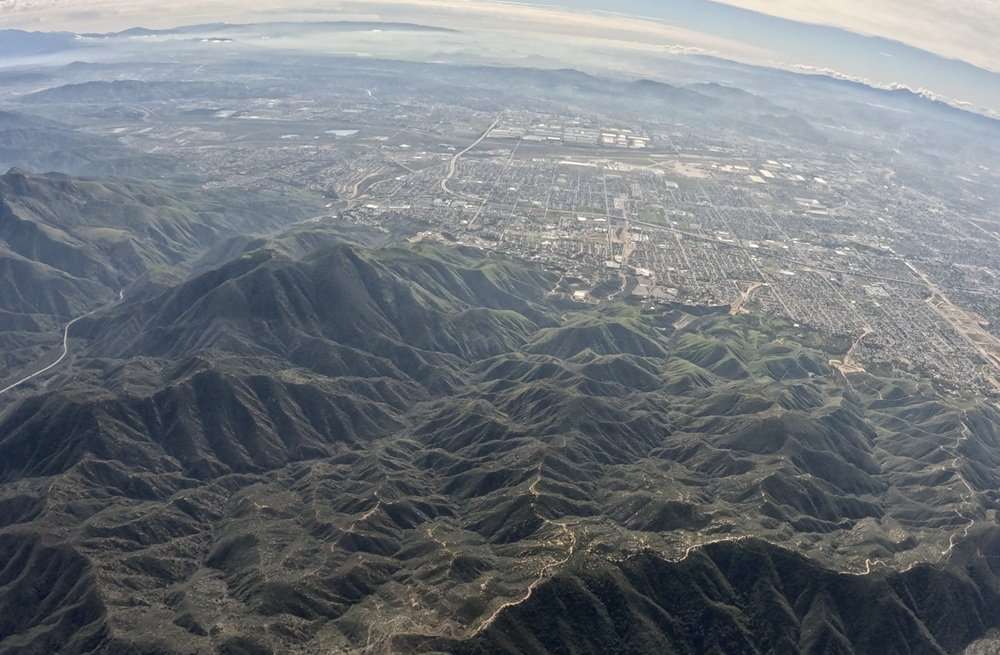
Most Californians will never see them. They don’t linger by scenic turnout or trailheads. They don’t pose for photos.
But deep in California’s most remote public lands — our roadless forests, high alpine basins, and rugged desert ranges — elusive wildlife survive because those places are still natural landscapes, open and undeveloped.
Gray wolves. Sierra Nevada red foxes. Mountain lions.
Their stories are different. But they share one thing in common: they depend on large, intact public lands — the very landscapes CalWild works to protect.
The Return of the Gray Wolf

In the 1920s, wolves native to California were pushed out. Even a decade ago they were almost entirely absent from our ecosystems.
Now, they’re back. And continuing to move south.
It started with OR-7 in 2011, the male gray wolf from Oregon. And, while growing slowly, our efforts to protect habitat have helped wolves gain a foothold in our ecosystem.
In November of 2025, California wildlife officials confirmed the existence of a new wolf pack in southern Plumas County, making a total of 10 packs established in Northern California. In February a lone “dispersing male” wolf was seen near Castle Peak around Truckee — a place CalWild worked to protect. In the 1970s and 1980s we fought Forest Service proposals to build new roads and off-road vehicle routes in Castle Peak. It is also the only place a wolverine has been sighted in California in recent memory.
And this year, the first female wild wolf to venture into Los Angeles County in nearly a century showed up near a forest service recommended wilderness area.
In the last decade, wolves have traveled hundreds of miles across national forests and remote public lands to find territory. Wolves require vast landscapes with minimal road density, healthy prey populations, and room to roam.
Even in a time where our public lands are under the greatest attack in recent memory, the recovery of wolves in California reminds us that nature can bounce back when we do the right things.
The Ghost of the High Sierra: Sierra Nevada Red Fox
 If wolves are comeback stories, the Sierra Nevada red fox is a tale of survival with happy news just this month.
Once thought to be nearly extinct in California, this high-elevation subspecies persists in tiny, isolated populations around Sonora and Ebbetts passes and Lassen Volcanic National Park. These foxes live above 7,000 feet — in wilderness areas, roadless national forest lands, and other protected alpine meadows, subalpine forests, and snowy volcanic slopes — many of which CalWild has fought hard to protect over its 50 years.
Few people have seen a Sierra Nevada red fox in real life. Many sightings come from remote wildlife cameras placed deep in public lands. In fact, this month near Mammoth Lakes marks the first time the California Department of Fish and Game has captured, fitted with a GPS-tracking collar and released a Sierra Nevada red fox in the Sierra Nevada, inspiring our team to double down on the fight to protect the Roadless Rule and stop public lands selloffs in regions like this.
The Cougar Next Door — and the Ones Farther Away

Powerful, solitary, and adaptable, mountain lions (or cougars) need space.
While just this year in Northern California, cougars have appeared in places as unlikely as the city of San Francisco, a single male can roam across hundreds of square miles. Many use public lands CalWild has long fought to preserve—connected landscapes that allow the cats to hunt, disperse, and maintain healthy populations.
Mountain lion populations of the Central Coast and Southern CA are now officially protected under the California Endangered Species Act due to dangerously low genetic diversity and habitat fragmentation.
But strongholds remain in large, intact public lands — from the Los Padres National Forest to the Sierra Nevada to remote desert mountain ranges. Yet, in the last month, CalWild and supporters have been forced to step up to fight new oil and gas drilling proposals in the Los Padres.
When we chip away at these lands — through road building, development, or unsustainable logging — we don’t just lose scenery. We shrink the territory of animals that require room to survive.
Protecting the Places They Depend On
When you defend roadless areas, challenge poorly planned logging, push back on public land selloffs, or advocate for stronger protections under the Endangered Species Act, we’re not just protecting land on a map.
We’re protecting the possibility of wildness.
You may never see any of these creatures.
But because these public lands remain, so do the animals that rely on them. Thanks to you.