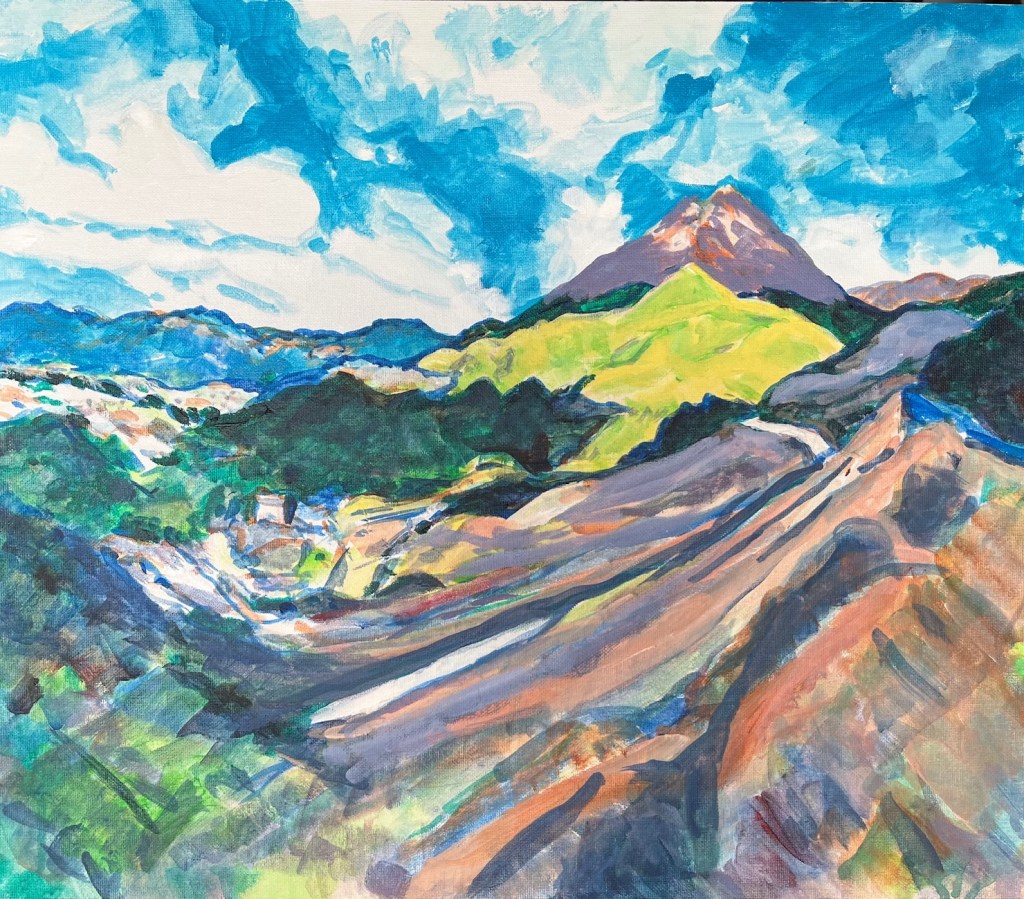
Mountains of Japan

World Haiku Review, Spring 2025

These ten paintings are by Susumu Takiguchi.

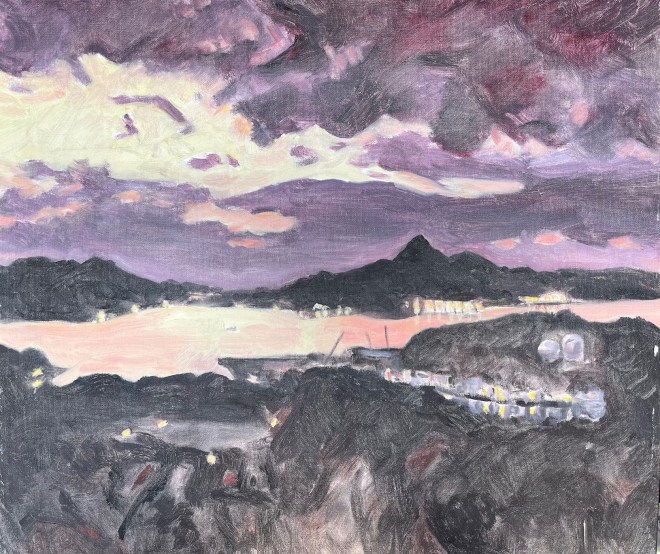
Mt Asaki on a Stormy Evening

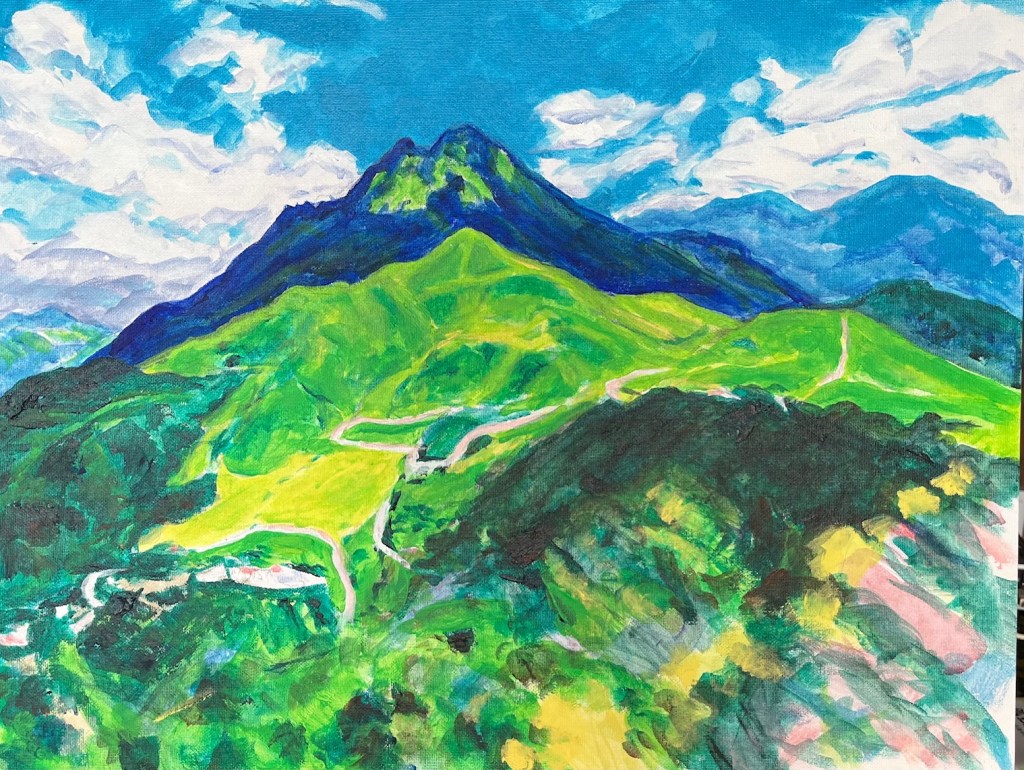
Mt Yufu Early Summer

Mt Yufu Mountain Paths

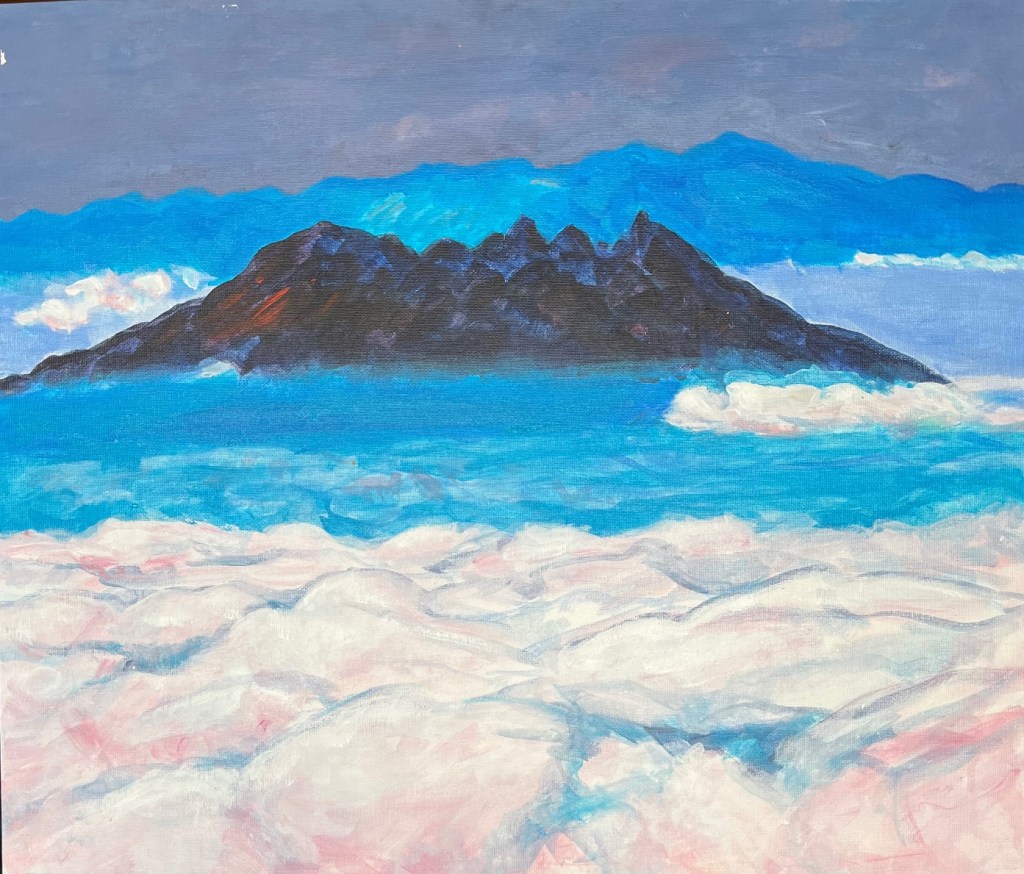
Mt Fuji Above the Clouds

Mt Aso Nekodake

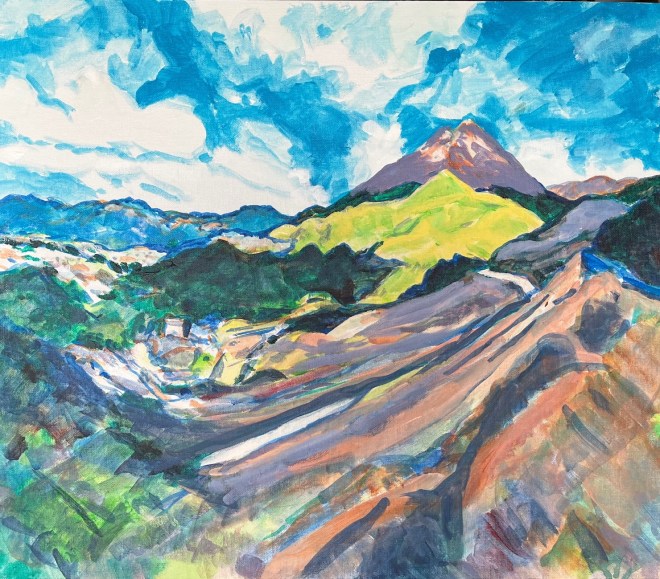
Mt Aso in Morning Sun

Mt Akasaki in Storm

Mt Fugendake Nagasaki

Mt Akasaki in Sasebo

Mt Aso Nekodake Autumn

WHR 2025 – Vanguard Haiku

World Haiku Review Spring 2025

Mt Aso in Morning Sun – painting by Susumu Takiguchi

Vanguard Haiku

First Place


dusty attic trunk …
the parts of mother’s heart
never open to me

Chen-ou Liu

Second Place


street lights
dancing with ghost
a bomb-ripped village

Iliyana Stoyanova

Third Place


war zone …
I roam the streets today
looking for the past

Subir Ningthouj

Seven Honourable Mention

(in no particular order)


draped over his lawn
a pall of leaves undisturbed
by the gardener’s death

Maxine Kim Green

still attached
to the old days
a watch on a chain

Ernest Wit

hospice visit—
on the window
my reflection

Meera Rehm

city park
a policeman and a bird left
a note on my car
 
Slobodan Pupovac


when he smiles
the rest of his face
joins in


Owen Bullock

old movies
how much younger
they look now

Joshua St. Claire


front line
from both sides
human voices

Vladislav Hristov

WHR 2025 – Shintai Haiku

World Haiku Review Spring 2025

Mt Akasaki in Storm – painting by Susumu Takiguchi

Shintai Haiku

First Place


visiting a friend
my second cup of tea
bitter and cold

Elisa Theriana


Second Place


the roads 
that I didn’t take 
moonlit night

Maria Concetta Conti

Third Place


not because of winds— 
March comes in like a lion 
with a tariff war 

Priscilla H. Lignori

Seven Honourable Mention

in no particular order


too soon
      for white lilies… 
                    baby’s last breath

Julie Ann Espinoza


night blooming jasmine 
the hint of love
he leaves in her hair

Brijesh Raj


Winds may roar on
mountains and whisper to willow trees,
but only poets hear them sing  

Richard West


daydreaming 
among blossoming cherries
the empty wheelchair


Natalia Kuznetsova

 
the last station…
not enough linden blossoms
to fill our silence

Steliana Cristina Voicu


I hold your hand
and even as the day shortens
you hold mine

Kristina Todorova

war cemetery
withered flowers
on young soldiers’ graves

Eufemia Griffo

WHR 2025 – Neo Classical Haiku

World Haiku Review Spring 2025

Mt Yufu mountain paths – painting by Susumu Takiguchi

Neo Classical Haiku

First Place

sidewalk cracks a smile for the daisies

Edward Cody Huddleston

Second Place


faith in humanity –
from the ashes of war
dandelions sprout

Paul Callus

Third Place


spring morning
I inhale
the chirping of birds

Fatma Zohra Habis

Seven Honourable Mention


the camellia, the plum —
almost out of, almost into
spring.

Marie Shimane


breaking through hard ground
like acts of love sometimes do—
purple crocuses 

Priscilla H. Lignori


collapsed building
the rubble covered
with cherry petals


Iliyana Stoyanova

 
war’s end
   both sides surrender
to cherry blossoms


Lev Hart


keeping us all
in suspense
camellia buds

David Jacobs

 
power outage –
the spring stars are
visible now

Tomislav Maretić


some hear the bees hum
while others see the blossoms —
spring remains the same

Kristina Todorova

WHR 2025 – Editors Choice

World Haiku Review Spring 2025

Mt Fuji Above the Clouds – painting by Susumu Takiguchi

Editors Choice


sidewalk cracks a smile for the daisies


Edward Cody Huddleston

 
Let me come clean from the outset that I do not normally value a one-liner as a useful haiku form. This one by Huddleston is therefore definitely an exception.

Why do I not think much of one-line haiku? First and foremost, I simply have not encountered any examples of it worth even glancing at since early 2000s, except for some rare freak occurrences, say 7 or 8 on a scale from 1 to1000. It would be easier to prospect for a gold nugget. This empirical evidence has been more than enough to put me right off this practice. It also serves as proof that my view is not based on prejudice or lack of experience judging from the vast number of one-liners I have had to read for the last 25 years.

Another simple reason for my rejection is the fact that so many one-liners are no more than simply putting three liners into one. The reader still has to do an irksome job of working out the invisible breaks to try to make sense of the poem. This hinders his/her comprehension, let alone appreciation. Breaking up a one-liner into (usually) three independent/interdependent parts and reading them again and again to try to understand the surface and in-depth meanings is after all not much different from a three-liner. What then is the point? The same can and do make it difficult for the reader to appreciate kireji if there is one in the one-liner.

So, why have we started to be bothered about one-liner haiku? An innocent and naïve answer could be that some non-Japanese poets looked at (printed) haiku written by the Japanese and concluded wrongly that English haiku should also be written in the one-line format to look like the genuine Japanese haiku, or to look unlike traditional English poems (which is constructed in lines). There was a ‘cult’, or linguistic sensor around the early part of the 2000s among American-led haiku leaders to reject in English haiku anything, even a hint, which reminded them of traditional English poems. In the formal, or traditional formats especially artistic ones, the Japanese haiku have rarely been written in one line but in two, three, four or even ten lines

To write haiku in the three-line format is undoubtedly one of the greatest achievements of English haiku and early pioneers who invented it cannot be praised enough. It has many advantages which have helped the development of English haiku and which the readers of this magazine hardly need to be told. It is therefore very difficult to beat it as a haiku form, which probably sealed the fate of the one-liner haiku in the estimation of this editor. There are other reasons why the one-line haiku is not recommended, which shall not detain us here.

So, back to the haiku of the Editor’s Choice. Its first impact is the good visual effect. Daisies are found everywhere in the world and have universal popularity, causing immediate fondness in the observers’ heart. Sidewalk (pavement in British English) is also a universal feature and closely connected with people’s daily life, a very apt thing for haiku-writing, including familiar damages to it such as unrepaired potholes or swell caused by trees’ root systems. The combination of the two gives the haiku unmistakeable sense of familiarity, warmth, humour, brightness and joy of the arrival of spring. Good choice of words makes it flow naturally and read well without causing awkward hindrance to comprehension so common in one-line haiku. One’s understanding of the haiku is instant and clear. Three liner would have made it less so.

This haiku is an extremely rare and shining example that one-line haiku can sometimes strike gold but it is still more akin to a miracle than to a routine occurrence.


WHR Spring 2025

World Haiku Review Spring 2025

Mt Akasaki on a stormy evening, painting by Susumu Takaguchi

Contents

Editorial – on this page

Editors Choice Haiku

Haiku page 1 – Neoclassical

Haiku page 2 – Shintai

Haiku page 3 – Vanguard

Haibun

100 Haijin – part 13, Akutagawa Ryunosuke

Mountains of Japan – paintings by Susumu Takiguchi

Editorial

Quality, quality, quality!


The World Haiku Review has held quality as its supreme guideline since its inception in 2000. Around that time haiku was in a state of flux with conflicting views, different schools of thought and even an altercation which was by no means infrequent. It was a noisy and chaotic place where misconceptions and biased dogmas rubbed shoulders with well-researched views and knowledgeable remarks. My hope was that it was creative chaos in disguise from which true haiku would find its place of honour in the end.

 
In the chaos described above, there were so many mutually exclusive beliefs and opinions in terms of such questions as the definition of haiku, the difference or otherwise between haiku and senryu, the concepts of kireji, toriawase, kigo, hai-i (haiku spirit) , etc., that to try and find the meeting of minds among dissenting voices was a non-starter. Hearing all these disagreeing voices, the WHR realised early on that to continue to be involved in these polemics which were often pointless, superficial, misleading or plain mistaken, was simply a gross waste of time. As a result, all the restrictions for submitting works to WHR for example were practically removed and the only criterion that has remained to this day is none other than ‘quality’. 

The relentless drive for higher quality has generated yet another drastic measure starting from this WHR issue of discontinuing the ‘Zatsuei’ (haiku of merit) section from all three haiku categories (the Neo-classic, Shintai and Vanguard), leaving only the best three and seven honourable mentions for each category, i.e. the best 30 in all three categories from the vast number of submissions.

The ‘Zatsuei’ was a very popular feature but now had to be abolished in the interest of achieving even higher quality. Ascthe number of poems published on WHR will thus be radically reduced, there i now much less chance for poets to have their work selected and published in WHR with extremely narrow gate through which only exceptionally superb haiku poems can pass. But people should not be discouraged by it. It is more challenging for them to try but much more rewarding if they are successful. On their own part they only have to double or triple their effort to raise their work’s quality. That way, poets and WHR will mutually try to raise the quality constantly and surely. Who would oppose to the enhancement of quality?

This measure must not be construed as ‘elitist’. On the contrary, relatively unknown poets or even beginners often have produced amazing haiku poems while the so-called seasoned or famous poets are known to have submitted what can only be described as ‘mediocre’. 

Overall, it is a good thing to happen and I am convinced that in time it will prove to be a powerful tool to improve the standards of haiku-writing world-wide and thereby to deepen people’s love for haiku. 

 Susumu Takiguchi


Spring 2025 Issue

We are back and submissions are now open for the Spring 2025 Issue

Deadline – Monday 31 March 2025 at 23:59 your local time.

Theme – HUMANITY” and/or any Seasonal Subjects at your northern or southern hemisphere location during spring (autumn) months

Here is the submissions call –

Dear Kuyu,

When the world goes crazy, we still write haiku. When fakes, aggression and destruction seem to prevail, we doggedly carry on writing haiku nonetheless. That’s the way not only can we remain sane, truthful and peaceful but also can preserve what’s left of human decency, creative joy and dignity. Haiku has little monetary value. It brings no conspicuous physical benefits. That is precisely its most precious asset…uselessness.

HAIKU POEMS IN ENGLISH OR IN ENGLISH TRANSLATION: TEN haiku poems which are inspiring, refreshing and exciting, and which have not been published or are not considered for publication elsewhere. Please make sure to send them to BOTH of the following addresses: [email protected] AND [email protected] (New site especially designed for WHR submissions). If you send them only to one address, they could get lost in the procedure. Also, please do not send them in attachments, which will not be opened for security reasons, but within the email text.

DEADLINE: Monday 31 March 2025 at 23:59 your local time.

SUGGESTED THEMES: “HUMANITY” and/or any Seasonal Subjects at your northern or southern hemisphere location during spring (autumn) months (These themes are not obligatory but shown here only as a suggestion). The only criterion for selection is quality.

Book Reviews have been discontinued for the time being.

The rest of the detailed guidelines can be found on the About page, HERE. Please read and follow them.

We wish to endeavour to present a unique haiku magazine which, while deeply rooted in tradition, is full of new ideas, innovative features or critical views. It will continue to aim at the highest standards and top quality.

Kengin to all,

Susumu Takiguchi
Managing Editor and Editor-in-Chief, World Haiku Review
Chairman, The World Haiku Club