
Tags
Causeway Lake Infant and Junior School, Express and Star, High Level Station, Labour Assembly Rooms, medal, Military Medal, Roland Elcock, Royal Scots, school records, Second World War, South Staffordshire Regiment, Victoria Cross, Wolverhampton Chronicle
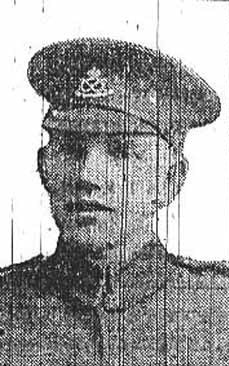 When an Express and Star journalist had the honour of conveying the news to Mrs Elcock that her son, Lance Corporal Roland Elcock, had just become the first and only Wolverhampton man to be awarded the Victoria Cross in World War One, she was “overjoyed at the good news”. However, it seems that the family had had some inkling of what was to come. In one of his recent letters home, he had written:
You ask me what I have been doing to get recommended again. Well, if I tell, you will fairly guess what I am going to get for it. So I will leave it till the decoration comes out. I am expecting the D.C.M., but, as rumours go in the battalion, I am in for the V.C. So I hope I get it.”
Obviously, his hopes came to fruition.
Roland Edward Elcock was born on 5 June 1899, and lived with his family at 52 Alma Street. He attended Causeway Lake Infant and Junior School 1902 – 1913. He then became a clerk at the Labour Assembly Rooms, Queen Square.

Causeway Lake Junior School Admission Register, D-EDS-149/7/1
Keen to be a soldier, he enlisted at the age of 15 years and 4 months, joining the South Staffordshire Regiment, seeing service in Egypt. He left after two years and worked briefly at the Corporation Electricity Works in Commercial Road. When he reached 18 in June 1917, he rejoined the Army, being transferred to the Royal Scots.
He first won the Military Medal, before his heroic actions in France earned him the Victoria Cross. On 13th October 1918 Acting Corporal Elcock single-handedly attacked an enemy gun position, putting it out of action and capturing five prisoners. Later the same day he attacked another enemy machine-gun, capturing the crew.
The full description of Lance-Corporal Elcock’s actions that earned him the Victoria Cross.
On Elcock’s return to Wolverhampton, he was greeted at the High Level Station by thousands of citizens, including the Mayor and other civic dignitaries. Described by the Wolverhampton Chronicle on 5 February 1919 as “modesty personified”, he “did not wish to talk about one of the most remarkable exploits of the war. He was content to let the official record speak for itself.” The streets were lined with cheering and waving, and people shaking Elcock by the hand. In response to the civic reception, Elcock stated, “I thank you very much for the way you have welcomed me home. Wolverhampton is my home, and I appreciate it very much. But in winning this great distinction, I have only done my duty to my King and country.”
He later achieved the rank of Major in the British Indian Army during World War II, dying at Dehra Dun, India, in October 1944.
Further details about Roland Elcock can be found here. Roland Elcock’s medal card and medal listing can be found at the National Archives.
 Wolverhampton's War