
Hello there, my name is Dariana. I am a computer science major, and I’ll be your SI leader for COP2500 with Professor Angell this Fall. I’ve been the SI leader for this class for 2 semesters now. I am also an international student, and I love going to, eating at, and buying stuff from Disney and Universal.
SESSIONS
| Day | Time | Location |
| Monday | 11:00AM-11:50AM | CB1 112 |
| Monday | 1:30PM-2:20PM | BA1 126 |
| Tuesday | 5:30PM-6:20PM | Zoom |
| Wednesday | 1:30PM-2:20PM | HS1 213 |
Remember, you can come to any session even if you haven’t attended before. I will also be posting some resources and study tips I like for learning Python.
TABLE OF CONTENTS
Fun Practice Problems
⊹₊ ˚ I challenge you to try these practice problems!
I’ll keep updating with more as the class moves forward. We can go over them together during SI sessions, along with any other problems you’d like to work on.
⊹₊ ˚ Math library/operators Kahoot!
loop tracing problems:
Practice problems after-midterm topics:
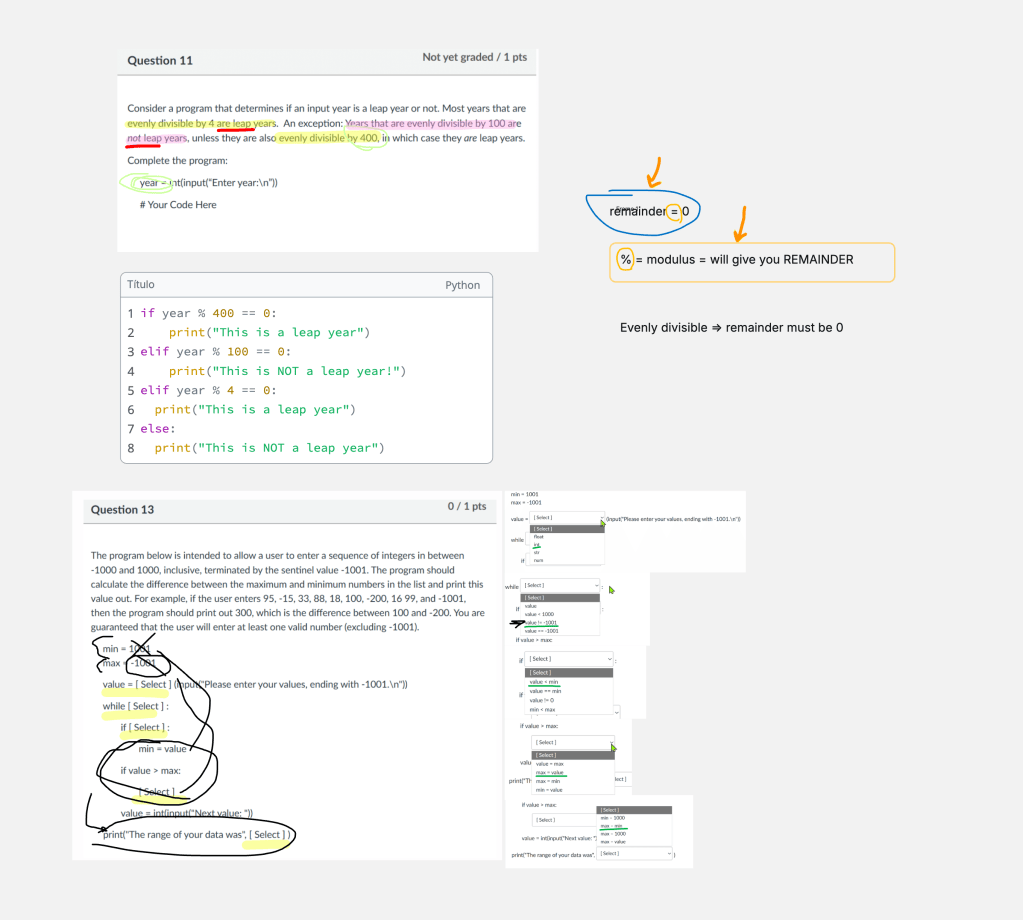
Function tracing problems:
Notes and guided examples
Cute guided function examples:


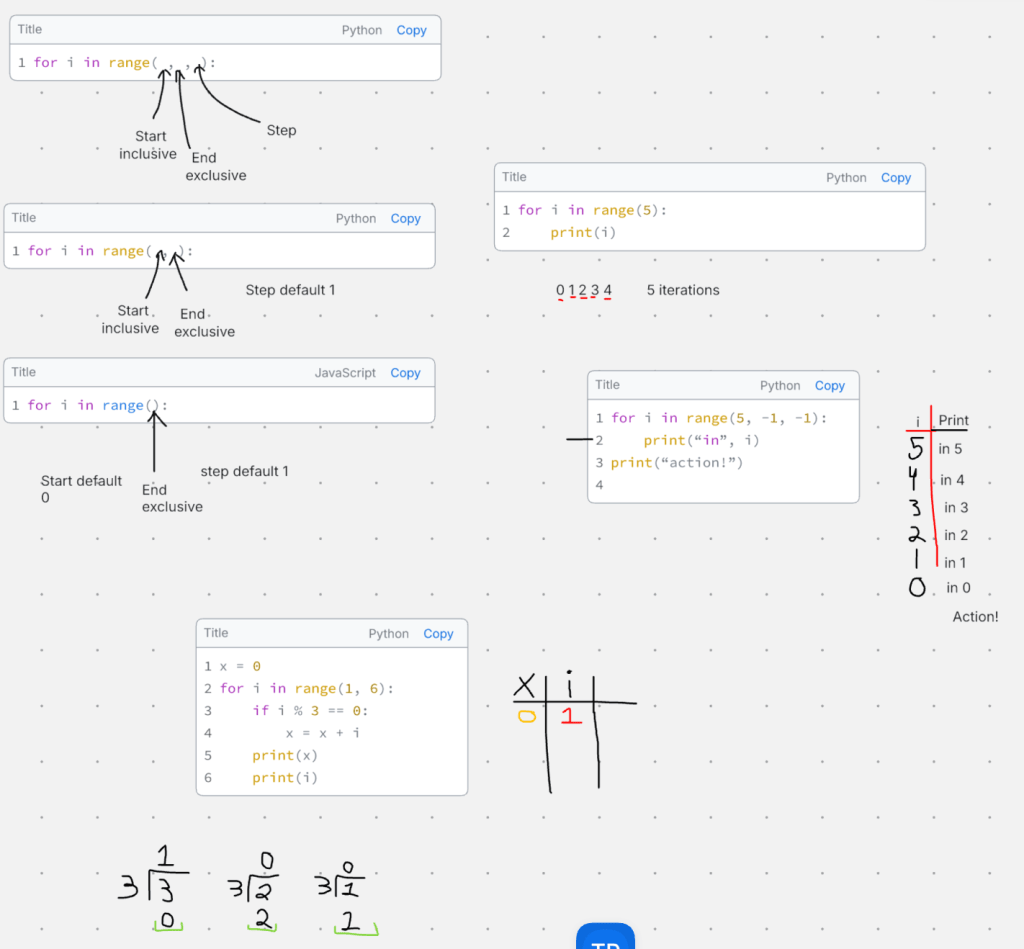
For loops range:
In-Session work
Click on the link to access the Colab document
In-Session work solutions
These are solutions to practice problems from sessions.
Click on a topic to see:
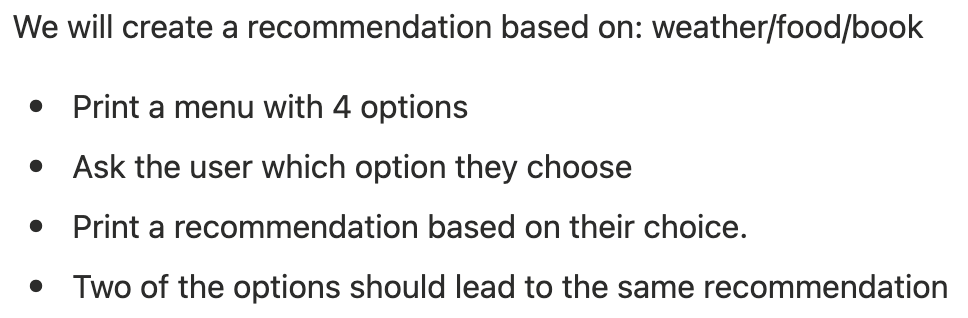
Instructions:
Solution:
#if statements group work Sept 16:print("Menu", "1- rainy", "2- sunny", "3- cloudy", "4- thunderstorm", sep="\n")num=int(input("What option do you choose?\n"))if num == 1 or num == 3: print("Your wet\n")if num == 2: print("Your not wet\n")if num == 4: print("You should be inside\n")
Instructions: Write a loop that produces the following output:
0 2 Checkpoint 1 8
for i in range(0,9,2):
  if i == 4 :
    print("Checkpoint 1")
  if i == 6:
    print("8")
    break
  if i!=4:
    print(i)
Instructions:

#solution for in session groupwork:
balloons = 15
pop = 0
while (balloons > 0):
  pop = int(input("How many balloons would you like to pop?\n"))
  if pop < balloons:
    balloons -= pop
    print(balloons,"balloons left")
  elif (pop == balloons):
    balloons -= pop
    print ("All the balloons are popped!")
  else:
    print("There aren't that many balloons!")

total = 0
for i in range (1,11):
  inches = int(input("How many inches did the frog jump?\n"))
  if (inches >= 20):
    print("Great jump!")
  else:
    print("Short jump!")
  total += inches
if total >= 200:
  print("The frog made it across!")
else:
  print("The frog fell into the pond!")
def combine(a, b):
return a + b
def process(x):
y = combine(x, 2)
print(y)
return y * 2
def main():
result = process(3)
print(result)
main()
Study tips
1-Practice a lot!!!! – Programming is just like learning another language. If you never use it, you will forget it. The more you practice, the more natural it will become for you.
2-Experiment as much as you can. – Wondering what happens if you delete a line, move things around, or add something new? Try it and see. Experimenting is one of the best ways to understand how your code actually works.
3- Break it into small steps – I know it can be overwhelming to figure out a whole complex problem. Start small and build up a step at a time.
4- Make it make sense to YOU!- There are so many ways to create a program, don’t think there is one “right answer”. Create with your own logic using what makes sense to YOU!
Resources
W3 Schools – Gives you concepts, tutorials and exercises.
Geeks for geeks – Gives you tutorials, coding challenges, and practice problems.
Python tutor – Helps you visualize what is happening in each line of your code.

