
The 2025 Academic Lab Management & Leadership Symposium
The course is organized by postdoc career development administrators from The Torrey Pines Training Consortium (TPTC), whose members include Salk Institute for Biological Studies, Sanford Burnham Prebys Medical Discovery Institute (SBP), Scripps Research, and UC San Diego.
$90 Early bird registration, ends January 31, 2025, after which registration cost increases to $125.
If you are affiliated with a TPTC institute, please contact your respective administrator to receive a separate discounted registration link.
The course is designed to equip postdocs and junior faculty in the biomedical, physical, and life sciences with the professional competencies to lead innovative and productive research programs. However, graduate students and research staff may also find this training informative and may attend. Additionally, the symposium will be held virtually this year, and we invite postdocs and graduate students from any institution.
Agenda
February 26 & 28 | March 3 & 5
Each event day is scheduled for 10:00am-2:00pm (PT) / 1:00pm-5:00pm (ET)
This virtual symposium will feature faculty from various institutions:
February 26, 2025
Developing Your Leadership Vision
Understand the importance of developing yourself as a leader with a unique vision and goals.
- Sandra Schmid | Chan Zuckerberg Biohub
Managing Communication & Conflict
Learn strategies for effectively leading a team through communication and conflict management.
- Diane Klotz | Sanford Burnham Prebys
- Malene Hansen | The Buck Institute of Aging
February 28, 2025
Fostering a Welcoming Community in Higher Education
Understand the importance of and fostering a welcoming and successful climate in higher education.
- Claudia Benavente | UC Irvine
- Jálin Johnson | Salk
- Michael Johnson | University of Arizona
March 3, 2025
Conducting Your Job Search
Learn strategies to successfully conduct an academic faculty job search.
- Sanjeev Ranade | Sanford Burnham Prebys
- Tsung-Ting Kuo | Yale
- Manisha Ray | Loyola University Chicago
Negotiating Your Academic Job Offer
Understand, evaluate and confidently negotiate a job offer.
- Jenna Hope | Drexel University College of Medicine
- Kristin Scaplen | Bryant University
- Mark Lawson | UC San Diego
- Siva Karthik Varanasi | U Mass Chan Medical School
Navigating Tenure
Gain knowledge about the organization and tenure process of a typical university.
- Amali Samarasinghe | University of Wisconsin
- Peter Iovine | University of San Diego
- Brandon Cox | SIU School of Medicine
March 5, 2025
Recruiting & Staffing Your Lab
Learn strategies to hire and retain effective lab personnel.
- Astrid Haase | NIDDK/NIH
- Danielle Grotjahn | Scripps Research
- Dmitry Lyumkis | Salk
Sustaining Your Lab
Understand initial budgets for operating an independent research lab.
- Gene Yeo | UC San Diego
March 24, 2025
Building an Effective Team
Learn strategies for managing/mentoring team members to successfully accomplish long-term research and career goals.
- Sandra Schmid | Chan Zuckerberg Biohub
- Luke Wiseman | Scripps Research
Speaker Biographies:
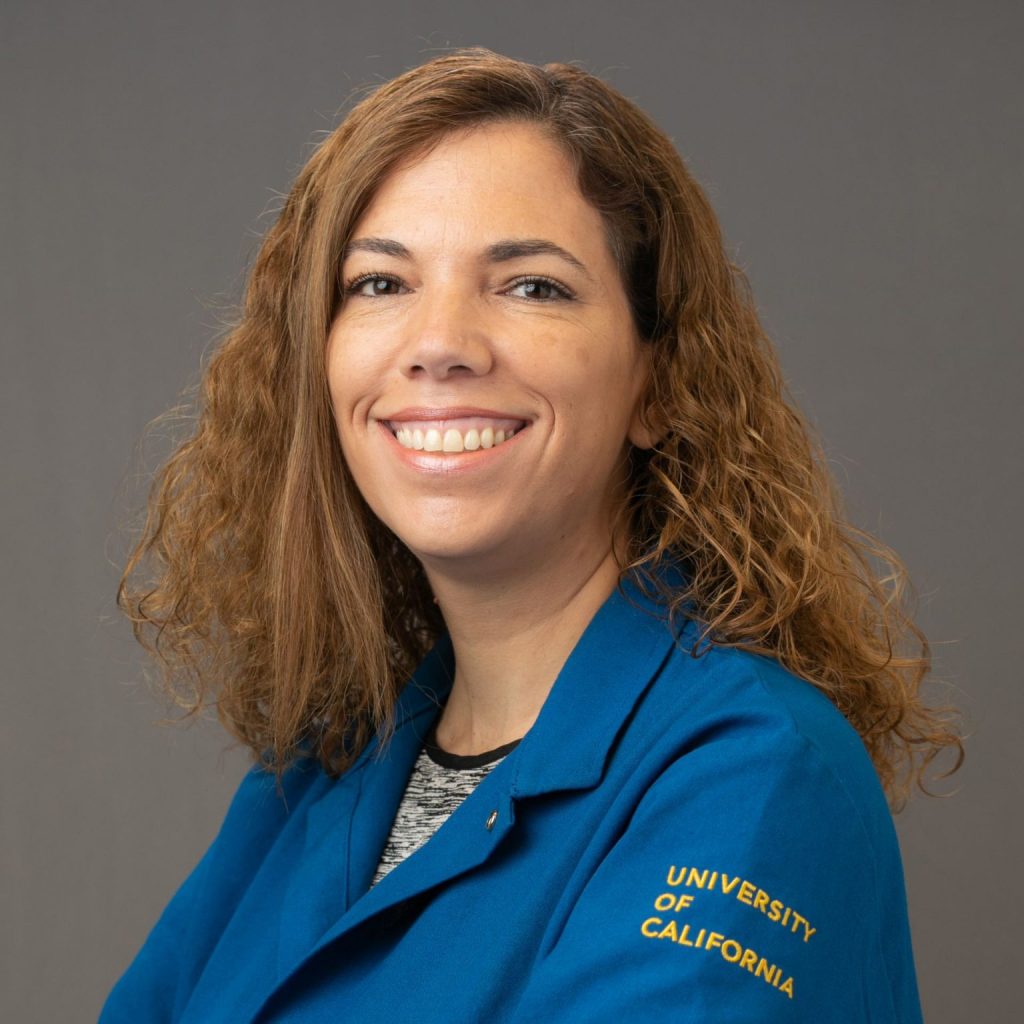
Claudia Benavente, PhD | UC Irvine
Associate Professor, Pharmaceutical Sciences and Developmental & Cell Biology
Deputy Associate Director for Cancer Research Training and Education Coordination
Panelist for “Fostering a Welcoming Community in Higher Education”
Dr. Claudia Benavente began her academic journey in Molecular Biotechnology Engineering at Universidad de Chile, where she first developed her passion for cancer research. To advance her studies, she moved to the United States as a Fulbright scholar and earned her doctorate in Cancer Biology at The University of Arizona. She then pursued postdoctoral training at St. Jude Children’s Research Hospital in Memphis, TN where she gained expertise in childhood solid tumors. Currently, Dr. Benavente is an Associate Professor in the Departments of Pharmaceutical Sciences and Developmental and Cell Biology at the University of California, Irvine (UCI). She also serves as Deputy Associate Director for Cancer Research Training and Education Coordination at UCI’s Chao Family Comprehensive Cancer Center. She is committed to providing a diverse, inclusive, and supportive environment for underrepresented minorities in science as diversity of skills, thought, and experiences strengthen our ability to ask important questions and solve problems. Dr. Benavente’s research focuses on unraveling the mechanisms underlying the most aggressive solid tumors, with a particular emphasis on pediatric cancers. Her work explores how genes are regulated during normal tissue development and how disruptions in these processes (epigenetics) drive cancer formation. This knowledge informs her efforts to develop innovative therapeutic strategies. Her studies center on retinoblastoma and osteosarcoma, two common childhood cancers, as well as triple negative breast cancer and small cell lung cancer, two highly aggressive adult cancers disproportionately affecting underserved populations.

Brandon Cox, PhD | SIU School of Medicine
Professor and Graduate Program Director, Department of Pharmacology
Panelist for “Navigating Tenure”
Dr. Brandon Cox received a B.S. in Biology from the University of Richmond where she first got involved in research studying coral. After 3 years of working in clinical trials in Chicago, Dr. Cox went to Georgetown University where she received a Ph.D. in Pharmacology. Dr. Cox’s postdoctoral training was completed at St. Jude Children’s Research Hospital where she first started research on hearing loss and the regeneration of sensory hair cells in the cochlea. In 2013, Dr. Cox joined the faculty at Southern Illinois University School of Medicine in Springfield, IL. The Cox lab investigates the cell source, mechanism, and genes involved in the hair cell regeneration process that occurs in the newborn mouse ear. Dr. Cox is also interested in the developmental changes that take place during the first weeks after birth which prevent regeneration from occurring in juvenile and adult mice. Other projects in her lab are focused on mechanisms that regulate hair cell survival during postnatal maturation, aging, regeneration, and in stressed hair cells after noise exposure. Dr. Cox has received grant funding from National Institutes of Health and the US Department of Defense.

Danielle Grotjahn, PhD | Scripps Research
Assistant Professor, Integrative Structural and Computational Biology
Panelist for “Recruiting & Staffing Your Lab”
Danielle Grotjahn is an Assistant professor in the Department of Integrative Structural and Computational Biology at Scripps Research. Her lab studies the structural and functional interactions that mediate stress-induced remodeling of mitochondria using cellular cryo-electron tomography. She received her Ph.D. in Biophysics from Scripps Research, where she used cryo-electron tomography and subtomogram averaging to solve the first three-dimensional structure of the microtubule-bound dynein motor complex in Dr. Gabe Lander’s laboratory. Danielle completed a short postdoctoral position in Dr. Grant Jensen’s lab at the California Institute of Technology (Caltech) before starting her independent career as a Scripps Fellow. She has been awarded consecutive Damon Runyon-Rachleff Innovation awards from the Damon Runyon Cancer Foundation in 2021 and 2023, the Baxter Young Investigator in 2022, and named a Pew Scholar in 2023.

Astrid Haase, PhD | NIDDK/NIH
Senior Investigator, RNA Biology Section, Laboratory of Cell & Molecular Biology
Panelist for “Recruiting & Staffing Your Lab”
I am a Senior Investigator at the National Institutes of Health (NIH), where I lead research on small RNA-guided gene regulation and genome surveillance. I earned my MD from the University of Vienna (Austria) and a PhD in Biochemistry from the University of Basel (Switzerland), where I conducted research on microRNA-mediated regulation of gene expression under the mentorship of Dr. Witek Filipowicz.
During my postdoctoral training with Dr. Greg Hannon at the Cold Spring Harbor Laboratory, I explored another class of small non-coding RNAs -PIWI-interacting RNAs (piRNAs)- that play a critical role in safeguarding germline genome integrity and ensuring fertility in animals and humans. Since establishing my independent research group at the NIH in 2015, my team has focused on elucidating conserved mechanisms in piRNA biology. By leveraging genetics, genomics, and biochemistry, we aim to uncover how these pathways protect genome integrity, contribute to gene regulation, and maintain fertility.

Malene Hansen, PhD | The Buck Institute of Aging
Chief Scientific Officer and Professor
Presenter for “Managing Communication & Conflict”
Dr. Hansen (she/her) is Chief Scientific Officer and Professor at the Buck Institute for Research on Aging, which is located just north of San Francisco in California. She obtained a M.Sc. in biochemistry in 1998, and a Ph.D. in molecular biology in 2001, both from Copenhagen University, Denmark. Dr. Hansen carried out postdoctoral studies at the University of California, San Francisco in the laboratory of Professor Cynthia Kenyon, Ph.D., a world leader in the genetics of aging. Dr. Hansen started her independent research career at Sanford Burnham Prebys Medical Discovery Institute (SBP), a private, non-profit research institute in San Diego in the fall of 2007. There, she also served as Associate Dean of Student Affairs in SBP’s accredited graduate program, and as Faculty Advisor on Postdoctoral Training until 2021, when she transitioned to Buck. In recognition of her mentoring efforts, Dr. Hansen has received the 2017 Mentor Award from the National Postdoctoral Association in the US, and she enjoys giving seminars on mentoring and professional development.
Dr. Hansen’s research uses both the short-lived and genetically tractably nematode C. elegans as well as mammalian cell cultures to investigate the molecular mechanisms of aging with a special focus on the role and regulation of the cell’s ability to recycle its own components, a cellular process called autophagy (awarded the 2016 Nobel Prize in Physiology or Medicine). Her research has resulted in >70 publications and she has received several awards for her research, including an Ellison Medical Foundation New Scholar in Aging Award, a Glenn Award for Research in Biological Mechanisms of Aging, a Julie Martin Mid-Career Award in Aging Research, a Breakthrough in Gerontology Award, the 2021 Irving Wright Award of Distinction from the American Association for Aging Research, and the 2024 Bennett Cohen Award from the University of Michigan. Dr. Hansen serves as an ad hoc reviewer for multiple scientific journals, and has chaired NIH’s study section CMAD/Cellular Mechanisms of Aging and Development. Moreover, she has organized a number of international scientific conferences, including the Cold Spring Harbor Laboratory’s (CSHL) meeting on Mechanisms of Aging from 2014-2018 and the 2020 Keystone meeting on Aging. She is currently a co-organizer of CSHL’s meeting on Proteostasis. During her career, Dr. Hansen has directly mentored >20 undergraduate interns, >20 research assistants, five graduate students, and 15 postdoctoral fellows, several of whom have gone on to start their own independent research labs, including at Brown University, MIT, and SBP. In her educational roles, she has also provided career advice to countless other trainees, which is an aspect of her own career that she finds very rewarding.

Jenna Hope, PhD | Drexel University College of Medicine
Assistant Professor, Microbiology & Immunology
Panelist for “Negotiating Your Academic Job Offer”
Dr. Hope is an Assistant Professor at Drexel University in the Department of Microbiology & Immunology in the College of Medicine. She attended Ursinus College (Collegeville, PA) where she obtained her Bachelors in Science in Biology with a minor in Biostatistics. She first joined Drexel University (Philadelphia, PA) as a PhD student in Dr. Peter Katsikis’ lab where she studied the role of microRNA’s in regulating CD8+ T cell responses to infection and cancer. Halfway through her PhD, she moved with the lab to Erasmus University Medical Center (Rotterdam, The Netherlands) and completed her PhD studies abroad. In 2017, she joined Dr. Linda Bradley’s lab at Sanford Burnham Prebys (La Jolla, CA) and began studying the underlying role of P-selectin glycoprotein ligand 1 (PSGL-1) in the development of T cell exhaustion. She was a NIAID T32 postdoctoral fellow from 2018-2020 before obtaining an American Cancer Society postdoctoral fellowship (2020-2022). In 2019, she and Dr. Bradley received an AAI Travel for Techniques Award to gain technical experience studying immunometabolism with Dr. Greg Delgoffe (University of Pittsburgh). At Sanford Burnham Prebys, she received the Eric Dudl Scholarship for excellence in cancer research and was the 2019 recipient of the Lenka Finci and Erna Viterbi Fishman Fund Career Development Award. In 2022, she was selected as one of twelve participants in the SITC Sparkathon program for emerging leaders in cancer immunotherapy. She is an advocate for increased funding for cancer research and participated in the 2023 AACR Early-Career Hill Day event.
Peter Iovine, PhD | University of San Diego
Professor, Chemistry and Biochemistry
Panelist for “Navigating Tenure”
Dr. Peter Iovine became a member of the faculty at the University of San Diego in 2002. He is dedicated to excellence in all areas of the academy: teaching, research, and service. Students are front and center in all Professor Iovine’s activities including a belief that research is the most effective form of teaching. He has won many awards including: the National Science Foundation CAREER award, the Henry Dreyfus Teacher-Scholar award, and the Research Corporation Cottrell Scholar Award. Dr. Iovine completed his Ph.D. work at the University of Pennsylvania and was a postdoctoral fellow at the Scripps Research Institute. He is highly active in the larger scientific community, serving on the advisory boards for private scientific funding agencies and routinely acting as a panel member or reviewer for the chemical community. Professor Iovine’s research program at USD is interdisciplinary and incorporates elements of organic chemistry, main group chemistry, materials chemistry, and polymer chemistry.
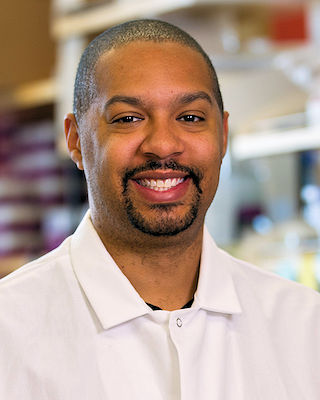
Michael Johnson, PhD | University of Arizona
Associate Professor and Graduate Studies Director
Panelist for “Fostering a Welcoming Community in Higher Education”
Dr. Johnson received an A.B. in Music from Duke University before obtaining his Ph.D. in biochemistry and biophysics at the University of North Carolina at Chapel Hill. After completing his dissertation in bacterial motility and attachment, Dr. Johnson joined St. Jude Children’s Research Hospital as a Postdoctoral Fellow in the Department of Infectious Disease to study how bacteria process nutrients, specifically metals, during bacterial infections and then in the department of immunology, studying newly discovered ways that the body eliminates harmful pathogens. During his postdoctoral fellowship, Dr. Johnson founded Science Sound Bites, a science podcast for kids. Dr. Johnson joined the faculty of the University of Arizona in 2016 and is currently an Associate Professor in the Department of Immunobiology where his lab studies mechanisms of metal toxicity in bacteria. Dr. Johnson is active in science outreach through events like The National Summer Undergraduate Research Project, DNA Day, The BIO5 Postdoctoral Fellowship Program and serving as the Phoenix Director of The National Summer Undergraduate Research Project (NSURP). He is also active in minority scientific affairs through the American Society for Microbiology and can be found online on X @blacksciblog.

Jálin Johnson, PhD | Salk
Director of the Office of Community & Engagement
Panelist for “Fostering a Welcoming Community in Higher Education”
Jálin B. Johnson is director of the Office of Community & Engagement at the Salk Institute. She provides leadership and support and collaborates with faculty, trainees, and staff to advance community-building and training initiatives that enhance Salk’s culture and help build a robust and welcoming STEM pipeline. Prior to Salk, Johnson served as senior diversity officer and vice-chancellor of Equity & Inclusion at the University of Massachusetts Global. Johnson is a tenured full professor of Business & Organizational Leadership, a multi-disciplinary curriculum developer, and has served on multiple Institutional Review Boards. She earned a Doctorate of Education in organizational leadership from the University of La Verne, a Master’s in business administration from the University of Redlands, and her Bachelor’s degree in applied communications from San Diego State University.

Diane Klotz, PhD | Sanford Burnham Prebys
Chief Learning Officer
Presenter for “Managing Communication & Conflict”
Diane Klotz, PhD, is Chief Learning Officer at Sanford Burnham Prebys Medical Discovery Institute in La Jolla, CA, where she oversees the education and training strategy of the Institute. This involves leading a team responsible for creating and delivering innovative programs to support the professional growth of students, postdocs, faculty, and administration, as well as serving as the executive sponsor for diversity, equity, inclusion, and belonging initiatives.
Diane received her PhD in Molecular and Cellular Biology from Tulane University, and pursued her postdoctoral research training at the National Institute of Environmental Health Sciences (NIEHS, NIH where her research focused on cross-talk between steroid hormone receptor and growth factor signaling pathways in the female reproductive tract. Diane’s career path has been shaped by her observations of and experiences with how scientific organizations function and how scientific leaders strive to effect change and make progress. Her focus in educating and training scientists and the administrative teams that support them is to provide resources that enable leaders to guide their teams with compassion, clarity, vision, and intent, and facilitate team environments where individuals from all backgrounds feel like they belong. Toward this end, Diane has worked with academic labs, professional associations, and biotech companies. Diane is a certified DiSC® facilitator, Influence Style Indicator™ facilitator, Leadership Process: Motivating Achievement facilitator, and MBTI® practitioner, and has achieved comprehensive certification in Conflict Management and Change Management from Kilmann Diagnostics, along with a certificate for Negotiation and Leadership from the Harvard Program on Negotiation.

Tsung-Ting Kuo, PhD | Yale
Associate Professor of Biomedical Informatics and Data Science and Surgery
Panelist for “Conducting Your Job Search”
Dr. Tsung-Ting Kuo is a faculty member of biomedical informatics and data science and of surgery at Yale School of Medicine. He earned his PhD from National Taiwan University in the Institute of Networking and Multimedia. Dr. Kuo was previously assistant professor of medicine at University of California San Diego (UCSD) Health’s Department of Biomedical Informatics. Prior to becoming a faculty member, he was a Postdoctoral Scholar at UCSD and received the UCSD Chancellor’s Outstanding Postdoctoral Scholar Award. Dr. Kuo was awarded a NIH R01 Research Project Grant, a K99/R00 Pathway to Independence Award with an Administrative Supplement, a R13 Support for Conferences and Scientific Meetings Grant, as well as UCSD Academic Senate Health Science Research Grants. His research focuses on blockchain technologies, machine learning, and natural language processing, with a particular emphasis on transformative applications in biomedical, healthcare, and genomic studies.

Mark Lawson, PhD | UC San Diego
Professor In Residence, Obstetrics, Gynecology & Reproductive Sciences
Panelist for “Negotiating Your Academic Job Offer”
Mark Lawson, Ph.D., is Professor In Residence of Reproductive Medicine at UC San Diego, Director of the UC President’s Postdoctoral Fellowship Program, and the Southern California Liaison for the Ford Foundation Fellowship Office. He also serves as Chair of the Embryonic Stem Cell Research Oversight Committee. Dr. Lawson’s formal academic training is in Biology and Microbiology and his current research focuses on the regulation of reproductive function by reproductive and metabolic hormones. He has research experience from both academia and industry and provides career guidance and support for diverse postdocs seeking careers in the academy. He has extensive experience in mentoring trainees from historically underrepresented groups as a faculty member and as a program director for undergraduate graduate, and postdoctoral training programs.

Dmitry Lyumkis, PhD | Salk
Associate Professor, Laboratory of Genetics
Panelist for “Recruiting & Staffing Your Lab”
Dr. Lyumkis studied chemistry and Biochemistry at the University of California, San Diego (B.S., 2007) and received a Ph.D. in Biophysics (2014) for his studies on cryo-EM methods development and their use to decipher the first high-resolution structures of the HIV-1 Envelope glycoprotein trimer under the mentorship of Dr. Bridget Carragher at the Scripps Research Institute. Dr. Lyumkis went on to complete a successful term as the inaugural Salk Fellow (2014-2017), a unique opportunity to form a research group and establish an independent research program in lieu of traditional years as a postdoctoral fellow, wherein he began his independent work studying pathogen/host interactions.
Dr. Lyumkis was promoted to Assistant Professor in 2018 and Associate Professor in 2023, and he is currently the holder of the Hearst Foundations Chair. He was awarded the Early Independence Award from the NIH in 2015, the George E. Palade Early Career Award of the Microscopy Society of America in 2016, the NSF CAREER award in 2021, and more recently the Margaret C. Etter Early Career Award from the American Crystallographic Association and the Young Investigator Award in Infectious Disease Research from the American Chemical Society, both upcoming in 2025.
Dr. Dmitry Lyumkis’ research has led to impactful contributions furthering our mechanistic understanding of infectious diseases through the lens of protein biophysics and structural biology. His lab studies the structure, function, and evolution of protein assemblies that are broadly related to pathogen/host interactions. The lab has historically been interested in defining mechanisms by which the human immunodeficiency virus (HIV) infects host cells and elucidating opportunities for personalized therapeutic intervention. His lab demonstrated how viral “intasomes” – which are nucleoprotein complexes that mediate integration of viral DNA into host chromatin – are assembled, deciphered principles of integration into host chromatin, defined how clinically used drugs block HIV integration, and elucidated mechanisms by which HIV evolves therapeutic resistance. Building upon the chromatin work, more recently his lab became interested in elucidating principles by which cellular proteins modulate host DNA to elicit diverse biological outcomes, in part as they relate to HIV and other retroviruses. He is also closely involved in the structural biology community. His team developed important methods to tackle major sample preparation bottlenecks in cryogenic electron microscopy (cryo-EM), improve resolution of reconstructed maps, and quantitatively establish novel validation metrics. The tools he developed have been broadly adopted by the cryo-EM community. They, in turn, have advanced his own cryo-EM goals, as they relate to pathogen/host interactions, drug resistance evolution, and therapeutic design.

Sanjeev Ranade, PhD | Sanford Burnham Prebys
Assistant Professor, Development, Aging and Regeneration Program
Panelist for “Conducting Your Job Search”
Sanjeev S. Ranade studies how transcription factors specifically control the development and function of cardiac cells — and what happens when things go wrong. Transcription factors (TF) are proteins that initiate and regulate the transcription of genes, essentially turning genes on and off, boosting or repressing their activity. At last count, there were over 1,500 known TFs, but the contribution of most of the TFs to life and health is unknown. In particular, Ranade focuses on how disrupted cell-to-cell signaling caused by mutations in TFs can cause congenital heart defects or CHDs.
“My research is focused on understanding why young children are born with heart defects. What are the principles and rules that allow our hearts to develop in the first place and why do these rules get broken in some cases? This is really important because nearly 1 in 100 children are born with some form of heart defect and many of these children will suffer from heart disease at much earlier stages in life compared to the general population.”
For his doctorate in molecular biology at Scripps Research in San Diego, Ranade studied ion channels — proteins that span cell membranes, allowing passage of ions or charged molecules from one side of the membrane to the other. The channels serve many critical functions, including transmitting signals involved in cell-cell communications and muscle contraction. Working as a post-doctoral fellow and staff research scientist in the lab of Deepak Srivastava, M.D. at Gladstone Institutes, Ranade looked at how genetics and cell biology were connected and how disruptions to these connections led to children with heart defects.

Manisha Ray, PhD | Loyola University Chicago
Assistant Professor, Chemistry
Panelist for “Conducting Your Job Search”
Dr. Manisha Ray is an Assistant professor at Lake Shore campus of Loyola University Chicago (LUC). She has received her undergraduate and master’s degrees in chemistry, and 3-years of research training from Indian Institute of Science, Bangalore, India. Her PhD thesis under the supervision of Prof. Caroline Jarrold at Indiana University, Bloomington involved spectroscopic and computational studies on catalytic properties of transition/lanthanide metal oxide cluster anions and their reactivities with small molecules in relation to alternative energy resources. With an interest in probing biological phenomena at molecular level, Dr. Ray performed an internship at Eli Lilly Biotechnology company. She continued her interests by pursuing postdoctoral research in a neurobiology group led by Prof. Jerold Chun at Sanford Burnham Prebys Institute, San Diego, CA. She developed binding assays to quantitatively measure the real-time interactions between challenging bioactive lipids and conformationally dynamic G-protein coupled receptors (GPCRs) using a cutting-edge technology called, Compensated Interferometric Reader (CIR). In her independent research group at LUC, Dr. Ray investigates the elusive roles of lipids (membrane, signaling lipids) that are present in human brain but are poorly understood towards their contribution in possible neurodegenerative diseases (like Alzheimer’s, Parkinson’s, ALS, etc.) by looking at lipids’ interaction with their carrier proteins and with cognate GPCRs.

Amali Samarasinghe, PhD | University of Wisconsin
Visiting Associate Professor, Allergy and Immunology
Panelist for “Navigating Tenure”
Dr. Amali Samarasinghe was born and raised in Colombo, Sri Lanka and arrived in the United States in 1998 for college. She has always been fascinated by life science and enjoys the structure of the scientific process. As an aficionada of the alternative hypothesis, Dr. Samarasinghe has passion to uncover the inner workings of non-dogmatic possibilities. The fundamental focus of her laboratory is to pursue host-pathogen interactions in the respiratory system in hosts with underlying allergic asthma in which the immune response is already perturbed. Dr. Samarasignhe’s lab has made interesting observations and discoveries with murine model systems specifically designed to model influenza virus and/or streptococcal infections in fungal asthma. Her lab found that the inflammatory processes associated with fungal asthma protect the host from severe influenza and synergistic interactions between influenza A virus and Streptococcus pneumoniae. Ongoing studies in her laboratory are aimed at additional pathways that may guide this protective response in allergic hosts. Dr. Samarasinghe was awarded a Presidential Fellowship from North Dakota State University to pursue her doctoral degree in the field of Pulmonary Immunology. She completed her postdoctoral training in the Department of Infectious Diseases at St. Jude Children’s Research Hospital and her independent laboratory was initially established in August 2012 in the Department of Pediatrics at the University of Tennessee Health Sciences Center. In December 2024, Dr. Samarasignhe joined the faculty in the Department of Medicine at the University of Wisconsin-Madison where she is continuing her work investigating the mechanisms of host-pathogen interactions during respiratory infections and fungal allergic asthma with a focus on eosinophil biology.
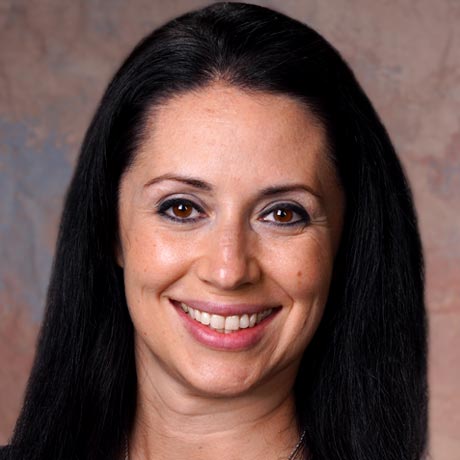
Kristin Scaplen, PhD | Bryant University
Assistant Professor of Neuroscience
Panelist for “Negotiating Your Academic Job Offer”
Kristin Scaplen is an Assistant Professor of Neuroscience at Bryant University and an Adjunct Assistant Professor of Neuroscience at Brown University. She received her PhD in Neuroscience from Brown University, where she also completed her postdoctoral training. At Bryant, she runs an independently funded lab powered by undergraduates that studies how the brain changes in the context of alcohol addiction. They use tools only available in the common fruit fly to study precisely how memories for intoxication are encoded and stored because these memories are thought to underlie the intense cravings that individuals experience which significantly increase the risk of relapse. The goal is to understand how alcohol use changes the brain in fruit flies to help unravel the complexity of addiction in humans. When not in the lab or teaching, Dr. Scaplen runs Brain Waves RI, a non-profit organization that aims to educate the community about brain science and brain health.

Sandra Schmid, PhD | Chan Zuckerberg Biohub
Chief Scientific Officer
Presenter for “Developing Your Leadership Vision”
Sandy Schmid joined the Chan Zuckerberg Biohub in 2020, bringing her career-long focus in cell biology to guide and amplify the scientific research of Biohub’s intramural research team as well as the Investigator Program. A member of the National Academy of Sciences, Schmid came to the Biohub from the University of Texas Southwestern Medical Center (UTSW), where she held the Cecil H. Green Distinguished Chair in Cellular and Molecular Biology and served as chair of the Department of Cell Biology.
Schmid was born in Vancouver, Canada, and received her B.Sc. (Honours) in cell biology at the University of British Columbia. She moved to the U.S. in 1980 for graduate studies with Jim Rothman at Stanford University. She was a Helen Hay Whitney postdoctoral fellow and Lucille P. Markey Scholar with Ira Mellman and Ari Helenius at Yale, then moved to The Scripps Research Institute as an assistant professor in 1988. She served as Chair of the Department of Cell Biology at Scripps from 2000–2012 before being recruited to UTSW.
She is a leader in the scientific community whose research, published in over 150 papers, is directed toward elucidating the molecular mechanisms and regulation of clathrin-mediated endocytosis (CME), characterizing the differential regulation of CME in normal and cancer cells, and analyzing the structure and function of the GTPase dynamin. She has received numerous awards, including the American Society for Cell Biology’s Women in Cell Biology Junior and Senior Career Recognition Awards, an NIH MERIT Award, and the Arthur Kornberg and Paul Berg Lifetime Achievement Award in Biomedical Sciences.
Schmid received an M.S. degree in executive leadership from the University of San Diego and is committed to mentoring young scientists and future leaders. She gives frequent career development and time management seminars to postdoctoral fellows and junior faculty throughout the U.S.

Siva Karthik Varanasi, PhD | U Mass Chan Medical School
Assistant Professor, Medicine
Panelist for “Negotiating Your Academic Job Offer”
Dr. Varanasi received his BSc in Biotechnology from Osmania University in 2006, an MSc in Biotechnology from Vellore Institute of Technology in 2011, and a PhD from the University of Tennessee Knoxville in 2018. He was then a postdoctoral fellow at the Salk Institute for Biological Sciences working with Susan Kaech. He joined the faculty in the Division of Innate Immunity at UMass Chan Medical School in 2024.

Gene Yeo, PhD, MBA | UC San Diego
Professor, Cellular and Molecular Medicine
Presenter for “Sustaining Your Lab”
Gene Yeo, Ph.D., M.B.A. is the Sanford Stem Cell Institute Endowed Chair (as of 2024) and Professor of Cellular and Molecular Medicine at the University of California San Diego (UCSD). He currently serves as the founding Director for UCSD’s Center for RNA Technologies and Therapeutics, the founding Chief Scientist for Sanford Laboratories for Innovative Medicine, the founding Director of the Sanford Stem Cell Institute Innovation Center, a founding member of the Institute for Genomic Medicine and member of the UCSD Stem Cell Program and Moores Cancer Center. Dr. Yeo has a BSc in Chemical Engineering and a BA in Economics from the University of Illinois, Urbana-Champaign, a Ph.D. in Computational Neuroscience from Massachusetts Institute of Technology, and an MBA from the UCSD Rady School of Management. Dr. Yeo serves as Co-Director of the Bioinformatics and Systems Biology Graduate Program, as Associate Director of a Genetics T32 training program at UCSD and as Chair of the Scientific Steering Committee of Sanford Consortium for Regenerative Medicine in La Jolla.
 Torrey Pines Training Consortium (TPTC)