
OpenMark AI
OpenMark AI evolves your AI strategy by benchmarking over 100 models on your actual task for cost, speed, and quality.
Visit
About OpenMark AI
OpenMark AI is a pivotal evolution in the journey of AI development, moving teams from speculative guesswork to data-driven confidence. It is a comprehensive web application designed for task-level LLM benchmarking, built specifically for developers and product teams at the critical pre-deployment stage. The platform's core mission is to eliminate the costly trial-and-error phase of selecting an AI model by providing a controlled, comparative testing environment. You simply describe your specific task in plain language, and OpenMark AI executes the same prompts against a vast catalog of models in a single session. This process yields side-by-side results based on real API calls, not marketing datasheets, measuring critical metrics like cost per request, latency, scored output quality, and—crucially—stability across repeat runs. This focus on variance reveals a model's true reliability, not just a single lucky output. By using a hosted credit system, it removes the friction of configuring multiple API keys, allowing teams to progress rapidly from exploration to validation, ensuring the chosen model delivers optimal cost efficiency and consistent performance for their unique workflow before any code is shipped.
Features of OpenMark AI
Plain Language Task Configuration
The platform begins your benchmarking journey at the most intuitive starting point: your own words. Instead of complex scripting, you describe the task you need the AI to perform—be it data extraction, creative writing, or code generation—in simple English. OpenMark AI's system validates and structures your description into executable prompts, democratizing access to sophisticated model testing and accelerating the initial setup phase from days to minutes for teams at any stage of AI maturity.
Multi-Model Comparative Analysis
This feature represents the heart of OpenMark's evolution from single-model testing to holistic comparison. You run your defined task against a large, curated catalog of 100+ models from leading providers like OpenAI, Anthropic, and Google in one unified session. The platform then presents a detailed, side-by-side results dashboard, allowing you to visually and quantitatively compare performance across cost, latency, and quality scores, transforming a complex decision into a clear, actionable dataset.
Stability and Variance Scoring
Moving beyond a single data point, OpenMark AI introduces a critical layer of maturity to benchmarking by analyzing consistency. It runs your task multiple times for each model to measure output stability. This reveals the variance in performance, showing you whether a model's first result was a fluke or a reliable indicator. This focus on repeatability ensures your product's evolution is built on a foundation of predictable AI behavior, not unpredictable luck.
Hosted Credit System & No-Code Setup
This feature dismantles the traditional barriers to entry for rigorous benchmarking. There is no need to manage separate API keys, billing accounts, or infrastructure for each model provider. OpenMark AI operates on a simple credit system, allowing you to access and test a wide array of models instantly. This no-code, no-setup approach accelerates the exploration phase, letting teams progress from idea to validated model selection without operational overhead.
Use Cases of OpenMark AI
Pre-Deployment Model Selection
When your team is ready to evolve from prototype to production, choosing the right model is paramount. OpenMark AI is used to rigorously test candidate models against the exact tasks your feature will perform. By comparing real cost, speed, and quality metrics, you make an informed, data-backed selection that balances performance with budget, ensuring a strong foundation for your shipped product.
Cost Efficiency Optimization
For growing applications, unchecked API costs can hinder evolution. This use case involves using OpenMark to find the most cost-effective model for a specific task. You benchmark to find the optimal point where output quality meets your standards at the lowest operational expense, directly impacting your product's scalability and long-term growth trajectory.
Agent Workflow and Routing Validation
As AI systems evolve into complex multi-agent workflows, routing tasks to the right model is crucial. Teams use OpenMark to benchmark different models on sub-tasks like classification, summarization, or tool-calling. The results inform routing logic, ensuring each step in an agentic chain is handled by the most capable and efficient model, optimizing the entire system's performance.
Consistency Assurance for Critical Tasks
When your application's success depends on reliable, repeatable AI outputs—such as legal document analysis or consistent brand voice generation—OpenMark's stability testing is essential. This use case involves running repeated benchmarks to identify models with low variance, guaranteeing that your user experience remains consistent and trustworthy as your product scales.
Frequently Asked Questions
How does OpenMark AI calculate costs?
OpenMark AI calculates costs based on the actual API pricing from each model provider (like OpenAI, Anthropic, etc.) for the prompts you run. It tracks token usage for both input and output and applies the provider's current rates. The cost shown in your results is the real expense you would incur for those API calls, providing an accurate financial comparison, not an estimate.
What is a "credit" and how does billing work?
Credits are OpenMark AI's internal currency used to execute benchmark jobs. Different models and task complexities consume different amounts of credits. You purchase credit packs through the in-app billing section. This system abstracts away the need for you to manage individual API keys and bills from multiple AI providers, simplifying the entire testing and comparison process.
Does OpenMark test models using real API calls?
Yes, absolutely. OpenMark AI performs real, live API calls to the models you select during a benchmark. It does not use cached responses or marketing numbers. This ensures the latency, cost, and quality scores in your results reflect genuine performance you can expect when you integrate the model into your own application.
Can I test my own custom prompts or evaluation criteria?
While the primary interface is designed for plain-language task description, the platform offers advanced configuration options. This allows you to input specific prompt templates, define custom evaluation instructions for scoring output quality, and set parameters to closely mirror your production environment, giving you control over the testing framework as your needs evolve.
Top Alternatives to OpenMark AI


qtrl.ai
qtrl.ai empowers QA teams to seamlessly scale testing with AI while ensuring control, governance, and quality oversight.

Blueberry
Blueberry is an AI-native workspace that unites your editor, terminal, and browser for seamless product development.

Lovalingo
Translate and index your React apps in 60 seconds with native rendering and automated SEO for global reach.


Fallom
Fallom provides real-time observability and cost tracking for your LLM applications.
diffray
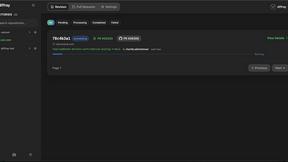
Diffray's AI evolves code review to catch real bugs with far fewer false positives.

CloudBurn
CloudBurn prevents budget surprises by revealing AWS costs in pull requests before deployment, ensuring smarter.