
Former Postdocs
10) Thibaut Arnoulx de Pirey worked jointly with Prof Sriram Ramaswamy from the Department of Physics, on multi-scale spatially-explicit eco-evolutionary dynamical models. He joined us as a prestigious Raman Postdoctoral Fellow at IISc. After his postdoc, Thibaut joined the Institut de Physique Théorique in Saclay near Paris as a Permanent Researcher in Jan 2025.
9) Archan Mukhopadhyay worked on collaborative work to characterise collective cell migration with CBM project, Department of Psychiatry, NIMHANS, Bengaluru. He did his PhD from IIT Kanpur in physics, working on evolutionary models. Archan was awarded the prestigious National-Postdoctoral Fellowship (NPDF) from SERB/ANRF, India. He joined the department of Physics, M. S. Ramaiah University of Applied Sciences, Bengaluru as an Assistant Professor, starting Jan 2025!
8) Viraj Torsekar joined us to work on fish schooling behaviour (specifically mixed-species schooling). He did a number of experiments on fish school, while continuing his primary work on predatory-prey ecology in the natural conditions. In July 2024, Viraj joined GITAM university as an Assistant Professor of Life Sciences. Check his work here.
Duration: August 2022 to May 2024.
Publications: Publications led by Viraj are currently being written up.
7) Cassandre Aimon joined us from France to work on investigating collective escape response of animal groups. She did a lot of experiments with fish schools! She also won the IISc IoE postdoctoral fellowship and presented her work at GRS/GRS on predator-prey interactions, and at GRC on Animal movement. She moved to University of Caen in France as a Teaching and Research Associate.
Duration: Oct 2021 to Aug 2023.
Publications: Two publications led by Cassandre are currently being written up.
6) Bidyut Sarania joined us to work on the project “Monitoring resilience of forest using remotely sensed technologies” funded by the Department of Biotechnology, Govt. of India. He jointly worked with Dr.Krishnapriya Tamma (Azim Premji University) for the project.
Duration: July 2019 to March 2022.
Publication: Bidyut Sarania, Vishwesha Guttal, Krishnapriya Tamma, 2021, Characterising the vegetation-rainfall relationship in the Northeast Himalaya, India;bioRxiv 2021.10.19.464965; doi: https://doi.org/10.1101/2021.10.19.464965

5) Priya Iyer did a postdoc in our lab from June 2017 to Jan 2021. Priya was interested in how males and females evolve to look and behave similarly in some and differently in other species. She tried to study this at different levels (gametes, whole bodies, secondary sexual characters and parental care), and with two species in the wild– blue sheep and ibex in the Indian Trans-Himalayas. Priya obtained her PhD in 2019, working with Joan Roughgarden at Stanford University. She researched and taught at IISER Pune for 4 years, and then spent 3 years in Himachal Pradesh on projects related to children’s education. Throughout her career, she mentored and inspired a large number of undergraduate and graduate students. Check Priya’s profile to see her publications.
Priya passed away in Jan 2021 – leaving a huge void in personal, academic spheres of many people.

4) Dr. Krishnapriya Tamma did her postdoctoral research in our lab, supported by SERB National-Postdoctoral Fellow and DST Mathematical biology program (IISc), from April 2016 to February 2019. She joined Azim Premji University as an Assistant Professor in March 2019! Prior to joining our lab, she did PhD from Dr. Uma Ramakrishnan’s lab at the National Centre for Biological Sciences, Bangalore.
The major focus of her PhD thesis was the biogeography of mammals in the Himalayas, and she used a variety of approaches (spatial analyses, phylogenetic) to understand the same. While in our lab, Dr Tamma worked on spatial ecology, specifically, in large-scale datasets of ecosystem change. She used remotely sensed data to measure changes in vegetation cover in savanna and semi-arid ecosystems. She is also interested in science communication, working in Northeast, underprivileged groups and hopes to increase her engagement with these in the coming years.
Visit her Google Scholar profile to read her papers.
Dr Tamma’s publications from the lab:
Sabiha Majumder, Krishnapriya Tamma, Sriram Ramaswamy, and Vishwesha Guttal. 2019, Inferring critical thresholds of ecosystem transitions from spatial data. Ecology, 100:e02722; PDF of Maintext; PDF of Maintext+SI; Data and codes.
Dr Tamma’s grants from the lab:
Investigating the stability of forest-savanna ecosystems using remotely sensed data and mathematical modeling, SERB National-Postdoctoral Fellowship, April 2017 (PI: Dr Krishnapriya Tamma). Funds ~ Rs 20 lakhs for two years.
Monitoring resilience of forests in protected areas using remotely sensed technologies, by DBT call for Forest-Biotechnology proposals, (Co-PI: Dr Krishnapriya Tamma; PI: Vishwesha Guttal), Funds ~ Rs 58 lakhs for three years (tentative start date: April 2019).

3)Dr. Anindita Das did a short postdoc in our lab from August 2017 to Jan 2018. She is integrated interest ined the mechanistic underpinnings of behaviour. She did her PhD on the neurophysiological basis of learning and memory as part of my thesis (advised by Prof Rishikesh Narayanan, MBU, IISC) using a combination of computational modelling and electrophysiology. After submitting her thesis, she worked in her lab as a Research Associate delving into the ecological basis of behaviour, learning methods of ecological modelling to understand heterospecific sociality. She then moved to her postdoctoral position with Prof Jesse Goldberg at Cornell University.
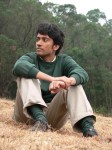
2) Hari Sridhar: Hari’s main research interest is understanding the causes of heterospecific sociality and its influence on community organization. He have been involved in organizing various student-based ecology conferences in India (YETI and SCCS), taught courses on birds at Azim Premji University, Bangalore and served as an editor for the magazine Current Conservation.
Check Hari’s Google Scholar page for his publications. Hari is also interested in history of science and how ideas/papers develop. He has also conducted a fantastic set of interviews of scientists on their key publications. Hari was supported by INSA Young Scientist program from June 2016-May 2019.
In Aug 2019, Hari joined NCBS as a postdoc to continue his work on bird flocks, history of ideas in ecology, etc.
Hari’s Key Publications from the lab:
Hari Sridhar (Ongoing Work) Reflections on Papers Past: Revisiting old papers in ecology and evolution through interviews with their authors.
Hari Sridhar and Vishwesha Guttal, 2018, Friendship across species borders: factors that facilitate and constrain heterospecific sociality, Phil. Trans. Royal Society of London B, 373: 20170014. doi:https://doi.org/10.1098/rstb.2017.0014 Download PDF; (Data are part of SI of the paper)
1) Karpagam Chellaiah did her PhD in ecology at the Centre for Ecological Sciences working on Asian elephants with Prof R Sukumar. She did a joint postdoc with Dr Maria Thaker (CES) and Dr Srikanth Iyer (Math department), working on analyzing elephant movement data from Africa. Duration: Jan 2014 to July 2016.
 Theoretical Ecology and Evolution Laboratory