A Poe anthology by Thomas Ligotti


Canon Fodder is an occasional series in which I write about classic works of horror fiction. This particular part of the series is devoted to the complete published works of Thomas Ligotti which I will slowly be working my way through.
Thomas Ligotti’s reworkings of Edgar Allan Poe do more than pay homage; they expose a fundamental difference in how both writers understand horror. Where Poe constructs meticulously controlled stories that generate dread through ambiguity, Ligotti returns to those same narratives and strips that ambiguity away, insisting that the horror is not psychological or symbolic but structural and inescapable. By revisiting “William Wilson”, “Ligeia”, and “The Fall of the House of Usher”, Ligotti transforms Poe’s carefully unresolved effects into expressions of a single, underlying system, one that governs not just his characters, but everyone.

Continue reading →

REVIEW: The Fisherman by John Langan

First published in 2016, John Langan’s The Fisherman won the Bram Stoker Award and has since become a staple recommendation for readers interested in Lovecraftian horror.

One of the defining characteristics of Lovecraftian horror is its portability. Lovecraft developed a set of images and tropes that are not only instantly recognisable but also applicable to a broad range of story-types. For example, Matt Ruff’s Lovecraft Country used those images to explore the experience of living in a country so profoundly racist that instances of petty bigotry and systematic mistreatment combine to create a pressure so intense as to be almost existential in character. Conversely, in Minions & Monsters, Lovecraft’s most famous creation Cthulhu appears as a faintly comic grump who serves as agent to monsters looking to get hired by Hollywood.

Having long since reached the point of pop-cultural saturation, the tropes and trappings of Lovecraftian horror are no longer in and of themselves frightening. Their power lies in the willingness of authors to use them to express something deeper and more personal, which brings us back to The Fisherman.

Continue reading →

On “The Man of Stone” by Hazel Heald and H.P. Lovecraft


Canon Fodder is an ongoing series in which I return to authors and bodies of work over time, reading them closely and piece by piece. This essay forms part of the Lovecraft strand; a chronological index of my Lovecraft writing can be found here. Other Canon Fodder posts can also be browsed via the series category.

What happens when Lovecraft’s cosmic machinery is dropped into something as lurid and domestic as a tale of jealousy and revenge? “The Man of Stone”, his early collaboration with Hazel Heald, is a slight and often silly story, but it reveals something far more interesting than its plot. In stripping Lovecraft’s ideas from their usual structures and embedding them in melodrama, the story exposes how easily his obsessions can be separated from their original context and made to function elsewhere. Rather than a late development of his posthumous fame, this portability may have begun much earlier, at the point where collaboration and financial necessity started to loosen his control over his own work.

Continue reading →

On Shut-Ins by Thomas Ligotti


Canon Fodder is an occasional series in which I write about classic works of horror fiction. This particular part of the series is devoted to the complete published works of Thomas Ligotti which I will slowly be working my way through.

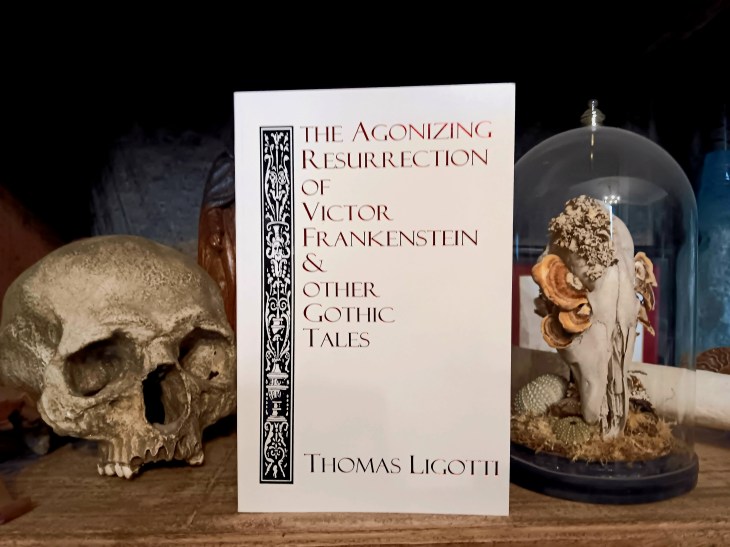
The “Shut-Ins” section of The Agonizing Resurrection of Victor Frankenstein deepens Ligotti’s growing critique of existence as a self-perpetuating system. Building on earlier stories about immortality and genius, these tales present characters who seem perpetually on the verge of escape yet only move deeper into structures that sustain themselves through their suffering. In both “The Ever-Vigilant Guardians of Secluded Estates” and “The Scream: From 1800 to the Present”, the promise of change or liberation proves illusory. Ligotti’s bleak suggestion is that there may be no outside of the system at all, and that the only true exit lies beyond existence itself.

Continue reading →

On “The Dreams in the Witch House” by H.P. Lovecraft


Canon Fodder is an ongoing series in which I return to authors and bodies of work over time, reading them closely and piece by piece. This essay forms part of the Lovecraft strand; a chronological index of my Lovecraft writing can be found here. Other Canon Fodder posts can also be browsed via the series category.

Written at a low point in Lovecraft’s career and dismissed by some of his closest collaborators as a failure, “The Dreams in the Witch House” has long divided readers. This essay argues that its apparent incoherence is not a flaw but a breakthrough: a deliberate rendering of madness from the inside out. Blending biography, close reading, and literary context, I explore how the story’s warped geometries, restless prose, and collapsing dream logic reflect a writer turning inward, away from cosmic spectacle and toward the instability of perception itself. Far from a misstep, “Witch House” may be one of Lovecraft’s most modern and unsettling achievements.

Continue reading →

REVIEW: Strange Houses (2025) by Uketsu

First published in 2021, Strange Houses is the debut novel of a Japanese YouTuber who goes only by the name of Uketsu. His videos (primarily in Japanese, though increasingly translated into English) often revolve around mysterious and ambiguous objects, which Uketsu presents to his audience while wearing a black body-stocking and a papier-mâché mask.

Speaking through a voice-changer that introduces a deliberate gap between what we see and what we hear, Uketsu typically frames these found objects as uncanny in one register before manipulating them to reveal a second, deeper strangeness. The videos are great fun, and it is easy to see why they are so popular.

As Uketsu’s audience grew, this success expanded into other forms: a series of novels, followed by manga adaptations and, eventually, a film. Strange Houses was his first novel and the work initially targeted for adaptation. However, it proved significantly less popular than his second novel, Strange Pictures, which was the first to be translated into English and is often treated as the opening entry in what has since become an ongoing series of three books.

I mention the character of Uketsu’s online activity and the fact that this was his first novel not merely to set the stage, but also to provide a degree of explanation. While Strange Houses is a formally unusual and visually interesting attempt at a mystery novel, it is plagued by technical missteps which weaken it to the point of distraction. These problems make considerably more sense once it becomes clear that the book was produced by someone whose dominant areas of expertise are visual and conversational rather than literary. Strange Houses is an interesting book, but I would struggle to call it a good one.

Continue reading →

On “The Trap” by Henry S. Whitehead and H.P. Lovecraft

Canon Fodder is an ongoing series in which I return to authors and bodies of work over time, reading them closely and piece by piece. This essay forms part of the Lovecraft strand; a chronological index of my Lovecraft writing can be found here. Other Canon Fodder posts can also be browsed via the series category.

Written during H. P. Lovecraft’s 1931 visit to his friend Henry S. Whitehead, “The Trap” is a curious and quietly revealing collaboration: a story that neither man would likely have written alone. Part occult detective tale, part metaphysical thought-experiment, it centres on a vanished schoolboy and an antique mirror whose horror lies not in spectacle but in stasis… an eternity without sensation, change, or agency. Light on dread but rich in ideas, the story’s real interest lies in its seams: the shift from dialogue to exposition, the crossing of genre boundaries, and the glimpse it offers into Lovecraft’s emerging fascination with abstract imprisonment, an idea he would soon revisit, more forcefully, in “The Dreams in the Witch House”.

Continue reading →

On Gothic Heroines by Thomas Ligotti

Canon Fodder is an occasional series in which I write about classic works of horror fiction. This particular part of the series is devoted to the complete published works of Thomas Ligotti which I will slowly be working my way through.

In Ligotti’s hands, Gothic heroines do not escape haunted castles and country estates so much as carry them forward. Terror does not end when the ghosts vanish, and care does not heal what is already broken. These stories ask a darker question: not who is guilty, but who survives long enough to transmit the damage.

Continue reading →

REVIEW: Generation Loss by Elizabeth Hand

They say that everyone has at least one novel in them, but reading Elizabeth Hand’s Generation Loss left me with the uncomfortable sense that my skull had been cracked open and that someone had used scalpel and clamp to cut this book directly from my brain like a malignant tumour.

This was not recognition in the flattering sense of influence or affinity, but something closer to diagnosis: a feeling that the sensibility and anxieties animating the novel had long been growing within me, unnoticed, drawing nourishment from the same conditions of damage, attention, and exhaustion that the book itself anatomises.

Generation Loss, first published in 2007, is the opening novel in a four-book sequence that straddles the porous boundary between crime fiction and horror while returning obsessively to themes that recur throughout Hand’s work: artistic inspiration, psychological damage, ritual practice, and the long aftermath of contact with something corrosively real. Its appearance coincided with a broader literary interest in hauntology and psychogeography, and while any direct influence is likely accidental, the overlap is telling. Like those modes, Generation Loss is preoccupied with ruin, with memory that refuses to settle, and with futures that have already been foreclosed.

Continue reading →

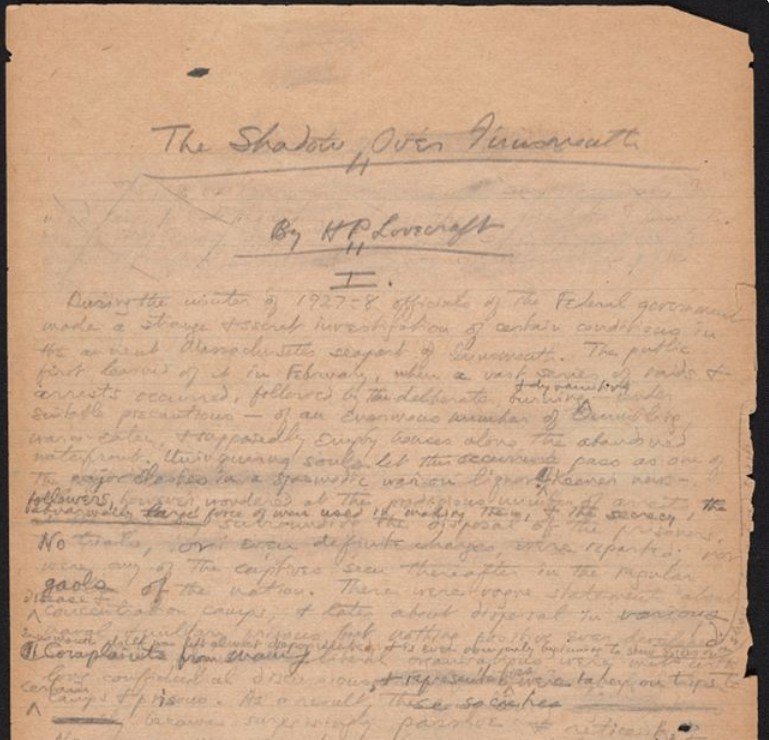
On The Shadow over Innsmouth by H.P. Lovecraft

Canon Fodder is an ongoing series in which I return to authors and bodies of work over time, reading them closely and piece by piece. This essay forms part of the Lovecraft strand; a chronological index of my Lovecraft writing can be found here. Other Canon Fodder posts can also be browsed via the series category.

The Shadow over Innsmouthis often remembered for its chase, its town, or its monsters. This essay argues that its real significance lies elsewhere: in a brief, fragile alignment between technical restraint and psychological doubt that Lovecraft never managed to sustain. Reading Innsmouth alongside Lovecraft’s early work and late collapse, this piece treats the novella not as a culmination or a confession, but as a failed attempt at self-reckoning: honest, costly, and quietly devastating.

Continue reading →

On Leading Men by Thomas Ligotti

Canon Fodder is an occasional series in which I write about classic works of horror fiction. This particular part of the series is devoted to the complete published works of Thomas Ligotti which I will slowly be working my way through.

In the “Leading Men” section of The Agonizing Resurrection of Victor Frankenstein, Thomas Ligotti reworks two familiar figures, the Phantom of the Opera and the Phantom of the Wax Museum, into studies of how genius circulates, is consumed, and is discarded. Stripped of romance and psychology, these stories present intensity not as insight or transcendence but as something procedural, something that passes through bodies, pleases audiences, generates value, and leaves nothing behind. What matters here is not who understands, but how understanding is processed, applauded, and allowed to vanish without consequence.

Continue reading →

On At the Mountains of Madness by H.P. Lovecraft


Canon Fodder is an ongoing series in which I return to authors and bodies of work over time, reading them closely and piece by piece. This essay forms part of the Lovecraft strand; a chronological index of my Lovecraft writing can be found here. Other Canon Fodder posts can also be browsed via the series category.


At the Mountains of Madness is often treated as the apex of H. P. Lovecraft’s career: a monumental fusion of cosmic horror and scientific imagination. This essay argues the opposite. The novella’s opening reveals a genuine technical breakthrough, a moment where Lovecraft finally mastered restraint, implication, and epistemic dread. What follows is not escalation but retreat, as the story collapses under the weight of explanation, history, and misplaced sympathy. Read closely, At the Mountains of Madness becomes a record of an author briefly seizing control of his art—and then recoiling from what that control required.

Continue reading →

On The Whisperer in Darkness by H.P. Lovecraft

Canon Fodder is an ongoing series in which I return to authors and bodies of work over time, reading them closely and piece by piece. This essay forms part of the Lovecraft strand; a chronological index of my Lovecraft writing can be found here. Other Canon Fodder posts can also be browsed via the series category.

The Whisperer in Darknessis a story about bad performances: aliens pretending to be human, an academicpretending to be arationalist, Lovecraft pretending to be a pulp adventure writer – and the story is most interesting where those performances fail, revealing class, colonisation, and Lovecraft’s own limits.

Continue reading →

REVIEW – Starve Acre by Andrew Michael Hurley

The director Georges Franju once observed that, while tension is often associated with horror, its presence in a film requires neither looming monsters, nor lurking maniacs. All you need is a gap between that which the audience expects to happen, and that which you deign to show them.

He once demonstrated this by having his characters rush across town to attend a meeting. The characters pile into their car and we cut to a shot of the car park outside the hospital where the meeting is due to take place. We see cars passing by the entrance but none of them turn in. Seconds pass. Then minutes. By the time the car arrives and the characters disembark, you find your hands gripping the seat. Not because the scene is dangerous and not because of moody lighting or musical cues, but because you expected something to happen and the film refused to satisfy that expectation.

First appearing under a pseudonym as part of a meta-fictional ‘lost horror’ project, then reissued in 2019 under the author’s actual name, Starve Acre is the third novel by Andrew Michael Hurley, author of the best-selling debut The Loney.

Starve Acre occupies similar geographic and formal terrain to The Loney; Both unfold in shadowed corners of Northern England, balancing the domestic and the uncanny—family drama on one side, something feral on the other. Steeped in the visual language of folk horror, Starve Acre may be a novel about community trauma, repression, or unresolved guilt but it is first and foremost a story about tension.

Continue reading →

On “Medusa’s Coil” by Zealia Bishop and H.P. Lovecraft

Canon Fodder is an ongoing series in which I return to authors and bodies of work over time, reading them closely and piece by piece. This essay forms part of the Lovecraft strand; a chronological index of my Lovecraft writing can be found here. Other Canon Fodder posts can also be browsed via the series category.

Ostensibly a Southern Gothic spin on The Great God Pan, “Medusa’s Coil” is a burned-out plantation house sinking into a marsh of racism, misogyny, and tedium. Lovecraft had lived many of the realities beneath Machen’s fiction, but his late-career habit of churning out verbiage instead of confronting feelings left the story adrift. The real horror here is wasted potential.

Continue reading →

On The Notebook of the Night – Section 5 by Thomas Ligotti

Canon Fodder is an occasional series in which I write about classic works of horror fiction. This particular part of the series is devoted to the complete published works of Thomas Ligotti which I will slowly be working my way through.

The third part of Thomas Ligotti’s third collection, Noctuary, consists of over twenty pieces of what was once called ‘flash fiction’—brief, unsettling texts seldom extending beyond a few pages. Rather than devote entire posts to stories that sometimes run less than a few hundred words, I’ll be grouping them together and approaching them in clusters. This post will be looking at:

  • Charnel House of the Moon”
  • Ten Steps to Thin Mountain”
Continue reading →

Strahd on the Moors

This blog is meant to track my creative process, though it mostly records what distracts me from it. Recently, returning to my Tudor Cairn campaign, I found myself thinking about how that game only swam into focus when I began to take inspiration from the landscape that surrounds me.

The OSR loves its forests. Cairn inherits its literary metaphysics from Dolmenwood, where the deeper you go into the woods, the stranger things become. It is a lovely idea, but it never sat right with me. When I picture deep dark forests, I do not see mystery. I see fairy tales by way of garden-centre statuary: porcelain pixies squatting between the recycling bin and a gently rusting barbecue.

In England, forests are not intimidating places… They are small, well managed, and full of signage. You pass through them on your way to a pub lunch. They belong to the realm of car parks and bird hides, not the uncanny. Vaesen: Britain and Ireland made a fascinating mistake when they grafted Scandinavian unease onto terrain that hums with different frequencies. The world outside my window is not a land of deep woods and trolls but of fog, peat, and ruins. Its fears seep sideways rather than looming overhead.

Continue reading →

On The Mound by Zealia Bishop and H.P. Lovecraft

Canon Fodder is an ongoing series in which I return to authors and bodies of work over time, reading them closely and piece by piece. This essay forms part of the Lovecraft strand; a chronological index of my Lovecraft writing can be found here. Other Canon Fodder posts can also be browsed via the series category.

Lovecraft’s collaboration with Zealia Bishop should have changed him. For a moment, it almost did. In The Mound, the stars brushed against the soil and cosmic dread met frontier folklore—but the spark died underground. This essay digs up that lost moment, when American folk horror might have been born and Lovecraft buried it alive.

Continue reading →

On Notebook of the Night – Section 4 by Thomas Ligotti

Canon Fodder is an occasional series in which I write about classic works of horror fiction. This particular part of the series is devoted to the complete published works of Thomas Ligotti which I will slowly be working my way through.

The third part of Thomas Ligotti’s third collection, Noctuary, consists of over twenty pieces of what was once called ‘flash fiction’—brief, unsettling texts seldom extending beyond a few pages. Rather than devote entire posts to stories that sometimes run less than a few hundred words, I’ll be grouping them together and approaching them in clusters. This post will be looking at:

  • “The Interminable Equation”
  • “The Eternal Mirage”
  • “The Order of Illusion”
Continue reading →

On “The Electric Executioner” by Adolphe de Castro and H.P. Lovecraft

Canon Fodder is an ongoing series in which I return to authors and bodies of work over time, reading them closely and piece by piece. This essay forms part of the Lovecraft strand; a chronological index of my Lovecraft writing can be found here. Other Canon Fodder posts can also be browsed via the series category.

A madman, a mask, a missed moment. The Electric Executioner is one of Lovecraft’s lesser-known revisions and this piece traces how tonal whiplash, editorial compromise, and a fluffed revelation leave the story wobbling between surreal tension and narrative indifference. Along the way, we glimpse de Castro’s chaotic literary career, a sinister echo in Stephen King’s Gerald’s Game, and the limits of Weird Fiction assembled by committee

Continue reading →