“Untitled”: A (Re)mix for #31DaysIBPOC

This blog post is a (re)mix of an original poem, “Untitled” (2021) for #31DaysIBPOC

Since August 2021, I have been neck-deep in my PhD program – reading more journal articles than I can count, typing more words than I ever thought possible, and thumbing through a book or APA manual almost every day. I spent the majority of my fall semester working on my first literature review. Though when I turned in the assignment last December, I couldn’t sleep. Why couldn’t I sleep after successfully completing my first semester as a doctoral student? Not only was I unable to catch any sort of slumber, I kept hearing funk music downstairs. I got up from my bed at least twice, checking TVs and bluetooth speakers. Finally, I decided to lay still in my bed. Breathing. Listening. I could still hear faint funk music, a sense of incredible calm washed over me until I eventually found a deep, (re)juvenating sleep.

The next morning, with the clearest mind, I rolled over to scribble my thoughts in my journal and as the pen flew across the page, I realized it was my dead dad keeping me up at all hours of the night. Why couldn’t I sleep after successfully completing my first semester as a doctoral student? I couldn’t sleep because my dad was playing his favorite music to celebrate. I couldn’t sleep because my dad was telling me he was proud of me. I couldn’t sleep because my dad was telling me I could rest.

During the Spring 2022 semester, I had the privilege of participating in a Black Women’s Liberatory Praxis course, where we (re)imagined endarkened studies while sippin’ tea on our virtual, metaphorical porch. I got (re)acquainted with the ancestors, their scholarship, their writing – Audre Lorde, bell hooks, Dr. Rochelle Brock, among others. I learned more than I can articulate here about (re)connecting to Spirit, about (re)membering the ancestors, about (re)claiming our roots, and (re)joicing in our lineage.

I’ve finished the first year of my PhD just before Mercury enters retrograde this May. As an educator and aspiring star girl, retrograde has me (re)calling the definition of the prefix (re), which means “back” or “again”. Mercury in retrograde is a (re)minder to (re)flect and (re)evaluate, a time to slow down and rest, or (re)set. This mercury in retrograde feels like a challenge to (re)claim my lineage and find rest in my ancestors’ spirits.

I used to ask myself or my mom, “Would my dad be proud of me? Does he really see and know what I’m accomplishing? How do I know “he’s with me”?” After learning about Spirit in a new way, digging into African spirituality and religions, and dabbling in astrology, I was desperate to answer these questions for myself… I created an altar paying homage to my ancestors with images and notes and quotes and includes all the things I love that bring me peace and joy. A record player with my growing vinyl collection is nearby with pictures of little Christina and her dad. My altar is an invitation to the ancestors, a prayer. Please visit me and continue to guide me. I ask that you hold me and protect me. Dad, keep me up with your best records. I’ll (re)joice. I’ll listen. I’ll rest.

I am my ancestors’ freedom dreams. Asé.

“My story begins before I was born…” – Daughters of the Dust (1991)

This blog post is part of the #31DaysIBPOC Blog Series, a month-long movement to feature the voices of indigenous and teachers of color as writers and scholars. Please CLICK HERE to read yesterday’s blog post by Kelly Niccolls (and be sure to check out the link at the end of each post to catch up on the rest of the blog series).

Black Girl Magic.

Black Girl Magic. A well-known, short phrase I often use to describe myself, whether quickly as an informal introduction to a stranger or as a social media caption. I am a Black girl raised in rural Appalachia who loves to learn through play and listening to music. I am a product of predominantly-white institutions and a millennial who discovered theories like culturally responsive teaching and Black feminism through social media. I am a feminist educator and professor obsessed with creating teaching and learning spaces that move society closer to freedom. These intersecting identities, both personal and professional, are Black Girl Magic. In my practice, Black Girl Magic (BGM) looks like understanding my cultural identities and experiences intimately and how they impact my practice as an educator. In practice, BGM means simultaneously experiencing systems of oppression and working to dismantle them. A PhD from UNCG’s Educational Leadership and Cultural Foundations program would provide me the rare opportunity to better understand concepts like “Black Girl Magic” and the intellectual movements behind it like feminist theory and critical race theory and more specifically how they work together in educational practice and policy.

There’s a long-held belief that feminist writer CaShawn Thompson coined the term “Black Girl Magic”, but my parents wanted their Black girl to know she was magic before Thompson popularized the term . My mother was constantly buying books and board games and ushering me outside to explore. While my mother was encouraging me to play and to read; my father was playing hip-hop, R&B, soul music and telling marvelous stories. My father taught me that music teaches about the world around us and provides an opportunity to share our lived experience through music, art, and dance. At home, I learned to be proud of my identity as a brilliant, curious Black girl who loved to read and dance. The cultural experiences of my childhood home continue to provide the philosophical and moral underpinnings of my belief that educators should be learners first, who are especially cognizant of their own identities and experiences in order to connect deeply with their students. Further, I believe teachers and learners should have access to spaces where they are free to be their full, authentic selves; just as I was, and am, at home with my loved ones. I am specifically interested in being a student at UNCG because Dr. Silvia Bettez created space for me to freely engage as a prospective student by asking questions and expressing emotion; further, her research interests mirror my own and it would be an honor to study alongside her.

In This Will Be My Undoing, Morgan Jerkins wrote, “To regain our humanity, we focus on what it means to be a black woman, where black women can find spaces, and how black women can protect themselves within white spaces”. Though my parents made it clear that their Black girl is magic; oftentimes, my environment, specifically the teaching and learning spaces I occupied, did not recognize and value my magic. In grade school, I received demerits for talking to friends or getting bored after finishing assignments early. In middle school, I was told by peers I “talked like a white girl” or “Black kids aren’t nerds”. In high school, I was called an “angry Black girl” for speaking truth to power. In college, I wondered where all the Black professors were and grew tired of white male authors up and down each syllabi. As an early career educator, I was frustrated to discover Black feminist scholars and concepts like culturally relevant teaching in Twitter chat forums via hashtag rather than in PD sessions. As a result of my experiences as a Black student and teacher in historically and predominantly white learning spaces, I understand how whiteness and white supremacy culture works to stifle Black Girl Magic. As a hopeful doctoral student, I’m interested in researching and fostering learning spaces that allow scholars, particularly Black girls and women like me, to regain their humanity and focus on what it means to themselves in institutions of teaching and learning where systems of oppression continue to negatively impact their success.

Over the course of my career as a public school educator, I’ve come to firmly believe that through our practice we can transform the systems of oppression that impact students in and outside of school. As a high school Special Education teacher, I was called a “troublemaker” by administrators for questioning the status quo and demanding discussions among staff on equity and anti-racism as it applies to curriculum and instruction. Now as a coordinating teacher, I see systems and policies from all levels of society and government that perpetuate inequities for the most marginalized stakeholders – Black, Indigenous people of color, disabled people, LGBTQ+ people, immigrants. Our responsibility as educators is to reconstruct society to create a better world, especially for those closest to the margins. In her book Eloquent Rage, Brittney Cooper writes, “I believe that because of all the oppressions we’ve experienced, Black girls have unique visions of freedom.” I have unique visions of freedom for public schools where teachers and students can critique the systems that produce and maintain inequities without being called “troublemakers”, then use their knowledge to create a more just system for all of us.

Black Girl Magic is a fun term to describe the brilliance and beauty that is Black girls and women. BGM is a well-used hashtag and popular social movement. Black Girl Magic is also my brave pursuit of a PhD in Educational Leadership and Cultural Foundations at UNCG. BGM is my desire and ability to dream about research interests that would allow me to align my identity as a Black feminist pedagogue who loves a good book and a hip-hop jam with my professional goals and passions over the course of my doctoral studies. I look forward to the opportunity to engage in academic discourse and research inquiry around issues of identity and culture, educational systems of power and oppression, and critical pedagogy as a Spartan.

References

Jerkins, M. (2018). This Will Be My Undoing: Living at the Intersection of Black, Female, and Feminist in (White) America. HarperCollins.

Cooper, B. (2018). Eloquent Rage: A Black Feminist Discovers Her Superpower. St. Martin’s Press.

Where I’m From Poem

An Ode To My Roots

I’m from Sharon Marie and Dirty Red

From Mama’s world and Daddy’s girl

I’m from DC and Dayton

From West Jefferson to Huckleberry and back


I’m from cream chipped beef, thick pancakes, and chocolate milk

From baked mac n cheese, collards, and juicy meats

I’m from soul food at reunions and cookouts

From grandmother’s table to Pappaw’s church


I’m from read alouds and sing alongs

From Seuss & Sesame to hip-hop and gospel

I’m from Power Rangers over Barbies

From scraped knees and floppy elbows


I’m from knowledge is power

From folk tales over box braids

I’m from lessons in trailer parks and tiny apartments

From memories at grandma’s house, in houses that burn to the ground


I’m from deceased and incarcerated Black men

From sick and tired Black women

I’m from where breast cancer is defeated

From where pneumonia is victorious


I’m from code switching 

From “wassup my nigga?” and “have a blessed day my sista!”

I’m from dueling worlds

From good grades and good grammar to stealing cars and sneaking into bars


I’m from falling in love with girlfriends and high school sweethearts

From Blue Ridge Mountains and RDU

I’m from Black people and Black music

From where being with my people is home.


I am Christina Marie Cole Spears.

Meredith College Giving Day 02.25.20

Written as Instagram post caption on 02.25.20

Published on 06.22.20

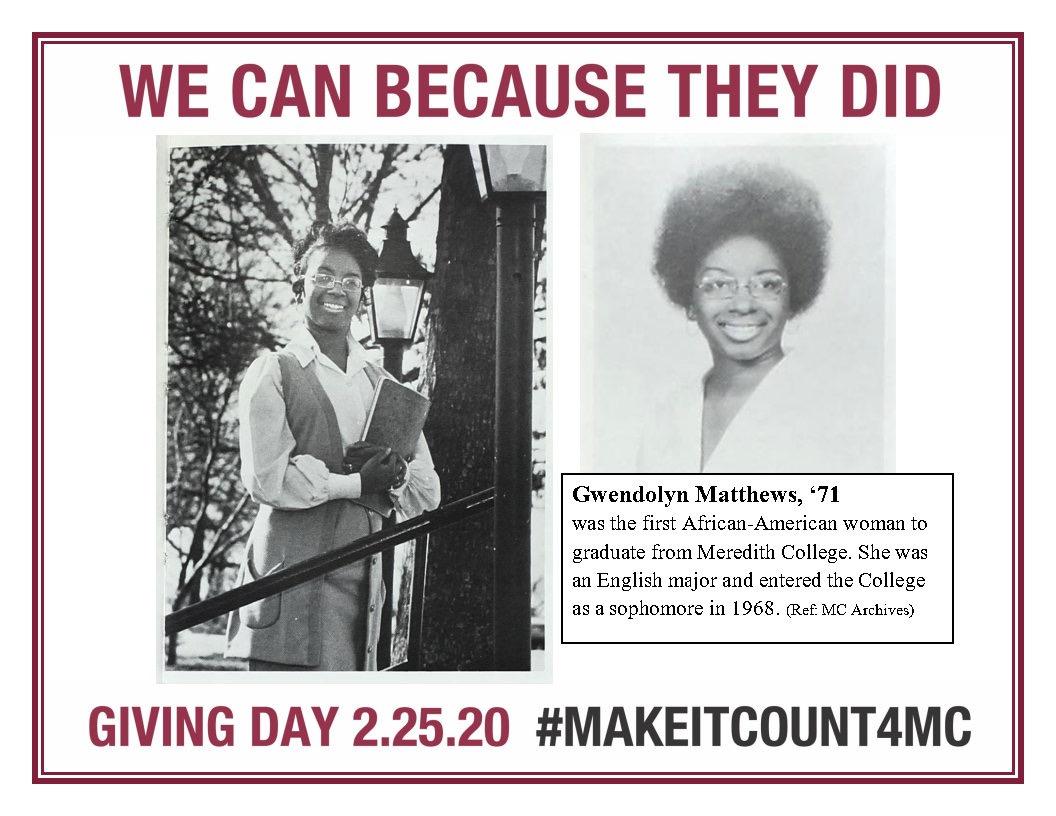
On this Giving Day, I’m wrestling with what it means to #MakeItCount4MC as a Black woman who is a student of her own racial identity development. What it means to give money to my historically and predominantly white institution. IN BLACK HISTORY MONTH NONETHELESS. MC poured so much into my growth as a woman, but looking back, missed the mark on intersectionality and pouring into my understanding of what it meant to be a Black woman in this world. That’s my truth.

On this Founders Day, I give to honor the ancestors. The Black heroes who paved the way for me, a student, an alumna, and sometimes faculty member at Meredith College. I can because they did.

image✊🏽Adalease Odessa Burt Goodson, Yolanda Fisher, Elizabeth Peru Ogonloynbu, & others whose admission was denied. That’s for your courage to shoot your shot.

✊🏽Gwendolyn Hilliard Matthews & Rosetta Berry Inmon who were the first Black students to step on campus full-time. I’m forever grateful for your bravery and for blazing a trail for me.

✊🏽Dr. James Alexander & Dr. Charles Coleman were the first Black professors to teach at MC. Thanks for breaking barriers so I could learn from amazing faculty like…image

✊🏽Dr. Wetonah Parker, the first Black educator I had the privilege of learning from, who kicked my ass into gear as a hesitant graduate student. Whose practice & pedagogy I admire more than I could ever begin to say here.

✊🏽Tomecca Sloane, the Black woman mentor I needed entering my beloved PWI in 2009. Thank you for seeing me and recognizing that things were different as a Black woman on campus. Thank you for creating the space for me to vocalize that.

On Giving Day and everyday, I’m thankful for Meredith College. I give to honor those whose shoulders I stand on. I give so another Black woman can stand on my shoulders.

#GivingDay #MakeItCount4MC #BlackHistoryMonth #BlackFutures

image

Snow [Falling] In Love

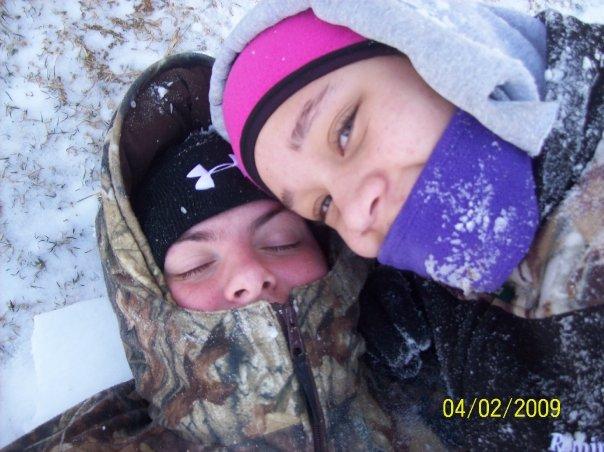
I fell in love with my husband, exactly 10 years ago, in the early winter days of December 2008. Our first dates included being bundled up to head to the mall or the movies. I remember him insisting he drive his red Nissan Titan up the snow-covered mountain to pick me up for dates. The snow or ice never posed a threat to our memory making. My earliest memories of our time together included playing in the snow, sledding and making snow angels. I remember watching him shovel the sidewalk at my house, while I made hot chocolate inside. We would drive his truck around our mountain towns, searching for a parking lot to do donuts or a hill to climb. His grandma and my mom always cautioned us to be careful “ripping and running in this weather”. We couldn’t blame them, but something about the snow falling that made us young, dumb, and in love.

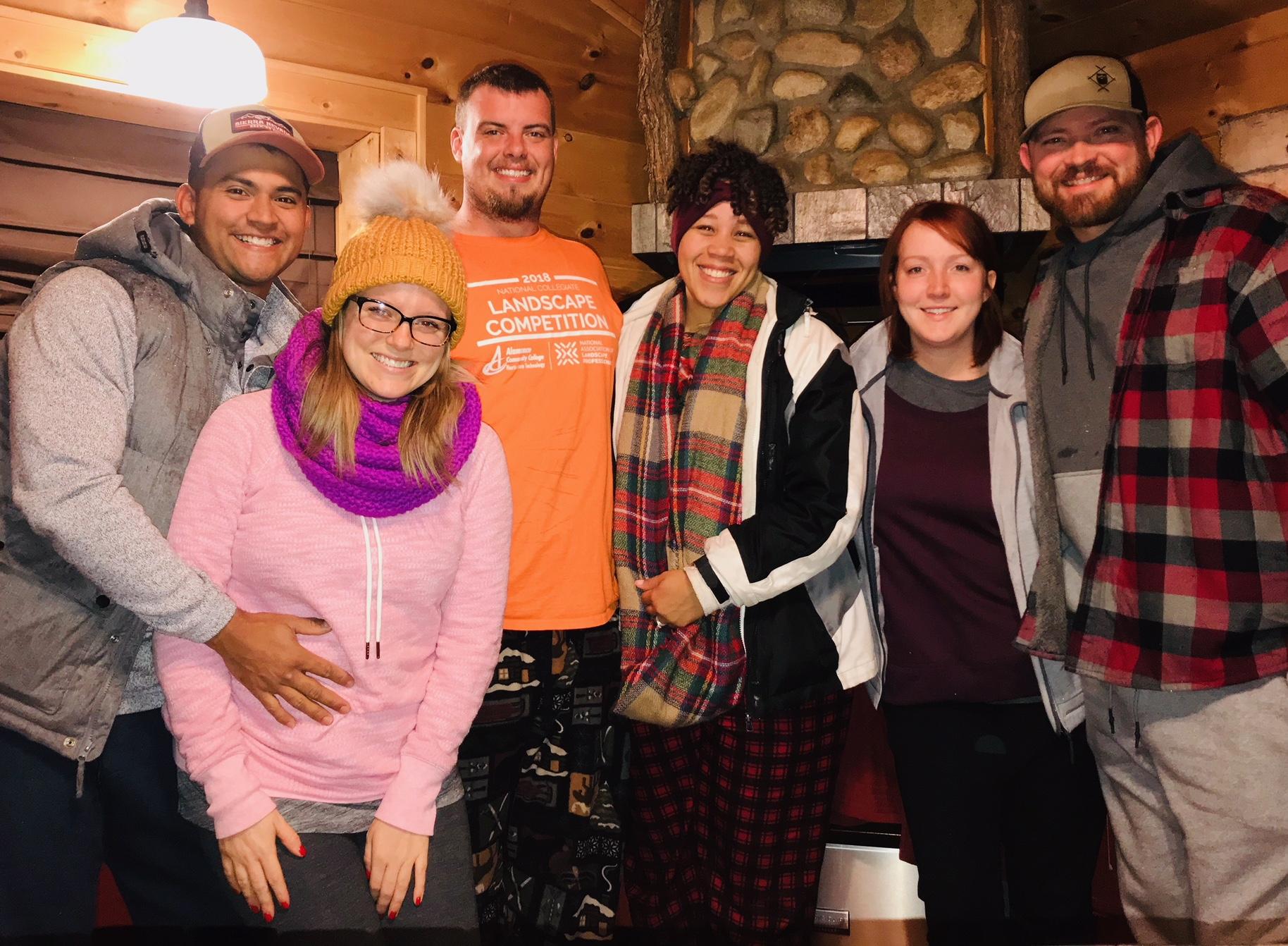
Fast forward to our mountain trip this past weekend, which was abruptly interrupted by winter storm Diego. We told ourselves, we’d leave early Sunday to “get ahead of the storm”. As the sun set on Saturday evening, we watched the radar. Although we secretly hoped we’d see beautiful mountain snow, we started to worry a bit. Would we be able to make it off of the mountain road where we were staying? Would we make it down the mountain once the storm hit tonight? We were having too much fun and didn’t want to leave our friends, so we watched another Christmas movie or two. Hours later at almost midnight, after hearing from friends farther west, and seeing the first big, fluffy flakes, we knew we had to make moves if we didn’t want to be snowed in. We split the food in the fridge, cleaned the cabin and bounced. By this time, about an hour and a half had passed, there was at least 3 inches of snow on the ground and the road disappeared under a blanket of snow. And the flakes showed no signs of stopping.

Our caravan of vehicles pulled out slowly, headed to our individual homes… ours being 3 hours away. Although our friends told us to be careful as we parted ways, we knew driving on winding country roads that hadn’t been cleared was a little reckless. But even ten years later, we’re still young, dumb, in love, and up for an adventure. It took us almost 2 hours to make a 45 minute drive from the cabin in my hometown to a hotel in my husband’s hometown at the bottom of the mountain. We woke up to a foot of snow, but were determined to make it home.

Over the course of our 6 ish hour drive home, as we were slipping and sliding all over the road, my husband reminded me why I fell in love with him ten winters ago. When I felt like we were going to lose control, he corrected the vehicle with ease and calmed my nerves with his words. He made me laugh when he persistently reminded me that “he was a country boy who knows how to drive in the snow”. We shared stories, belted songs at the top of our lungs, cursed at bad drivers, and held hands in silence. Our treacherous time on the road during this early winter storm surprise, reminded me of our first days together and why I wanted to spend the rest of my life with him. Happy Ten Year Date-iversary Justin! I can’t wait to spend the rest of our winters together falling more in love!

PS. What’s crazy is my two girlfriends in this picture were around 10 years ago to witness our budding romance! Thanks for a wonderful weekend, friends!

Power.

Washing one’s hands of the conflict between the powerful and the powerless means to side with the powerful, not to be neutral. -Paulo Freire

Last week I had the opportunity to attend NEA’s Conference on Racial and Social Justice in Minneapolis. I traveled to the Twin Cities on my own after registering for the conference as the result of an unprompted email from NEA. The theme of this year’s conference, “From Presence to Power”, seemed intriguing with its connection to using art and culture to build movements. I was ready for two days of learning and reflecting with the hope of improving my practice, deepening my understanding of racial and social issues, and bringing my newly gained knowledge back to my colleagues.

On Thursday morning, I walked slowly into the massive exhibit hall and my ears were filled with the beats of The Jackson 5, followed by 90’s HipHop, then a few R&B jams. DJ Rich Medina was set to bless us with a keynote address that morning, but not before he blessed us with his skills on the turntables. The emcee led the room full of 800+ educator activists on a journey through the history of American protest music.image First, we listened to drums played by Sioux tribes, then Negro spirituals sung by enslaved peoples, followed by Billie Holiday’s “Strange Fruit” and Nina Simone’s “Mississippi Goddam”, tunes from Bob Dylan and James Brown, N.W.A. and Public Enemy’s “Fight the Power”, Rage Against the Machine and The Beastie Boys, and finally Childish Gambino’s “This is America”. Music was constantly present throughout America’s protest movements and symbolized the power of people to use their artistry to connect marginalized people across spans of time. Grateful DJ Rich Medina was able to connect us to our country’s rich music history in his one hour on the 1s and 2s.
Thursday evening reminded me the power of social media, and again music’s magical ability to change the rules in regards to human connection and learning. I participated in a Twitter chat cypher with my #EduColor + #HipHopEd family. We shared the lessons we’ve learned through discovering music with our students. We talked about music in the classroom as a tool for critical consciousness, a seamless connection to the morning’s keynote. And I’m still thankful for the power of Twitter as a way to build genuine connections with other educators whose hearts are set on justice.

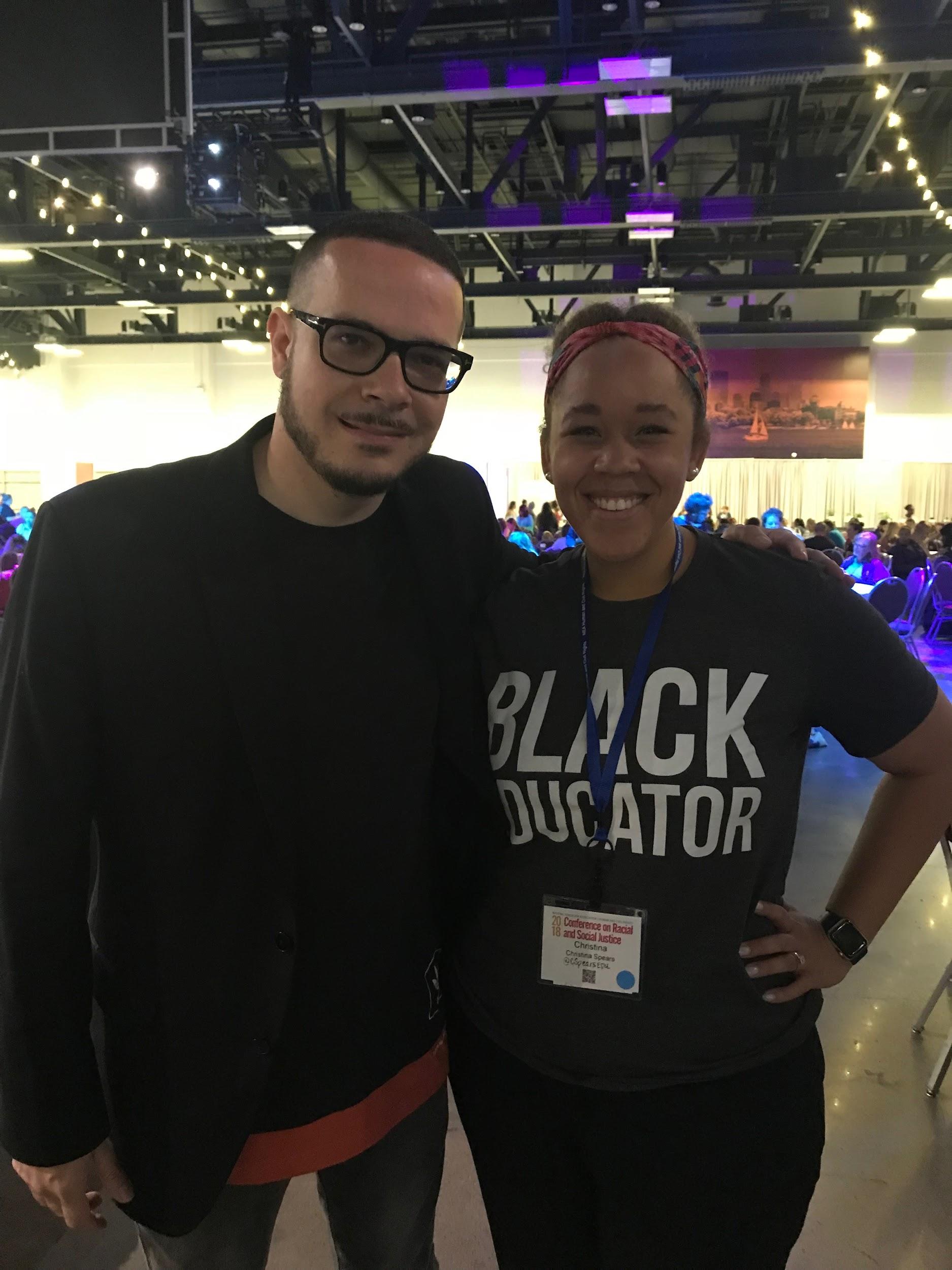
And social media’s ability to change the rules about how we connect with activists and change makers, like writer and organizer Shaun King. I’ve followed Shaun’s justice work online for years and was always struck by his honesty about police brutality and other racial and social injustices. Fast forward to 20 minutes before Shaun King’s Friday morning keynote, I’m approached by an NEA staff member. She asked me my name, I introduced myself and she happily says, “Oh yes! You were one of 10 social media influencers chosen by NEA staff to attend the conference to help us with promoting the event online.” Well, that’s pleasant news to me! She invites me and my tablemate to the stage to meet Shaun King. We’re honored and oblige. Hugo and I shared with Shaun our roles in our respective districts, snapped a few pics, and Shaun thanked us for our work as educators and recognized our key role as powerful organizers.

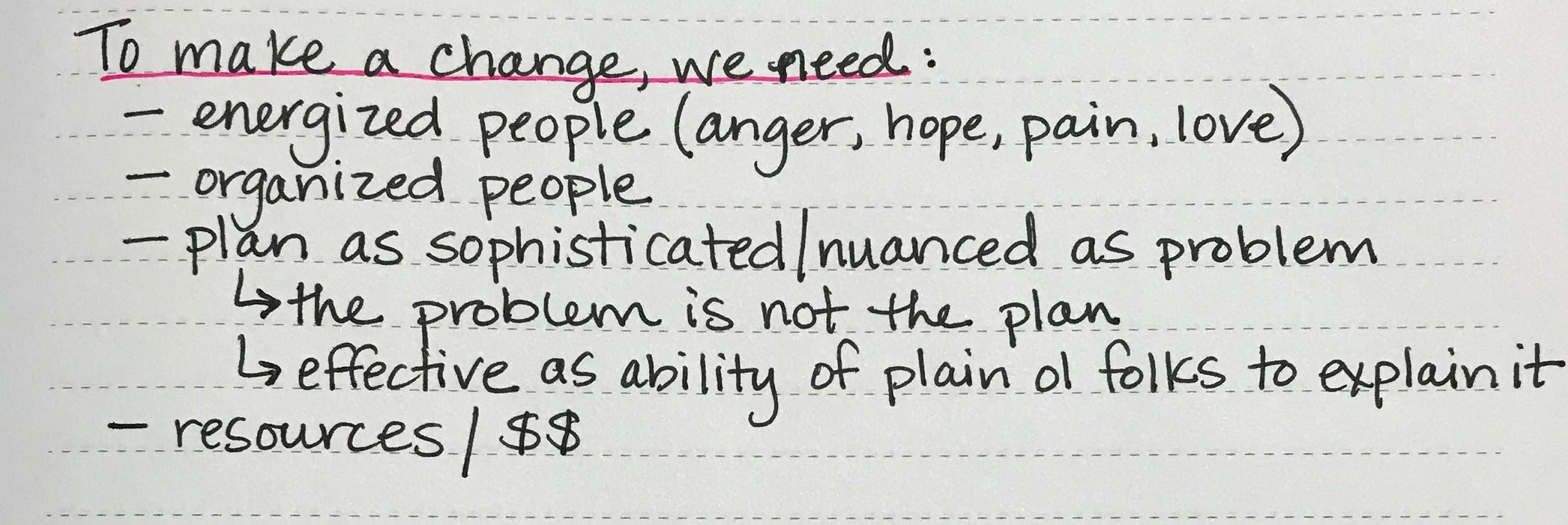
King’s keynote to educator organizers provided four necessary ingredients for making a change. The first ingredient is energized people. He reminded us that people can be energized by many emotions or events – anger, hope, pain, loss, love. Then, the second ingredient, we must be an organized collective of folks. We received an ounce of shade when King reminded us that collecting contact information is not organizing. That organizing meant creating a plan as sophisticated and nuanced as the problem, the third ingredient in King’s people power cocktail. And finally, powerful people need resources and cash flow. Educators have this power, this ability to change the rules. In North Carolina alone, we’ve seen 20,000+ educators organize to advocate for the schools our students deserve on May 16th. And educators across the country are interrupting the school-to-prison pipeline through restorative practices and trauma-informed practice and demanding the protection of student civil rights through marches and policy change.

The greater part of my Friday morning was spent watching the documentary, “More Than a Word”. The film explores Native American-based mascots and the history of the slanderous term r*dskin. Ultimately, the film argues for representations that honor and celebrate the humanity of indigenous people. This wonderfully insightful documentary set the stage for educators to discuss the power of words and how the words we allow or don’t allow in our classrooms and school communities sends a message to our students and their families. Brave teachers in the room committed to teaching hard history and honoring the humanity of indigenous people in our communities through our curriculum and our practices.

On Friday afternoon, the last keynote speaker of the conference, Rashad Robinson, Executive Director of Color of Change, so eloquently summarized the theme of the conference by saying, “Too often people mistake presence for power. But presence is not power. Power is the ability to change the rules.”

My learning experiences at last week’s conference serve to remind me about the difference between presence and power. And how the collect power of educators can transform public schools. NEA’s Conference for Racial and Social Justice gave me hope that educators will harness the power of music, social media, and energized, organized people to mastermind a plan to achieve racial and social justice for all of us. I believe that educators have that ability to change the rules, to beyond presence to power.


Speak Truth.

So I’m starting a blog. (Again.)

I was recently invited to speak to a group of students and faculty at UNC-Asheville during their annual Education Advocacy lunch sponsored by the student chapter of NCAE. At the luncheon, I shared insights about how student teachers and beginning teachers can be actively involved in advocacy and how to develop leadership skills in their classrooms and beyond.
Luckily for me, this event was during my spring break, so the trip doubled as a short vacation for me, myself, and I. I wasn’t expecting to be compensated for sharing my experience, but I was; so I left the luncheon on a new high, screaming “Mama I made it!”

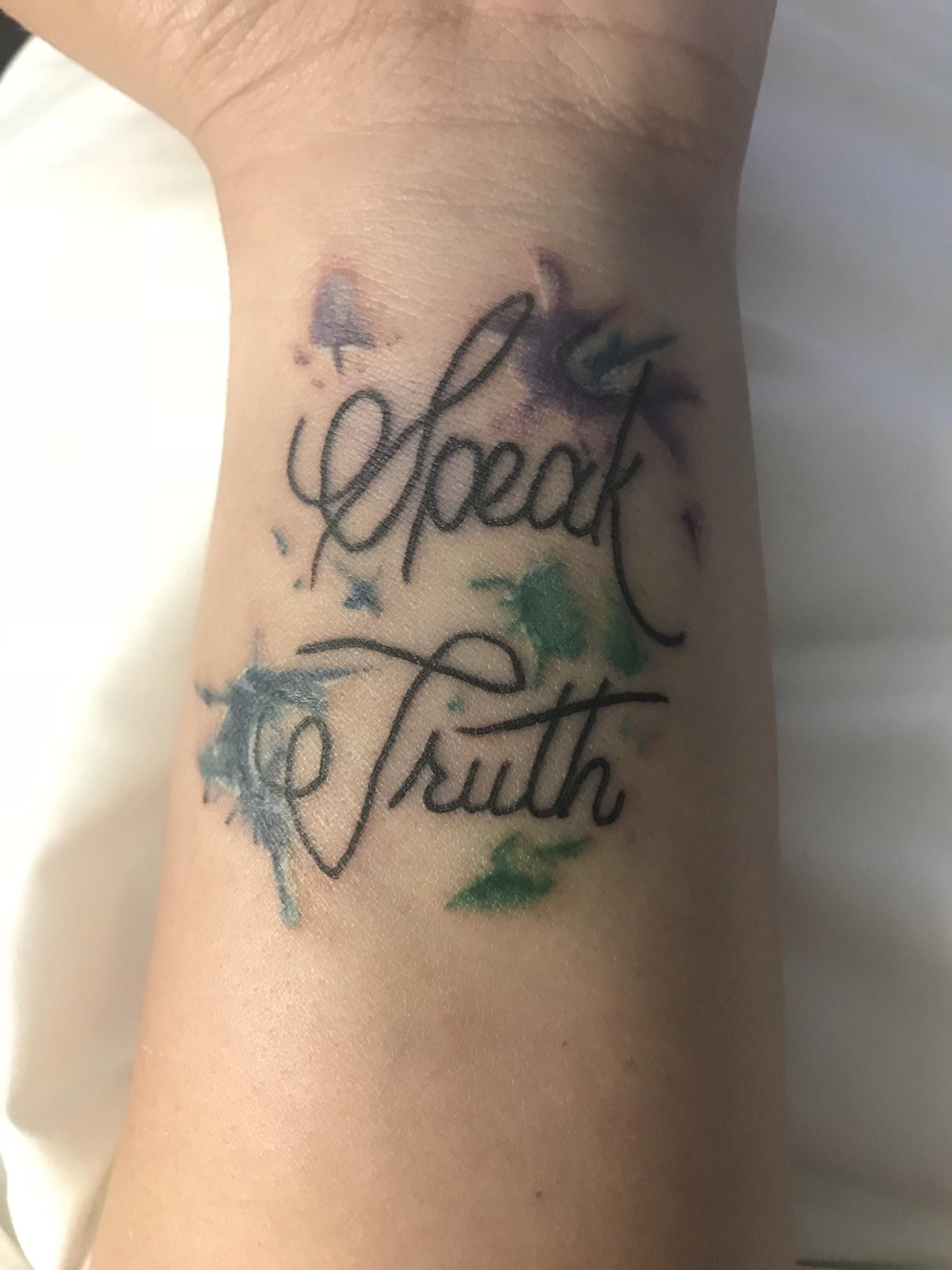
So with a few extra coins in my pocket, a pep in my step, and Asheville at my disposal, I decided to get a tattoo. I’ve wanted new ink for awhile, and this was the perfect opportunity to get tat, tat, tatted up!

Why the phrase “Speak Truth”?

I’m always shocked when folks ask me to speak at their meetings or participate as an education panelist. I was surprised when I was asked to write for the “Teaching in Color” series. I’m always humbled when I receive awards like the Recent Graduate Award at my alma mater. I’m shocked and surprised because I’m simply speaking my own truth in the spaces I inhabit. I’m humbled that folks continue to ask me to speak my truth in their respective spaces.

At the end of last month, I took a huge leap of faith and stepped out of the classroom as a special education teacher and stepped into a new role in my district’s Office of Equity Affairs. I have the privilege of working with small groups of school-based teams. When facilitating difficult conversations around race and culturally responsive instruction, we use group agreements to ground our discussion. My favorite group agreement from Singleton’s Courageous Conversations About Race is “Speak Truth”. Often times, we’re inclined to keep the peace by saying what others want to hear rather than speaking our truth by being honest about our own thoughts, feelings, and opinions. This leads to confusion and mistrust, so in my conversations with colleagues, I choose to speak honestly and openly about my own experience.

My tattoo serves as a constant reminder for me to speak my truth. And stand in that truth with pride. This new blog serves as a space for me to write more while sharing my truth with friends, family, colleagues, and anyone who cares to listen.