Beyond Homo Economicus
from Constantinos Alexiou and RWER issue 112
In finance and the investment banking industry, the determinism versus free will debate is becoming sharper with the growing application of artificial intelligence (AI), algorithmic trading, and automation (Lo 2017). While previous investing was extensively marked by individual human choices, contemporary financial markets are increasingly controlled by prediction models, machine learning algorithms, and high-speed trading platforms (Kirilenko & Lo 2013; Barberis 2018). Such technological advances bring with them the fundamental questions of how far, if at all, investors actually do have free will in financial markets. To the extent that decisions become increasingly – or even completely – determined by machines, in how far can we still presume human investors have agency? This mirrors Nietzsche’s argument against free will, since now financial markets are determined by forces outside the control of any individual, supporting a more deterministic economic behaviour.
Whereas orthodox economic theories anticipate rational independent choice, technological innovation and the findings of behavioural economics suggest economic choices are more dynamic and nuanced phenomena. Understanding these dynamics is therefore crucial to policy makers and investors in a world where human agency becomes more deeply embedded in automation and conditioning of the human.
Cataclysmic Superfecta
from Constantine Passaris and RWER issue 112
The first three decades of the 21st century have unleashed a cataclysmic superfecta. Starting with the global financial crisis of 2008 which adversely affected financial institutions worldwide. This was followed by the protracted Great Recession which triggered a sharp decline in economic growth accompanied by high levels of unemployment. In the third decade, COVID-19 created a global tsunami of economic devastation and an asymmetric economic impact between countries (Passaris, 2024B).
Furthermore, throughout the decades of the new millennium, humanity has witnessed the progressive deterioration of the environment and the decline of biodiversity. The ensuing natural disasters have resulted in the loss of human lives and economic assets. Climate change is causing significant environmental, economic, social, and human harm nationally and internationally. Increases in average global temperatures are precipitating longer droughts as well as increasing the frequency and severity of heat waves. They are also causing extreme weather events and natural disasters like destructive floods, residential area wildfires, forest fires, environmental storms, sea level rising, and have brought our ecosystem to the brink of collapse. Read more…
The dollar is a reserve currency, not the reserve currency
from Dean Baker
I continually get people asking me questions and sending me articles about how the dollar might lose its status as the world’s reserve currency and then something horrible is supposed to happen. Neither part of this story makes much sense and treating the issue in this manner confuses what is at stake.
As I, and many others, have pointed out, there is not a unique reserve currency. Many currencies, including the euro, the yen, the English pound, the Chinese renminbi, and even the Swiss franc are held as reserves by central banks. The dollar is the predominant reserve currency, but not the only one. It accounts for around 60 percent of central bank reserves at present.
There is a similar story with the dollar being used as the medium of exchange in international transactions. Again, most international transactions take place in dollars, but only a bit more than half of all trade. Just about all the trade between European countries is conducted in euros.
One of the great myths that has formed the basis of endless conspiracy theories is that oil must currently be traded in dollars. A popular story of the rationale for overthrowing Saddam Hussein was that he was going to start selling Iraq’s oil for euros.
This is absurd for two reasons. Read more…
Conversations in Real-World Economics
from Lars Syll
Jamie: Lars, perhaps a useful place to start would be with some introductory comment on what informs your reasoning. Whilst your postings range across many subjects you regularly return to a common theme. Specifically, the use economists make of mathematics to express theory and of analytical statistical techniques to conduct research. What are the key problems you see here and in what sense can or should matters of methodology provide a common thread to this common theme?
Lars: Well, I think the main problem here when it comes to applying mathematics and inferential statistics to economics is that mainstream economists usually do not start by asking themselves if the ontology — real-world economies and societies — is constituted in a way that makes it possible to explain, understand or forecast our economies and societies with the kind of models and theories that mathematics and inferential statistics supply.
The basic fault with modern mainstream economics, in my view, is that the concepts and models it uses — often borrowed from mathematics, physics, and statistics — are incompatible with the very objects of economic study. The analytical instruments borrowed from the natural sciences and mathematics were constructed and used for totally different issues and problems. This has fundamentally contributed to the non-correspondence between the structure of economic science and the structure of real-world economies. And I think it may also be one of the main reasons why economists so often have come up with doubtful — and sometimes harmful — oversimplifications and generalizations.
Using simplifying tractability assumptions — rational expectations, common knowledge, linearity, ergodicity, etc. — because otherwise one cannot “manipulate” the models or come up with rigorous and precise predictions and explanations, does not really exempt economists from having to justify their modelling choices. Being able to manipulate things in models cannot be enough to warrant a methodological choice.
Take, for example, the discussion on rational expectations as a modelling assumption. Those who want to build macroeconomics on microfoundations usually maintain that the only robust policies are those based on rational expectations and representative actor models. As I tried to show in my book On the use and misuse of theories and models in mainstream economics (2016) there is really no support for this conviction at all. If microfounded macroeconomics has nothing to say about the real world and the economic problems out there, why should we care about it? The final court of appeal for economic models should not be if we — once the tractability assumptions are made — can manipulate them. As long as no convincing justification is put forward for how the inferential bridging is made, mainstream model building is little more than hand-waving.
Oxfam report on growing inequality in Sweden
from Lars Syll
 The 2026 Oxfam report, Our Unequal Sweden, issues a damning indictment of the nation’s economic trajectory, systematically dismantling the enduring myth of Swedish egalitarianism. It reveals a society undergoing a profound and deliberate schism, where escalating mass vulnerability exists in parallel with unprecedented wealth consolidation among a tiny elite.
The empirical evidence is overwhelming and alarming. A surge of 120,000 individuals into poverty within a single year expands the impoverished population to approximately 700,000. Concurrently, over a quarter of households report being unable to afford essential goods, while energy poverty — measured by the inability to heat one’s home — tripled between 2021 and 2023. This tangible deprivation contrasts violently with the fortunes of the apex: the combined wealth of Sweden’s 46 billionaires, which surpasses the assets of the poorest 80% (8 million people), grew by an estimated 24% in one year alone.
Sweden ranks (according to last year’s the UBS Global Wealth Report) as the sixth most unequal country in the world in terms of wealth distribution. This places Sweden ahead of many countries commonly associated with extreme inequality and, strikingly, more unequal than the United States, which ranks seventh in the same index. The comparison underscores the severity of wealth concentration in Sweden and challenges the widespread perception of the country as an economic outlier defined by equality. In fact, Sweden is among the most wealth-unequal societies globally. Read more…
Doing well by doing good: Dump your American stocks
from Dean Baker
Before I go further here, let me qualify everything I’m saying here with a warning: I have no crystal ball from which to give people investment advice. However, I do know logic and arithmetic, apparently unlike Donald Trump, so I can draw out some hypothetical situations, which is what I do below.
There has been much discussion, both here and around the world, of the possibility of a flight from the dollar. This has always been a serious risk since Donald Trump took office, but the risk increased enormously from his deranged rant at the World Economic Forum in Davos last week.
Virtually everyone who was not on Trump’s payroll acknowledged that the speech was both scary and incoherent. He made threats to our allies, boasted about imposing tariffs based on personal whims, and displayed an extraordinary ignorance of major world events. With Trump commanding extraordinary powers as president as a result of a docile Republican Congress and servile Supreme Court the United States does not look like a good place to park your money.
There have already been some prominent instances of pension funds pulling their holdings out of Treasury bonds and other US assets, but this is the less important part of the story. Most of the money at risk of leaving the United States is not held by public pension funds which may announce their decision to make a political point.
Rather, most of the money at risk of fleeing is held by private corporations and banks, and wealthy individuals, who would pull their money out of the United States because they think that Donald Trump’s America is a bad investment. There are literally trillions of dollars that could be leaving. Read more…
Paul Davidson and yours truly on uncertainty and ergodicity
from Lars Syll
A few years back, I had an interesting discussion over at the Real-World Economics Review Blog with Paul Davidson on ergodicity and the differences between Knight and Keynes concerning uncertainty. It all began when I commented on Davidson’s article Is economics a science? Should economics be rigorous? :
LPS:
Davidson’s article is a nice piece — but ergodicity is a difficult concept that many students of economics have problems with understanding. To understand real-world ”non-routine” decisions and unforeseeable changes in behaviour, ergodic probability distributions are of no avail. In a world full of genuine uncertainty — where real historical time rules the roost — the probabilities that ruled the past are not those that will rule the future.
Time is what prevents everything from happening at once. To simply assume that economic processes are ergodic and concentrate on ensemble averages — and a fortiori in any relevant sense timeless — is not a sensible way for dealing with the kind of genuine uncertainty that permeates open systems such as economies.
When you assume the economic processes to be ergodic, ensemble and time averages are identical. Let me give an example: Assume we have a market with an asset priced at 100 €. Then imagine the price first goes up by 50% and then later falls by 50%. The ensemble average for this asset would be 100 €- because we here envision two parallel universes (markets) where the asset-price falls in one universe (market) with 50% to 50 €, and in another universe (market) it goes up with 50% to 150 €, giving an average of 100 € ((150+50)/2). The time average for this asset would be 75 € – because we here envision one universe (market) where the asset-price first rises by 50% to 150 € and then falls by 50% to 75 € (0.5*150).
From the ensemble perspective nothing really, on average, happens. From the time perspective lots of things really, on average, happen.
Assuming ergodicity there would have been no difference at all.
Just in case you think this is just an academic quibble without repercussion to our real lives, let me quote from an article of physicist and mathematician Ole Peters in the Santa Fe Institute Bulletin from 2009 — “On Time and Risk” — that makes it perfectly clear that the flaw in thinking about uncertainty in terms of “rational expectations” and ensemble averages has had real repercussions on the functioning of the financial system:
“In an investment context, the difference between ensemble averages and time averages is often small. It becomes important, however, when risks increase when correlation hinders diversification when leverage pumps up fluctuations, when money is made cheap, when capital requirements are relaxed. If reward structures—such as bonuses that reward gains but don’t punish losses, and also certain commission schemes—provide incentives for excessive risk, problems arise. This is especially true if the only limits to risk-taking derive from utility functions that express risk preference, instead of the objective argument of time irreversibility. In other words, using the ensemble average without sufficiently restrictive utility functions will lead to excessive risk-taking and eventual collapse. Sound familiar?”
PD: Read more…
Economics journals essentially reproduce existing knowledge
from Bernard C. Beaudreau and RWER issue 112
For most of its history, the findings in economics were diffused through either pamphlets or books. In fact, most of that which today constitutes the core curriculum in modern economics originated in pamphlets or books, not in journal articles. While this to most will appear or seem irrelevant or inconsequential, we believe that it has an important bearing on the evolution of economics. Specifically, journal articles are not, in general, conducive to Kuhnian-like paradigm shifts in thought, owing in large measure to the length and purview of the contents. In short, journal articles are more conducive to the propagation of, the refinement of, and the testing of the canons of the field/science. For example, in economics, articles on consumer theory seek to validate, refine, or extend the basic utility maximization model. To my knowledge, there is not one article that single-handedly changed the course of a field or the profession itself.
Historically, economic journals evolved from being a combination of book reviews and short articles/comments to exclusively devoted to the latter. Take, for example, the American Economic Review, founded by a group of politically and religiously-minded scholars, which in its early years devoted more space to book reviews as it did to articles. Figure 1 shows the contents of the inaugural volume of the American Economic Review. What is particularly noteworthy is the fact that of the seven pages of content, six and one-half are book reviews, the other half being articles. In other words, it accorded more importance, in so far as the advancement of the field was concerned, to new ideas/concepts than it did to refinements of existing ones. The same was true of the Journal of Political Economy whose inaugural number contained 36 book reviews and 24 articles.
The environment has no problems. It is us humans that have the problems.
from Theodore P. Lianos and RWER issue 112
We often read or hear about the problems of the environment. It is useful to point out that generally speaking this is an error in syntax. The environment has no problems. It is us humans that have the problems. If a glacier melts and the level of the sea rises this is not a problem of the glacier or of the sea, it a problem of the humans that may need to relocate. This is not a grammatical error; it is a subconscious tendency to shake off our guilt.
Any reference to environmental problems brings to mind air pollution, deforestation, soil degradation, water scarcity, loss of biodiversity, plastic pollution, ocean acidification and of course climate change. To these we should add scarcity of land for production of food. All these problems can be seen as results of transgression of the limits imposed by nature.
How is it possible, one may ask, for humans to observe galaxies thousands of light years away from the Earth and not see the limits in the resources of the Earth? To this question several answers can be given.
• Until very recently many people did not know what an environmental problem is. Most people know now because of the publicity given to the change of climate.
• Many people know but they do not care enough to participate in political movements or pressure groups involved in protecting environment.
• Many people, perhaps most, know and understand the importance of environmental problems but they discount the future by a 100% discount rate and continue to enjoy life without any remorse for the consequences of their action, e.g. many children per couple, overconsumption and wasteful living.
• After the 2nd World War a culture has been developing that encourages breaking the limits in many parts and norms of social life including economics, politics, arts, ethics, education etc. That led to rising demand, directly and indirectly, for economic growth. Huge flows of migration to Australia, Canada, USA and to some European countries (mainly Germany) helped all countries grow. Thus, production and consumption became the prime objective of economic and related policies. China and the Soviet Union had no choice but to compete with each other and with the developed countries in economic as well as in military power. Per capita GDP and its growth became the dominant statistic around the entire world. Thus, the perceived need for production and consumption prevented peoples and governments from seeing the limits of the Earth’s resources. Consumerism has conquered human society.
• Wealthy people, politicians, businessmen, and the military, i.e. the ruling class, seem to believe that the dreadful consequences of the environmental disasters would not affect them. Only the weak and the poor will suffer but who cares.
Of course, the academic community, at least part of it, saw the dangers of approaching and surpassing the limits. Ehrlich (1968), Ehrlich and Holdren (1971), Boulding (1964, 1966), Daly (1968, 1972), Georgescu-Roegen (1971, 1975) and Meadows et al. (1974) in the sixties and early seventies sounded the alarm. However, capitalists in their attempt to maximize profits and grow willingly ignored the warnings while governments had neither the strength nor the desire to impose limits and rules in the use of resources.
Thus, we have reached the point where the ecological footprint is currently 2.75 global hectares per capita while biocapacity is only 1.63 global hectares per capita. In other words, we are using the resources of the Earth 70% faster than they can be replenished. That means we are overproducing and overconsuming. Read more
The Holy Grail of Science
from Lars Syll
Traditionally, philosophers have focused mostly on the logical template of inference. The paradigm-case has been deductive inference, which is topic-neutral and context-insensitive. The study of deductive rules has engendered the search for the Holy Grail: syntactic and topic-neutral accounts of all prima facie reasonable inferential rules. The search has hoped to find rules that are transparent and algorithmic, and whose following will just be a matter of grasping their logical form. Part of the search for the Holy Grail has been to show that the so-called scientific method can be formalised in a topic-neutral way. We are all familiar with Carnap’s inductive logic, or Popper’s deductivism or the Bayesian account of scientific method.
There is no Holy Grail to be found. There are many reasons for this pessimistic conclusion. First, it is questionable that deductive rules are rules of inference. Second, deductive logic is about updating one’s belief corpus in a consistent manner and not about what one has reasons to believe simpliciter. Third, as Duhem was the first to note, the so-called scientific method is far from algorithmic and logically transparent. Fourth, all attempts to advance coherent and counterexample-free abstract accounts of scientific method have failed. All competing accounts seem to capture some facets of scientific method, but none can tell the full story. Fifth, though the new Dogma, Bayesianism, aims to offer a logical template (Bayes’s theorem plus conditionalisation on the evidence) that captures the essential features of non-deductive inference, it is betrayed by its topic-neutrality. It supplements deductive coherence with the logical demand for probabilistic coherence among one’s degrees of belief. But this extended sense of coherence is (almost) silent on what an agent must infer or believe.

In mainstream economics, there has long been an insistence on formalistic (mathematical) modelling, and to some economic methodologists this has forced economists to abandon realism and substitute axiomatics for real-world relevance. According to this critique, the deductivist orientation has been the principal reason behind the difficulty mainstream economics has had in understanding, explaining and predicting what occurs in modern economies. Yet it has also granted mainstream economics much of its discursive power—at least so long as no one begins asking difficult questions about the veracity of, and justification for, the assumptions upon which the deductivist foundation is erected.
The sort of formal-analytical and axiomatic-deductive mathematical modelling that constitutes the core of mainstream economics is difficult to reconcile with a real-world ontology. It is also why so many critics find mainstream economic analysis palpably and utterly unrealistic and irrelevant. Read more…
High and higher. US credit card rates.
Increasingly, we have to pay to pay. Directly, but also indirectly. For instance, credit card payments entail borrowing, and debts entail interest payments. It´s well known that interest rates on credit card debts are high (graph 1). At this moment, US rates even are at a historic high. They were roughly as high as US consumer loan rates. Today, they are 10% higher. Whenever the Fed decreases its interest rates, US credit card rates decrease by less than that decrease. And whenever the Fed increases its interest rates, US credit card rates increase more than this increase. In the Euro area, this is not the case with European credit card rates and European Central Bank rates. High US credit card delinquency rates are among the reasons cited for these high interest rates. But US delinquency rates halved (graph 2). My question: Why do people in the US still use US credit cards? Historically, US credit cards solved a US payment problem. Not anymore. I mean, why not use the modern Brazilian PIX payment system?
Graph 1. Selected US interest rates.

The 10 RWER Blog posts most read in 2025
1. Sweden’s unequal wealth distribution
Lars Syll, 2025
2. It wasn’t just flawed forecasts, dishonesty has also hurt economists
Dean Baker, 2025
3. Economics textbooks — scandalous intellectual dishonesty
Lars Syll, 2025
4. Donald Trump is badly confused: The story of supply and demand
Dean Baker, 2025
5. The Nobel family dissociates itself from the economics prize
Jorge Buzaglo, 2010
6. Reality — a virulent virus afflicting mainstream economics
Lars Syll, 2025
7. Leontief and the sorry state of economics
Lars Syll, 2025
8. The incredible cost of Bitcoin
Merijn Knibbe, 2025
9. USA: The Great Prosperity / The Great Regression: 5 charts
David Ruccio, 2011
10. If poor people knew how rich rich people are, there would be riots in the streets
David Ruccio, 2018
Rediscovering justice in economics
from Asad Zaman and WEA Pedagogy Blog

This post summarizes the first five chapters (through Chapter 5A) of Alasdair MacIntyre’s Whose Justice? Which Rationality? It is written for economists—especially heterodox economists—because MacIntyre exposes something deeper than “mainstream mistakes.” He shows why modernity has lost the ability to even hear what Plato and Aristotle were saying about justice: justice is not an individual preference or a procedural device, but a social achievement—an expression of shared norms, practices, and moral education.
Economists already know that methodological individualism shapes micro theory. Many also know (and teach) that norms matter—there is an entire literature on culture, identity, institutions, and “social preferences.” Yet standard micro textbooks still begin with an asocial individual with “given preferences,” and treat society as an add-on. That move is not harmless abstraction. It is the root of our inability to theorize justice—and it quietly pushes us back toward the Thucydidean conclusion that power defines justice.
Geoffrey Hodgson’s How Economics Forgot History names the methodological catastrophe: the switch from historical–qualitative political economy to formal–quantitative modeling trained economists to search for physics-like invariant laws in a domain where the objects of study change through history. When norms, institutions, and even emotional repertoires evolve, the dream of invariant “economic laws” becomes a category error. Read more…
Why do economists never mention power?
from Lars Syll
The intransigence of Econ 101 points to a dark side of economics — namely that the absence of power-speak is by design. Could it be that economics describes the world in a way that purposely keeps the workings of power opaque? History suggests that this idea is not so far-fetched …
The key to wielding power successfully is to make control appear legitimate. That requires ideology. Before capitalism, rulers legitimised their power by tying it to divine right. In modern secular societies, however, that’s no longer an option. So rather than brag of their God-like power, modern corporate rulers use a different tactic; they turn to economics — an ideology that simply ignores the realities of power. Safe in this ideological obscurity, corporate rulers wield power that rivals, or even surpasses, the kings of old.
Are economists cognisant of this game? Some may be. Most economists, however, are likely just clever people who are willing to delve into the intricacies of neoclassical theory without ever questioning its core tenets. Meanwhile, with every student who gets hoodwinked by Econ 101, the Rockefellers of the world happily reap the benefits.
The rich control the media: Whining is not a strategy
from Dean Baker
If anyone doubted that the rich would use their control of the media to push their agenda and silence dissent, CBS removed it with its decision to censor the scheduled 60 Minutes broadcast on CECOT prison. CECOT is the notorious maximum security prison in El Salvador where Trump has sent a number of the people that he has deported. There have been numerous accounts of torture and abusive treatment in the prison, which presumably would have been highlighted in the segment.
CBS, under its new ownership, decided that we shouldn’t see the 60 Minutes segment, or at least not the one its team had prepared for broadcast last night. Apparently, they were worried it would offend the Trump administration.
According to a leaked account, Bari Weiss, the right-wing zealot that the new ownership put in charge of CBS News, decided that the program could not air without an interview with Stephen Miller, Trump’s deporter-in-chief. The producers of the show had apparently already reached out to the White House, as is their standard practice, but they refused to comment, presumably choosing to instead attack the broadcast as unfair and unbalanced after it ran. Read more…
Sweden’s unequal wealth distribution
from Lars Syll
Global Wealth Report 2025 reveals that Sweden — once a global beacon of equality — has now fallen to the far less enviable position of sixth place among the world’s most unequal countries in terms of wealth.
How could things have gone so wrong for a country that, not so long ago, was seen as a model of equality?
Almost a decade ago, Thomas Piketty’s Capital in the Twenty-First Century hit the shelves. In many ways, it marked a turning point in the global conversation about economic inequality. But last year, Swedish economics professor Daniel Waldenström, of the Research Institute of Industrial Economics (which is controlled by the Confederation of Swedish Enterprise, an employers’ organisation and an interest group for Swedish business), published the book Superrika och jämlika: Hur kapital och ägande lyfter alla (Super-Rich and Equal: How Capital and Ownership Lift Everyone), arguing that Piketty is fundamentally wrong about the trajectory of wealth inequality. Read more…
Merry Christmas and a happy new year.

I´ll keep it personal. But for the ribbons, all items of the wreath, including the willow twigs underneath and the oyster shells, are gathered, not bought.
Next year, we have to keep up the fight for public health, public education, public environmental policies, public research and development, public money and public sanity, mental and otherwise. I´m surely not against private companies or against markets. But we have to fight the onslaught on public provisions.
new issue of RWER
real-world economics review
issue 112
download whole issue
ECONOMICS 100: Overpopulation is a wicked problem
Theodore P. Lianos 2
The transformational role of artificial intelligence in the pursuit of good economic governance
Constantine E. Passaris 21
Elements for a radical inflation targeting
Carlos Guerrero de Lizardi 36
Beyond homo economicus: an interdisciplinary critique of rationality in economic decision-making
Constantinos Alexiou 47
The Solow residual or what happens when moral philosophers try their hand at natural philosophy
Bernard C. Beaudreau 66
Teaching economics of populism
Junaid B. Jahangir 86
Strength and weakness of Germany’s economy
Leon Podkaminer 101
Gendered exposure to artificial intelligence in labor markets
Daniel Petrov 108
The confident falsehoods of economists and the Nobel Prize
from Lars Syll
Faced with economic theory’s apparent inability to address real economic and financial problems, economists retreat into the wonderful world of models. Instead of constructing theories based on empirical facts, they abandon the real world and prove things about imagined ones. If the goal is knowledge about the real world, the value of these exercises is, to say the least, unclear.
When the Sveriges Riksbank Prize in Economic Sciences in Memory of Alfred Nobel was established in 1969, there was no problem whatsoever in finding worthy laureates. Gradually, however, the pool of obvious candidates thinned, and less self-evident names began to figure in the discussions. A theoretical and ideological bias also became increasingly apparent.
Almost exclusively, economists representing the dominant orthodoxy were considered. Other important schools and theories were ruled out from the start. They had not devoted themselves to refining the toolbox, but had directed their research efforts towards analysing and trying to understand the conditions for economic growth and an environmentally sustainable development and transformation of our economy.
Of the 99 laureates since 1969, two-thirds are American, and 35 of the winners have been affiliated with the University of Chicago at the time of the award or for their prize-winning research. Three of the 99 laureates have been women. Read more…


—– look inside —– $5.94 / $20.00

—– look inside —– $4.90 / $8.00

—– look inside —– $15.99

—– look inside —– $5.99 / 12.99

—– look inside —– $5.93 / $12.99

—– look inside —– $4.97 / $9.90

—— Ugarteche, Puyana and Madi ——

Gerson Lima / Maria Alejandra Madi

Edward Fullbrook and Jamie Morgan

————— Michael Hudson ————–

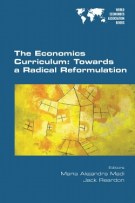
Maria Alejandra Madi / Jack Reardon
————- Edward Fullbrook ————-

—————— Steve Keen —————–
————— Richard Smith —————

————– Gustavo Marques————

– Victor Beker and Beniamino Moro –

————– Lars Pålsson Syll ————-

—————– Stuart Birks —————-

Edward Fullbrook and Jamie Morgan

———— Armando Ochangco ———-

Shimshon Bichler / Jonathan Nitzan

————— Mauro Gallegati ————–

————— Herman Daly —————-

————— Asad Zaman —————

—————– C. T. Kurien —————

————— Robert Locke —————-
 Real-World Economics Review Blog
Recent Comments