Tag Archives: square

The Rise of SquareSoft (Part 4) – No Going Back

After defining and revolutionising RPGs on the original PlayStation, Square went head first into the next generation by beginning work on the tenth instalment in the Final Fantasy series developed exclusively for the PlayStation 2. With much more powerful hardware, Final Fantasy X saw the introduction of voice acting, more realistic facial animations, fully 3D environments (replacing the pre-rendered ones used in Final Fantasy VII, VIII and IX) and had three different composers producing the soundtrack including Nobuo Uematsu. Final Fantasy X was a huge success and was seen as a giant leap forward for the series, while still keeping the features fans enjoyed, such as an engrossing narrative, memorable characters, mini-games, turn-based battles and a gigantic world to explore.

Final Fantasy X Tidus Wallpaper

During the early 2000s online gaming was growing in popularity and Square announced the next numbered Final Fantasy game would be a completely online experience. Final Fantasy XI allowed players to created their own online avatars and take on quests to develop their character and progress through the main storyline. Final Fantasy XI became the most profitable entry in series and is still in operation 10 years after it’s release with new developments expanding the game.

Final Fantasy XI Battle

After the critical success in Japan of Vagrant Story and Hironobu Sakaguchi’s pleasure with Yasumi Matsuno’s work as a game director, Sakaguchi decided that he would entrust Matsuno with the next mainline Final Fantasy game. Co-directed by Matsuno and Hiroyuki Ito, Final Fantasy XII was a massive change in direction for an offline Final Fantasy game. It featured a seamless battle system with no random battles, free camera control, was based in the world of Ivalice from Final Fantasy Tactics and put heavy emphasis on a political storyline. Due to creating the new battle system completely from scratch, Final Fantasy XII had a very long development cycle of around 6 years and during the time Matsuno fell ill leading to his resignation from Square. Final Fantasy XII was completed after he left and was still meet with huge success.

Final Fantasy XII Boss

Square had partnered with Nintendo many years earlier to create Super Mario RPG, but the world was shocked when they announced they were developing a new RPG with Disney known as Kingdom Hearts. Character designer Tetsuya Nomura made his debut as game director as Kingdom Hearts was released as an action-RPG featuring worlds and characters from Disney animated films such as Aladdin and The Little Mermaid, mixed with original and Final Fantasy characters ranging from Cloud Strife to Squall Leonheart. What seemed like an odd combination produced one of the best RPGs released on the PlayStation 2 and expanded into its own long running series.

Kingdom Hearts Sora Donald Goofy

With Square still dominating the RPG scene, Sakaguchi believed it was time to broaden the company’s horizons as he created Square Pictures and directed his first feature length movie. Final Fantasy: The Spirits Within was the first photorealistic computer animated feature film using the most advanced technology available at the time. Despite some positive reviews, the film didn’t earn enough money to even cover its expensive development and cost the company millions of dollars, Square Pictures was closed down and SquareSoft was in financial strife. Sakaguchi stepped down as vice president of Square and shortly left the company all together when Square merged with their once rival Enix in 2003, creating Square Enix.

Final Fantasy The Spirits Within

During the years either side of the merger with Enix, many talented employees left Square such as  directors and game designers: Hironobu Sakaguchi, Yasumi Matsuno and Tetsuya Takahashi, script writers: Masato Kato and Kazushige Nojima, as well as composers: Nobuo Uematsu, Yasunori Mitsuda and Yoko Shimomura. Many other employees joined smaller development companies too. Square Enix still continues to create Final Fantasy games and others in old Square franchises, but the golden age of SquareSoft seems to have long past. Still, we can always look back at some of the greatest video games ever made and remember the unforgettable journeys they gave us…


Final Fantasy Hironobu Sakaguchi

6 Comments

Filed under Editorial, Final Fantasy Series, Kingdom Hearts Series, Music, Vagrant Story

The Rise of SquareSoft (Part 3) – It’s Hip to Be Square

Following their success on the Super Nintendo, Square had originally planned to continue to develop for Nintendo systems. They even created a tech demo rendering some of the Final Fantasy VI characters in 3D for which many thought would be a preview of what Final Fantasy might look like on the Nintendo 64. These plans would soon change though, when a partnership between Nintendo and Sony fell through which ended with Nintendo staying with cartridges for its new system and Sony deciding to enter the video game market with its CD enabled PlayStation. With Sakaguchi and his team looking to push themselves with the expanded storage space offered by the CD format, Square controversially announced they would develop Final Fantasy VII for the Sony PlayStation.

PlayStation Logo

Yoshinori Kitase was concerned that the franchise would be left behind unless it embraced 3D graphics like other new games at the time and so Square made many advances with the new technology and Final Fantasy VII was the first in the series to feature a 3D world map, 2D pre-rendered backgrounds and character models rendered with polygons. Most famously though was the introduction of higher quality Full Motion Videos (FMV’s) that became a staple of the series.

Final Fantasy VII Cloud Midgar

Square didn’t just focus on graphics though, as the fantastic story of Final Fantasy VII was a joint effort written by Kazushige Nojima, Kitase and Masato Kato, based off an original draft by Sakaguchi. Previous Final Fantasy series artist Yoshitaka Amano was limited during the production due to other commitments and so Tetsuya Nomura, who previously had worked on Final Fantasy V and VI as a monster designer, was promoted to lead character designer. Even composer Nobuo Uematsu utilised the PlayStation’s internal sound chip to create songs with digitized voice tracks.

Final Fantasy VII Aeris Death

Final Fantasy VII was one of the most expensive games of its time and Sony advertised it heavily, especially in North America. It was also the first mainline title in the series to be released in Europe. The game was met with critical and commercial success upon its release and went on to sell 10 million copies worldwide. Final Fantasy VII is often regarded as one of the greatest games ever made and is recognised as the catalyst for popularising RPGs outside of Japan.

Final Fantasy VIII Squall

Final Fantasy VIII followed soon after VII and expanded on its foundations, presenting a more modern and futuristic world, as well as realistic and highly detailed characters again designed by Nomura. With Square’s experience with 3D graphics growing, Final Fantasy VIIIs presentation was much more consistent and it allowed the designers to make more experimental game play mechanics, such as the junction system and the addictive card mini game Triple Triad.

Final Fantasy IX Zidane Moogle

Final Fantasy IX was the last main installment to be developed for the PlayStation and returned the series briefly to its medieval, fantasy roots. Hiroyuki Ito returned as director while the character designs were handled by Hideo Minaba and were made more cartoonish to reflect the older games in the series, it also included black mages, crystals and lots of moogles . Sakaguchi has stated that Final Fantasy IX is his favourite in the series and that it most closely resembles what he initially visioned Final Fantasy to be. The soundtrack is also said to be Uematsu’s favourite composition.

Chrono Cross Kid Artwork

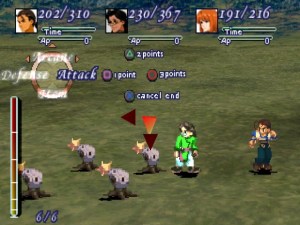
Square seemed to be on roll with the PlayStation and as their popularity grew overseas more of their other games found success as well. Masato Kato was handed directorial duties on Chrono Cross and with returning composer Yasunori Mitsuda they created a bright and wonderful game that dealt with parallel dimensions and featured a cast of 45 different characters to recruit. The action RPG Legend of Mana released with some of the most beautiful art work ever seen in a video game and highlighted the talent of up and coming composer Yoko Shimomura who would go on to score the two Parasite Eve games and many other big name franchises in the years to come. Showing the enormous depth of talent at Square, Tetsuya Takahashi, who had smaller roles on games like Final Fantasy VI directed the amazing Xenogears. It featured one of the most intricate and fascinating stories ever conceived and utilised a battle system that incorporated game play mechanics like combos found in a fighting game. It seemed like Square could do nothing wrong.

Xenogears Combos

Sakaguchi was also a big fan of a small development studio known as Quest who made the Ogre Battle games and he convinced the director Yasumi Matsuno and his team to join Square. Their partnership created more mature and complex games such as the classic strategy RPG, Final Fantasy Tactics and the dark and cinematic Vagrant Story.

Vagrant Story Title

With a whole new legion of fans from around the world, SquareSoft re-released some of their classic games to a new audience and PlayStation ports of Final Fantasy I and II, Final Fantasy IV and Chrono Trigger and Final Fantasy V and VI were given new life and their quality was appreciated all over again. Square was now a household name and Final Fantasy was one of the biggest video game series ever, could anything stop their seemingly endless supply of talent and creativity…?

3 Comments

Filed under Chrono Series, Editorial, Final Fantasy Series, Mana Series, Music, Parasite Eve Series, Vagrant Story, Xenogears

The Rise of SquareSoft (Part 2) – The Golden Age

The first article recounted how a small Japanese games company named Square had gone from being on the verge of closing down, to finding a hit with the original Final Fantasy and continuing to grow in popularity. Squaresoft had originally planned to release Final Fantasy II in English, but these plans were cancelled as they looked towards the new generation of game consoles with the international release of the Super Nintendo.

During the early 1990’s, Final Fantasy evolved with new hardware adding better graphics, a more detailed and featured storyline and more complex soundtracks. Final Fantasy IV, V and VI would be created in Japan but only IV and VI would be localised in North America and they were released as Final Fantasy II and III respectively. A major update to the series was the removal of the purely turn-based battle system and the implementation of the Active-Time-Battle system by game designer Hiroyuki Ito. Envisioning Formula One racing cars passing each, Ito designed the combat system where each character had a speed gauge that determined when they could act in the battle. The revolutionary new system stayed mostly unchanged up until the ninth instalment in the series.

Final Fantasy IV offered one of the most dramatic and compelling narratives seen in a video game at the time and Cecil, the main character was one of the first heroes to be shown with redemption as his motive. Final Fantasy V instead put game play back at the forefront updating the job system used in the third game, leading to an incredible amount of character customisation. This would be the last time the story would be put in the background as Final Fantasy VI featured one of the best RPG tales ever, combined with a large cast of deep and memorable characters. Hironobu Sakaguchi had directed all of the instalments in the series up until the sixth game when he moved to the watchful role of Producer and handed over the directorial duties to Yoshinori Kitase and Hiroyuki Ito. Final Fantasy VI is often regarded as one the best games in the series and featured Nobuo Uematsu’s greatest soundtrack at that point in his career.

“They say that technologically, it’s good to keep going, and each time, we give it our all and expend out skills and energy until we can go no further; this is what I consider to be the “final fantasy”. – Hironobu Sakaguchi

Square was not content with creating just one masterpiece on the Super Nintendo and in 1995 they released Chrono Trigger, which was designed by a “Dream Team” of developers. Sakaguchi combined with Dragon Quest creator Yuji Horii and Dragon Ball manga artist Akira Toriyama to create one of the greatest RPGs of all time. Bringing together designers at the top of their field seemed to allow the creativity to flow, as Chrono Trigger revolutionised RPGs. It removed random battles, allowed characters to combine their special abilities into team attacks and featured a time travel narrative that showed the outcome of player’s actions in the past and how they affected the future. Most notably though it was one of the earliest games to have multiple endings (13) and have a new game plus mode. Chrono Trigger also saw the rise of other great designers at Square such as writer Masato Kato and the brilliant composer Yasunori Mitsuda.

Other franchises from Square were also hitting their stride on the Super Nintendo, such as the Seiken Densetsu series which produced the magical action- RPG classic that was released in English as Secret of Mana. Showing its versatility, Square also teamed up with Nintendo to make Super Mario RPG: Legend of the Seven Stars which had some of the best graphics ever made for the console. SquareSoft was now localising a lot of RPGs for the North American market and even translated and released Capcom’s original Breath of Fire game as well as creating Secret of Evermore themselves. Unfortunately a lot of games were not released outside of Japan during this period and the English speaking world missed out on RPGs such as the fantastic sequel to Secret of Mana, Seiken Densetsu 3, as well as the Romancing SaGa games, Live a Life, Bahamut Lagoon and the tactical- RPG Front Mission.

With some of the most creative and best video game designers and composers at their disposal Square were releasing some of the greatest games ever made. Still, RPGs were not the most popular genre at the time and Square’s success outside of Japan was still limited, but with the next generation of video game consoles fast approaching and the arrival of the new Sony PlayStation that was all about to change…

5 Comments

Filed under Chrono Series, Dragon Quest Series, Editorial, Final Fantasy Series, Mana Series, Music, SaGa Series

The Rise of SquareSoft (Part 1) – Telling a Story

During the 1990s SquareSoft was synonymous with quality RPGs. From Final Fantasy, to the Chrono or Mana series players were exploring magical worlds and experiencing unforgettable stories for over a decade. This series of articles will recount how a small Japanese video game company known as Square rose to become the king of RPGs and create some of the best games ever made.

In the late 1980s Square had produced a few games in different genres for Nintendo’s first home console, but were struggling financially. A young employee by the name of Hironobu Sakaguchi decided that his last game would be an RPG and if it failed he would retire from the games industry and return to university. Inspired by other RPGs of the time such as Dragon Quest from Enix, Final Fantasy was a success for Square and was translated and released in English by its North American branch SquareSoft, leading to a sequel and Sakaguchi becoming the director of the series.

“I don’t have what it takes to make an action game. I think I’m better at telling a story.” – Hironobu Sakaguchi

The first three games in the Final Fantasy series were developed for the Nintendo Entertainment System, but only the original was released outside of Japan at the time. These games established many of the foundations the series would continue for over a decade including turn-based combat, a job system for the characters, a world map and dungeons to explore. The second game featured a more involved story and an experimental leveling system, while the third returned to the style of the original but allowed characters to change their job throughout the game. The key staff members of the early instalments were Sakaguchi as creator, artist Yoshitaka Amano, Nobuo Uematsu and game designer Akitoshi Kawazu. Each new Final Fantasy game was an indirect sequel, presenting a brand new world and characters, that let the series evolve and grow as technology progressed.

While the early Final Fantasy games were proving very popular, Square also starting creating other RPG franchises around this time, such as the Seiken Densetsu (later known as the Mana series in English) and SaGa series on Nintendo’s first handheld console the Game Boy. Seiken Densetsu featured an action-based battle system similar to Nintendo’s own The Legend of Zelda, while Akitoshi Kawazu’s SaGa series expanded on elements he had incorporated into Final Fantasy II. Both were marketed as Final Fantasy spin-offs in North America and Europe to increase sales, but as SquareSoft’s popularity grew both series would use their original Japanese names in later instalments.

With the Final Fantasy series as their main franchise, as well as many other talented designers working on establishing their own series, Square had built a solid foundation that enabled them to transition into the next generation of video game consoles with the release of the Super Nintendo and to what many fans refer to as their golden age…

7 Comments

Filed under Dragon Quest Series, Editorial, Final Fantasy Series, Mana Series, SaGa Series