worldbuilding

Thieves’ Guilds in History, according to Pathfinder

from Pathfinder’s Council of Thieves: “Thieves’ Guilds in History”

No one expects the Spanish Inquisition!

This unorthodox list of “Thieves’ Guilds in History”, in Pathfinder’s Council of Thieves (2010), was regarded with some suspicion. “Surely this can’t be right!,” a friend of mine thought, and showed it to me in disbelief. But I’ll defend it, because it does what it says on the tin. Just the small print of the tin, not the large title. It ‘s not literally a list of historical thieves’ guilds, but it’s definitely a list of parallels, “organisations that can be conceptualised as thieves’ guilds” to quote the text, and whose characteristics might resemble your standard fictional Thieves’ Guild in some regard, I would add. If we look at it that way, it’s not that much of a stretch.

No joke at all, depending on how we define organised crime, we might unintentionally include all sorts of organisations, because as it happens, the features, structure, and tactics of the Mafia (and the Yakuza and the Triads etc) can also be found in corporations, sovereign states, and so on. OPEC qualifies, and so does NATO and the IMF. The IMF is the probably the worst, and it would be my first choice if I was making that list. The blackmail of entire countries and their subsequent strangulation via debt isn’t very different (of better) than the blackmail of individuals and their subsequent murder via Colombian necktie.

In rural areas, resistance movements of all kinds (and rebel groups, irregular liberation armies, what have you) operate like bands of bandits. It’s inevitable, it simply doesn’t work otherwise. Their ultimate goal may vary wildly, ranging from admirable to appalling, but if the intermediary goal is “kick out the occupying army and/or defeat the national one with guerilla warfare”, what are they gonna do? Work 9 to 5 at the office and sabotage the bridge at 6? No, they need hideouts in the wilderness, and friendly locals, and supplies that they’ll acquire by any means necessary. Just like bandits.
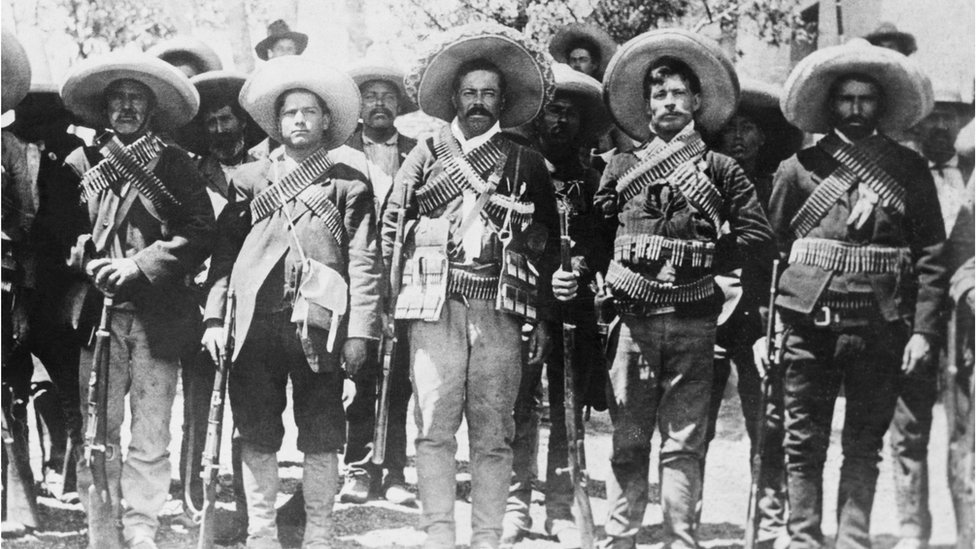
Pancho Villa and followers. The Mexican Revolution makes it obvious (and iconic, thanks to the visual of the bandoliers), but the very thin and blurry line between bandit and (rural) revolutionary applies almost everywhere if you look close enough.

So again, this is not a list of historical thieves’ guilds by any means (there is no such thing), but we can take it as food for thought, a nudge for more research, and inspiration for worldbuilding.

The source: Pathfinder 1E, Council of Thieves Adventure Path, Part 5 of 6: “Mother of Flies

[original post]

Regional Thieves’ Cants in D&D

Thieves’ Cant signs collection by aliveria

There’s an idea floating around that “thieves cant is essentially coded messages, probably based on references and stuff, so it’d be SUPER regional”. The logical conclusion is that a traveling rogue would have to learn the local culture before understanding the references, and that’s indeed pretty funny.

And you could do that! One modest option is to assume that only a few terms are different, so you can mostly communicate but misunderstandings can still happen.

But historically, cants weren’t really regional, because they were mostly used by people on the road, vagrants and vagabonds and itinerant workers and such. Think hobo signs and hobo slang: the whole point is to communicate with people who came from elsewhere, and don’t have the same references as you. Some cants were geographically MORE widespread than local languages. For example, Rotwelsch was spoken by various marginal groups in Germany, Austria, Switzerland, and Bohemia.

Without looking it up right now, I believe the English cant had very few regional, local references, and those mostly involved prisons or execution sites. Like, “Tyburn tippet” meant noose: a tippet is a scarf-like garment worn by anglican priests, and Tyburn was a gallows. A bunch of terms refernce it, both directly and indirectly (“to go to Holborn Hill” = to hang, because this hill was on the way there from London, “Paddington Fair day” = execution day, because it was in the parish of Paddington, etc). But everyone knew Tyburn, and especially everyone who spoke cant. There were also terms that referenced the Newgate prison, the executioner Jack Ketch, and so on, but again, all these were famous all over Britain, and not obscure local knowledge.

On the other hand, a French argot-speaking rogue would find English cant mostly unintelligible, though some words come from Romance languages or Romani, so they’d have a headstart learning it, at least. But of course, here we get to the larger issue of languages in D&D settings, and to the absurdity of Universal Common — a worldbuilding atrocity that I’m happy to handwave because it facilitates gameplay and makes the story go. (Seriously, Common makes no sense at all if you think about it, but whatchagonna do? Never travel to or meet anyone from a different country? Preposterous! We’re hopping to other planes here, surely we can make it to the equivalent of France!)

So anyway, if you want to introduce some regional differences in thieves’ cant in your game because you dig it, that’s great! But if you’re only doing it for the verisimilitude, you don’t really have to, and I think you shouldn’t go overboard either way. Don’t screw the Rogue!

As I’ve said before, thieves’ cant in D&D works better when you think of it like its historical counterpart: it’s not the language of thieves, it’s the language of people in the margins. Including but not limited to thieves.

[originally posted on tumblr]