
 Another one that took me yonks to finish, but also one I rather enjoyed, especially for its atmosphere. Clearly I picked a bad period to read good, atmospheric books.
That being said, I think I did enjoy this less than the others, but I feel like the fault for that sits more with me than with the book – I felt like I was missing a lot of context that would have helped me fully grasp some of what was going on. It never stopped me following the story, but I felt like it was doing more and cleverer things and I was just missing them by being an ignorant fool. Which is kind of annoying, but totally my problem. And the only way it would have got around that would be to massively handhold me… at which point, presumably it becomes deeply annoying and patronising to anyone who does have the context to appreciate it properly. So it definitely did the right thing. I just don’t particularly treasure my ignorance (cue one thousand Wikipedia pages until 3am – the best way to learn about things you never actually intended).
The book is set across multiple generations of one family in what is now Uganda, from the 1750s up to the present day (though not totally in that order), and a curse which afflicts each generation and that they must seek to break. But it’s about more than just that story – it’s about the changing lives of the people in the region through successive events of invasion, colonial rule and independence, and reconciliation of tradition with the legacy of foreign invasion and rule. About traditional religion vying with evangelical Christianity, and the mixed religious heritage of the people of Uganda. It’s also about twins, and about love and relationships, about compromises and mistakes and shame and secrets and transgression. It’s about living with the legacy your parents have given you, even the ones you don’t know about, and how they shape your life. There’s a lot going on, but it meshes well together, and creates a nice, cohesive whole in the end.
The start… is a bit more patchy. It takes a while for things to come together, and for it to start being clear how the different timelines interact with one another. You know the characters are related, of course, but exactly how they link up beyond that takes a while to get clear in your head. But once it does, things seam together beautifully, and it flows along very well.
I particularly like the extent to which the pattern of the events in the 1750s is played out over and again, repeated and amended and re-examined by later generations, with different viewpoints and different intentions. It’s not about the inevitability of fate, they’re not all doomed to do the same things over and over, but more they have the same pattern about their lives, and we get to see how different people react to that, pulling and stretching the story in different directions. Particularly, there’s a chapter at the end focussing on an old academic, and reading him responding to the previous story as he knows it, musing over it and trying to draw out the pattern is beautifully meta.
The 1750s chapters are also particularly evocative in and of themselves – we get a very close focus on the emotions of Kintu Kidda, with whom the curse all starts, and get to see exactly why he did as he did, for all that we may disagree. He’s simultaneously an alien character – someone with a lot of power, whose decisions have wider repurcussions, who must think of a wider group of people who all depend on him – and also very familiar. His loves and his irritations. We get the intimate detail just as much as the political scale, and the way the two are presented help each work to the greater interest of the other. As we moved away from his chapters, I was sad to have to move on, but looking back, if we’d dwelled on it any longer it would have thrown out the balance of the story as a whole.
I did find the pacing a little slow for me, and the switches between characters did not always make sense as I read them (though sometimes more in hindsight), not sufficiently to stop me enjoying the book as a whole. The ending was also a little… odd for my taste… but I got the feeling it was invoking storytelling traditions outside just the normal novel format, and again, I feel like if I’d known a little more, I’d have been able to see it was doing more than I could see.
I’m glad I read it, and it’s doing a lot of really interesting things. There’s no denying it’s artistically great. I just got quite frustrated with myself at how much I was clearly missing, and I’d like to come back to it again in a few years, ideally having read more Ugandan fiction, and I think I might get more out of it then.
 I nearly fucking CRIED. I don’t cry at books. It made me feel emotions and it was deeply distressing at the most fundamental level. By which I mean I fucking loved it. And I know this is blasphemy – there are those of you who would hunt me down for saying so – but… I think it was better than Lions of Al-Rassan. I’ll just let that sink in.
 I managed to get in on this one juuuuuust before he won the Arthur C. Clarke Award. Couple of days maybe. But a very long time after a lot of people I know had been talking about it. So not actually in there early, if I’m honest. Ah well.

 Having finally finished all the Culture novels – and soon intending to read Player of Games again for book club – I decided it was time to reread the one I disliked the first time round, and led to me not reading any of his books for several years. I know my book tastes have changed in the last few years – and the first time I read it was now many many moons ago, back when I was a first year undergrad* – so maybe it was worth re-examining.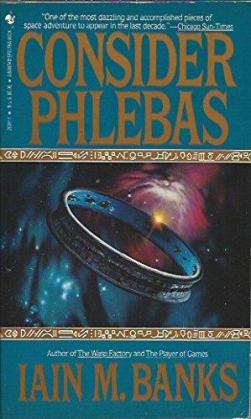

 How the hell do I review an academic non-fiction book? I mean, really though. Because it fails on a lot of the metrics I’d normally use (it hardly has a compelling plot, after all) and well… it’s just so much of a different thing. And I’m not an academic – I haven’t anywhere near the awareness of the current literature to review it in a proper academic way. I’m just someone who likes reading about witches and Romans. Possibly this is where my intention to review everything I read trips up a little bit. This probably doesn’t need a review. But when have I ever felt the need to change my plans simply because they didn’t survive contact with reality? So it’s probably going to be another short one.
 It’s probably been a bit too long since I read volume 1 – I am not 100% sure I could have given you a plot summary before I started reading this one – but it worked out ok in the end. Luckily it’s the sort of story that signposts back to the previous stuff quite a bit, so I felt like I’d been clued in, more or less, as I went. Also it’s just quite pretty. That makes up for a fair bit.
 THE HUGOS ARE VANQUISHED. I HAVE CONQUERED THEM. Look upon my toil ye mighty and wonder what the fuck I’m doing with my life. Jesus Christ this was a bad one to end on. I knew I wasn’t going to like it, I always knew… but I had underestimated quite how spectacularly shite it was going to be.
 A Reader of Else