Inception
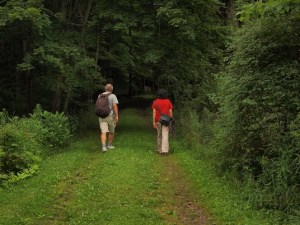
That day, walking down on the Camino Real near El Ocaso, the project presented itself: we needed to keep the flow of a conversation that was starting, but restrict it (mostly) to the purely photographic, at least for a while. Very soon thereafter, in August 2013, we started the actual photographic conversation.
The topoi, the places of conversation, none of them completely mathematical nor completely artistic, started to ebb, to flow. Two texts were important inspiration at first: Daido Moriyama’s Tales of Tono – his own attempt as a professional photographer to capture the valley of Tono in Japan, and Samuel Todes’s philosophical text Body and Mind – an extremely accomplished reading and interpretation of phenomenology ranging from Husserl to Heidegger to Merleau-Ponty – Todes describes how our being-placed-in-bodies in the world determines so many of our perceptual categories.
For our project, these were crucial starting points. But at some point we freed a bit ourselves from their original inspiration.
The project originally was not a photographical project, although many of the photographs are interesting in their own right.
The project originally was not an artistic project, at least not in the original intention (but part of it clearly has the flavor now of an artistic project).
The project is not a philosophical treatise – but it is certainly marked by phenomenological reflection.
And the project is obviously not a mathematical work – but two of its participants are active mathematicians, and many threads of the project are strongly inspired by their wish to communicate mathematics outside of the usual way – and avoiding more common popularizations of mathematics.
BUT the project has now evolved into becoming artistic, photographical and in some slanted way, mathematical. It is flowing.

Direction – Time topos
After two and a half years of conversation, including also some videos (dynamic topoi), we seem to be ready to pause and look at the big picture, the “topos of topoi” we have created inadvertently: some 2500 images, some 22 videos could be the beginning of a description. But much more seriously, some topoi (blur, in-between, memory, sheaves, standard/nonstandard, arithmetic, modular, arboreal, etc.) seem to have emerged from the project and acquired their own “life”.
Life of a topos?
This could seem ludicrous. Topoi have been described in mathematics, in philosophy, in different subjects where an abstraction, one of the most effective generalizations of the notion of “space” is needed. Grothendieck in particular came up with the name and assigned it to a situation where (I try now to avoid specific mathematical language) a “space” (a notion of spaciality, a notion where you can place objects and compare positions) where typical notions fail. The definition is technical but has been extremely useful – in a way, you replace the “points” of a space, the basic positions by all possible representations of them in actual situations. You abstract notions such as “being there“, “being inside“, “connecting”, etc., by representing them somewhere “else”, somewhere where you can contrast these notions, without reducing the original topos to any of its specific representations but rather having a way of recovering information from the specific representation. A topos is a “place” where this is technically possible.
In the project the photographs – and more especially the conversations freely interwoven by four different “voices” through the photographs – gave life to some topoi. “In-between” is an example of such emergence of a strong topos.

But… why topoi?
Coming back to the origin of the project, why topoi?
One of the notions common to plastic art, to video, to painting but also to sculpture and drawing and to mathematics is the centrality of a notion of space. Not necessarily the same, and not necessarily restricted to the parts of mathematics (or plastic art) whose central object of study is “space” in however abstract a way. Rather, and this is crucial, the way we perceive, understand, build our primary notions, develop understanding by the fact of being embodied, being in a body whose sense of verticality, “up and down”, symmetry, etc. are givens of perception, since the very beginning of our life. We are in the world as bodies in the world. Todes says about the vertical field:
This vertical field is applied not to us, as active percipients, but through us. Our initial problem is to balance ourselves upright in this field of influence. Our problem is neither to conform (accede) to this influence, nor to offer resistance to it – neither of which makes perceptual sense.
A notion of spaciality present in our way of developing mathematical notions seemed in 2013 a first key to the possibility of a meaningful conversation between two artists and two mathematicians – a reflection through our photographs on very general notions of space/topos (including memory, blur, in-between, numeric, geodesic, etc.).
 project topoi
You must be logged in to post a comment.