• Member Portal
  • Contact
  • Subscribe
  • For Journalists
  • Search Search
1.800.944.4773
Postpartum Support International (PSI)
  • Get Help
    • In An Emergency
      • People in crisis should call their physician, local emergency number or National Emergency Hotline. Learn More.
    • Perinatal Mental Health
      • Signs, Symptoms & Treatment
      • Resources for You
    • Find Support
      • PSI HelpLine (English & Spanish)
      • Provider Directory
      • Find Local Support
      • Online Support Groups
      • Chat with an Expert
      • Peer Mentor Program
      • Specialized Support Resources
      • Postpartum Planning Class
      • Perinatal/Postpartum Psychosis
      • En Español
    • Resources
      • Connect by PSI
      • Intensive Treatment in the US
      • Current Research Announcements
      • Legal Justice
      • Medication Resources
      • Birth and Postpartum Doulas
      • Resources in Other Languages
      • FAQs
  • Professionals
    • Professional Services
      • PSI Membership
      • PMH Certification (PMH-C)
      • Perinatal Psychiatric Consultation Program
      • Provider Directory
      • Legal Justice for Families
    • Events
      • Trainings and Webinars
      • PSI Annual Conference
      • 2026 World Maternal Mental Health Forum
    • Resources
      • Current Research Announcements
      • CW Memorial Training Scholarship
      • Susan A. Hickman Research Award
      • Screening Recommendations
      • State Perinatal Psychiatry Access Programs
  • Training
  • Get Involved
    • With PSI & Your Community
      • The Climb
      • PSI Membership
      • U.S. Chapter Program
      • Ways to Give
      • Volunteer
    • Spread Awareness of PMHD
      • Maternal Mental Health Month
      • Father’s Mental Health Day
      • Blue Dot
      • Tell Your Story
    • Professional Involvement
      • Alliance for People of Color
    • Mind the Gap
      • About Mind the Gap
      • Coalition Members
      • Join the Movement
      • Action Wall
      • The Strategic Action Plan
  • About
    • Our Impact
      • Our Work in Action
    • About Us
      • Mission, Vision & History
      • Strategic and Financial Statements
      • Non Discrimination Policy
    • Meet Us
      • Staff
      • Board of Directors
      • Advisory Council
      • Faculty
      • Best Practice Committee for PMH Equity
      • Postpartum Psychosis Task Force
      • Our Sponsors
    • Blog & Media
      • Journalists & Media
      • Blog
      • I Am One Podcast
      • Public Service Announcements
  • Marketplace
    • Shop
      • PSI Manuals, Resources & Printables
      • PSI Gear Shop
    • Books, Tools & Awareness Materials
      • Recommended Reads
      • Educational Materials/Material educativo
      • Discussion Tools/Herramientas de Discusión
  • En Español
    • Para Familias
      • Apoyo de PSI para las familias hispanoparlantes
      • Trastornos de salud mental perinatal, conozca los síntomas
      • Encuentros de Apoyo
      • Recursos Especializados
      • Taller prenatal: del embarazo al posparto
      • Apoyo de pares
      • Material educativo y recursos
      • Pérdida y Duelo
      • Ayuda para los papás
    • Para Profesionales
      • Conferencia anual de PSI
      • Entrenamientos para profesionales
      • Certificación PMH-C
      • Hazte miembro
      • Material Educativo
      • 2026 World Maternal Mental Health Forum
    • Acerca de PSI
      • Misión, visión e historia de PSI en español
      • Voluntariado en PSI
      • Mes de la salud mental materna
  • Donate
  • Menu Menu
Blog
Blog español, Perinatal

“Ten hijos… será divertido, dijeron”

Paulina Chavez Medina, Terapeuta asociada

Me tomo un poco de tiempo crear esta pieza por que mientras me tomaba un tiempo para reflexionar en mi trayectoria como mamá, hubieron tantos temas que pensé que serían importantes de mencionar. Así que aquí les comparto un poco sobre lo que he aprendido como mamá y terapeuta en los últimos 14 años.

Ser mamá fue algo que hasta un cierto punto siempre supe que quería ser. Mis hijos imaginarios eran tan buen niños, calmados , respetuosos, no usaban iPad o teléfono. Eran perfectos. Mi hijos de la vida real creo no recibieron el memo o visual que yo tenía. La maternidad realmente me agarró desprevenida, o me dejó en seis como decimos en México. Y la razón fue porque la realidad es que la maternidad tiene tantas interacciones que no solo tienen que ver con el aspecto de ser mamá.

Como terapeuta especializada en salud mental maternal aprendí que tanto como las presiones
sociales, las mentales y culturales crean un sistema interno lleno de inseguridades y constante
preocupación. La realidad es que la salud mental maternal es parte de una especialización de modelos de trauma y negar o minimizar este aspecto causa fallas en el tratamiento que puede hacer más
difícil el apoyar a las mamás que están pasando dificultades.

Como mamá y como terapeuta, veo esta realidad desde dos lugares. Desde el corazón que ama profundamente a sus hijos… y desde la mente que entiende lo mucho que se nos exige sostener.
Porque la maternidad no viene sola. Viene con carga mental, expectativas irreales, presión social y muchas veces, con muy poco apoyo real.

Se espera que estemos presentes, pacientes, amorosas, organizadas, emocionalmente disponibles… todo el tiempo. Pero, ¿quién sostiene a la mamá cuando ya no puede sostener más? La salud mental materna sigue siendo un tema del que se habla poco y se juzga mucho. No es fácil decir:

  • “Estoy agotada”
  • “Extraño mi espacio”
  • “A veces me frustro con mis hijos”

Pero decirlo no te hace mala mamá. Te hace humana. Desde mi experiencia como terapeuta, sé que reprimir estas emociones no las hace desaparecer —solo las intensifica. Y desde mi experiencia como mamá, sé que hay días en los que el amor y el cansancio coexisten en el mismo momento. Cuidar la salud mental no es un lujo. Es una necesidad. Eso puede verse como:

  • Pedir ayuda (aunque cueste)
  • Tomarte pausas sin culpa
  • Decir “hoy no puedo con todo”
  • Ordenar comida porque hoy no se cocina
  • Ir a terapia
  • O simplemente permitirte sentir sin juzgarte

La maternidad no necesita más perfección. Necesita más honestidad. Y tal vez, si empezamos a hablar de esto sin filtros, más mamás dejarán de sentirse solas en lo que están viviendo.

Mayo es el mes de la salud mental materna, en este mes tan importante queremos invitarte a reflexionar sobre todo lo que inclye la maternidad real. Recuerda no estás sola, no tienes la culpa. ¡Con ayuda, te sentirás mejor! Comparte este blog de apoyo en salud mental perinatal con quien lo necesite.

Acerca de la autora

Paulina Chavez Medina

Paulina Chavez Medina es terapeuta asociada y mamá, especializada en salud mental materna, ansiedad, depresión, agotamiento emocional y procesos de identidad en mujeres y madres. Su enfoque terapéutico integra autenticidad, humor, vulnerabilidad y una mirada culturalmente sensible hacia las experiencias de mujeres latinas, de primera generación e inmigrantes. A través de su trabajo, busca crear espacios reales y libres de juicio donde las personas puedan sentirse vistas, acompañadas y emocionalmente sostenidas.

 @paumft


Escribe para el blog en español de PSI
Suscríbete al boletín de PSI en español

Apoyo de PSI para familias hispanoparlantes

Encuentros de apoyo

Recursos especializados


  • En Instagram
  • En Facebook
Capacitaciones en salud mental perinatal de PSI
Certificación en salud mental perinatal (PMH-C)
Inscríbete a la conferencia PSI 2026

Connect by PSI App

Connect by PSI

Descarga Connect by PSI desde tu tienda de aplicaciones para obtener apoyo y recursos en la palma de tu mano.

May 11, 2026
Share this entry
  • Facebook Facebook Share on Facebook
  • X-twitter X-twitter Share on X
  • Whatsapp Whatsapp Share on WhatsApp
  • Pinterest Pinterest Share on Pinterest
  • Linkedin Linkedin Share on LinkedIn
  • Tumblr Tumblr Share on Tumblr
  • Vk Vk Share on Vk
  • Reddit Reddit Share on Reddit
  • Mail Mail Share by Mail
https://postpartum.net/wp-content/uploads/2026/05/Espanol-Blog-featured-Image-2000-x-1050-est.-8.2025-62.png 1050 2000 PSI Español /wp-content/uploads/2019/12/PSI-logo_72.png PSI Español2026-05-11 17:29:162026-05-18 17:05:40“Ten hijos… será divertido, dijeron”

Blog Topics

News & Blog

  • Blog
  • I Am One Podcast
  • Info for Journalists
  • Public Service Announcements

eNews

Subscribe to the PSI Blog

Postpartum Support International
Facebook Facebook Instagram-1 Instagram-1 Pinterest Pinterest Linkedin Linkedin Vimeo Vimeo Youtube-play Youtube-play

Guidestar Charity Navigator Four Star Rating

For Helpseekers

  • Explore PSI Support Options
  • Contact the PSI HelpLine (English & Spanish)
  • Learn About Perinatal Mental Health Signs & Symptoms
  • Resources for You
  • En Español
Apple App Store
Google Play

For Professionals

  • Explore PSI’s Programs for Professionals
  • Learn about Certification
  • Training & Webinars
  • Perinatal Psychiatric Consultation Program
  • List Your Practice in the Directory
  • PSI Annual Conference

Make an Impact

  • Make a Donation
  • Become a Member
  • Volunteer with PSI
  • Participate in The Climb
  • Tell Your Story

© 2026 Postpartum Support International.
  • Disclaimer
  • Privacy Policy
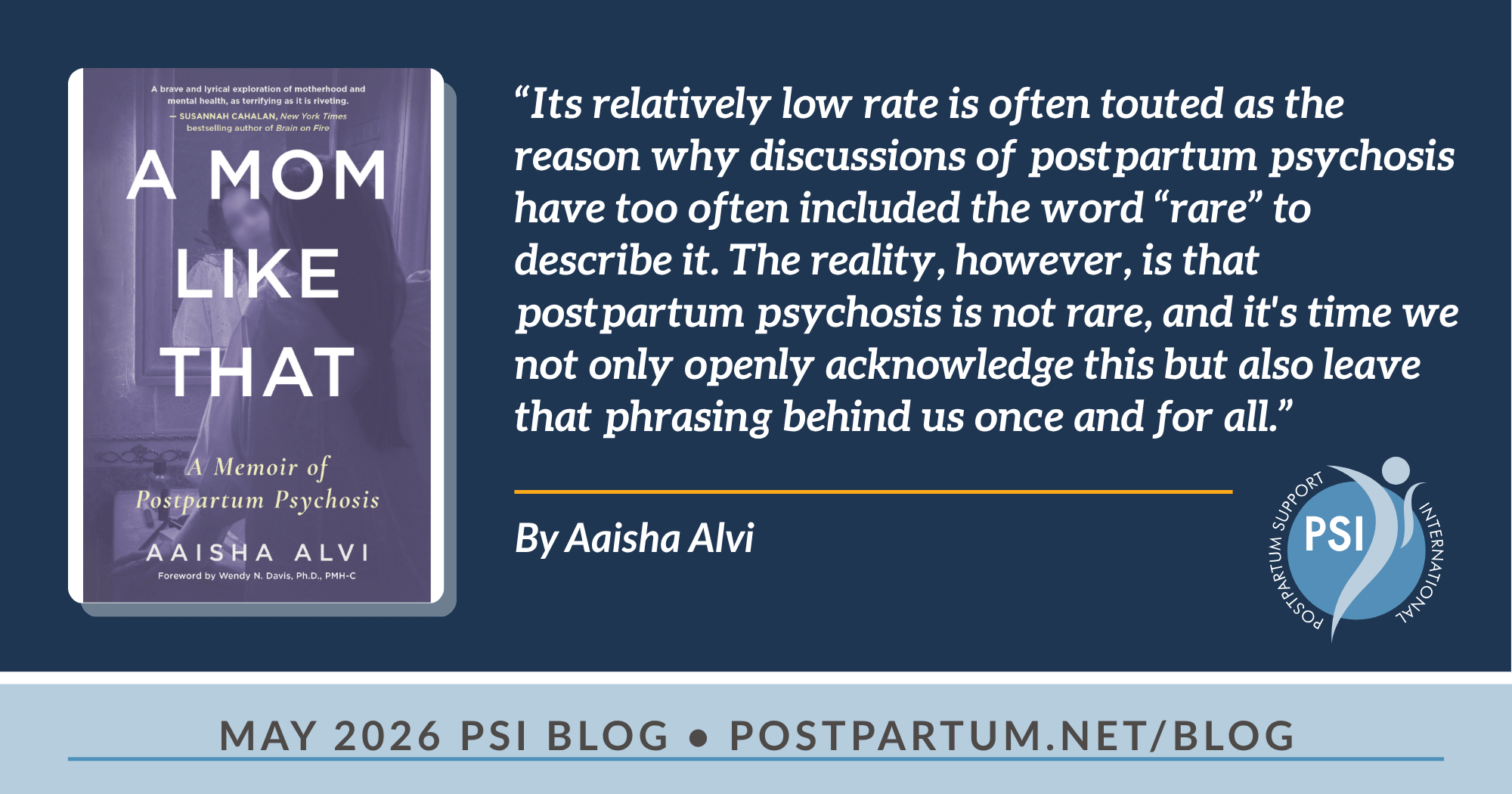
Link to: Mother’s Day: A Love Letter to My Younger Self Link to: Mother’s Day: A Love Letter to My Younger Self Mother’s Day: A Love Letter to My Younger Self“I wish every mom would write themselves a love letter this Mother’s Day. You deserve to recognize how far you’ve come–and the strength you’ve built. Ask yourself: What would I say to my younger self? What were my hardest moments–and what did I learn? When did I ask for help? How did I change because of it? What am I most proud of? Remember, you are growing even when it doesn’t feel like it. And you are not alone. Happy Mother’s Day.” Mother’s Day: A Love Letter to My Younger Self To the mom who doesn’t feel like herself right now By Nancy Goh Kelly, MPH Link to: Putting an End to Calling Postpartum Psychosis “Rare” Link to: Putting an End to Calling Postpartum Psychosis “Rare” “Its relatively low rate is often touted as the reason why discussions of postpartum psychosis have too often included the word “rare” to describe it. The reality, however, is that postpartum psychosis is not rare, and it's time we not only openly acknowledge this but also leave that phrasing behind us once and for all.” By Aaisha AlviPutting an End to Calling Postpartum Psychosis “Rare”
Scroll to top Scroll to top Scroll to top