February 6, 2026
Big Book Launch News!
(This is a pinned post! Scroll down for updates)

🎉 Celebrate the launch of DEFINITELY THRIVING, with a special 25th-anniversary showing of BRIDGET JONES’S DIARY, the iconic film starring Renée Zellweger, Colin Firth, and Hugh Grant, at Paradise Theatre in Toronto on Thursday March 5. 🎉
Following the film, enjoy a conversation between Kerry Clare and Marissa Stapley, New York Times-bestselling author of LUCKY, about why Bridget Jones still resonates, and the film’s connections to DEFINITELY THRIVING, a novel about people who are perfectly imperfect, and all the love and support that’s required for one woman to make it on her own.
A night out at @paradiseonbloor, Toronto’s prime cinema venue, with books on sale from the good people at @typebooks? DING DONG. 🎥 📖 🎉
Pick up your tickets today at https://paradiseonbloor.com/movies/bridget-joness-diary-definitely-thriving-book-launch-with-kerry-clare/
February 24, 2026
Standing on the Edge

I’m writing this post from the airport where I’ve arrived much too early for my flight to Pittsburgh, where I’ll be attending the American Booksellers’ Association’s Winter Institute, an opportunity I’m so excited about—can you think of better company? And for me, this is the beginning of Book Promo season, a season that’s actually going to be pretty busy. We’re also taking a family trip to the UK in early April, a trip I booked around potential book events, which I felt a little embarrassed about at the time, because who was to say that such events would even come to pass? But they have, they really have, a string of occasions that I could (and no doubt will) line up in a row and call my “book tour,” as though I were R.F. Kuang or Sarah J. Maas. And I feel lucky for all these things to look forward to, for all these opportunities to meet readers and sell books. When I published my first novel almost ten years ago, I just took for granted that these were the sorts of things that just happened, but they don’t always. (And to be honest, even when they do, readers and book sales are never guaranteed. It’s a crapshoot.) I feel really lucky for the marketing and publicity push my publisher has put behind my book—the creativity, intelligence, and care has been astounding. Every author should be this fortunate.
And being able to line up events like this, a quasi book tour—of course celebrating these opportunities is important, but underlying this celebration is an uncomfortable feeling like I’m trying to prove something with them. Look at me, here’s living proof of my substance and importance, that I’m legit. Posting my “Book Tour” schedule like it’s no big thang, as though I’m the kind of person this sort of opportunity happens to (but oh, it’s such a big thang. I’m so so grateful and so so pleased, because I’ve experienced a book launch to CRICKETS and it wasn’t great.) The same way I feel compelled to line up my four published novels (my fourth novel is not officially out YET, but it’s slowly trickling its way into the world. Official pub date is March 17!) and exclaim to the world, “Look what I’ve done! Four entire novels. Maybe this author thing is not just a ridiculous fluke after all.”
As though the four books and the list of events add up to something more than what they are, as though they prove something about my worth, my worthiness—as a writer and a human both. And this is what I’m resisting, what I’ve been working on shrugging off since my last book came out three years ago and it almost wrecked me. All these things are wonderful, but they also mean nothing. This is my moment to shine, but also nobody cares, and neither point necessarily cancels the other, and being able to hold all of this at the very same time might very well be the key to not losing my mind.
February 23, 2026
Gleanings

- In a log cabin quilt, the red represents the fire at the centre of the home. This morning ours is burning warmly, wood cut and split and stacked in the woodshed by the grandfather who loves to show his grandsons how a house is built. How the beams are built up of long lengths of 2x12s spiked together, the joists crossing them.
- It seems symbolic these days, to simply make a mark, a human mark on a piece of paper.
- This wintering of life is my chance to go deeper, slow down, fan the embers of latent desires of my youth that I didn’t have time for while rushing from train to office desk to school pick-up to grocery store to kitchen.
- This is the language I grew up with, spoken by my parents to each other and to me, although I almost always answered in English. Still, most of my childhood memories come with German subtitles.
- I’d rather be “cringe” and sincere than “cool” and detached. I’d rather celebrate the fact that we are capable of feeling something for one another in a world that often feels designed to keep us apart.
- “Rules are rules: Cold but piercingly sunny days require grapefruit cake.”
- My chief take-away from that course was that, to be successful, one has to choose a location, walk into it quietly and with as little fuss and noise as possible, settle and wait.
- “Physical books have always been my best friends, and the wisdom and characters within them have guided me when human beings or humanity disappoint. I do think my reading practice serves as the perfect antidote to the noise and performance of social media.”
- This morning, I
track my day, searching
for it. A “holy moment” –
one amidst a thousand
of them to be sure.
And there you are,
a tiny moment. Maybe
three minutes in a
day filled with over
a thousand,
waking ones. - How do I turn off my thinking mind? Actually, I’m an expert — I’ve learned all kinds of strategies by necessity, because writing doesn’t thrive when thinking, if thinking is equated with panic or rumination. Thinking seems like the opposite of trusting, of going with the flow. Thinking spirals. To turn off the thinking mind, you need to get what’s inside, out — by drawing, sketching, making music. Even talking is not the same as thinking.
- There’s something quietly radical about gathering with strangers and neighbours, opening our books and simply being together. No pressure to perform. Just the shared understanding that reading, even when done alone, doesn’t have to be lonely. Sitting with other people absorbed in their own worlds somehow creates a connection that’s hard to describe but easy to feel.
February 23, 2026
Frog and Other Essays, by Anne Fadiman

The day I first met my friend Nathalie was, in some ways, the day my life began, because it was also the day I discovered Anne Fadiman, when Nathalie gave me a copy of one of her essay collections—I think it was Ex Libris: Confessions of a Common Reader. And I very quickly became a devotee, devouring her other collection, and then the book on rereading which she’d edited, and ever since, Nathalie and I have been waiting for, craving, still more Anne Fadiman, her humour, her focus, her attention, her brilliance.
And then finally, Anne Fadiman delivered, with a new collection called Frog and Other Essays, which does not disappoint. If I designed the world, there would be stacks of copies at the entrance to every bookshop in the country and descending hoards on the verge of riot who want to buy them, but it turned out that our local Indigo had ordered in two. When I showed up at the store to purchase one, I texted Nathalie to let her know (she’d had no idea!) and before I’d even brought my copy to the till (I take a long time to browse, it’s true) Nathalie had come into the store and bought the copy remaining. (I’ve just checked their stock and there are two more on the shelf!).
What a thing to finally pick up a book that you’ve been waiting to read for more than 15 years—and Frog does not disappoint. Although the opening essay was unexpected—so many of Fadiman’s essays are the result of her close attention, and this one (about her children’s long-lived pet frog) was about a being to which she’d paid very little attention at all. (It made me laugh until I cried. “You may be wondering: What kind of frog was he? / I didn’t.”) Fadiman is so thoughtful, so intelligent, so creative, her thoughts so nimble, and so an essay about a mostly ignored frog (THAT LIVED FOR 17 YEARS!) is also a meditation on devotion (and otherwise), domestic life, care, family, and changes over time.
And then her essay on her printer. Her printer! “[A] Hewlett-Packard LaserJet Series II that cost $1,795” in 1987, and would live on for decades, Frankensteined together from spare parts mined on eBay. In “The Oakling and the Oak,” she writes about Coleridge’s disappointing son Hartley, and the nature of progeny, disappointing or otherwise. In “All My Pronouns,” she expounds on her evolving relationship with the rules of grammar, informed by her strict prescriptionist sensibility, but also from her relationship with her beloved students at Yale, where she is a Professor of English and teaches nonfiction writing. “Screen share” is a trip through Zoom learning in Spring 2020, what was lost, what was gained. The final line is, “At 5:20, I am reluctant to click the button that says, ‘End Meeting for All.'”
In “South Polar Times,” readers indulge Fadiman’s obsession with polar expeditions to much reward, this one about the newsletter produced by Robert Falcon Scott’s ill-fated polar expeditions. And then finally, “Yes to Everything!” about Fadiman’s student, Marina Keegan, a writer of great promise whose sudden death was shocking and whose work was published posthumously in the collection The Opposite of Loneliness.
Oh, I love the world through the eyes of Anne Fadiman. And I love Anne Fadiman, and I love Nathalie for giving me Anne Fadiman (among so many other riches). Like all the best thing, Fadiman’s work is never enough, but also it manages to be everything.
February 20, 2026
These are the Fireworks, by Vicki Grant

Oh, wow, this comedy murder mystery is one heck of a ride, full of twists and turns, moments of real poignancy, and abject absurdity. Celebrated YA and middle grade author Vicki Grant makes an assured debut for adult readers with These Are the Fireworks, a story about a family thrown into disarray after the death of its patriarch, but just not for the reasons you’d think. After the unexpected death of Nina Fforde’s father, Malcolm, her mother, Petra, begins acting bizarrely, dressing differently, hardly beset by grief at all, and possibly cavorting with a much-younger man. Nina herself decides to throw off her listless relationship, and move back home to help care for her mother—but Petra seems hardly concerned with being there for her grown daughters. Plus there’s a detective sniffing around suggesting that Malcolm’s death may not have been an accident. Come for the wacky story, but stay for the amazing family dynamics (including spectacular dialogue) between Nina and her two sisters. This one is great.
(This is one of four books featured in my latest “On Our Radar” column at 49thShelf. Check the whole thing out here!)
February 18, 2026
Black Public Joy, by Jay Pitter
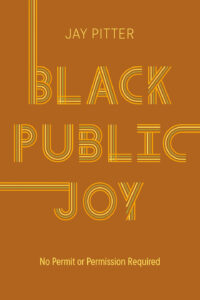
“Every gesture, from ceding space on a sidewalk, to nodding your head to bombastic beats radiating from a street festival, influences the amount and quality of public joy available to ourselves and others. Every bus ride, trip to the bookstore, and coffee shop meetup presents us with the responsibility to be good stewards of each other’s public joy.” —Jay Pitter
In her work, Jay Pitter takes the familiar and makes it new, complicating narratives in the most generative, engaging and interesting ways to create new possibilities. And in her new book, BLACK PUBLIC JOY, she continues that work, exploring the myriad expressions of Black identity in public spaces, and how those expressions are connected to history and culture. The book begins with a childhood memory of Pitter dancing to music she hears while walking through a shopping mall, and being reprimanded by her mother “who felt that a Black person dancing in public was undignified and reinforced racist stereotypes.” And over the years, the experience would contribute to Pitter’s approach as a placemaker (someone who leads the design, policy and programming of public spaces) and urban planning professor. She writes, “I’m fascinated by how people claim and cede space in public and how design, histories, stories, politics, and social attitudes impact these choices.”
BLACK PUBLIC JOY explores all these ideas through five different topics: performance, restriction, protest, sacred space, and joy, drawing on examples from cities across North America. It’s a beautiful and galvanizing text, shifting my own perspective about public space, and making me consider the ways in which I too can be a steward of public joy for those around me.
February 17, 2026
How to Stay Humble

(This essay was first published in my latest Pickle Me This Digest ENTHUSIASMS newsletter, along with a lot of other great stuff. If you’d like to receive the newsletter free to your inbox every month, sign up here!)
I went to a bookshop a couple of weeks ago, and brought along an advance copy of Definitely Thriving to pass to the bookseller behind the counter, which might not be the done thing, but why not, I thought? And so after buying a stack of books, I handed her mine, and said, “I’m an author. You’ve stocked my books in the past, and I wanted to let you know about my latest.” She visibly recoiled, and shouted, “NO!” “I mean, you don’t have to take it,” I said. “I just thought somebody here might like to read it.” This back and forth went on for what felt like 500 years, and then she seemed to realize that it was an advanced copy, and consented to accept it. “I can’t sell this in the shop though,” she said, and I replied, “Well, I kind of hope that you wouldn’t?”
“Wow, that was rough,” said my kids, once we were out of the shop and back in the car. “Are you okay?” my husband asked, but I’ve been an author long enough to know that being brought down to size on a regular basis is part of the job description. Authors are not special. Authors are a dime a dozen. Authors are basically an infestation, and booksellers have to contend with our demented desperate egos on the regular. That bookseller didn’t care about my ARC, and I know where she was coming from.
If you’ve ever had authorial dreams, I would advise you to not have these be the foundation of your self-esteem—and believe me, I’m speaking from experience.
I launched this newsletter just over two years ago during a disappointing season following the lacklustre reception of my third novel, and ever since I’ve been trying to figure out to be a creative person who will never be so tripped up and shattered by such an experience again. Initially I thought the key was to have zero hopes or expectations thereby bypassing the possibility of disappointment altogether, and then my therapist and I had to have yet another conversation about there in fact being no shortcut around having feelings, even tough ones. And then I started thinking about how important it was to want things, including success, and how to hold this balance (and not have said success be the foundation of my self-esteem). Another layer was trying to avoid the trick of convincing myself that by not hitching myself to meteoric dreams of success, such a thing would finally happen.
Most importantly, I am working hard to accept the forces that are within my control versus those which fall outside it—for example, I can indeed try to sell as many tickets as possible for my March 5 book launch, but making my novel a bestseller, say, in a way that requires buy-in by the nation’s big box bookseller entirely is outside of my purview and no amount of rearranging my books at those bookstores so the covers are facing out is going to change that. (If it could, I would have become a national bestseller a long time ago…)
It has helped that lots of lovely things are happening around the launch of Definitely Thriving, things that definitely assuage the humiliation of that bookstore accepting my ARC as though it were a used tampon. I have a packed couple of months ahead of me, and I’m grateful and excited. I’m so glad that my publisher and marketing/publicity team have worked so hard to push the book and support it. There is exciting buzz and possibility, and while I know that none of that is necessarily indicative of anything except the loveliness that it is, I have also been around enough to no that such buzz and possibility is never inevitable, it’s actually so hard to come by, and that I’m incredibly lucky to be where I am right now. (The me who was launching my previous book would have been aching with envy.)
Pema Chödrön writes about the challenge of “being big and small at the same time.” Is she a big deal? Is she small potatoes? “This was a painful experience because I was always being insulted and humiliated by my own expectations. As soon as I was sure how it should be, so I could feel secure, I would get a message that it should be the other way. Finally I said to [her teacher], “This is really hurting. I just don’t know who I’m supposed to be,” and he said, “Well, you have to learn to be big and small at the same time.”
But how does one do that exactly? Pema Chödrön has no answer, although it’s a process that all of us are ever undertaking in our own ways. As my personal fave Courtney R. Martin writes, “‘Big and small at the same time’ is a constant human condition, not an exceptional paradox.”
February 11, 2026
The Barn, by Wright Thompson

After hearing Wright Thompson—a white sportswriter from Mississippi—on The Bulwark Podcast, I absolutely had to get my hands on his book The Barn: The Secret History of a Murder in Mississippi, which is on one level about the 1955 murder of Emmett Till, a 14 year old Black boy lynched after apparently whistling at a white woman that summer when he was down south visiting his cousins. But which is also about America all told through the history of a thirty-six square mile area in the Mississipi Delta that was—not randomly in the slightest, but instead as a result of its land, its people, its politics, its history, its mythology—where Emmett Till (a child whose family called him Bobo, one of the silly nicknames I’ve given my own children) was murdered in a barn in earshot of plenty of people who did nothing to help. A barn that still stands today, where the property owner stores his Christmas decorations, and he had no idea that Till had been killed there. So many people in the Mississippi—Thompson among them for a very long time, whose family had been farming on nearby land since 1913—never knew the story of Emmett Till at all, and Thompson points out the strangeness of a culture build on remembrance managing to forget so very much.
Thompson never mentions the song in his book, but I’ll never hear Arlo Guthrie singing about the rhythm of the rails ever again without thinking about how Emmett Till rode the Illinois Central line that summer, The City of New Orleans, and came back home the same way in a casket that his mother insisted remain open at his funeral so that everyone could see what the murderers had done to her child. Emmett Till was America’s native son, a product of a terrible and violent history that endures to this day and whose patterns continue with state-sanctioned violence in Minnesota and an establishment that will stop at nothing to maintain their place in a hateful caste system. (He was more than a symbol though, he was also a boy, Mamie Till-Mobley’s son, and Wheeler Parker’s cousin, and his family has worked to keep the memory of his life and the tragedy of his death alive, to make it all mean something.)
There is no then and now in Thompson’s storytelling, instead everything happening at once, layers upon layers of meaning and time, Thompson peeling back the layers to let light shine into the darkness. This is one of the most beautiful, powerful and heartbreaking books I’ve ever read, galvanizing and absolutely necessary.
February 10, 2026
In Winter I Get Up at Night, by Jane Urquhart

Jane Urquhart’s In Winter I Get Up at Night is plotted more like an epic mural than a straightforward novel. Instead of straightforward chronology, time is a tangle, the past ever present, memory heaped on memory, some of it imagined, some of it otherwise, the line between fact and fiction blurred, mythical figures appearing as men, other men as myth (maybe). As Emer drives down snowy roads in Saskatchewan, on her way to work as an itinerant music teacher at rural schools, she recalls the story of her one great love, and their illicit evenings together at railway hotels. She also thinks about her family’s journey from Ontario to the Prairies, the great storm that unsettled their settling there, and the months she spent as a patient in a children’s ward in the hospital recovering from catastrophic injuries. In some ways, this is a quiet novel, a subtle novel, but only if one is not reading very carefully, skimming over the clearing of Indigenous peoples from the plains, the presence of the KKK in prairie communities, the xenophobia that gets in everywhere. Symbols of Canadiana woven into the tapestry—the railway, its castle-like hotels, Frederick Banting, Pullman porters in all their gallantry, a powerful invitation to look again and consider what the true stories of this country actually are.
February 9, 2026
A Love Affair With the Unknown, by Gillian Deacon

“Unfathomable life is the reality, yes. With a deep breath to calm ourselves, we can concede that uncertainty is inevitable and part of being alive. In fact, we turn toward it; we need the rich mystery of life’s unknowableness. We understand, deep down, that a life that went entirely to plan would be joyless.”
It has taken me a long time, many missteps, four years of therapy, and a pile of books by Pema Chodran to learn to be somewhat not un-okay with uncertainty. A love affair I would definitely not term it yet, but I’ve come a very long way since a decade ago when Twitter was breaking my brain and I was continually refreshing my feed anyway in the hopes that this next update that would make sense of the chaos unfolding and offer some indication that everything, at some point, would turn out okay. Since six years ago as we were heading into a pandemic and I felt I was single-highhandedly responsible for holding the world together. Since four years ago when I walked up Major Street weeping, because a new strain of Covid was about to arrive and I was incapable of imagining anything less than an apocalypse. In my mind, there was what I could control and abject disaster, and nothing in between.
But oh, there is space, so much space, for wonder and possibility, for strength and resilience, for care and community, and—in Gillian Deacon’s extraordinary case—a book like this one, which is such a gift to its readers. A Love Affair With the Unknown is a compelling blend of memoir and reportage about dwelling in uncertainty as Deacon—a popular Toronto broadcaster—finds herself beset by a debilitating and mysterious illness in late 2022. Having previously come through three bouts of cancer, and as someone who works on live radio, Deacon was more familiar than most are with uncertainty, but this new twist in her story was particularly challenging—she could no longer partake in the activities that gave her pleasure, she felt terrible all the time (nausea, fatigue, tinnitus, chills, and more), and worst of all, she had no assurance whatsoever that things were ever going to change, that the rest of her life wasn’t going to be a tiny world defined and confined by illness.
Deacon eventually receives a diagnosis of Long Covid, but this book isn’t about the happily-ever-after (Deacon knows by now there’s no promise of that), instead the uncomfortable in-between when she still didn’t know how it all might shake out. It’s an exploration of the psychology behind our discomfort with uncertainty, the way that too many of us would prefer to skip through the hard stuff and get to the end—Deacon writes about how she used to think she was embracing the maxim to “Feel the fear and do it anyway,” but she was actually jumping past the fear part so she didn’t have to feel it at all. She writes about how difficult it is to be lost, to lose control, but what we miss when we refuse to let go, the amazing possibilities for how fate may unfold. That the greatest fear of all is often that we might not have the capacity to get through challenges, more so than the challenges themselves (it’s a fine distinction, but it matters).
Deacon considers how Salmon Rushdie faced his fears, references Rebecca Solnit’s A Field Guide to Getting Lost, explains attention bias, recommends awe, thinks about art and unpredictability. She notes how the Covid pandemic thew so many of us off the rails (it’s me!), leaving us less equipped to meet this current moment and all its tumult. There’s also the anxieties that aren’t simply all in our head—the reality of climate change especially, fears that are justified, an unknown that holds no promises of everything working out just fine. She also writes about chance and risk and poker (!), about arrogance and humility. About hope. About “figuring out how to stay emotionally afloat in a tsunami of change.”
The crux of it all, for me, has been learning to stay where we are. Not leaping into a terrifying future, not desperately clinging to a past that is gone, but instead being here and paying attention. And A Love Affair With the Unknown is a guidebook to just that, a beautiful, kind, calming and bolstering read, and a book I’ll keep returning to (along with all the Pemas).


