Showing posts with label Neil Miller. Show all posts

Friday, 17 June 2022

Beer O’Clock Tribute: All Hail Pale Ale


Way back in the mists of time, i.e., about 14-55 years or so BC*, back when craft beer was just something talked about on obscure blogs by large oft-bearded men wearing Hawaiian shirts, the late and much-lamented beer writer and raconteur Neil Miller was one of the two main contributors to our (ir)regular Friday afternoon Beer O'Clock column here at NOT PC -- in which in his own entertaining fashion he introduced most of us to just what was going on with this weird new stuff that frequently tasted of something called hops.

So in tribute to his good self, I'm going to just as (ir)regularly post some of those columns that you might remember -- this one, for example, in which he introduced us to something we'd never heard of, something called Pale Ale...

Beer O’Clock: All Hail Pale Ale

From 2007: in which Neil celebrated one of his favourite beer styles – Pale Ales ...

I’m a great believer that beer needs to be drunk in the proper context. Ordering a jug of Speight’s at the excellent Leuven Belgian Beer Café is very poor form. Conversely, drinking 8.5 per cent Duvel at the cricket will have you completely trumpeted by tea time.

The quest for proper context was my excuse at least for eating gourmet hot dogs and watching the opening match of the NFL while sampling the first bottle of Emerson’s American Pale Ale (6 per cent). The star-spangled label would outrage Nick Kelly and Keith Locke - always a huge bonus. It pours a deep burnished gold which would not be out of place in Fort Knox.

This is a big, strong and independent beer delivering plenty of rich orange and grapefruit notes – like snogging a Californian fruit salad - before a unilaterally firm finish. The day this beer is released each September should be a public holiday. No one would really miss Labour Day.

American Pale Ales (APA) are the boisterous new cousins of the traditional English style pale ales. Historically, pale ales are firm, fruity, nutty and relatively bitter. A fine example is the Croucher Pale Ale (5 per cent) from Rotorua. The brewer, Paul Croucher, is a reformed university lecturer who is fiercely passionate about food and beer.

His Pale Ale throws a punchy malt nose with lashings of stone fruit. In the glass, it has a full, biscuity body with pronounced orange and caramel notes. A lingering dry finish leaves the drinker immediately ready for the next taste.

One of the popular beer genres is India Pale Ale. This style of beer was developed when Britain still ruled the Raj. The troops – heaven forbid – would not drink local brews, so barrels of good old English pale ale (pip! pip!) were shipped in from Portsmouth.

Given that beer does not like heat or movement, the rough, steamy ship journeys tended to see the beer arrive in an undrinkable state. Long before refrigeration, the brewers turned to their two main weapons against infection – alcohol and hops (a natural preservative). The result was a strong, bitter style known as India Pale Ale (IPA) which, ironically, has still never been made in India.

Made from authentic ingredients and true to style, Tuatara IPA (5 per cent) is a luxuriant beer with a deep spicy nose, mellow marmalade body and a long, imperial finish. It is great to see this beer appearing in supermarkets around town.

Another university lecturer who went on to gainful employment is the effervescent Dr Ralph Bungard who runs the boutique Three Boys microbrewery in Christchurch. He says his Three Boys IPA (5.2 per cent) is unique because it uses a selection of New Zealand-grown hops which produce similar aromas and flavours to modern IPAs and APAs, “but extends those styles in a genuinely New Zealand direction.”

His golden beer has a herbal and citrus nose, a well balanced body with lashings of grapefruit and a cleansing finish. Another magnificent beer and one more reason to All Hail Pale Ale!

Cheers, Neil
* BC = Before Covid

Thursday, 19 November 2015

Quote of the Day: ‘Just the one?’

“’Fancy a pint?’ … As invitations go, it’s one of the most
appealing I can imagine that involves remaining fully dressed.”

~ Beer writer Pete Brown, from his book Three Sheets to the Wind
   via beer writer Neil Miller, from his post ‘Fancy a (sessionable) pint at the Session Beer Session?

Friday, 8 May 2015

A couple of links…

Just a special note for a UK election Friday: if you’ve been hanging out for a run-down on the British election featuring beer – and let’s face it, who hasn’t – then Neil Miller’s latest Malthouse blog 'Beer, British politics and Boris Johnson' is probably the second-best place to start (and try his favourite bus-stop beer, and you’ll soon be finished).

But if you were wondering why the Euro Zone is beginning to look more like meltdown-zone in “the markets” this morning, you might prefer David Stockman’s reminder that centrally-driven market highs have nothing to do with economics – whereas the busts they generate certainly do.

And finally (yes, that’s more than a couple, but they say it’s always better to under-promise and over-deliver) if you’d like a simple explanation of why art became ugly – why we need to see in our galleries Millie Brown’s vomit, Tracy Emin’s sheets and a boy buggering a goat -- then you need Stephen Hicks’s piece on emptiness and nausea in modern art. Because unlike Stephen, those alleged artists have nothing to say.

Saturday, 21 December 2013

What Your Beer Says About You

So, turns out I’m a direct, aggressive reader of Nietzsche who embraces change, has a drunk mother-in-law, and hides a heart of gold behind my thick skin.

Or something.

What Your Beer Says About You

What does your beer supposedly say about you?

PS: What do New Zealand’s ten best beers for 2013 say about us as a culture? (And I say that as someone who in no way truly gives a shit.)

Thursday, 30 May 2013

Beer! And awards for it.

NZ brewers have been over the Tasman picking up medals.

Beer writer and general gourmand Neil Miller describes them as “rampant”—having won 65 awards at the 2013 Australian International Beer Awards (AIBA), including six trophies and seven gold medals, and Marlborough’s Renaissance Brewery, yet again, taking out the award for AIBA Champion Small International Brewery.

Neil has all the winners over at the always sharp Beer and Brewer blog—being winners here, I’ve listed below all the local trophy and gold medal winners.

So these are the gold-medal-winning beers to check out next time you’re buying*:

Moa Brewing Company, Marlborough = 6 medals (1 gold, 1 silver, 4 bronze)
Gold in Belgian Lambic: Moa Sour Blanc

Renaissance Brewing Ltd, Marlborough = 2 trophies and 9 medals (1 gold, 1 silver, 7 bronze)
Trophy for Champion Small International Brewery
Trophy for Best Scotch Ale/Barley Wine: Tribute 2011 Barley Wine
Gold in Barley/Wheat Wine: Tribute 2011 Barley Wine

Lion, Auckland (Lion!):
Trophy for Best Australian Style Lager: Mac’s Gold
Trophy for Best Pilsner: Mac’s Hop Rocker
Gold in Other Pilsner: Mac’s Hop Rocker
Gold in Australian Style Lager: Mac’s Gold
Gold in Low Carbohydrate Lager: Mac’s Spring Tide

8 Wired Brewing, Marlborough = 1 trophy and 6 medals (1 gold, 2 silver, 3 bronze)
Trophy for Best IPA: Superconductor
Gold in Imperial/Double IPA: Superconductor

* And good luck if you can either find or afford a Renaissance Tribute 2011 Barley Wine.

Monday, 18 March 2013

Beer is beneficial

Politicians and other busybodies obsess about the cost of drinking beer.  Too little analysis focuses on the benefits, so former NOT PC beer writer Neil Miller has undertaken the serious scientific research on the topic for you. Here are the top ten benefits of drinking beer.

1. Beer lessens the constant anxiety of watching the Black Caps bat.

2. After beer, Gareth Morgan's constant lectures become slightly less annoying.*

3. Beer enables people to hold strong opinions on every issue without resorting to research.**

4. Without beer, no one would date in the provinces.

5. Television beer ads employ all young Kiwi actors not talented enough to be on Shortland Street

6. The Government gets lots of money from beer through excise tax, GST and company tax on anyone who manages to make a profit.***

7. Frank Zappa said "You can't be a real country unless you have a beer and an airline. It helps if you have some kind of a football team or some nuclear weapons." Without beer, New Zealand would only be half a real country.

8. The late-night takeaway food industry depends on beer for patronage.

9. Beer production provides the main ingredient in Marmite.

10. Drinking a frosty beer annoys President Mahmoud Ahmadinejad and Professor Doug Sellman.

* There is not enough beer in the world however to make Gareth Morgan sound sane.
** And to voice them with greater eloquence.
*** This is not exactly a benefit.

Friday, 23 July 2010

BEER O’CLOCK: Here Be Monsters – Hop Monsters

small_Yeastie_Boys_logo_270_0 If you’ve been worried about what’s happened to our once-regular beer correspondent Stu, then don’t be. As our other even-less regular beer correspondent Neil Miller explains, he’s been busy creating a monster.

Here Be Monsters – Hop Monsters
by Neil Miller

They are, according to the Made from New Zealand website, “the hottest and most unusual brewing company in New Zealand right now.”  The Yeastie Boys have just released their latest pair of beers, Yakima Monster and Motueka Monster… 

Because there is no substitute for primary research, I rang Stu McKinlay, the ginger half of the Yeastie Boys, and asked him some thoughtful questions.  The first related to the Yeastie Boys’ moniker.  Some people hate it, most people love it, but where exactly did it come from?

Well, it turns out Yeastie Boys was originally the name of Stu’s award-winning home brewery.  He says he turned up to a home brewing event and everyone else had great names for their breweries.  It was at that moment he realised then he needed one too.  Stu wanted a brewery name with a bit of a musical theme (because music is a huge part of his life) but not one which mentioned malt or hops like so many bars and breweries did. *

_QuoteOff the top of my head,” Stu said, “Little Creatures was the only brewery that referenced yeast in its name.  One day I happened to see a Beastie Boys album and the name just popped into my head.”

He admits to not particularly being a Beastie Boys fan [Me either, Ed.] but that does not stop the brewery and others constantly making references.  One media article on the Yeastie Boys was titled “Fight for your right to party” (one of the Beasties’ more famous songs) and even the Yeastie Boys’ own website has a section called “Swill Communication”, a clear play on the Beastie Boys fourth album title of “Ill Communication.”

Of course, this all meant that Stu’s still fully functional home brewery once again lacked a sobriquet.  His ingenious solution was to call it Eastie Boys, a reference, he claims, to its location deep in the eastern suburbs of Wellington.  “It has the added advantage that when I give a bottle to someone, I can use a Yeastie Boys label and just cut the letter Y off,” Stu explains.

The next question was about how the business operated.  Stu admitted it was a difficult question -

_QuoteI guess we are a brewing company but slightly more complex than most because we make different beers all the time.  We don’t own a brewery but there are lots of them around.  The Yeastie Boys just make good beer.  Maybe the best description is that we are a post-modern brewing company.” [Eeks! – Ed.]

On their Made from New Zealand profile, the Yeastie Boys note

_QuoteWe're also utilising excess capacity at small local breweries that we respect.  So, while growing our own business we are supporting other businesses made from New Zealand that we love.  The whole really can be greater than the sum of the parts. 1 + 1 = 3!!!” 

So far, all their beers have been made at Invercargill Brewery under the watchful (yet huggable) eye of Mr Steve Nally.

Then it was time to talk about The Monsters.  Both are 6% India Pale Ales brewed for winter with 100% UK malt (Golden Promise, Caramalt) and a ‘monster-load’ of hops (9g/L).  Two near identical batches of the beer were produced on subsequent days with the sole difference being the hops used.  Yakima Monster is an American Pale Ale with Nugget, Simcoe and Amarillo hops.  Motueka Monster is a New Zealand Pale Ale using the same amount of Southern Cross, Nelson Sauvin and NZ Cascade hops. **

It turns out that the idea for these particular beers was a long time in the making.  Shortly after the Yeastie Boys were set up, Stu were approached by Joseph Wood, an exceptional home brewer.  Joseph asked Stu to make one of his beers in commercial quantities.  Stu acknowledges that it was a little unusual for a home brewer to ask another home brewer to make a beer this way.

At the time, the Yeastie Boys had basically sketched out all the beers they planned to make over the next year but Joseph and Stu kept discussing the issue.  Finally, they nailed a time to do.  The Yakima Monster is based on Joseph’s beer of the same name.  The added dimension was that Stu had been toying with the concept of “cross town challenges.”

Stu had seen the Annual West Coast Challenge between Epic and Hallertau and, while he loved the beers, found them hard to compare directly because they were just so different.  He wanted people to be able to try two beers where the only difference was the hops.  It would be, in his words, “an education in hop terroir.”  

This was the thinking which led to the recent Nerherder beers from Yeastie Boys.  Nerdherder B used Motueka hops (formerly Saaz B) while Nerdherder D used Riwaka hops (formerly Saaz D).  Fundamentally, the same approach has been taken with the monsters, just with everything turned up a notch. 

So, what is the difference between the two new beers?  Well, Yakima is more assertive and, frankly American.  Motueka is more balanced and, feedback suggests, more complicated.  Both have the exact same bitterness units (around 56 IBU) but Stu believes the perceived bitterness is quite different.  In the mouth, the Motueka seems a lot less bitter.

Stu is reluctant to pick a favourite Monster saying

_QuoteNah – I sway a bit.  Initially I would have said Yakima because I’m much more familiar with aggressive American style rather the New Zealand Pale Ale style.  Now I’m not so sure.  I did a tasting last week and both nights saw pretty much a 50/50 split between the two.  The crowd came up with three or four descriptors for the Yakima and about 20 for the Motueka.  That is interesting but unexplainable.”

The only real explanation is to taste the beers.

Motueka Monster and Yakima Monster are two new beers from the Yeastie Boys, “specialists in all styles.” ***

Monsters are real and they are at Malthouse now [and around the country – Ed.]. 

* * * *

* Exhibit A: Malthouse
** The Yeasties freely acknowledge the irony of having a beer called Motueka Monster which does not use Motueka hops.
*** According to their Twitter profile.  Remember, if it’s on the internet, it must be true.

Cheers


Beer Writer
Real Beer New Zealand 
Beer and Brewer Magazine 

The post originally appeared at Wellington’s Malthouse Blog, which is almost as good as Wellington’s excellent Malthouse Bar.

Friday, 7 May 2010

BEER O’CLOCK: Oyster Stout- Right Here, Right Now

Malthouse and NOT PC beer correspondent Neil Miller gives praise to the great Three Boys Oyster Stout, a case of which just landed outside my own door courtesy of what I like to call “the perfect client.”  So thanks to that perfect client, I herewith announce the re-launch of our once regular Beer O’Clock posts – Ed.

Oyster Stout- Right Here, Right Now
by Neil Miller

Outside, the seasons are changing. Nights are getting colder, Bluff oysters are flying off the shelves and Magnum PI makes a welcome return to early morning television. To celebrate these auspicious events, Three Boys Brewery has released the 2010 vintage of their much-anticipated Oyster Stout. As the name suggests, it is a stout brewed with the addition of real oysters.

It seemed appropriate to have a chat with the ever urbane and affable brewer, Dr Ralph Bungard, to get his thoughts on what is certainly his most famous beer. The research for this article also turned up an excellent 1995 article from late beer authority Michael Jackson entitled “Heaven sent - downing oysters by the pint.”

Friday, 29 January 2010

BEER O’CLOCK: The very best beers of 2009

Direct from The Wellingtonian and the Real Beer blog (well, as direct as I could make it considering it was written on the eve of New Year’s Eve when I was, um, a bit busy--as I’m sure you were too, dear readers) beer correspondent Neil Miller adjudicates magisterially on the best local beers of 2009.  I can’t say I have any complaints about his judgement. [Photo by Kyle Carter]

The Very Best Beers of 2009
    December is the time that columnists reflect on the preceding year and make the traditional spurious “best of” lists. This column is no exception. Here then are my ten best beers of 2009 with last year’s rankings shown in brackets. The list clearly reflects my taste for big hoppy beers but, while they may be hard to find, every beer is well worth trying.

10. Croucher Pale Ale (7) – This is the flagship beer from Paul Croucher’s craft brewery in Rotorua, the Aromatic Capital of New Zealand. It remains a boisterous, flavoursome pale ale with plenty of character and charm.

9. Tuatara Pilsner (NEW) – From the beer-making superstars in Reikorangi, this Pilsner blends the classic Czech style with top-quality local ingredients. The end result is a crisp, dry, approachable lager which can convert people to craft beer.

8. Invercargill Pitch Black (10) – From the country’s southernmost brewery, Pitch Black proves that beers do not need to be strong to have flavour. It showcases a wonderful balance of chocolate and coffee notes before a clean finish.

7. Yeastie Boys His Majesty (NEW) – Newcomers the Yeastie Boys have stormed onto the brewing scene in 2009. His Majesty is a bold and cleverly-made India Pale Ale with bursts of citrus notes before an insidiously refreshing bitterness.

6. Three Boys Oyster Stout (NEW) – A modern recreation of a Victorian recipe, the use of real Bluff Oysters helps create a silky, sweet, decadent stout. It should not work but it really does.

5. Three Boys Golden Ale (NEW) – This seasonal release had never registered on my beer radar before. This year, a few brewing tweaks have produced a zesty, quenching summer delight.

4. Emerson’s Pilsner (2) – Now the only organic beer from New Zealand’s champion brewery, this New World Pilsner is a balance of fruity hops and cleansing bitterness. It is the standard by which others are measured.

EpicArmageddon3. Epic Pale Ale (1) – A rare combination of full-flavour with drinkability, this is rapidly becoming a Wellington beer fixture. The brewer loves his hops and it is evident in every glass.

2. 8 Wired Hopwired IPA (NEW) – One of the first brews from a new Blenheim brewery, this is my new beer of the year. It has a billowing hop aroma, big passion fruit and citrus flavours, late bitterness and subtle power.

1. Epic Armageddon (3) – Easily one of the most highly hopped beers ever made in New Zealand, this huge beer showcases massive orange and grapefruit notes, a solid malt backbone and lingering bitterness. It should be enjoyed as if it was the last beer on earth.

Thursday, 7 January 2010

SUMMER SIX-PACK: Whales, Christians, babies, beer & credit!

Six more of the best from the NOT PC archives. Enjoy!

* * * *

Wednesday, January 11, 2006

Opening a whole new can of whales
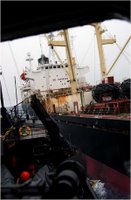
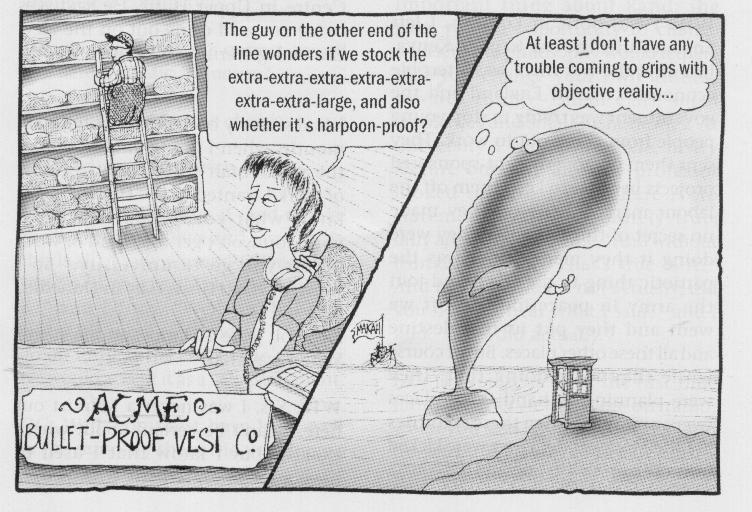
    We eat cows. The Japanese eat whales. The only difference is that cows are privately owned, and whales are much larger. Despite the hand-wringing over the killing and eating of whales , it's no more nor less barbaric than the killing and eating of cows.
    Fact is, if you don’t like where food comes from, then don’t eat it yourself.
    But here's what really is barbaric: trying to stop whaling by sinking whalers with a 'can opener' -- as the self-appointed Sea Shepherds have done nine times before. Meeting these efforts with defensive force -- as the Japanese whalers have now asked their military to do -- is simple prudence. Good for them. When you're being rammed by a ship with a 'can-opener' attached, being piloted by people intent on sinking you, why wouldn't you defend yourself?
    In that context, Jeanette Fitzsimon's call to have a New Zealand frigate sent to protect "the safety of our citizens on the protest ships" is worse than stupid. Much like she is really. Best she stick to marketing her Green Organic Defoliant.
    PS: Robert Winefield's comment below on Green inconsistency is worth highlighting:

    “The fact that Fitzsimons wants the RNZN to fight the Japs over a bunch of sodding whales just shows you how idiotic she and her minions are. Do the Greenz not provide the Minister for Disarmament from within their own ranks?
    “Sure, let Osama and Saddam rape, kill and torture MEN, WOMEN and CHILDREN in Iraq and Afghanistan and it's ‘How dare anyone raise arms against them.’ 
    “But harm one hair on some blubbery sea-beast... and it's ‘let's send in the navy!!!’"

PPS: Samizdata contributor James Waterton makes socially responsible whale-meat of the arguments made against minke-whaling by anti-whaling zealots. "Soft-headed, shallow and emotionally driven," he calls the points raised by Greenpeace's eco-pirates. And you thought I was harsh.
 

* * * *

Monday, December 15, 2008

Police investigating greens?

The Sunday Star Times published claims yesterday that a police intelligence unit was spying on Greenpeace protestors.

Since this was the same Sunday Star Slime (and the same so-called reporters) that not so long ago published claims that Tariana Turia was being bugged by the SIS – a claim investigated and subsequently demolished by Justice Paul Neazor, who called it "a work of fiction"  – you’ll forgive me if I don’t lend any credence to the report without better evidence than that provided by Nicky Hager and Anthony Hubbard.

But let’s assume for argument’s sake that the claim is true.  Then so what? I’d be far more surprised if green groups weren’t being investigated. After all, the groups said to be under investigation are said to include the likes of Safe Animals from Exploitation (SAFE), Peace Action Wellington, GE-free groups, and Save Happy Valley, all of which are law-breakers – as is their ‘mother ship’  Greenpeace, who if you’ll remember were supporters of the likes of the Sea Shepherd, which spends time in freezing Antarctic waters trying to sink Japanese whaling ships with all the lives on board. 

These people are not part of a knitting circle.

  • SAFE have a history of breaking and entering, and destroying people’s property. 
  • It was GE-free groups who broke into Lincoln University a few years back and destroyed experiments worth millions (and, incidentally, risked spreading the GE virus against which they were protesting). 
  • And Save Happy Valley and Peace Action Wellington are nothing like as benevolent as they sound: members of both these groups have been arrested and investigated in the past for wilful damage, and both were included in those arrested last year as part of the Te Qaeda/Urewera 17 operations. 

So even if the Sunday Star Slime’s claim were proven, if these groups are being investigated then it simply means the police are doing their job.

PS:  If you harbour peaceful feelings about any of these groups, do yourself a favour and search Trevor Loudon’s blog for information on what they get up to, and what they’re involved with.  You’ll raise more than just your eyebrows.  Here’s a few links just to get you started:  Greenpeace, Peace Action Wellington, Save Happy Valley Coalition and animal rights groups.   Says Trevor, “Can't think why the police would be interested in these people. Any ideas?”

* * * *

Wednesday, August 02, 2006

What's wrong with designer babies?

    Otago University Researchers have been very quick to affirm that the start to government funding* for genetic screening of human embryos for birth defects will not mean designer babies.

But why shouldn't it? What's wrong with choosing characteristics of your offspring if that's scientifically possible? Why limit parents to selecting for sex only on compassionate grounds? It's very good news that a complete handbrake on this life-affirming work hasn't been applied, but why has any been applied at all?
    "We shouldn't play God," say religionists motivated by religious dogma -- who say it's wrong to end the suffering "chosen by God," and wrong even to stop suffering beginning -- who say that screening for genetic defects "cheapens human life," when in fact it does exactly the opposite.
    This isn't playing God -- it's being precisely and heroically human.
    "We shouldn't meddle with nature," say commentators, without perhaps realising that meddling with nature is exactly how we human beings stay alive: from morning to night, from birth to a hopefully far-off death, our lives and longevity are made possible precisely because we do meddle with nature.
Staying alive because of advanced medical technology is not 'natural' -- if Nature had her way we'd all be dead at thirty or less once our teeth decay and our bodies start failing -- in fact staying alive at all is unnatural. If we didn't meddle with nature to produce food, we wouldn't even be alive. 'Meddling' with nature keeps us alive.
    Constructing and living in buildings 'meddles with nature' -- if Nature had her way we'd still be in caves instead of planting crops, breeding animals, building dams and abattoirs and factories and oil rigs and hospitals and cyclotrons and skyscapers ... all examples of how we 'meddle with nature' to make our lives better. Indeed, these are the very means by which we human beings stay alive.
    You see, unlike other animals, man, the rational animal, cannot live as nature delivered us into the world -- naked, unarmed, without the claws, the fur, the sharp teeth of other animals. Without our brains and the science and the industry and the food and the shelter and the clothing we produce by applying our brains to nature, we'd die. The first man who hunted down and killed and ate another animal was meddling with nature, as he was when he began making the weapon to do it with. Man as a species has to discover and produce for himself all the values needed for survival and flourishing.  Everything we do 'meddles with nature' -- we investigate, we rearrange, we tinker, we plan, and by so doing we work to make human life much better, much longer, and more abundant.
    That, by the way, is a good thing.
    Trish Grant from the IHC, on the other hand, who says that this research "devalues the lives of those children who are living with a disability" is just talking errant nonsense. What hatred of human beings she must have to demand that other human beings live with crippling dieases just so her charges (she says) can feel better about themselves. She would condemn other human beings to live by her choice with Downes Syndrome, with achondroplasia, with Marfan syndrome, with Tay-Sachs disease, with cystic fibrosis, with haemophilia, with Duchenne muscular dystrophy, with all the other possible genetic birth defects when it's completely and utterly unnecessary. Meddling with nature to avoid this is good. Not meddling with so as to ensure such suffering is criminal.
    Technology such as this truly values human life.
    The real enemies of human life are those who stand in its way.

-----

* Yes, the taxpayer is being forced to pay for this. No, you shouldn't have to. Yes, when governments pay for such things, some of those required to pay for it actively object to what their money is paying for, yet their views are just overridden. And yes, that is wrong.
As
Yaron Brook from the Ayn Rand Institute said recently when commenting on Bush's disgraceful stem-cell veto,

    “It is only because science today is so dominantly funded by the government that restrictions on [state] funding can wreak the devastation they have--severely hindering a promising area of potentially life-saving medical research.
"If science were left free, as it should be, funded solely by private sources, a scientist would not have to plead the merits of his work before a majority of politicians, however ignorant or prejudiced by religious or other dogmas they might be."
LINK: Embryo report calls for changes - TVNZ
Government versus science - Yaron Brook, Ayn Rand Institute

* * * *

Thursday, April 12, 2007

A Christian nation?

    WHAT’S THE BASIS OF western civilization? A commenter here at Not PC suggested that religion, specifically Christian religion is the foundation for western civilisation.
   Now that's a widespread view to be sure, but being widespread doesn’t mean it’s not totally wrong. Which it is.
    As I said in response to that commenter, "I suspect the Classical Greeks might raise some objections to the proposition, as might several historians of both the Dark Ages and the Enlightenment." If the basis of western civilisation can be described as a focus on reason, individualism and happiness on this earth -- ideas that were a product not of theologians but of Classical Greeks; ideas which were fortunately rediscovered for the west in the Renaissance, and developed further in the Enlightenment -- then far from being any sort of foundation for these ideas, Christian religion is at odds with all of them. (More on that below.)
    Now, my commenter suggested that as leading proof of his thesis the observation that the US,

   “a heavily Christian country ... produced 173,771 patents in 2006. Check all Islamic countries since 1700 and you might get 1000.”
     Now observe that being “heavily Christian” is not a leading cause of scientific inquiry--the Enlightenment focus on reason and this earth is. Fact is, theocracy -- any theocracy -- is bad for free-wheeling scientific research, and it's equally true that religion -- any religion -- is a hindrance rather than a help to scientific research. (Faith and mysticism are not handmaidens to truth, but they are the twin handmaidens of religion, so-called shortcuts to knowledge that are nothing but short-circuits destroying the mind, and destroying science if we would let them.)
    Observe that the number of patents issued during the Dark Ages, over which the Christian church presided, can be counted on the fingers of one foot. Given that Islam is now enduring its own Dark Ages, it’s no surprise to find that their religious darkness is just as stultifying as our own was.
    Fact is, the reason for the disparity in those quoted figures is not because there are different religions in the US and in Islamic countries, it is because the influence of religion is far less and far less all-pervasive in the US than it is in the Islamic theocracies. The separation of religion and state was well done by America's Founders.
    NOW IT MIGHT BE argued here that in fact the US was founded as a Christian country. Well, it wasn't. The Founding Fathers never intended that. John Adams himself declared,
    “The government of the United States is not in any sense founded on the Christian religion.”

    Read that again just so you take it in:

    “The government of the United States is not in any sense founded on the Christian religion.”

    That was John Adams totally dismissing the claim. You can't get too much more of a blunt declaration than that. 
    Fact is, America's revolution was not founded on God or religion, but upon a view of human freedom and a declaration of rights that were both a product of the Enlightenment. As Thomas Jefferson explained (and he would know):

    “Our civil rights have no dependence on our religious opinions, no more than on our opinions in physics and geometry...”

    So declared Thomas Jefferson. 
    Fact is, the US was not a nation founded on religion, it was fully a Nation of the Enlightenment, that proud era in human affairs that represented an overthrow of religion and a renaissance of reason. [More quotes in this vein here, courtesy of the Ayn Rand Institute] In fact if religion is anything to America it’s a handbrake, not a bulwark. It’s a threat, not a foundation—which is a  what philosopher Leonard Peikoff maintains.
    Think about it: Just what did religion bring to history? Founding Father James Madison has the summary:

    “Religious bondage shackles and debilitates the mind and unfits it for every noble enterprise....During almost fifteen centuries has the legal establishment of Christianity been on trial. What have been its fruits? More or less, in all places, pride and indolence in the clergy; ignorance and servility in laity; in both, superstition, bigotry, and persecution.”

    Ignorance, superstition, bigotry and persecution. They do not describe western civilisation, but they do describe the Dark Ages to a 'T'; that ordure-strewn wasteland of crosses and graves and misery; those dark centuries over which the Christian church so dolefully presided.
    As philosopher Leonard Peikoff explains,

    "The Dark Ages were dark on principle. Augustine fought against secular philosophy, science, art; he regarded all of it as an abomination to be swept aside; he cursed science in particular as "the lust of the eyes". . .
    “As the barbarians were sacking the body of Rome, the Church was struggling to annul the last vestiges of its spirit, wrenching the West away from nature, astronomy, philosophy, nudity, pleasure, instilling in men's souls the adoration of Eternity, with all its temporal consequences.""

   The church made Augustine a saint for his views. No wonder. Augustine distinguished between what he called the City of God (based upon faith) and the City of Man (based upon reason) – he praised the former and damned the latter. Concern solely with life on Earth was a sin, he said. For Augustine, man was "crooked and sordid, bespotted and ulcerous."   

    "Intellectually speaking [concludes Peikoff], the period of the Middle Ages was the exact opposite of classical Greece. Its leading philosophic spokesman, Augustine,
held that faith was the basis of man's entire mental life. ‘I do not know in
order to believe,’ he said, ‘I believe in order to know.’ In other words,
reason is nothing but a handmaiden of revelation; it is a mere adjunct of
faith, whose task is to clarify, as far as possible, the dogmas of religion.
    What if a dogma cannot be clarified? So much the better, answered an earlier
Church father, Tertullian. The truly religious man, he said, delights in
thwarting his reason; that shows his commitment to faith. Thus, Tertullian's
famous answer, when asked about the dogma of God's self-sacrifice on the
cross: ‘Creo quia absurdum. (‘I believe because it is absurd.’)
    "As to the realm of physical nature, the medievals characteristically
it as a semi-real haze, a transitory stage in the divine plan, and a
troublesome one at that, a delusion and a snare - a delusion because men
mistake it for reality, a snare because they are tempted by its lures to
jeopardize their immortal souls. What tempts them is the prospect of earthly
pleasure.
    "What kind of life, then, does the immortal soul require on earth? Self-
denial, asceticism, the resolute shunning of this temptation. But isn't unfair
to ask men to throw away their whole enjoyment of life? Augustine's answer is:
what else befits creatures befouled by original sin, creatures who are, as he
put it, "crooked and sordid, bespotted and ulcerous"." [Religion vs America, Leonard Peikoff]

In his book A History of Knowledge ,Historian Charles Van Doren points out that

"God was the last of the three great medieval challenges [note: others being the “struggle for subsistence” and a “world of enemies”], and the most important. Human beings had always been interested in God and had attempted to understand his ways. But the Greeks, and especially the Romans, had kept this interest under control…In the early Middle Ages it overcame the best and the brightest among Europeans. It can almost be said that they became obsessed with God." [‘A History of Knowledge’, Charles van Doren, p. 100]

    What were the practical results of this approach to life?
    Dutch economic historian Angus Maddison points out that from 500 to 1500 AD Europe suffered from zero percent economic growth, this in a period in which a slice of bread per day could be considered a good meal, and in which the average infant had a life expectancy of just 24 years -- if that is they weren't of that third who failed to live beyond their first year. [See Angus Maddison, 'Phases of Capitalist Development, pp 4-7, and Angus Maddison, 'The World Economy: A Millennial Perspective']
    Says French historian Fernand Braudel of the pre-eighteenth century era,

"Famine recurred so insistently for centuries on end that it became incorporated into ma's biological regime and built into his daily life..." [Fernand Braudel, 'The Structures of Everyday Life: Civilization and Capitalism, 15th-18th Centuries,' pp 73-78]

Everything human took a dive, only re-emerging centuries later with the Renaissance (and the rediscovery by the west of Aristotle and the Classical Greeks) and the Enlightenment (which represented the application of Aristotelian reason to human life).
    Life during the Dark Ages was shit. Sanitation collapsed, and disease rocketed; agriculture barely fed those who worked the fields, and that in good years; literacy and education plummeted; learning almost vanished; scientific research was non-existent, replaced instead by arcane theological explorations into the nature of the supernatural ; life expectancy as we've said was just barely above the teens ... and the ethic of faith, sacrifice and suffering oversaw it all. The only thing that flourished in this time was the church, and its churchmen.
    The result was not a flourishing of reason and a devotion to life on earth. Quite the opposite. For that we had to wait for the rediscovery of Aristotle (for the west) in the Renaissance – and for that we have to thank the world of Islam (whose scholars had preserved Aristotle’s works, and during the period those works and their secular focus were valued Islam enjoyed its own Golden Age.)
    W.T. Jones, the 20th century's leading philosophical historian summarises the state of the west at this time:

    "Because of the indifference and downright hostility of the Christians ... almost the whole body of ancient literature and learning was lost... This destruction was so great and the rate of recovery was so slow that even by the ninth century Europe was still immeasurably behind the classical world in every department of life... This, then, was truly a 'dark' age." [W.T. Jones, 'A History of Western Philosophy, vol. 2, The Medieval Mind,' pp141-142]

    And so it was. An age in which ignorance, superstition, bigotry and persecution flourished. In no way do those qualities describe western civilisation, but they do describe the Dark Ages to a 'T'—those centuries over which the christian church so dolefully presided, and whose shackles the west had to break to emerge, like a butterfly, from its pagan chrysalis.
    And those qualities also describe to a ‘T’ the present-day Islamic theocracies—who like the west of that Dark era rejected the sunlit secularism of the Greeks only to embrace its polar opposite. 
    So in summary, the basis of western civilization is not Christian religion. The leitmotifs of western civilisation are not ignorance, superstition, bigotry and persecution, but their polar opposites: reason, freedom and individualism.
    We got these beneficient ideas from the Greeks. And we had to shake off centuries of religion to rediscover them.

LINKS: Murdering tall poppies - that's what Easter is all about - Not PC
The Founding Fathers on religion - Ayn Rand Institute
Religion vs. America - Leonard Peikoff

* * * *

Monday, November 03, 2008

The global financial/economic crisis: causes & solutions

Sovereign Life's David McGregor has penned a great summary of the global financial and economic crisis: it's real causes and the only long-term solution.

If you're looking for some clarity as to why the current financial crisis has happened - and what needs to be done to not only fix it, but to ensure such events need never happen again -- then I urge you to read and reflect -- and to download the quoted publication at the conclusion.

The Global Financial/Economic Crisis:
The True Causes And Only Long Term Solution
    As financial and market instability persist, as governments flail and fumble, one thing is for sure - we're on the brink of a most serious economic event - a "depression" which is the BUST component of the typical "boom/bust" cycle.
    Popular criticism is centred on blaming the bankers, the financiers, and to some extent the politicians, and the overall lack of "regulation." And above all there is a consensus emerging that it is ultimately the fault of the free market, of capitalism - and that what is needed to "fix" this problem is more regulation, more easy credit (debt), and ultimately more government.
    Nothing could be further from the truth.
    The cause of the "bust" is the same as the cause of the previous "boom" - the willy-nilly creation of credit out of thin air, for the purposes of creating political and economic advantage in the short term.
    To understand the root cause of this crisis you need to understand the root cause of "boom and bust". Contrary to popular opinion, this is not the result of capitalism or the free market, rather it's caused by the nature of the banking and monetary system itself - the way it operates.
    The boom cycle is achieved by the three pillars of the global financial system - the "Trinity" of the banking "religion" - which are fiat money, fractional reserve banking, and central banks. When the pyramid of debt generated by this unholy Trinity gets out of control, it must be liquidated, creating what we call the "bust."
    Consider these facts:

  1. Banks lend out more than they take in. The reason banks
    can and do fail, is because if all depositors ask for their
    money back at the same time, the bank is unable to meet such
    a demand. The money is simply not there.
  2. Banks employ what is termed a  "fractional reserve" policy,
    which means they can literally take in $1 on deposit and
    lend out $10. Thus the basis of the banking system we all
    take for granted is fundamentally fraudulent. The money you
    think the bank has on your behalf is in fact not there. The
    business of fractional reserve banking is based on faith and
    confidence. In other words, it's a CONfidence trick.
  3. It's fraudulent because banks are lending out money held
    on deposit which is supposed to be "on demand" and are
    effectively making money on money they do not have, and
    have no right to use.
  4. Because of this fractional reserve system, and the essentially
    fraudulent nature of it, it's always possible that banks can
    fail - if enough depositors suddenly show up to withdraw all
    their money. And to avoid this "ugly" scenario, central banks
    were created to be "lender of last resort"  - in other words to
    provide the money (out of thin air) the banks don't have, in
    order to make good on their bogus promises. This is designed
    to maintain the "faith" in banks.
  5. Central banks manipulate the money supply at will, by
    controlling all elements of the fractional reserve process,
    by altering the reserve requirements and the total money
    supply as and when deemed necessary. Operating under a state-
    granted monopoly, central banks wield enormous "hidden"
    power.
  6. Governments love fiat money, fractional reserve banking
    and central banks, because it allows them access to "free"
    money with which to bribe the electorate and carry out their
    objectives. It allows governments to appear "generous" by
    over-promising on social welfare - and to take aggressive
    actions by financing wars and mayhem out of the same
    store of "funny money".
  7. Money can be manipulated in this way because it is money
    by edict/command - or what is called fiat money. Fiat money
    is paper money without any true or inherent value - and is given
    "value" simply by government command, via the legal tender
    laws in each country. Unlike the money which naturally evolved
    during history - gold and silver - fiat money has no natural
    constraints and no historical precedent for long term success.
    When the state inflates the fiat money supply ad infinitum, then
    such money simply loses its purchasing power, becoming a
    stealth tax on the people. And when the end-game arrives it
    becomes as valuable as toilet paper (but not as absorbent!).
  8. Governments and bankers love fiat money and fractional
    reserve banking because they are "partners in crime" and
    co-conspirators in the business of engaging in fraudulent
    financial transactions - at the expense of the rest of us.
  9. The current financial/economic crisis has its roots in
    the expansion of easy credit (debt) - which creates the boom
    and bust cycles. This is made possible by loose monetary
    policy as initiated by central banks and endorsed by their
    political masters - using the mechanisms of fiat money,
    fractional reserve banking and central banks.

    The only solution to all these shenanigans is to unwind the CONfidence trick, and de-nationalise the world's money:

    1. Abolish fiat money and reinstitute sound money, backed by
      real commodities.  Ideally, make all currency backed once
      again 100% by gold - the only money that has evolved over time via
      the true free market in money. [George Reisman explains very simply how to go
      about it
      .]  Note that gold (and to a lesser extent silver)
      is "market" money, whereas as fiat money is government
      money - backed by force.
    2. Change the laws so that banks must hold 100% of all
      demand deposits in reserve - and put an end to all fractional
      reserve banking. Make banks behave like any other business
      - and to ensure no fraud takes place.
    3. Close down/abolish all central banks.
    4. Remove the issuance of money from the government's
      hands - because as long as they control its issuance, either
      directly or via their central bank proxies, they can and will
      manipulate it to their own political advantage.
    5. Allow private banks to issue money -- 100% backed by
      gold -- and keep them in line via anti-fraud legislation,
      i.e. legal provisions to ensure they do not lend any more
      than what they have on deposit. In other words, end fractional
      reserve banking.
    6. Do away with national fiat currencies and floating exchange
      rates. Instead, allow gold to become the naturally evolved
      global currency - a money fully backed by something which
      cannot be manipulated by banks OR politicians.
    7. Establish a free banking, non-fractional reserve, 100%
      gold-backed global monetary system - the only monetary
      reform that attacks the problem at the root, and the only
      reform that will not only abolish boom/bust, but will bring
      about a rational international system of exchange.
    8. Abolish the "boom and bust" mentality and reality, and
      allow purchasing power to increase over time, as production
      grows in relation to the gold held as currency backing.

    Any monetary "reform" that does NOT attack the cause of the
problem - fractional reserve banking and monopolised banking
using fiat money - is doomed to failure.
    Don't let those who have caused the problem in the first
place be the only ones writing the "rules" of reform - because
you can bet your bottom dollar, it will not be the reform we
need or want.

    If you think the proposal is crazy, or that commodity-backed or gold-back money doesn't work, or leads inevitably to instability,  then just see how things worked out in New Zealand and Britain in the nineteenth-century, back before our money was nationalised.  What you see below (which shows The Course of Prices in NZ, 1960-1910) is a stable currency in both countries, gently easing prices and increased purchasing power for every pound in your pocket-- which effectively means increasing real wage levels and more prosperity for all -- with no great schocks or monetary booms and busts -- and this is despite the over-borrowing by the likes of Julius Vogel:

Gold-Century-web

And compare that to all the ups and downs in the price levels over the twentieth century once the gold standard was abandoned in 1914, and money was finally completely nationalised in 1936, two years after the Reserve Bank's founding in 1934 [graph courtesy Bryce Wilkinson from Wellington's Capital Economics Ltd, referenced in Frederic Sautet's article: 'The Disastrous Effects of Central Banking: Let’s Get the Story about Inflation in New Zealand Straight.']

6a00d83451eb0069e200e55074d96c8833-800wi

Anyway, David McGregor concludes (and I thoroughly approve his recommendation):

    “For a complete theoretical and practical exposition on all of
the above - and a rigorous assertion of the viability of a 100%
gold backed currency and non-fractional reserve banking, I
recommend you download the following e-book. At 876 pages
it's not your average bedtime read, but if you have any interest
at all in where all this is headed, then you owe it to yourself
to discover why it has happened and the only sure way to prevent
it happening over and over again in the future.

    "Money, Bank Credit And Economic Cycles"
    By Jesus Huerta de Soto

    “Published by the Ludwig von Mises Institute and available for
free download here:  http://mises.org/books/desoto.pdf
    “Like I said, it's a BIG book - but even if you only read
certain chapters, the ones that immediately interest you,
you will already be better informed on this crucial subject
than all your ‘leaders’ put together!”

To get a heads up on the brilliance of De Soto's analysis, listen to this richly explanatory recent interview while you sort out your download, and check out his article: Financial Crisis & Recession.

* * * *

Thursday, June 19, 2008

Hot songs about cold beer

    NOT PC beer writer Neil Miller talked to Radio NZ's Jim Mora recently about beer tours, beer songs and other things beer.  He did well (audio here) but disgracefully, the best he could come up with in the way of great beer songs was Th' Dudes' 'Bliss.'  Uuugh.
    I figure between us you and I can do a lot better than that so the poor chap is better equipped next time he's put on the spot.  Here's a list to start with:

Great songs about beer, and drinking.
'One Bourbon, One Scotch, One Beer' - George Thorogood
'Warm Beer & Cold Women' - Tom Waits
'Pub With No Beer' - Dubliners
'Beercan' - Beck
'Six Pack' - Black Flag
'Special Brew' - Bad Manners
'Milk and Alcohol' - Dr Feelgood
'Beer' - Reel Big Fish
'I Spent My Last $10 (On Birth Control and Beer)' - Two Nice Girls
'Drink, Drink, Drink' - from Sigmund Romberg's 'Student Prince'
'Look What I Found in My Beer' - Beautiful South
'Long Neck Bottles' - Captain Beefheart
'Beer Goggles'- Brilleaux
'Beer Drinkers & Hell Raisers' - ZZ Top
'Boys From County Hell' - Pogues
Two Pints of Lager' - Splodgenessabounds
'Drinking Song' - from 'The Vagabond King'
'Let Us Drink' - from Verdi's 'La Traviata'
'Beer is a heaven's gift indeed...' - From Smetana's 'Bartered Bride'
'A Long Hard Thirst Needs a Big Cold Beer' - TISM
'Last Lager Waltz' - Kevin Bloody Wilson
'Titties and Beer' - Frank Zappa
'Philosophers' Drinking Song' - Monty Python's Flying Circus

What's yours?  (Remember, "a lot better than that " excludes anything sung by anybody wearing a stetson hat, meaning this is out -- and probably excludes songs you sing after a bucket load of beer. Probably.)

* * * *

Thanks for reading.  As your reward, here’s Tom:

Friday, 30 October 2009

Beer O’Clock: In favour of brand disloyalty

Beer writer Neil Miller argues you should lose your beer label inhibitions . . . a good argument to consider on the eve of tomorrow’s beer tasting (don’t forget, 2:30pm at The Castle in Mt Eden). [Cross-posted at The Malthouse Blog]

heineken_beer It would be possible, if you wanted to and really tried, to travel around the world and eat nothing but McDonalds.   Similarly, it would be possible, if you wanted to and really tried, to travel around the world and drink nothing but Heineken.  Well, maybe not quite as easy but you could certainly drink look-alike international golden lagers in pretty much every corner of the globe. 

We would tend to portray the person who eats only corporate burgers and fries as unsophisticated, a little odd and probably quite large.  However, the person who drinks nothing but – say – Heineken is seen as a loyal and informed drinker.  I simply cannot express the absurdity of this notion any better than noted beer writer and my third favourite Canadian Stephen Beaumont* who wrote:

“Beer drinkers have been duped by mass marketing into the belief that it makes sense to drink only one brand of beer. In truth, brand loyalty in beer makes no more sense than 'vegetable loyalty' in food. Can you imagine it? ‘No thanks, I'll pass on the mashed potatoes, carrots, bread and roast beef. Me, I'm strictly a broccoli man.’"

The notion of brand loyalty and a generic drinking culture perhaps reached its peak in New Zealand during 1969.  In a little known chapter of our brewing history, New Zealand Breweries, in their infinite wisdom, decided that Kiwis did not want choice or local beers. What they really wanted was four slightly different beers all under the one glorious brand and that brand was to be called Lucky. 

In August 1960, all their various breweries shut down production of their established products (including Speight’s) and began making their allocation of the Big Four Lucky Beers.  The intent would be that Lucky would be produced so efficiently that it would drive down the price of beer and push their rival Dominion Breweries right out of the market.

Predictably (to everyone not working for the New Zealand Breweries marketing team), drinkers around the country immediately went up in arms and the Lucky experiment was ended in October 1960 after just two ignominious months.  In terms of bad beer decisions, its short duration means it does not come close to equalling the impact of the disastrous Six O’Clock Swill but it terms of sheer stupidity it was right up there. 

The only signs that remain of Lucky are some bottles and cans in the excellent Speight’s brewery tour (though you won’t see any actual brewing on it).  Speight’s must have been tempted to (mis)-quote Hon Dr Michael Cullen and put little signs like “we won, you lost, eat that” under the Lucky-branded vessels.

New Zealand drinkers these days rightly demand more choice and variety.  Heck, Richard “Spiderman” Emerson alone produces four new beers every 100 days.  Sometimes, we drink local, other days we feel like something more continental.  We might crave a cutting edge style or perhaps something a bit more traditional.

chimaytripel One of the classic European beers on tap at Malthouse[and at very few other good establishments around the country-Ed.] is Chimay White.  This Trappist masterpiece is an extremely rare sight on tap in New Zealand and it is about to get a whole lot rarer.  The last Malthouse keg is currently attached.  This is the last chance (for a while at least) to try this dry, spicy brew on tap.

Chimay White (8%) is a strong, unpasteurised Tripel which pours a handsome cloudy gold with a pillowed white head.  The nose is dry, hoppy and yeasty – unmistakably Belgian.  It is full bodied with hints of orange, juniper, spices and hops before a peppery, dry finish.

This is also the last week of Octoberbest – the new Malthouse tradition.  The final push sees the welcome return of Epic Armageddon, Yeastie Boys Plan K and Yeastie Boys PKB.

This blog post now comes to an end as it is time for lunch with Mr Luke Nicholas, the Impish Brewer.  In unrelated news, stocks of Armageddon IPA are about to plummet at Malthouse so Chimay White might not be the only beer on its last keg…

* After Russ the Canadian and William Shatner. **

** Glass tip to the Impish Brewer for reminding me of “Bill” Shatner which sadly saw Stephen Beaumont bumped to third.

Cheers


Beer Writer
Real Beer New Zealand 
Beer and Brewer Magazine

Friday, 16 October 2009

Beer O’Clock: Putting beer in its proper context

Crossposted from the Malthouse blog our fearless beer correspondent Neil Miller features (Sir) Jeremy Clarkson on Chinese beer, and explains why Fiji Bitter tastes better in Fiji:

Beer is a highly contextual beverage.  Our taste impressions and flavour memories can be strongly influenced by whatever else was happening when we drank a particular beer. 

fijibitter This phenomena first really came to my attention when, as an aspiring beer neophyte, I was tasked with handing out samples of “Beers from the Pacific” at a small beer festival.  One of those beers was Fiji Bitter (seen in its proper context on the right).  Having tasted this rather sugary yet somehow metallic brew at a couple of student parties, I thought it would be tough work to even give the stuff away.  I was wrong.  There was a queue.

Not just a queue but a queue adamant that Fiji Bitter was, in fact, the very best beer in the entire world.  I poured tasting glasses as quickly as I could and watched, without exception, their expectant faces fall as soon as the insipid liquid passed their trembling lips.

“This doesn’t taste nearly as good as the stuff in Fiji.”
“This is not the same beer.”
“This is truly awful.”

The thing is, it was exactly the same (awful) beer but they were also quite right that it tasted much better in Fiji.  Why precisely that was the case quickly became clear when I enquired about how they drank the beer in Fiji.  Essentially, they all drank ice-cold Fiji Bitter in the hot sun, by the pool, relaxing on holiday while being waited on by someone young, attractive and largely naked.

In contrast, the Fiji Bitter they had in Wellington was served cool-ish, the rain was lashing against the spartan meeting room’s windows, it had been a busy working week and the beer was being served by a husky chap in a Hawaiian shirt.   It is all about context.

Confirmation of my contextual theory was recently provided by Jeremy Clarkson, the tight-trousered bane of environmentalists, hybrid car enthusiasts and assorted beardies.  In his customary meandering introduction to a car review, (Sir) Jeremy Clarkson took the time to reflect on beer:

“In 1984, I spent some time wandering around China, where, so far as I could tell, it was always 48 degrees and raining.  This made me very thirsty so I spent most days drinking gallons of the local brew, which is called Tsingtao.  It was delicious.  I loved it.  And then I tried some when I got home and I decided that it was exactly the same as drinking watered down mouse pee.”

Same beer, different context - though I would have to say that Tsingtao (pronounced Ching-Dao) can be a refreshing accompaniment to spicy Chinese food.  Care must be taken with the pronunciation however otherwise you can end up with Singha (an inferior lager) or, if you really mangle it, Lindauer (an inferior type of bubbles).  This last theorem was recently proved by my best friend, much to his mortification and to our collective merriment.

And now, in the context of Wellington drinking or for drinkers further afield and eager to add to their list of “must-try” beers, a list of the fresh range of Octoberbest beers are awaiting their opportunity to shine in the convivial drinking context of the Malthouse.  In no particular order, these include:

Mussel Inn Captain Cooker – a true Kiwi classic, this is a distinctively spicy and fresh brew from Golden Bay.  The beer itself is a pleasing rich amber colour and has a complex fruity, flowery and spicy body before a perfumey Turkish Delight finish. 

Epic Lager – it may be the Impish brewer’s least hoppy offering but this fruity yet crisp lager is wonderfully balanced.  According to his website, making great beer takes “a prodigious amount of toil and love.”  Bless his impish little socks.

Harrington’s Rogue Hop – one of the surprise package beers of 2008 for me.  It is a grassy, floral, fresh pilsner with just a hint of nettle.

Harrington’s Pig and Whistle – one of the surprise hits of the 2009 Brew NZ Beer Awards.  This trophy-winning brew won best European style ale.

Three Boys Golden Ale –  this ale is tasting the best I’ve ever had it.  Another rather quenching offering from the marvellous Dr Ralph Bungard.

Golden Ticket Exchange Student – this is a beer I’m really looking forward to sampling.  The debut offering from Golden Ticket Brewing is described as “a late hopped pale ale with a hoppy aroma, moderate bitterness and nice malt balance.  Generously hopped with New Zealand and American varieties for a full-on flavour hit, it’s just the ticket to prepare you for summer.”

In the right context, a pretty poor beer can taste, at least briefly, pretty good.  However, a far better long-term strategy is to drink already excellent beers in the context of a beer haven like the Malthouse.


Cheers


Beer Writer
Real Beer New Zealand 
Beer and Brewer Magazine
Crossposted at (guess where) the Malthouse Blog.

Friday, 2 October 2009

Beer O’Clock: Oktoberfest

Neil Miller takes a look at his German calendar,and heads straight down to Wellington’s Malthouse clad in leiderhosen . . .

Oktoberfest It has begun.

The 176th Oktoberfest opened in Munich on 19 September and will run through to October 4.  Over 6 million litres of beer will be drunk at the event which is both the world’s biggest beer festival and the world’s biggest fair.  Fourteen larger and several smaller beer tents and beer gardens provide enough seating at any one time for 98,000 of the expected 6 million visitors.

Oktoberfest began as an elaborate wedding commemoration for Crown Prince Ludwig (later King Ludwig I) and Princess Therese of Saxe-Hildburghausen (who had narrowly avoided marrying Napoleon) in 1810.  Since then, Oktoberfest has been cancelled only 24 times due to wars or outbreaks of disease.

If proof was ever needed that Oktoberfest is actually a pretty classy event, look no further than the organiser’s decision in 2007 to ban serial oxygen-thief Paris Hilton.  The official reason was that Paris “cheapened” the festival in 2006 with her attendance but the real reason was perhaps that she had used her time at the festival to run an advertising campaign for canned wine.

Malthouse is looking to start its own October beer tradition with the first annual “Octoberbest” – a month long celebration designed to showcase some of the medal winners from the Brew NZ Beer Awards and some Malthouse staff picks from Beervana and elsewhere. 

Oktoberfest at Wellington’s Malthouse will enjoy some important differences from the German version:

  • While entry to both Oktoberfest and Octoberbest is free, a “Mass” (one-litre stein) in Munich this year will cost between €9.30 and €11.60 – almost NZ$24.  That makes it almost as expensive as drinking on Auckland’s Viaduct.  Malthouse prices will be lower.
  • On 24 occasions the German Oktoberfest has been completely cancelled due to epidemics (usually cholera) or wars.  Neither of these phenomena is expected to affect Courtenay Place in October.
  • Smoking is permitted in the Oktoberfest beer tents even though Bavaria has some of the most stringent anti-smoking laws in the world.  Oktoberfest has an exemption from the smoke-free laws, Octoberbest does not.
  • New in the Malthouse fridge is the very appropriate Galbraith’s Munich Lager.  This is a rare bottled beer from the iconic Auckland brewpub.  It is a Bavarian style lager which pours a pale gold with a firm head.  It has a spicy, grassy nose, a sweet, nutty body and a crisp, bitter finish.  Authentic German ingredients are used.

Head brewer Keith Galbraith is a wonderful host and has even inspired some poetry over at the Beer Haiku Daily website.  The poem is called “Perfect”:

Butcher and brewer
Make ESB sausages
Perfect with mashed spuds

This poetic offering is by Rupert Morrish who notes "my local butcher makes these excellent Bitter and Twisted sausages for Galbraith’s."  I suspect this is not the first time the dashing Keith Galbraith has had a poem written about him. *

Finally, a pertinent question, can it really be a coincidence that the first day of Oktoberfest was also International Talk Like a Pirate Day?

* I have no actual evidence of this of course.

Cheers


Beer Writer
Real Beer New Zealand
Beer and Brewer Magazine

Friday, 18 September 2009

Beer O’Clock: American beer is like making love in a canoe

Your (ir)regular beer correspondent Neil Miller cross-posts from Wellington’s famous Malthouse Bar:

Any mention of the United States these days polarises people.  It does not seem to matter whether the discussion relates to foreign policy, hip-hop music or beer.   If you put the word “American” in front of a topic, it suddenly becomes controversial.

Me, I love America.  It’s big, it’s fun and it’s the land of the free.  As Laurence J Peter once said, “America is a country that doesn’t know where it is going but is determined to set a speed record getting there.”  Liking America is not the same as liking all Americans.  I find Oprah Winfrey more annoying than Steve Urkel and there are reasons why Canadians go to such great lengths to avoid being mistaken for southern neighbours when travelling overseas.

Talk of American travellers reminds me of an epic visit to ‘The Shakespeare’ some years ago.  Here is what I wrote at the time:

“I share the dining room with four Americans who have that amazing ability to make it sound like there are a dozen of them all talking at once through toy megaphones.  The four of them drinking OJ somehow manage to be louder than the six Canadians seriously drinking beer at the bar the night before.  One of the girls was actually called Britney and one of the guys felt it was acceptable to use ‘y’all’ a lot in everyday conversation.”

American beers have an appalling reputation internationally based on the fact that 80% of them are, in fact, nonsense on stilts.  This was certainly the reputation that Monty Python was lampooning in the line which now serves as the title of this blog post. However, that same accusation of mainstream mediocrity can be levelled at a number of countries around the world.  Often a nation’s most popular or most famous beer is hardly their best offering.  Both those generalisations apply fully to New Zealand.

I have to confess that I did try Bud Light during my stay in America.  Somewhat reluctantly, I had a taster glass of the stuff at my hotel.  Robert the Rather Excellent (Malthouse) Barman commented that this was the first time he had ever poured a tasting glass of Bud Light.  It had a faint, distant nose of apple, a watery thin body, hints of apple juice and virtually no bitterness at the end.  It was the very epitome of insipid. 

Robert agreed with every word of my tasting notes and explained that was precisely why he liked Bud Light so much.  Deep down, we all have friends like Robert.

If you move beyond the big three American breweries (Anheuser-Busch InBev, MillerCoors Brewing Company and Pabst Brewing Company), American regional, craft and micro-breweries are amongst the best and most innovative at the world. 

sierra-nevada-pale-ale1 One of the first examples of American brewing prowess to force me to re-examine my prejudices was the classic Sierra Nevada Pale Ale (5.6%) from the pioneering microbrewery in the Sierra Nevada Mountains, west of the Rockies.  Fragrant, luscious, bursting with fruit and brimming with bitterness, after one sip I could never honestly say all American beer was awful again.

It is still a special beer and is once again available at the Malthouse (and at other special places around New Zealand).  Joining it for the first time are a number of its Sierra Nevada stablemates including the decadent Stout, spritzy Summerfest and the wholly hoptastic Torpedo IPA. This big 7% beer uses whole cones of Magnum, Crystal and Citra hops for added intensity.

As for the punch line to the canoe joke, well, if you don’t know you will just have to look it up.  This is a family blog after all (although you wouldn’t know it sometimes).  The line is funny, but fortunately it’s not universally true about American beer any more.

USA!  USA!  USA!

Cheers


Beer Writer
Real Beer New Zealand 
Beer and Brewer Magazine