

Paramotoring is one of the most accessible forms of personal aviation in the world, but it is still aviation, and aviation demands discipline.
If you’ve ever asked:
- Is paramotoring safe?
- How dangerous is paramotoring really?
- What causes most paramotor accidents?
You’re asking the right questions.
The truth is this: a paramotor is only as safe as the pilot flying it.
The overwhelming majority of paramotor accidents are not caused by equipment failure… they are caused by decision-making errors, poor weather judgment, low flying, and skipped safety checks.
That’s good news, because it means risk is controllable.
In this guide, you’ll learn:
- The real causes of paramotor accidents
- How to reduce your risk dramatically
- Weather rules smart pilots follow
- Why altitude equals safety
- How to avoid the complacency trap
- The safety gear every pilot should carry
- Emergency mindset principles
This isn’t theory. This is practical, field-tested safety thinking designed to keep you flying for decades, not seasons. We go into detail on the main causes of paramotor accidents in this post, click here.
1. Why Safety Matters in Paramotoring
Just like any other type of aviation or sport, paramotoring has risks – but most of that risk can be controlled. From my own personal experience, and according to data and community experience, pilot error accounts for the majority of paramotor accidents, not equipment failure.
This means that what you do before, during, and after flight determines how safe you will be. By investing time in training, habit-building, weather assessment, and gear preparation, you can dramatically reduce your risk. I’ve put together a pre and in-flight checklist to help you reduce your risk, you can find it in my book by clicking here.
2. Ground Safety: Where Most Injuries Happen
One of the biggest eye-openers for new pilots is that many serious injuries occur on the ground, even before takeoff.
Ground Hazards to Watch For
- Propeller entanglement: Loose throttle cables, scarves, hoods, and long hair can get sucked into the prop. A proper clear prop call and vigilant setup help prevent this.
- Starting the engine incorrectly: Starting without being strapped in or using a secure propeller safety strap increases the risk of hands, fingers, and limbs being pulled into the spinning prop.
- Improper netting: Damaged or missing netting allows lines or gear to be drawn into the prop. Fix it before flying.
Pro Safety Steps Before Engine Start
✔️ ALWAYS wear a helmet on the ground! Even crashes at takeoff/landing speeds can cause head injury.
✔️ Call out “CLEAR PROP” before starting your engine.
✔️ Use a paramotor prop safety strap if starting the engine on a surface (see page 56 of my book).
✔️ Check throttle cable routing. Never under any circumstance start the engine if it’s tight or binding.
✔️ Ensure netting is secure, undamaged, and free of line traps.
3. Essential Pre-Flight Checks: Make It a Habit!
Whether you’re a seasoned pilot or a fresh graduate, a thorough pre-flight inspection protects you and those on the ground.
What to Check
Paramotor Engine and Frame
- Loose bolts on frame, harness or engine
- All propeller bolts secure
- No oil leaks or cracked mounts
- Throttle lever returning and cable running free
Harness and Carabiners
- All straps fastened (Leg, Leg, Lap, Chest, Chin (helmet))
- Carabiners inspected for cracks or damage and locked
- Stainless steel carabiners recommended for longevity
Wing and Lines
- Wing fabric for tears
- Lines and stitching intact
- No line twists or knots
Most pros recommend writing your checklist down and using it every time. Habits like this will catch little problems before they become big ones.
4. Weather: Know When Not to Fly
One of the biggest causes of in-flight issues isn’t gear… it’s weather. Understanding conditions will keep you in safe air and off dangerous gusts.
Weather Rules for Safe Paramotoring
- Fly early mornings and evenings – these are usually calmest times due to lower thermal activity.
- Avoid midday thermal activity, especially in the summer – thermals can cause unpredictable air, updrafts and wing collapses.
- Don’t fly in rain, thunderstorms, or turbulent gust fronts – they can destabilize your wing instantly.
- Use weather apps and wind forecasts… knowledge beats assumptions!
5. In-Flight Safety: Stay Aware, Stay Alive
Once airborne, your awareness is your primary safety tool.
Altitude Safety
You gain significant safety advantages when flying with altitude:
✔ More time to react to engine trouble
✔ More room to navigate to open landing areas
Always keep a landing option within glide distance.
Avoid Rotor and Turbulence
Rotor – the swirling air behind obstacles like hills, can collapse your wing instantly without warning. Fly on the windward side of hills and stay out of rotor zones.
Keep Clear of Other Aircraft
Mid-air collisions are rare but devastating. Maintain situational awareness and be highly visible:
- Use bright wing colors
- Fit a strobe light
- Check NOTAMs and communicate flight plans when possible
When flying with others:
✔ Don’t fly on the exact same level as your wingman
✔ Maintain safe distances
✔ Use radio communication to coordinate maneuvers
6. Emergency Handling: Be Ready for the Unexpected
Every paramotor pilot should be comfortable handling emergencies, because sometimes things do go wrong.
Engine Failure Protocol
An engine quit is not the end if you’ve prepared:
- Always maintain sufficient altitude over terrain without landing options (like water or forest).
- Look for open landing fields or roads if possible.
⚠ Flying over water or dense woodlands without landing options increases risk dramatically! Stay higher and away from danger zones.
Flying Low Safely
If you choose to fly low:
✔ Scout for hazards like wires, trees, animals. Do this from altitude before flying low over the area.
✔ Understand that obstacles are hard to see from altitude. Take your time scanning the area before descending.
7. The Reserve Parachute: Your Last Line of Defense
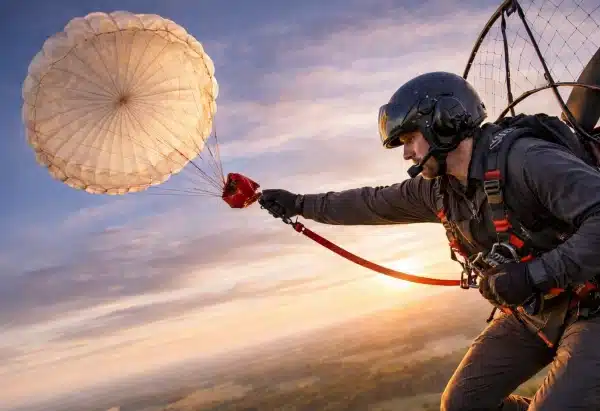
No matter how careful you are, you should NEVER fly without a reserve parachute.
Reserve Safety Tips
- Repack and inspect your reserve annually. Find a qualified repacker to do this. Don’t attempt it yourself without experience.
- Check reserve locking pins are secure before every takeoff
- Consider a steerable reserve for better landing control
A parachute won’t prevent every accident, but it will likely save you when everything else fails.
8. Avoiding Complacency: Your Deadliest Enemy
Statistics show that as pilots gain experience, they think they know it all, and begin to skip crucial safety steps. Many accidents occur after 100 flight hours when pilots get relaxed.
Make the following mindset habits part of your flying DNA:
✔ Treat every flight like your first
✔ Never skip your checklist
✔ Always respect the weather
✔ Review safety lessons regularly
Complacency kills – vigilance saves.
9. Paramotoring Safety Gear You Should Own
Protect yourself and others with quality gear:
Pilot helmet: reduces injury risk on landings and ground mishaps.
Two-way radio: essential when flying with others or around active airfields.
Strobe and visibility aids: paramotors are difficult for pilots of fast moving aircraft to see. help other aircraft see you.
Proper carabiners and harness checks: reduce gear failure.
Printed checklist: never trust memory for safety steps.
Your gear not only enhances performance – it saves lives.
10. Training and Certification: Invest in Your Future
Despite deregulated airspace in many regions, including the UK, professional training is critical.
Self-teaching or partial training leads to habits that become dangerous over time. A full syllabus from a reputable instructor builds risk assessment skills and muscle memory that may keep you safe for life.
11. Rules and Regulations: Know the Law and Stay Legal
Just like drivers learn the rules of the road, paramotor pilots must learn the rules of the air. Regulations like avoiding certain airspace, or the UK’s 500 feet rule – help keep pilots and the public safe.
12. Conclusion: Safety Is Your Best Flight Partner
Paramotoring will always have risks, but with the right mindset, training, gear, weather knowledge, and safety habits, you can stack the odds in your favor and enjoy flight for years to come.
If there’s one principle to remember, it’s this:
Most paramotor accidents are preventable – focus on preparation and awareness, and safety becomes second nature.
For more detailed guides on equipment, training, weather, and flight planning visit the Paramotor Planet posts page – your #1 paramotor knowledge hub.