North of Oxford Presents- And So This is Winter… A Poetry Anthology

Frozen Dam by Lois Schlachter
© remains with contributing poets. Art © Lois Schlachter
Introduction
So, this is winter in all of its beauty, of snow-covered streets, hills and valleys. Of living objects becoming ice sculptures, of sun and sun glint, of majestic gray clouds and clear star filled skies. It is winter in all of its beauty and of course the darkness of early morning and arrival of night in the afternoon. In this time of governmental chaos let us look onto nature, the beauty and ugliness of its arrival displayed in all our lives. It is in the upturns and downturns of nature we find hope and even in the darkness, the beauty of the earth and all that surrounds us.
Thanks to all the contributing poets to – And So This is Winter Anthology.
The Poets in order of appearance: Charles Rammelkamp, Joseph C. Ogbonna, Mike Maggio, Thaddeus Rutkowski, Ed Meek, James Benger, Wayne F. Burke, Jianqing Zheng, Rustin Larson, Aaron Fischer, Arvilla Fee, Mike Reis, Greg Bem, D. R. James, Amy Barone, M.J. Arcangelini, Diane Webster, J.R. Solonche, Byron Beynon, Michael Todd Steffen, Jeff Burt, Simki Ghebremichael, Obiotika Wilfred, Stefan Raffl, Stephen Mead, Jeffrey Cyphers Wright, Sharlene Guth, Cleveland Wall, Lynette G Espositio and Paul Nash.
.
Charles Rammelkamp
.
Blizzard Pines
.
The snow lies on the branches of the pine trees
Like suds on the backs of a dishwasher’s hands,
Only heavy, a burden, sloping their shoulders
Under so much weight.
.
The bleak New England winter, like a timeless dream:
A tableau: frozen motion in black and white:
Going up Route One from Boston to Dover,
Past black leafless trees in the middle of
All that white:
.
The snow keeps driving in from the northeast;
Druid dudes dressed in black, funeral directors,
Hovering wasplike forms standing quietly
In the death white snow.
.
The dividing lines in the highway,
Separating the lanes, obliterated by snow;
Abandoned cars on the side of the road:
Stranded motorists missing Thanksgiving
Dinner and family.
.
Only the pines, silent as slanting, pinched-shoulder
Pagodas, offer any sympathy. Like ruined temples,
They watch the weary travellers stuck in the whiteness:
Helpless, stoic, shrugging.
.
Charles Rammelkamp is Prose Editor for BrickHouse Books in Baltimore. A collection of persona poems and dramatic monologues involving burlesque stars, The Trapeze of Your Flesh, was recently published by BlazeVOX Books. His collection, The Tao According to Calvin Coolidge, has just been published by Kelsay Books.
.
Joseph C. Ogbonna
.
Frosty January
.
The snow drops came falling
They dropped like little flakes of ice in the quiet morning
Of heaven’s bleached downpour.
The evenings are characterized by persistent darkness
In the month of Janus’ watchful eye.
The frosty plains are readied for a sleigh ride.
It sure seems to be a time of funfair atop the tranquil white.
Cars are trapped in the icy situation, and deciduous trees
In every neighborhood have been stripped bare.
They look unclad with a pristine and undyed covering.
During the much shorter length of daylight,
Kids dexterously mold the seasonal wintry snowman.
The seasonal toy that makes them converge quite often
On the plains.
Plummeting temperatures and blizzards join the choral
Batch of elements of the frosty season.
The snow, ice, precipitation and dormant plant life are
All imprinted on our minds as frosted memories.
.
Joseph C. Ogbonna is a widely published poet. Some of his works have been published in
Micromance magazine, Spillwords, PoetryXhunger, Waxpoetry, Written Tales, Borderless,
Poetica, Poetrysoup and other literary sites. He is an Amazon International Best Selling
Co-author. He is also a columnist for an international magazine based in India. He lives in Enugu, Nigeria.
.
Mike Maggio
.
Plexus
.
within the absence
of absence
.
outside the luminosity
of existence
.
lies the likeness of a water lily
filigreed on a momentary lake
.
the pale echo of a morning bell
skittering across an unknown sky
.
existence
crystalized
into
absence
.
now
a distant glimmer beckons my unshrouded soul
.
in an instant
my brief spirit waxes into white
.
sealed within this brilliant bead of water
pulsing outside my winter window
.
Birds
.
I have seen birds fly
in the tranquil, dazzling dawn
sometimes they have come slowly
their wispy wings
not to brush my mind
sometimes
in a moment’s time
they span
the far diaphanous rim
.
in the crystal, cloudless sky
I have seen birds fly
.
sometimes we don’t listen to birds
their clarion song
s o
c l f
a i f
t k
t e l
e e
r c a
e a v
d s e
t s
sometimes
when they celebrate God
their lithe melodies
fall on untuned ears
.
Hear now
one perched
trying to chant the heavens
.
Amazing
how one tiny bird
might whisk you away
.
Mike Maggio’s publication credits include fiction, poetry, reviews, translations and travel in The Montserrat Review, Potomac Review, The L.A. Weekly, The Washington CityPaper and many others. He has written 11 books of poetry and fiction, including Let’s Call It Paradise, which won the International Book Award for Contemporary Poetry in 2023, and Woman in the Abbey, which was awarded the Literary Titan Gold Book Award in 2025. His web site is
http://www.mikemaggio.net.
Thaddeus Rutkowski
.
Cold Blaast
.
My fingers on the bike’s handlebars
.
get cold first,
though I’m wearing heavy gloves
and a padded jacket with a hood.
My bare face doesn’t freeze,
but my body tenses over the saddle,
.
A few birds pass over me.
Surprisingly, they’re still active.
The cold air doesn’t slow them down.
In fact, it gives them lift.
They’ve found the opposite of a thermal—
an ice spiral—and they rise on it.
.
Thaddeus Rutkowski is the author of eight books, most recently Safe Colors, a novel in short fictions (New Meridian Arts). He teaches at Medgar Evers College/City University of New York and at a YMCA. He received a NY Foundation for the Arts fellowship and a Best Small Fictions award.
.
Ed Meek
.
On the Highway
.
It was sunny when just ahead,
a toxic cloud bank,
strafed with pink and gray,
swooped in, driven by wind
that brought the cold down
like a hand from above.
.
Hail pinged the hood and snow
whited out the windshield until
I was driving blind. It was a squall
that seemed to appear out of nowhere.
.
The wheels spun on the slick surface,
the car skidded sideways
and I found myself off the road.
I jumped out to witness
A tandem truck jackknife,
blockading the highway
until a half-dozen vehicles,
collided into each other like circus clowns–
victims of seemingly random
complex interconnected fractals.
And we were all together alone
On the highway, waiting to be rescued.
.
Ed Meek is the author of four books of poetry and a collection of short stories. His most recent book of poems is High Tide. His new book of poems, Great Pond, is coming out in 2026. He has had poetry in North of Oxford,
The Baltimore Review, The Sun.
.
James Benger
.
The Grind
.
I was making the long commute
one frozen January morning;
twenty-five miles of iced-over K10
to get from the studio apartment
to the warehouse, as always
on my three or four hours of sleep,
double-fisting coffee and an energy drink.
I was blearily navigating the slick highway,
thinking, This is how I die, trying to
get to a job on time so I could make
a couple bucks over minimum wage.
.
Bald tires met black ice,
if there’s a silver lining for having to
be out so early, it’s that no one else
was on the ill-repaired road.
The base model sedan fishtailed and spun,
no amount of feathering the brake
and turning into the skid could stop it.
The guardrail ground the car to a
metal-on-metal halt.
Once my heart had removed itself
from my throat and returned to my chest,
I turned the car around
and resumed my pointless journey.
.
Later that day as I was inventorying
various pipes, I used my burner
to call the insurance company,
feeling all sophisticated to have insurance at all.
I was just getting to the point where
I was realizing that if I filed the claim,
the premium would devour
my meager food allowance,
so I was just going to have to live with
a couple of doors that wouldn’t open,
when the supervisor spotted me.
.
He waited till I ended the call, then informed me:
“I ever catch you on the phone again
when you’re on the clock, you better be
talking to your wife or your mom,
and somebody better be fucking dead.”
I didn’t have a wife, and my mom was
well on her way to being dead.
I nodded and went back to my work, thinking that
from now on, my girlfriend was going to have to
climb over the gearshift.
.
James Benger is the author of several books of poetry and prose. He serves on the Board of Directors of the Writers Place, and on the Riverfront Readings Committee, and is the founder of the 365 Poems in 365 Days online workshop. He lives in Kansas City with his wife and children.
.
Wayne F. Burke
.
Thaw
.
Walking in the world
under blue sky and
a great pine tree like
a skyscraper with arms;
gleaming sheets of
snow melt
in naked streets; muddied
water in coffee-colored puddles, and
my car
needing a bath, sitting
on green and gold gravel, as
a crow caws from the
pine tree in
February’s thaw.
.
Wayne F. Burke’s poetry has been widely published online and in print (including in NORTH OF OXFORD). He has authored 12-poetry collections–most recently WHATEVER HAPPENED TO BABY WAYNE? Hog Press, 2025. He lives in Vermont (USA).
.
Jianqing Zheng
.
Winter’s Illusion
.
The
first
snowflake
glides on wind
holding a glitter
of sunlight like in pair-skating,
my eyes figure-dance with them spinning to slow down and
land among a pile of brown oak leaves like an Ishihara plate to test my vision.
.
Winter Images
.
first snow
out to see
the snowscape
.
I slip
with a thump
on the sidewalk
~
an iced branch
snaps into
ice chips—
.
a snow white
crash
of silence
~
winter sunset
banked
by dark clouds
.
into glowing
red lava
on the horizon
~
winter break
finally
have time
.
to turn
paper shred
into a floral wreath
~
dark night
winter
wind
.
finger
snapping
past windows
~
after
winter
solstice
.
each day
inches
longer
~
sunrise
an abstract
sunflower
.
blooming
on the frosted
window
.
Jianqing Zheng’s new poetry collections include Dreaminations (Madville, 2026), Visual Chords (Broken Tribe, 2025), Soulful Dancer (Blue Horse, 2025), coauthored with photographer William Ferris, and Still Motion (Photo Circle, 2025), coauthored with photographer Leo Touchet. He lives in Mississippi.
.
Rustin Larson
.
Celestial Music
.
Slippery rock hard ice everywhere.
Darkness compounded by snow.
A strange planet beyond
The far reaches, a music
Heard from a stairwell of angels
Echoing, drawing me upward.
.
December 1st
.
Snow and cold on schedule,
A poem, a missed heart-
Beat that fills my chest
With stars. I built a garden
Of rock and sand. The neighbors
Threw their garbage there. When
It snows, it all looks like lawn
Gnomes pushing wheelbarrows
Near the white chickens,
Molecules into winter’s body,
An impromptu pillow for
The head of the lovely ghost.
.
Rustin Larson’s writing appears in the anthologies Wild Gods (New Rivers Press, 2021) and Wapsipinicon Almanac: Selections from Thirty Years (University of Iowa Press, 2023). His poems have appeared in The New Yorker, The Iowa Review, Puerto Del Sol, The Penn Review, North American Review, and Poetry East. His latest collection is Russian Lullaby for Brother Donkey (Alien Buddha Press, 2024).
.
Red Barn in Winter by Lois Schlachter
.
Aaron Fischer
.
November Geese
.
When a wobbly V falls into place and rises
over the playground, the kids defrost
.
their freeze-tag poses and let loose
a chorus of taunts and honks,
.
the tow truck driver kicks the spent flares
to the side of the road, watching the birds braid
.
and bank in a slow curve. There’s something
rusty in their strident calling.
.
They cross the office window
of a chief exec who doesn’t know what to tell the stockholders.
.
Eyes closed she hears them grousing
and kvetching as they sort out their flight pattern.
.
Eyes open, they’re gone.
When they loft over the brick and razor-wire yard
.
at Rahway,
the prisoners stop shooting hoops and pumping iron.
.
Someone mimes a duck hunter
sighting down the barrel of long gun, someone
.
blows them out of the air wholesale with an AR-15.
Whitman followed these cadenced flights —
.
black as grapeshot — against the gray scumble of the sky.
Chaucer saw them wheel and scissor
.
over the half-finished spires at Canterbury,
the thatched Kentish farmhouses
.
that kept their backs to the sea.
Li Bao saw them disappear
.
over the gullies and steep cuts between
him and his friends.
.
In their wake they towed dead leaves, yellow grasses, snow.
In winter, the high mountain passes
.
are closed alike to men who do good
and those who do no wrong.
.
My Father’s Blizzard
.
Deer rifle barrel down,
safety off — my father’s fist bangs
on the door to the doctor’s office.
.
The snow snarls
around him like
it’s settling a grudge,
.
laying a thin drift
on the gunstock.
.
My father’s mouth
is sour, his heart ticking
in the vein
along his jaw.
.
My mother’s scared, waiting
in the dump they rent
beyond the last streetlight,
miscarrying their first.
.
They’ve already been turned
away once. The doctor
opened his door
on the whiteout, told them
.
Try St. Anne’s.
.
But the road
over Storm King is buried
end to end.
.
My father’s wearing
a yoke of snow,
a plaid hunter’s cap.
.
The snow’s so heavy
it’s hard to catch my breath.
.
The door
opens. I raise the rifle
and rest its barrel on the ledge
.
between the doctor’s
nose and mouth.
.
Cold Calling
.
In that cold room in the lakeside house
we heard the geese’s liquid calling
and knew what light we had till winter.
.
Of all the seasons ours was winter.
Our temperaments chilled in the cold house.
And finding flaws became a calling.
.
When we made love we called and called,
but our cries had too much winter
to warm us, icebound in the cold house.
.
In that house where our calling was winter.
.
Aaron Fischer’s poems have appeared in the New Yorker, Poetry, American Journal of Poetry, Five Points, Hudson Review, and elsewhere. He won the 2020 Prime Number Magazine poetry contest, 2023 Connecticut poetry prize, 2023 Naugatuck River Review poetry prize, and the Maria W. Faust sonnet contest.
.
Arvilla Fee
.
Giving Back
.
cardinals perch on the edge
of cylinder-shaped feeders,
beaks peck-pecking away
at black oil sunflower seeds
.
woodpeckers and wrens favor
squares of suet—peanut crunch
and wild bird blend, perfect, too
for jays and chickadees
.
I suppose it might seem silly
to spend money in my old age
on nature’s feathered friends
but it’s this kaleidoscope of color
.
on bitter days when my bones
are cold and the sun a paper
cutout in the sky, that I find joy
in three-toed prints pressed
.
into powdered snow, birds
deep red and blue as berries
filled with gratitude for one small
act of service I gladly give
.
Winter Winks
.
how deceiving
that patch of sunlight
spread across my kitchen floor
.
but I’ll take it
will rejoice in my tabby’s
faux summer nap in winter
.
I’ll sip cocoa
in front of the fireplace
and watch the frozen lake
.
across the field,
diamonds flung across
yesterday’s six-inch snow
.
redwing blackbird
on the fencepost singing
conk-la-ree, conk-la-ree
.
Arvilla Fee lives in Dayton, Ohio with her husband, three of her five children, and two dogs. She teaches for Clark State College, is the lead poetry editor for October Hill Magazine, and has been published in over 100 magazines. Her three poetry books, The Human Side, This is Life, and Mosaic: A Million Little Pieces are available on Amazon. Visit her website and her new magazine:
https://soulpoetry7.com/.
Mike Reis
.
December River
.
I am corpse-cold and bothered.
I am knife-slit flume, scalpel-cut chute.
I am bay-bent throat-roar, plunge-deafened post oak.
I am bedrock groan, shivered bridgeway.
I am icy quarrel, going downhill fast.
.
Aquaglyph
.
Suddenly,
the day wanes glyphic.
.
Blue river, noctilucent, conic-riffled,
scimitar-slices Indigo Neck.
.
Two greenheads flushed,
swing catenaries over pond-flecks.
.
Early March kayak, coldwater stylus,
incises arrowhead cartouche.
.
Twilight owl freezes, hoods her eyes,
restrikes an ancient drachma.
.
Mike Reis is a writer and environmental historian whose poems have appeared in Narrative Northeast,North of Oxford, Woven Tale, Gargoyle, Crossways, Lucille, The Broadkill Review, The Raven’s Perch, Northern New England Review, The Seventh Quarry, WWPH Writes, Superpresent, The Maryland Literary Review, Blueline, Open Doors Review, Backbone Mountain Review, and Chicago Review. His poem “Surf and Shelter” was performed in 2025 by the Rose Theater Company of Washington, DC, and his poetry has also been published in the anthologies America’s Future, Cabin Fever, Pandemic of Violence II: Poets Speak, and Traitor/Patriot: A Reflection of January 6.
.
Greg Bem
.
.
10PM: THE TOWN
.
Brittle ache after a long day scraping across time’s elbow, where leaning is staying.
Lean, future edge that rips across abdomen in the absence of birds, rodents, larger mammals.
.
Now waters speak in the tongues of the absent ones, the ones whose voices I keep.
In the calm, in the restless calm, the sleeping restlessness made of triangular mouths
as / is, keep through its absence, the hollowed halls of the built and its impermanence
like a gentle scream touching each side of the supplies once gifted through transaction.
.
In this light where there may be no light there is the soft interrogation of footsteps.
It may be a phantom’s knowing this weaving across time and place, this integration.
It may be a phantom’s plight to find visibility within shadow, wet, the creeping corners.
And then to ask, of who or of what, the phantom in its explorations, looming like questions.
.
Tepid is the puddle that may greet my sole, my ankle, my undefined limb, lit by streetlight
and security camera LED flicker, inch at a time, subtle illumination, muffled understanding, the link between the body and its position; and then the satisfaction of determining positions. Position, positionality, in this maze of hedge, yard, border, boundary, security, liminality.
.
It was right that they gave us the positions of movement when we were given existence,
given, gave, forgot; I once thought there could be more than the ups and downs of broken road. Time in its shallow swallow of moon offers me up no more than the obvious: the in front of me. That and perhaps being, perhaps becoming buried amidst the mist and break of new cloud form.
.
Of sill and shallow, this burying not much more than a buzzword, a pig war, a lashing across camp. But from the precipice of a queered modernity, the arrival back to the well-lit presence of present. I keep the way the blocks keep: poorly, with necessary renovation and a prescience of the precious. In the booming wake of a once-dull ferry terminal there may be the brightness and there may not.
.
And so, I thread curiously the wake which is nothing more than nearby this rolling flux.
And so, I guess the matte upon which everything becomes human, humane, an offer moving deeper.
.
11PM: THE DOCK
.
Odder tidings this eve from the balancing act of the wondrous modality of the bounce.
It was loftier when I could see as an arrow and the slip through image split anew.
.
From the tip of the edge a dream to dip one’s body into the blood of that which was breathed. Calming and irreverent and irritated, an exactitude of potential kelp and mismatched creature. And the grating beneath and the sky above, so sky, so grated, each boundary a boon. A conversation that forwards and backwards preserves language and keeps the mind.
.
Basked, basking in the dark, pretense of shudder, to know what is here, to hear confined.
Distant laughter, or is that the otter’s creek, splash echo turned hallucination bellow.
It was a creature of the night when it wasn’t more than a wave upon a night pylon.
Canvas is the sensate of the watery grave, the rhythms waiting to turn you over in gasp.
.
In belabored breath we are breathing through stifled discomfort, laughter, nervous swell.
Mocking the bridges and their connected land by stepping once more toward the breach
of abyss, a wrack of the toes against steel, the scum and the rust inches apart and away.
Meek and humble as this flimsy sit is what I have, the act of the dramatic anywhere else.
.
It could be going home that is of dominant sheen here, the sheer of the image of negation.
Such is the boundaries of thought as I bounce along in my steadiness, sturdy and heavy.
Gaunt first and present second, the reality of fixture, like statue, like memorial, to the lost.
What has come and thus goes, leaving the storied shroud continuing its ominous talk.
.
I move sideways and perhaps yawn, or I am startled by fright and the great sleep ahead.
Psychosis of splattered residue, blackened white caps, and the muted nubs of barnacles.
Everything in the coax of night reaches out and flexes itself away from these curled visions.
Where the skin is wrought with numb and the perplexity of the electric sky teaches me.
.
Adjacent to a core is the newness that was once forever, once ancient, a reaching with voice.
Placement in the chanting of the tide and the worrisome knowing that this will all collapse.
.
12AM: TURN POINT
.
Staring east, northeast, staring shore, island, obstruction and is it even visible
and yet I know it’s there, know it’s forever ready to take me along with its obstruction.
.
A long glance toward what is imaginable in the depths of possibility, this is night
and it is, I could only wish, quiet, but my whispers and my discussions grow louder,
as my hair becomes damper with night’s spirit; only condensation may manifest
what may be or has been before me and behind me, within us and beyond us.
.
Crackled beach and the peace of a spear of transition in the mellow shallow of night.
What speckled offerings my headlamp may find lurking in the rubble beach sand.
Wind spit and the slice of the false emergence, that there is nothing lurking within this,
that every moment I stare I find the hesitant mind understanding its cool options.
.
Imagining the earlier peoples, could they become numb, number, numbest to this.
The depth of the periphery as a comforting blanket of warm possibilities, fear
a beautiful embodiment of possibility, opportunity, and the ragged rawness of story.
Before distant bass hums of ferry or the occasional blade swish of tire tread.
.
And always the nearby movement from rest to action, action to rest, and not just.
Shifted weight in sand leads to a shifting of the beach, the impressions here that stay.
That which is echoed through the obliteration of people into sleep, what we have
a memory block, memory beings trapped inward, their interior unforgettable.
.
They too have impressed this land, their littered existence day upon day beaten into rock,
the tiniest pebbles crying out they’ve become known, they are now near,
and the world is proximity and my skin chills across each word on this maritime brace,
no shelter but in the collapse of this poem into a disintegration, a removal of viscera.
.
The palm of the sea opens in a darkly lit room, the splash nothing more than a small wash.
Out there may be two eyes looking back, this space as mirror as they could be, saltily.
.
Greg Bem is a poet and librarian based in Spokane, Washington.
.
D. R. James
.
Self-Soothing for February
.
A downed oak, toppled by time, pithless log
leveled, imploding, rotting edifice
under blown snow; above, warped-and-woven
scene of leafless torsos, sky’s grays threaded
through like tattered banners attesting cold.
The outlook looks inexorably glum,
a festival of numbing, fierce fatigue.
But sketched across like skewgee code, scrawny
branches portend their lush replenishment,
pivot pointless angst toward plush Spring’s caprice.
.
.
Snowfall on Chianti by Lois Schlachter
.
Amy Barone
.
Iced
.
Late winter’s trees
are no longer barren
this morning, but bejeweled
.
with ice crystals
after a night of noisy rain
that disrupted my sleep.
.
A state of beauty and danger
keeps me in, a gift
I welcome on a gray
.
windy day where
war fills blue screens.
.
Amy Barone’s poetry collection, Treesongs, will be released by Broadstone Books in 2026. Her book, Defying Extinction, was published by Broadstone in 2022. New York Quarterly Books published collection, We Became Summer. She wrote chapbooks Kamikaze Dance and Views from the Driveway. Barone lives in New York City and Haverford, PA.
.
M.J. Arcangelini
.
Coyotes on St. Martin Bay
.
Onto the snow-covered ice of St. Martin Bay,
coyote drags his share of a deer carcass from
the shadows of cedar and birch into the intense
light covering this pocket of Lake Huron,
.
his bitch, a respectful distance behind him.
She wanders off a bit, finds a vantage point
to lie down watching, waiting her turn.
On subtle signal from him she approaches.
.
In the air above them a large raven spirals
down until it catches the attention of the
coyotes, then spirals back up to join its mate,
wait for their turn at the still warm meal.
.
Sated, the coyotes trot off together
south toward Mackinac Island, across the
ice as though it will go on forever
and there will always be another deer.
.
M.J. Arcangelini, has published extensively in magazines and over a dozen anthologies. He has 8 published collections, the most recent of which are: PAWNING MY SINS, 2022 (Luchador Press), FIERCE KISSES (Rebels & Squares Press) 2024, & HOOKING UP (Pure Sleaze Press) 2025.
.
Diane Webster
.
Winter Gowns
.
Winter evergreen trees
in their wedding gowns
stand abandoned
at the altar
in the church
silent
as newly fallen snow
hushes the guests
to bow their heads
to pray for sunshine
for an early spring
for the unconsummated
dress to retire to a dusty
trunk with memories
piled like shed needles
strewn around the forest.
.
.
J.R. Solonche
.
Winter Lake
.
The lake is a mirror that has forgotten how to ripple.
A single leaf is trapped in the glass like a pressed thought.
.
The shore is a white hem on a garment of iron.
The fish are sleeping in a room with no doors.
.
The heat of summer is a coin buried deep in the mud.
The silence is a stone that the water cannot swallow.
.
The winter is a secret the lake keeps from the sky.
The lake is a floor that no one can walk upon without faith.
.
The frozen surface is a letter written but never sent.
The snow on the ice is the dust of a house left empty.
.
The white distance is a map where the landmarks have all been erased.
The cold is a neighbor who has come to stay for a very long time.
.
The lake is a heart that has decided, for now, to be still.
The lake is a white eye that refuses to blink.
.
The ice is a heavy lid closed against the sun.
A crack in the center is a word spoken in the dark.
.
The wind is a carpenter building drifts upon the glass.
The pier is a skeleton standing in a white field.
.
The water below is a dream that the surface cannot remember.
The grey sky is a roof that has collapsed on the foundation of the world.
.
Nominated for the Eric Hoffer Book Award, twice for the National Book Award and three times for the Pulitzer Prize, J.R. Solonche is the author of more than 50 books of poetry and coauthor of another. He lives in the Hudson Valley.
.
Byron Beynon
.
Brynmawr
for Claude Powis
.
When the sea dropped
clear away,
the past happened,
the iron jaws of a hardboiled place,
winter comes easily
to the high town of the country.
.
Waun Helygen – Marsh of the Willows,
caught at the head of the valley
the air rarefied,
a raw presence
as the snow covers
the old tracks on mountain ridges.
Moonlight and singeing frost,
remote cairns on Llangattock moors,
the wind cracks the wanderer in half.
Adrift Ebbw Fach?
.
History can dry you up
with only echoes of the forge,
the ice begins to weep,
slow on a big hill.
.
*Brynmawr is the highest town in Wales above sea level
.
Byron Beynon lives in West Wales. His work has appeared in North of Oxford, The London Magazine, Poetry Wales, Nine Mile Magazine, Chiron Review, Nixes Mate and the human rights anthology In Protest (University of London and Keats House Poets). Several collections including The Echoing Coastline (Agenda Editions) and Where Shadows Stir (The Seventh Quarry Press)
.
Michael Todd Steffen
.
One December Drive
.
It loped into the headlights out of nowhere.
The impact sudden—numb. The seat belt caught
and left a deep scarlet burn in my collar
bone, for weeks. I noticed the whole front
of my uncle’s Dodge caved in as though we’d
rammed a telephone pole. He’d managed somehow
to get the scene off to the side of the road
as traffic slowed to pass us, the stag now
visible in the headlights of a truck
that stopped behind us. Torso paralyzed,
the animal kept rising from the neck
then slamming its rack back onto the tar.
I jumped when the man’s shotgun barrel blazed—
my stun hissing clear in the hung-up stars.
.
Michael Todd Steffen lives in the Boston area, where he has taught, and worked in the nonprofit sector. He publishes articles on new and established poetry, and helps coordinate a quarterly poetry reading series with sponsorship from The Grolier Poetry Book Shop in Harvard Square. His third book of poems, I Saw My Life, will be out in March 2026 from Lily Press. Joan Houlihan has noted Steffen’s intimate portraits, sense of history, surprising wit and the play of dark and light…the striking combination of the everyday and the transcendent
.
Ice Fishing by Lois Schlachter
.
Jeff Burt
.
After the Storm
.
I picked my way through speared thistle
until the old unpainted farmhouse stood
in a small swale next to his mobile home,
metal a flat yellow paint and rust.
.
A college student volunteer who once brought
Thanksgiving dinner to his farm,
I had come to find Lindstrom the Elder,
eighty-one years old. He had no family left.
.
The flood after the blizzard had cut his gravel
road in two, a gaping hole as wide as two cars,
like a yawn that starts and doesn’t stop
until the jaw seems set permanently open.
.
The electrical was back. The yard lamp glowed
through daylight, timer out of sync.
One hole in the clouds had a blue so bright
I could not look at it and could not look away,
.
for the snow on the hillsides reflected
as if a focused lens on dry grass.
I knocked but heard no answer,
traced mud prints to the barn
.
by the boot-sized puddles, like a puzzle
one might make for a child.
I heard noise in the barn and then a grunt,
and ran to the barn, worried for Lindstrom.
.
He was standing next to a deer lying dead,
wind ruffling the fur, he smiling ear to ear,
his cheeks forcing his glasses up and, with it,
for the first time since I’d known him, his vision.
.
He told me he’d heard a ruckus on the porch
during the blizzard, came out in his pajamas,
found the buck clopping and pounding on the stairs,
stood stone-still and stared, and the buck stared back,
.
then dropped over dead.
Not a gift, Lindstrom said, a talent.
Nothing surprises me.
I don’t blink anymore
.
.
Simki Ghebremichael
.
Birches
.
The birches
have a natural phosphor-
essence.
.
They are damp and drip
groundward
out of chilled, ashen cloud.
.
Utter quietly they sip
black earth under
snowfall’s hushed debris.
.
Night enters under high,
fir roof and settles
like a silken spread.
.
Simki Ghebremichael received her MFA in Creative Writing from American University. Her poem “Prague TV” about dissident writers won first prize in the Split This Rock poetry contest. Her poem, ¡SÍ, SE PUEDE!, will appear in the anthology, Symphony in Hope Major: Poems of Protest & Witness, in April 2026. Her writing has appeared in various journals including Gargoyle, Potomac Review, Passager, So To Speak, and Capitalism, Nature, Socialism. Her YA biography, Pauli Murray’s Revolutionary Life, is published under the name, Simki Kuznick.
.
Obiotika Wilfred
.
Communion in Winter
.
One night—
after communion with a spirit-being,
after a concourse with a friend,
our right hands stretched
into the old grammar of fellowship—
I stepped outside
into utter darkness.
And was undone.
The heavenlies leaned low:
stars braided with silence,
the moon humming its pale psalm,
the shepherds’ song
still drifting somewhere between centuries.
It was winter.
Cold sharpened the sky.
The moon and stars gleamed
like fresh oven-fried plantain chips—
crisp, golden, impossible to ignore.
My breath abandoned me.
In that glee—
face-to-face smiles—
I called to my friend.
We stooped, stalked beside the kitchen store
where a tall, heavy white turkey,
separated from the others,
lay down, stood again—
asleep, yet mouth agape
like a lapping dog.
A Christmas gift misplaced in feathers.
In that moment
I witnessed the tenderness
and playful excess of a Maker
who delights in surprise.
A warmth rushed through me—
the body’s honest rebellion,
the sudden urge to empty itself
before wonder overwhelms.
Memory tapped my shoulder.
The lighthearted days of duck-hunting
rose again—
and with them the sting
of my father’s criticism,
sharp as a fifteen-dollar note
burning in my pocket:
small, exacting, unforgettable.
Once, during a hunt,
a wildfire raged—
and a forest ranger
rescued a bear cub.
The cub, standing on its fragile hind paws,
wrapped its arms around the ranger’s calf—
instinct clinging to mercy,
life recognizing refuge.
That image stays.
Because humanity has done the same—
often unconsciously,
especially at Christmas:
from the wild inferno
of fear, hunger, and loss,
we stagger toward our ultimate resource,
and hold on
with everything we have.
.
Stefan Raffl
.
Companion
.
Thick snow falls,
unhurried,
enough time
for a thought to finish.
.
Fences ease into fields.
The road leaves its urgency behind.
.
The river slows, listening
to what settles on it.
.
Sound withdraws.
.
What remains is the careful work
of winter.
.
I have always preferred
what does not insist,
what waits
to be met.
.
The snow does not ask
who I am.
It keeps arriving,
as though quiet
needed a companion.
.
I don’t mind the patience
it takes
not to disturb it.
.
Stefan Raffl is an Austrian-born writer living in California. His poems often rise from small moments—light, breath, movement—and examine how connection reshapes our sense of self. His work has been published in North of Oxford, Contemporary Haibun Online, Under the Basho, and other journals.
.
Stephen Mead
.
Magnolia Snow
.
Spring’s retreat is this smoky pallor,
& that garnet – the blossoms as flurries
speed-blurring with the white squall
sudden as anything every year
in the northeast just when we think
winter is nothing but a recollection,
& the sun of love shall bake
earth back to emerald.
.
Still, this is something of wonder
to dance in sensuous & wet with hair
akimbo as the scarves of Isadora.
.
Stephen Mead is a retiree whom, throughout all his pretty non-glamorous jobs still found time for writing poetry/essays and creating art. Occasionally he even got paid for this.
.
Jeffrey Cyphers Wright
.
Mantra Ray
.
Wild bells practice the scales of icicles.
Fallen, the snow has nowhere to go,
dressed in white ermine, ruling the cold.
.
A Black Russian holds Ron hostage.
My friends walk a wire of braided shine.
.
You are my hope, my despair, my sole
purpose. You are a plurality. We are one.
.
The peasants are revolting.
Let them eat pheasant!
One person’s dinner is another’s labor.
.
Tomorrow spins, a coin best left unspent.
We all subsist on borrowed favor.
.
I am but a teller of words, my mantra
a contrail in a bottle of blue nebulae.
.
Spreading the Wealth
.
Each snowflake is the king of wind,
diving and rising by command,
until landing on snowdrops
who bow pale lavender heads.
.
You go back and forth between
being blind and seeing into my heart
standing trial in love’s court.
.
But you always come out on top.
Like snow. Embarrassingly beautiful
in your intent at least.
You never promise to compromise
and we are louder than allowed
syncing the dream bundle
with full rounds of empty wonder.
.
Peter the Great
.
A few clouds in the south proceed apace.
My days are made of such lost parades.
.
Helen Hooker plays a madrigal on QXR.
Red coxcombs spout wrinkled flame.
.
Sunset flares, a halo behind your hair.
Homing geese seek the horizon’s navel.
.
Life is swell and you are a lucky charmer.
The sugar-frosted Snow Moon beams.
.
Under your spell, on top of der Welt.
Submersed in the champagne of your wake.
.
Your lips touch mine, softly idling, like
a getaway car. Lightning on your breath.
.
This is what I live for, to be here, inside
the glow only majesty can bequeath.
.
Winter Morning by Lois Schlachter
.
Sharlene Guth
.
Winter Scene
.
Winter has landed
like an atom bomb.
.
Everything is white and gray.
.
Snowflakes fall on the silence
like ash.
.
One cardinal lands on a black branch
Iike a single drop of blood.
.
There is no relief in the cold wind.
.
Bio: Sharlene Guth is a writer, psychologist, and Tarot reader. She lives in Tabernacle with her husband James and daughter Maeve.
.
Cleveland Wall
.
Winter Song
.
As if the sun were not a symphony,
you sing me a shadow—
winter music dark as love.
Lust plays the fiddle;
light falls behind,
thinking only of the garden
gone
as summer leaves.
.
Cleveland Wall is a poet, collage artist, and sole librarian at tiny Books on the Hill, a mighty twig of the Bethlehem Area Public Library. Her most recent project I Can. We Will, was a collaborative installation with six other artists through the Nurture Nature Center, exploring the many positive actions we can take against climate change.
.
Lynette G Espositio
.
Transformation
.
My relationship with the wind has stopped.
It is still.
I am
held in limbo
between
the
cold
and
the
sun.
.
Made of earth, I bow my head
and
become particles of dust
the wind gathers with its
cold breath
and scatters across the meadow
to nurture flowers.
My relationship with the wind has stopped.
I am still.
.
In the Mist at the Side of the Road
.
The deer stand shadow silent in the twilight
fog
watching, alert– then burst across
like a devil wind is chasing them.
Their hooves lightly dance
across the ground.
All disappear into the woods except for one
whose eyes. bright and round as the winter moon
glow—beacons of hope and innocence–
wild and free.
.
Lynette G. Esposito has been published in Poetry Quarterly, Glass Post, Self, 50 Haikus, US1, Dawn Horizons, Front Porch, Sheepshead, and others. She lives in Southern New Jersey and was married to Attilio Esposito.
.
Paul Nash
.
Absolution
.
Crystalline cracks
just beneath the surface
ping with every step
across a glacial lake
.
as steel crampons
crunch down and splinter
frozen leaf litter
.
then step gingerly
between transparent
patches of slippery ice.
.
I look down to see
a petrified catfish
suspended in cryogenic stasis
.
just above translucent stalks
of flash-frozen Hydrilla and Coontail
protruding from the marshy lakebed.
.
Embedded in mud,
a bog turtle sleeps deeply
without breathing,
.
floats freely outside itself
and has risen invisibly
with the cold winds
.
passing the outermost breaths
of earth’s atmosphere,
to dream in those vast
unfathomable reaches between stars.
.
Falling Leaves
.
Burgundy blades of Ash
are the first to fall,
dispersed across the old sand pit,
.
soon covered by a chiaroscuro
of vermillion Mountain Maple and Yellow Birch,
accented by scarlet splashes of Sumac
.
as a distant train whistle’s
faint doppler shift
ebbs and vanishes to the west
.
followed by a series of swirling gusts
that blast and scatter
the rustling leaves
.
which fall once more, a variegated carpet,
only to be strewn and shredded yet again
by blustery winds
.
finally settling as night’s frigid air
casts their desiccated remains
into Winter’s spectral silence.
.
3i/ATLAS on the Run
.
Farther-flung
around our sun,
slung or tossed,
battered, spun,
dissipated, lost,
crossed and blasted,
flabbergasted,
she waits for no one
her fate of late
is to come undone.
.
Reanimation
.
A block of melting ice —
jade crystalline dissolution
of Winter’s cold heart.
.
Paul Nash is a paleontologist at the American Museum of Natural History, for which he conducts laboratory and field research on ancient organisms in amber. Paul is published in both scientific and literary journals. He is past President of the New York Paleontological Society, and he co-hosts the longstanding High Mountain Meadow Poetry Series under the umbrella of the North Jersey Literary Community. Email address:
[email protected].
.
The Artist

As a graduate of Pennsylvania Academy of Fine Arts, Lois Schlachter was formally educated in the graduate program of life, Lois paints whatever comes into her head, working directly from her hand to the canvas with little to no planning. With her love of line, handsome and vibrant color, Lois leads the viewer into her world of rhythm and comfortable composition. Lois was born in Philadelphia and currently resides in Kunkletown, Pennsylvania which is in the southeast part of the Pocono Mountains. Her studio is in her home which overlooks a lovely lake. www.fineartbylois.com
The Editors

Diane Sahms, a native Philadelphian, is the author of eight poetry collections, with her ninth collection, —of an octopus: an archite|x|tural awareness of words, is now available from Carbonation Press, 2026, (https://www.carbonationpress.com/catalog-2/019-octopus ). She was awarded first place in Judith Stark’s Poetry Contest; Partisan Press’s Working People’s Poetry Contest; and received a poetry grant from AEVentures Foundation. Published in North American Review, Northern Virginia Review, Brushfire Literature & Arts Journal, Valley Voices, Sequestrum Journal of Literature & Arts, Chiron Review, The Philadelphia Inquirer, Pennsylvania Literary Journal, The New Verse News, #Ranger Magazine, Amsterdam Review & elsewhere. She’s Poetry Editor at North of Oxford. https://dianesahmsguarnieri.wordpress.com & http://www.dianesahms-guarnieri.com/
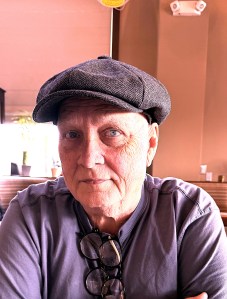
A writer of poems and stories and on occasion literary criticism, g emil reutter was born in Bristol, Pa., raised in Levittown, Pa. and has lived most of his life in of Philadelphia, Pa. His poetry and fiction have been widely published in the small and electronic press as well as numerous newspapers and magazines. Twenty-one of his collections have been published. Making America Sad Again – Trump and the Syncophants will be released March 8, 2026. He published The Fox Chase Review (2008 – 2015). He is currently a contributing editor at North of Oxford . https://gereutter.wordpress.com/about/


 North of Oxford