Showing posts with label artifacts. Show all posts

Wednesday, May 19, 2010

Proteus Gowanus Benefit/Anniversary Party, Saturday, May 22nd, 7-10 p.m.


This Saturday May 22, the Morbid Anatomy Library's beloved mother institution Proteus Gowanus will be hosting a benefit party; for the event, I will be on hand to provide wine-soaked tours of the Library and my Observatory exhibition The Secret Museum; there will also be an exciting variety of other events, happenings, workshops, and music, not to mention food and wine. This promises to be a great event! Very much hope to see you there!

Full details follow:

PROTEUS GOWNAUS BENEFIT/ANNIVERSARY CELEBRATION
The Proteus Gowanus Board and Core Collaborators:
Sasha Chavchavadze, Tammy Pittman, Tom LaFarge, Wendy Walker
Julie Freundlich Lang, PK Ramani, Benjamin Warnke, Nick DeFriez
Andrew Beccone, Joanna Ebenstein, David Mahfouda

Invite you to join us for

A Benefit Party
to Celebrate Five Years on the Alleyway

Saturday, May 22nd, 7 - 10 p.m.
RAIN DATE: Sunday, May 23, 7 - 10 p.m.
Featuring

Optiks/Alley
A multimedia installation/performance by Paul Benney and friends
inspired by Newton's Opticks and West Side Story. Viewers will be
transported down the alleyway through a dream-like world
of theatrical lighting, video and an original sound score

And a Laboratory of Protean Workshops:
Rocketworks Countdown 3, a triptych moon launch video
Improvisational Mending with the Fixers Collective: bring a broken object!
Individual and Dual Stunts in the Reanimation Library
A Secret Museum, a private viewing of Morbid Anatomy Library’s collection
The Mysteries of the Gowanus Unveiled in our Hall of the Gowanus
An Oulipian Escapade with our Writhing Society

Music by Union Street Preservation Society
A selection of Thai hors d'oevres by JOYA restaurant
and wine will be served

Tickets $60 each
Space is limited, tickets will be sold
on a first come first served basis

BUY NOW

Or go to www.proteusgowanus.com
to buy a ticket or make a donation
718-243-1572
543 Union Street at Nevins Street Gate

You can buy tickets by clicking here; you can find out more about Proteus Gowanus by clicking here, more abou the Morbid Anatomy Library by clicking here, more about Observatory by clicking here, and more about The Secret Museum--which has been extended until June 6th--by clicking here.

Photo: Eric Harvey Brown, for Time Out New York

Tuesday, January 5, 2010

"Medicine and Art: Imagining a Future for Life and Love," Mori Art Museum, Tokyo


The Mori Art Museum of Tokyo, in conjunction with the incomparable Wellcome Collection of London, has just launched a really incredible sounding exhibition entitled "Medicine and Art: Imagining a Future for Life and Love."

The show, I am told, was inspired by the Wellcome's groundbreaking "Medicine Man" exhibition (more on that here), and "Medicine and Art: Imagining a Future for Life and Love" appears to be as fascinating and provocative as its muse. Consisting of over 100 pieces of medical curiosa from the Wellcome Collection augmented by contemporary and ancient artworks--including works by Leonardo da Vinci and Damien Hirst--"the exhibition presents an integrated vision of medicine and the arts, science and beauty" while examining "the human body as the meeting place of science (medicine) and art."

The show is up until February 28th of this year. Looks like one not to miss, if you are in the Tokyo area of have some post-holiday money to burn on international travel.

Wish I lived in Tokyo.

More on the show, from the Mori Museum website:
For most human beings their own body represents both the most familiar and most unknown of worlds. From ancient times humans have sought to unravel the secret mechanisms of the body, developing in the process a wealth of medical expertise. At the same time we have seen our own bodies as vessels for the representation of ideals of beauty, and long sought to depict our bodies in paintings and drawings. Leonardo da Vinci, who went so far as to dissect human bodies in order to make more accurate depictions of them, is perhaps the single creator whose output best embodies the integration of the scientific and artistic aspects of the body.

This exhibition, with its theme of "the human body as the meeting place of science (medicine) and art," was made possible with the cooperation of the Wellcome Trust, the world's largest independent charity funding research into human health. Consisting of around 150 valuable medical artifacts from the Wellcome Collection and around 30 works of old Japanese and contemporary art, the exhibition presents an integrated vision of medicine and the arts, science and beauty. The show is a unique attempt to reconsider the science's role in health and happiness and also the meaning of human life and death. A highlight of the exhibition is three anatomical sketches by Leonardo da Vinci from the Royal Collection, owned by Queen Elizabeth II.
You can find out more about the show on the Mori Museum website by clicking here. All images from Boing Boing's excellent write-up of the exhibition, which you can read by clicking here. You can visit the Wellcome Collection website by clicking here. And thanks to all of you who sent me links about this exhibition!

P. S. If anyone wants to see the amazing catalogue for this exhibition, you are invited to come visit it (and me) at the Morbid Anatomy Library.

Image credits, top to bottom:
1) Three Tibetan Anatomical Figures; c. 1800; watercolour and black ink on white linen; Wellcome Library
2) Walter Schels; Life before Death - Elmira Sang Bastian, 14th January 2004/23rd March 2004; photography
3) E. Muller; Set of 50 Artificial Glass Eyes; 1900-1940 / Liverpool, England; glass, wood, velvet, leatherette; Science Museum, London

Monday, August 17, 2009

"Classified: Contemporary Art at Tate Britain"


While in London a few weeks ago, I found the time to check out a small but intriguing exhibition at the Tate Britain. Entitled "Classified: Contemporary Art at Tate Britain," the exhibition focuses on recent Tate acquisitions that pivot around the central theme of classification and taxonomy, and features the work of Damien Hirst, Mark Dion, and Jake and Dinos Chapman. More about the show, from the Tate website:
Classified: Contemporary Art at Tate Britain
How we see the world is how we understand it. Things are seen in relationship to other things and actions. Connections are made, naming takes place and meaning is formulated. We all engage with the world around us in diverse ways, both actively and passively.

The meanings and names given to things are not fixed, but instead fluid. We classify and catalogue but over time these categories and attendant meanings change, as does the importance they hold for us. The medieval world view, or cosmology, bears little relationship to the way we understand our place in the world today.

The works in this exhibition are drawn from Tate Collection. They adopt various forms, suggest diverse types of interpretation and provide a means of suggesting how the different types and arrangements of material culture inform our daily life. The exhibition also makes explicit the museum's role in collecting, classifying and displaying objects. It reveals how the arrangements of objects feed into museum systems of classification and interpretation bringing a sort of order to the world.
You can find out more, see more images, and watch a video about the exhibition by clicking here. But better yet, visit it in person, if possible. A small but lively and engaging exhibition.

Images, from Tate website: Top: Mark Dion, "Tate Thames Dig" 1999; Mixed media, installation; Bottom: Damien Hirst, "Forms Without Life" 1991: MDF cabinet, melamine, wood, steel, glass and sea shells, installation

Wednesday, December 3, 2008

1930s Anatomical Model


Found on the Anonymous Works blog.

Tuesday, October 28, 2008

Ivory Anatomical Mannikin (c. 1500-1700)


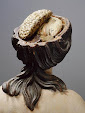
An ivory mannikin used for instructing medical students on female anatomy, circa 1500-1700. From the Alabama Museum of the Health Sciences of The University of Alabama at Birmingham.

Via Scribal Terror.

Sunday, October 19, 2008

Abandoned Russian Brain Research Laboratory Photo Gallery


I just discovered an amazing collection of images, ostensibly taken at an abandoned Russian brain research laboratory. The above images are just a few of the many found in the gallery; view the entire collection of images here.

From the website Brusnichka.com, found via a blog called Holding Tide.

Tuesday, August 5, 2008

Mourning and Funerary Artifact Exhibition, Slifer House, Lewisburg PA


When visiting my sister in Lewisburg, PA a few weeks ago, we visited an exhibition entitled "Gone, But Not Forgotten: Death & Mourning in Victorian America"--an assemblage of mourning and funerary artifacts drawn from the collection of Galen Betzer, proprietor of Galen R. Betzer Funeral Services, being held at the Slifer Historic House Museum.

The exhibition seeks to explore the customs surrounding death and mourning in the 19th Century; the historical house is draped in black crepe, as if a cherished family member (in this case, family patriarch Eli Slifer) had just died, and each room in the 19th Century mansion features other evidence of mourning, each one painstakingly pointed out and explained by the tour guide.

The exhibit culminates in a small room packed full of mourning and funerary artifacts drawn from Galen's vast and broad collection. This room is filled with an entrancing breadth and magnitude of artifacts such as hair art, mourning stationary, "tear catchers," funeral souvenirs, memorial photographs, a variety of goreyesque hearse designs (see above), hair and other memorial jewelry, coffin plates, mourning clothing, and antique funerary trade literature and promotional materials. The Centerpiece is a small child's coffin, and an elaborate children's hearse dominates the front porch of the house.

All photos above from the exhibition; see the complete set of photographs here. You can find out more information about the exhibition and related events and lectures here. For more information on artworks related to mourning, check out Curious Expedition's recent post The Art of Mourning.