I seriously cannot wait to read Rupert Thomson's new novel Secrecy, which takes as muse the enigmatic work and mysterious life of one of my all time favorite artists, the 17th-century Sicilian abbot Gaetano Giulio Zummo aka Zumbo (1656 – 1701). It also seems to be a good book, or so at least asserts the review in The Guardian, which describes it as "a visionary tale of waxworks and court intrigue set in a sinister and baroque Florence" and mentions its author in same breath as JG Ballard, Dickens and Buñuel.
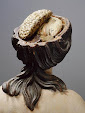
Zumbo--whom regular readers might remember from from these recent posts [1, 2]--was a fascinating character; before grandfathering the practice of anatomical waxes (see bottom image), he was already renowned for his obsessive, miniature wax memento mori-themed dioramas he called “Theatres of Death.” These tiny dioramas--featuring meticulously rendered representations of dead, decomposing and tortured human bodies and bearing titles such as “The Plague” (top image), “The Triumph of Time” (second image) “The Transience of Human Glory” (third image) and “Syphilis” (fourth image)--attracted the notice of such luminaries as the Marquis de Sade, Lord Byron and the Grand Duke of Tuscany Cosimo III. They also brought the attention of French surgeon Guillaume Desnoues, who commissioned Zumbo to create a wax simulacrum of a decaying medical preparation in what was to become the first wax anatomical teaching model.
The Financial Times has just run a really fascinating piece by the author in which he muses on his initiation into the wonders of anatomical waxes, details his discovery of Zumbo's work, and describes how he managed to research such an under-documented character and develop this research into a novel.
Following is a short excerpt from this article; you can read it in its entirety--which I highly recommend!--by clicking here:
Fugitive pieces
By Rupert Thomson
How the macabre works of Gaetano Giulio Zumbo, a mysterious 17th-century Sicilian wax modeller, inspired Rupert Thomson’s new novel ‘Secrecy’
...Driving back to England two months later, I stopped in Florence. Opened in 1775, La Specola is the oldest scientific museum in Europe, and the first 24 rooms are filled with extraordinary zoological specimens. There is a 17th-century hippopotamus that the Grand Duke used to keep in the Boboli Gardens. For some reason, the taxidermist had given the hippopotamus what appeared to be the feet of a dog. There is also a manatee, and a basilisk in a jar. In the two months since the birth of my daughter I’d had little sleep, and I was so deeply tired that I felt at times as if I were hallucinating. I hurried on, eager to see the waxes Jan had spoken of. All I remember from that day is walking into a room that was dominated by three hip-high glass cases. Each case contained a life-size woman made of wax. They were naked except for delicate pearl necklaces, and their heads rested on satin pillows. They had real human hair, and eyes of coloured Venetian glass. Their skin, a sallow golden-yellow, gleamed as if they had just broken out in a light sweat. Though I knew nothing of their provenance or their purpose, they seemed distinctly ambiguous, walking a fine line between the medical and the erotic. I came away from La Specola fascinated by wax as a medium; the way it mimicked human flesh – in his Natural History, Pliny calls it “extreme resemblance” – was uncanny, disquieting.
Towards the end of that year, I went to the Spectacular Bodies exhibition at the Hayward Gallery in London. I still have the page of scribbled notes I made that day. Though I recorded the names of several wax artists – among them Joseph Towne, Anna Morandi, Petrus Koning and Clemente Susini (who had made the three women in La Specola) – almost a quarter of my notes related to Gaetano Giulio Zumbo, whose “Dissection of a Head” was on display, and who was described in the catalogue as an “eccentric Sicilian wax-modeller”. I learnt that several of Zumbo’s most important works were kept in La Specola, and felt stupid for not having noticed them in March. As I left the Hayward, I resolved to learn more.
I quickly discovered that Zumbo is perhaps most celebrated for his plague pieces, which are wooden cabinets – or teatrini – that are filled with the macabre yet oddly tactile bodies of the dead and dying. When I first saw them, as photographs, I was reminded of nativities – though their subject is obviously human not divine, death not birth. Zumbo’s figures sprawl on a rubble of broken tombs and scattered bones, and their flesh is green, yellow, brown or black, depending on the degree of decomposition. The detail is intricate, obsessive – rats tug at entrails, eyeballs are festooned with maggots – so much so that art historians suspect Zumbo of using a magnifying glass when he was modelling; there is a secret, hidden element to the work, just as there was in society, knowledge being the prerogative of the few in those pre-Enlightenment days. Each tableau Zumbo made contrives to be both rich and desolate, and each has a painted backdrop – one of his innovations – which affords the dying a “view” of the landscape beyond the grotto, a last glimpse of the world they are about to leave. Though most of the figures would fit on the palm of your hand, they look more like individuals than specimens, and have an unnerving flamboyance or sensuality that borders on exhibitionism.Jorge Luis Borges once said that great art always has a certain ambiguity about it. Here, in that case, was great art. Here, also, was a conundrum. And, as a writer, that is precisely where a novel begins for me. Something seems to open out in front of me, something I feel driven to explore, and the only tools I have are sentence...
... By the late 17th century, the glories of the Renaissance were long gone. Florence had entered a profound economic slump – it was an age of austerity, not unlike our own – and the mood was neurotic, disapproving and suspicious. In order to survive, you had to dissimulate, cultivating a gap between your thoughts and actions. During his travels Zumbo may have come to see himself as an outsider but in Florence he was definitely a foreigner as well, and the graphic, gruesome nature of his plague pieces, which teetered on the brink of horror, would also have marked him out as an oddity. To Cosimo III, famously morbid, Zumbo’s work spoke of the transience of life – it was cautionary, meditative – but in centuries to come, opinions would differ wildly. Predictably, perhaps, it appealed to both Lord Byron and the Marquis de Sade. De Sade’s description of the plague pieces – their “fearful truth”, as he put it – was used in Juliette, or Vice Amply Rewarded, a context that mingled desire, cruelty and death. “So powerful is the impression produced by this masterpiece,” de Sade wrote, “that even as you gaze at it your other senses are played upon; moans audible, you wrinkle your nose as if you could detect the evil odours of mortality.” But Herman Melville, who mentioned Zumbo’s work in Journal up the Straits some 50 years later, took a different view: “A moralist, this Sicilian,” was his measured response. To this day, however, a sense of unease remains.
And what of Zumbo’s private life? The devil doesn’t appear in Zumbo’s work, and he makes no reference to salvation or paradise. His focus is specifically terrestrial. For Zumbo, the threat is not sin, but time. His anatomical pieces were forensic but they were also, quite clearly, sensual – or, as the art historian Roberta Panzanelli puts it, “love-letters to life itself”...Excerpt and images from The Financial Times article "Fugitive Pieces;" You can read the entire piece by clicking here. The top four photos are drawn from the piece, and were taken by Nick Ballon, while the bottom image was sourced on the from Musesplorando website; Full captions follow, top to bottom. You can read The Guardian's review of the novel by clicking here. You can find out more--and order a copy of the book--by clicking here,.
Thanks so much to George Loudon and James Kennaway for bringing this amazing looking new book to my attention.
- Gaetano Giulio Zumbo’s miniature wax tableau ‘The Plague’
- ‘The Triumph of Time’
- ‘The Transience of Human Glory’
- ‘Syphilis’
- Anatomical head by Gaetano Giulio Zumbo; found here.