
“But there certainly are not so many men of large fortune in the world as there are pretty women to deserve them.”
This tongue in cheek observation from Mansfield Park is what one would expect from Jane Austen’s pen but yet there is something different about the novel that sets it apart from the other works of the author. I am re-reading Jane Austen’s novels to honor the 250th anniversary of her birth. I started with Mansfield Park, Austen’s third novel published in 1814, which is considered as her least popular work. I wanted to understand why this novel is not as appealing as the other works of Austen. After reading it, I am even more perplexed that its main character Fanny Price is considered the least likable heroine in the Austen universe. Why has this novel been overlooked just like its protagonist who is overlooked by everyone in her social circle and in the literary world at large? Mansfield Park has a more sombre tone and marks a departure from Austen’s effervescent novels but that makes it even richer in my opinion. It delves into Austen’s frequently explored themes of marriage and morals, social class and mobility but with less levity and more psychological depth and even touches upon colonialism and slavery albeit peripherally.
Young Fanny Price is transplanted from her impoverished parents’ humble abode in Portsmouth to Mansfield Park, to live with the Bertrams, her wealthy aunt and uncle who take her in as an act of charity. She grows up with their four children: Tom, Edmund, Maria and Julia. She is constantly reminded of her place and denied the privileges afforded to her cousins. No wonder she is timid and submissive. She can only be valued as a people pleaser. Her benefactor and uncle Sir Bertram is an authoritarian figure who is frequently absent from home. Her aunt Lady Bertram lives in her own world and is neglectful of Fanny and the other aunt Mrs. Norris who is a frequent visitor to the house, belittles and bullies her constantly and deprives her of basic needs like a fireplace in her room.
“I am quite ashamed of you, Fanny, to make such a difficulty of obliging your cousins in a trifle of this sort— so kind as they are to you! Take the part with a good grace, and let us hear no more of the matter, I entreat.”
“Do not urge her, madam,” said Edmund…
“I am not going to urge her,” replied Mrs. Norris sharply; “but I shall think her a very obstinate, ungrateful girl, if she does not do what her aunt and cousins wish her— very ungrateful, indeed, considering who and what she is.”
Fanny only finds solace in the kindness and friendship of her cousin Edmund and it is no surprise that she starts falling in love with him.
The fashionable and flamboyant siblings Henry and Mary Crawford arrive in town to disrupt the normal pace of life in the Bertram household. The sisters Maria and Julia fight over Henry’s attentions. The fact that Maria is engaged to another man doesn’t deter her from flirting with Henry. Meanwhile Edmund falls head over heels in love with Mary and Henry who at first flirts with both Bertram girls, eventually turns his attentions towards Fanny as she is the only one who seems to be resisting him. Edmund is so smitten that he has lost all perspective and overlooks Mary’s flaws.
The youngsters are emboldened by Mr. Bertram’s long absence from home. All propriety is thrown off the wind when Yates, a visiting friend of Tom’s suggests they perform Elizabeth Inchbald’s adaptation of the play, ‘ Lovers’ Vows’, a rather risqué production for the time. Edmund and Fanny oppose the plan though Edmund is eventually drawn into it. Fanny stays true to her principles and remains the silent observer who is perceptive about the behavior and actions of those performing around her. There are parallels between the amorous scenes acted out on stage and the desired attachments in real life that after a point it is hard to distinguish the acting selves of the characters from their real selves.
One reason Mansfield Park is not that popular is that a romance with a first cousin is off-putting for many readers. In the Regency era such marriages were legal and a way to keep wealth and property in the family. Marriages between first and second cousins still account for a good percentage of marriages in some cultures around the world. However it is not just the shared genes but the fact that Fanny and Edmund are raised together as siblings in the same house that perhaps offends our modern sensibilities even more.
Another reason why Mansfield Park has been vastly under appreciated is because of the heroine. Fanny Price is perceived as weak and insipid as she is too nice. She’s a passive soul lacking the sassiness and wit of some other Austen heroines. It’s true that she lacks the confidence and vivacity of a Elizabeth Bennett or Emma but we have to bear in mind that she is a dependent young woman who lacks the support of her family, a privilege which our other Austen heroines take for granted. The circumstances of her birth deny her the luxury of engaging in frippery and frivolity. She is told from childhood that she is dull and dependent and she internalizes that message.
I personally admired the silent strength of Fanny. Though she is considered to be a character who shows no growth, her journey to self-worth is a gradual process. With her unobstrusive presence, she faces challenges with resilience and quiet determination. She shows a lot of spunk and strength when she rejects the wealthy suitor that the whole family including Edmund wants her to accept. “Let him have all the perfections in the world, I think it ought not to be set down as certain, that a man must be acceptable to every woman he may happen to like himself.” Fanny’s foil , Mary Crawford, seems to be more like a typical Austen heroine. The Crawford siblings may be shallow and self-absorbed but they are also charming and amicable. They are way more interesting and portrayed with more nuance compared to the lackluster heroine.
It wasn’t the dull heroine or the romance with a first cousin that put me off. I loved this book till the last few chapters and was ready to consider it my favorite Austen till the ending ruined it for me. The love story is not satisfying. Fanny deserved better. I was almost rooting for Henry to win her over. All along she was pining over Edmund who is besotted with someone else. It is so painful to see Fanny witness Edmund’s infatuation, and to hear about it constantly from him and yet remain unswerving in her devotion to him. He is a good and principled man but he is not in love with Fanny. His last minute change of heart seems contrived and insincere. He is disappointed with Mary who lacks the moral compass he expects from her and so he decides he’ll make do with Fanny. It wasn’t as though he loved her at a sub- conscious level and was just not aware of it. If that had been the case, it would have been a sweet love story and given our heroine the happy ending she deserved. But she is literally the second pick and it seems he is taking advantage of her. I didn’t find Edmund appealing at all as a romantic interest.
Fanny has a little bit of a martyr and masochist in her and takes the high road. This Austen novel has an ambiguous ending. Ostensibly, Fanny has married well. She is rewarded with a husband and the people who tormented her are punished and forced to flee Mansfield Park. If we keep in mind that marriage was the only way for a woman to climb the social ladder, she certainly made an advantageous match. Yet I am left with a bad taste in my mouth. This is not a romance novel with a happily ever after. Our Cinderella certainly got her castle but I am not convinced she got her Prince Charming!
Have you read Mansfield Park? Did you find it different from other Austen novels? What is your favorite and least favorite Jane Austen novel? And why?













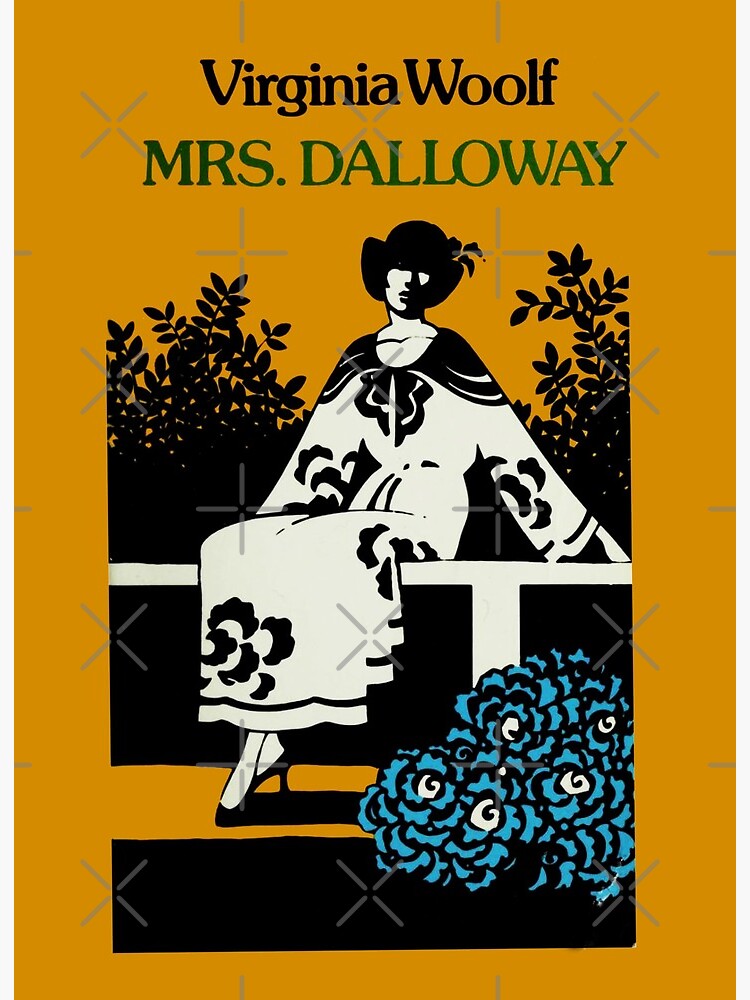
 There are some books that are plain comfort food for the soul. One such book that holds a special place in my heart is







 Literary Gitane