The Genesis Mission unites DOE National Labs, industry, academia, and more to harness AI for breakthroughs in energy dominance, discovery science, and national security. As part of the mission, the American Science and Security Cloud integrates America’s most advanced high-performance computing systems, scientific experimental facilities, data resources, and production capabilities into a single, coordinated AI-driven discovery system. Researchers at the Advanced Light Source (ALS) have been using this platform to accelerate our science and are contributing to push the limits of what is possible.
The ALS leads a Genesis Mission initiative called SYnergistic Neutron and Photon Science-Intelligence (SYNAPS-I) that has brought together experts from the DOE light and neutron sources to accelerate discovery in energy technologies, chemical and materials manufacturing, agriculture, and medicine. By applying AI tools to neutron and photon science, what used to take researchers months now takes mere minutes. In May, the team demonstrated at the AI+ Expo that this discovery process will continue to improve by using the American Science and Security Cloud.
Dylan McReynolds, data platforms program lead within the ALS Photon Science Computing group, shared more details.
Why is the American Science and Security Cloud necessary?
Oak Ridge National Laboratory is coordinating the American Science and Security Cloud, and they’re building these services to help all of us do AI. “All of us” includes ALS computer scientists, of course, but also our beamline and instrumentation experts and user partners from academia and industry.
Some of the services in the platform address longstanding needs, like transferring files between an ALS beamline and a computing cluster or a user’s home institution. Other services have become necessary as we grow in using AI to accelerate science. For instance, a common model repository and a common data catalog are both central to our research that is ever increasingly interconnected, like a user from the USDA physically scanning samples at the ALS in California, deploying computing tools at the Argonne Leadership Computing Facility in Illinois, and then making the results available to the agricultural research field at large.
Read more on the ALS website
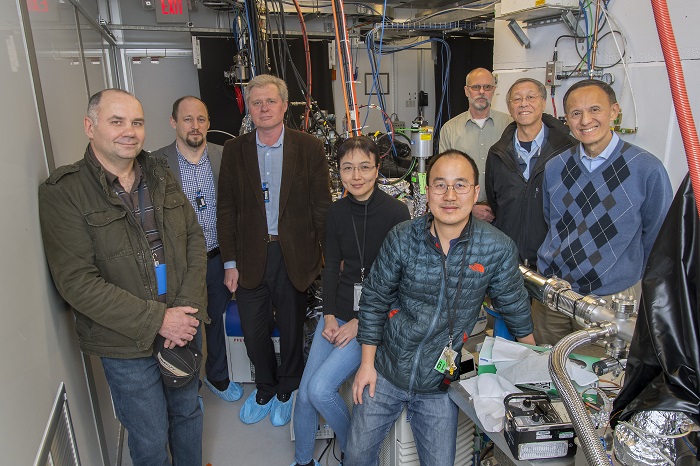
Image: Dylan McReynolds and Tanny Chavez of the ALS Computing Group deployed AI tools to accelerate discovery at Beamline 8.3.2. Their work helped researchers gain insights into drought resistance in plants.
Credit: Dylan McReynolds/Berkeley Lab