Feeds:
Posts
Comments

The basics: | L’essentiel :

La Fosse is situated at the edge of Perriers-en-Beauficel, a small, peaceful village (no shops or bars/restaurants) in countryside in southern Normandy / Manche. Small, rural bed & breakfast / chambres d’hôte with two rooms available. Only one booking taken from a couple or group at any one time. There are no close human neighbours, only sheep, cows and chickens. It is peaceful, green and the garden is managed for the benefit of wildlife.

La Fosse est située à l’orée d’un petit village paisible Perriers-en-Beauficel (sans commerces ni bars/restaurants) dans la campagne du sud de la Normandie / Manche. Petites chambres d’hôtes rurales avec deux chambres disponibles. Une seule réservation par couple ou groupe à la fois. Il n’y a pas de voisins humains proches, seulement des moutons, des vaches et des poules. L’endroit est paisible, verdoyant et le jardin est entretenu pour le bien de la faune et de la flore.
 

Two rooms are available to book –

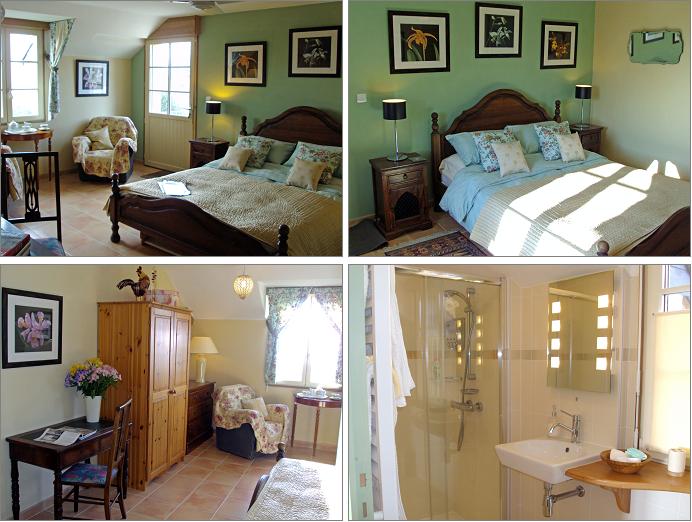
Orchid – super-king size bed, ensuite shower, basin & loo, private exterior balcony – room is 80 euros per night (occupancy 2 people) | – lit super-king, douche, lavabo et toilettes en suite, balcon extérieur privé – chambre à 80 euros par nuit (occupation 2 personnes)

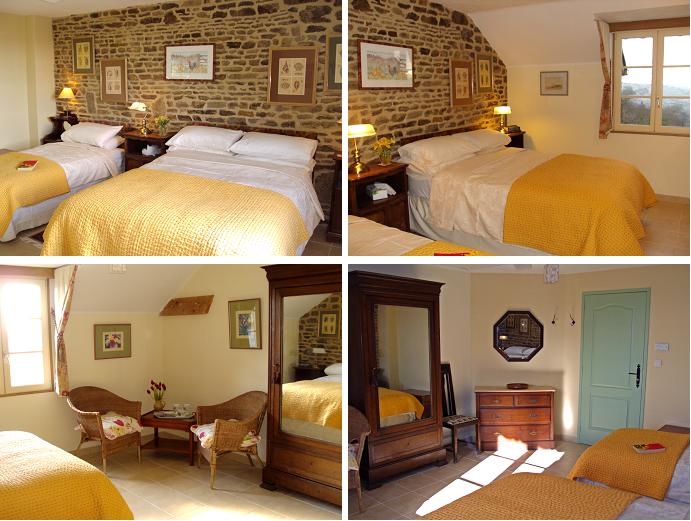
Rose – Kingsize bed + single bed with private use of adjacent bathroom/ bath, over-bath shower, basin & loo – room is 75 euros per night (occupancy 2 people) or 90 euros per night (occupancy 3 people) |
Lit kingsize + lit simple avec utilisation privée de la salle de bain adjacente avec baignoire, douche, lavabo et WC – la chambre coûte 75 euros par nuit (occupation 2 personnes) ou 90 euros par nuit (occupation 3 personnes).
La Fosse: other info… advance booking essential

Minimum stay of 2 nights; no pets allowed, no smoking or vaping on the premises. Prices include breakfast and tourist taxes. Guests have an independent entrance and have sole use of the upper floor. There is a corner for guests to make cold or hot drinks (selection provided, free of charge) with a small fridge guests can use for chilled drinks, snacks, etc. Wifi available. Only one booking (for one or both rooms) taken at one time. There is private parking at the house.

La Fosse : autres informations… réservation à l’avance obligatoire

Séjour minimum de 2 nuits ; animaux non admis, interdiction de fumer ou de vapoter dans les locaux. Les prix comprennent le petit-déjeuner et les taxes de séjour. Les clients disposent d’une entrée indépendante et ont l’usage exclusif de l’étage supérieur. Un coin est à leur disposition pour préparer des boissons chaudes ou froides (sélection fournie gratuitement) et un petit réfrigérateur leur permet de conserver des boissons fraîches, des collations, etc. Une seule réservation (pour une ou deux chambres) est acceptée à la fois. Wifi dispo. Il y a un parking privé à la maison.

Continental-style breakfast is served downstairs in the kitchen / dining area from 07h45 onwards (at a time to suit guests – later is fine). | Le petit-déjeuner est servi à partir de 7h45 dans la cuisine/salle à manger au rez-de-chaussée (à l’heure qui convient aux clients, plus tard si vous le souhaitez).

And finally… Et enfin…

Bedrooms are south-facing and equipped with shutters and fly-screens. Each room has an electric ceiling fan for hot weather. All rooms have smoke detectors. | Les chambres sont orientées au sud et équipées de volets et de moustiquaires. Chaque chambre dispose d’un ventilateur électrique au plafond pour les journées chaudes. Toutes les chambres sont équipées de détecteurs de fumée.

We use good quality mattresses along with pure cotton bedding and towels. | Nous utilisons des matelas de bonne qualité ainsi que des draps et des serviettes en pur coton.

Contact us: | Contactez-nous

Carole et Patrick HEAD, La Fosse, 50150 Perriers-en-Beauficel, Normandie enquiry.lafosse @ gmail.com (remove the spaces / supprimer les espace)

Portable FR: 06.62.73.21.11

December can be a bit of a blowy month (as well as downright cold and rainy) but we took advantage of a briskly cold but bright day recently and had a tramp around Avranches Jardin des Plantes. Overlooking the Baie de Mont-St-Michel, it suffers from some traffic noise but it is sheltered and there are some interesting plants, sculptures, memorials and trees.

decembre-21Looking over the hydrangea beds (in need of a bit of dead-heading) towards the cathedral just outside the Jardin

decembre-19

decembre-04I’ve not seen a persimmon tree before but here one is, fruit still hanging on in December. The fruit was very popular with blackbirds who were feeding straight from the branches

The persimmon – or sharon fruit – is called kaki in France which, from a background of Old English slang, doesn’t make it sound the most appealingly named item. I think they’re fairly tasteless (ie, flavour!) but perhaps they’re just delicate and too much garlic has burnt out my ‘delicate’ tastebuds.

decembre-13

decembre-15A carpet of golden Ginko biloba leaves under quite a venerable specimen – such a fabulous shape and texture

decembre-05This is a mulberry tree in full leaf in early December… which surprised us

decembre-09Bumblebee, lightly dusted with seasonal glitter (okay, pollen) working hard on winter-flowering honeysuckle
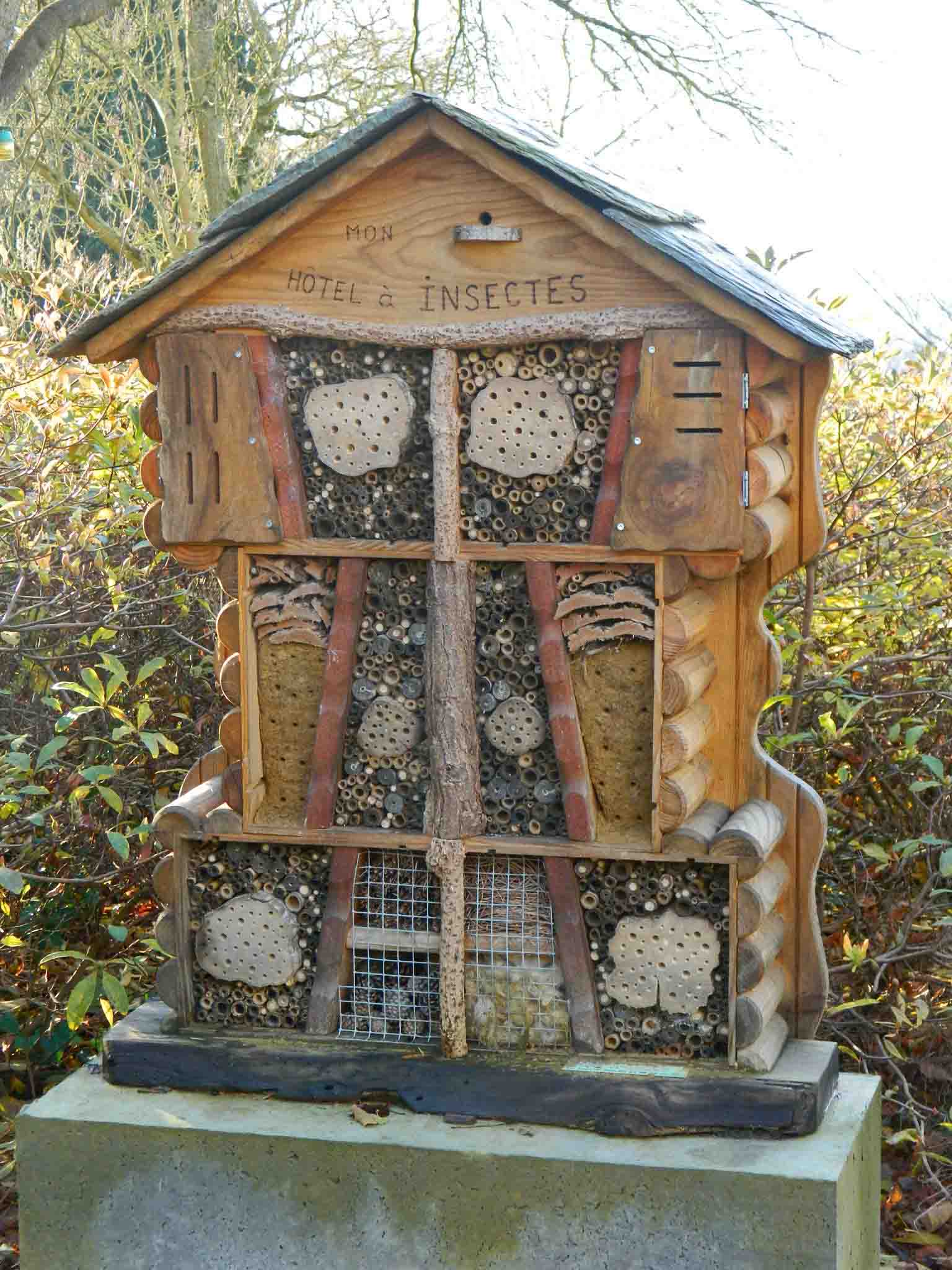
It was nice to see that the Jardin had thought about its insects with large and varied premises just for them.

decembre-12

Whether the bumblebee had booked in for the winter I don’t know (a whole new commercial opportunity for Airbnb perhaps) but I doubt it as they prefer to overwinter in a sheltered hole in a bank or perhaps a crevice in a wall.

decembre-11There are viewing platforms which enable you to look across the Baie towards le Mont-Saint-Michel rising out of the haze in the distance
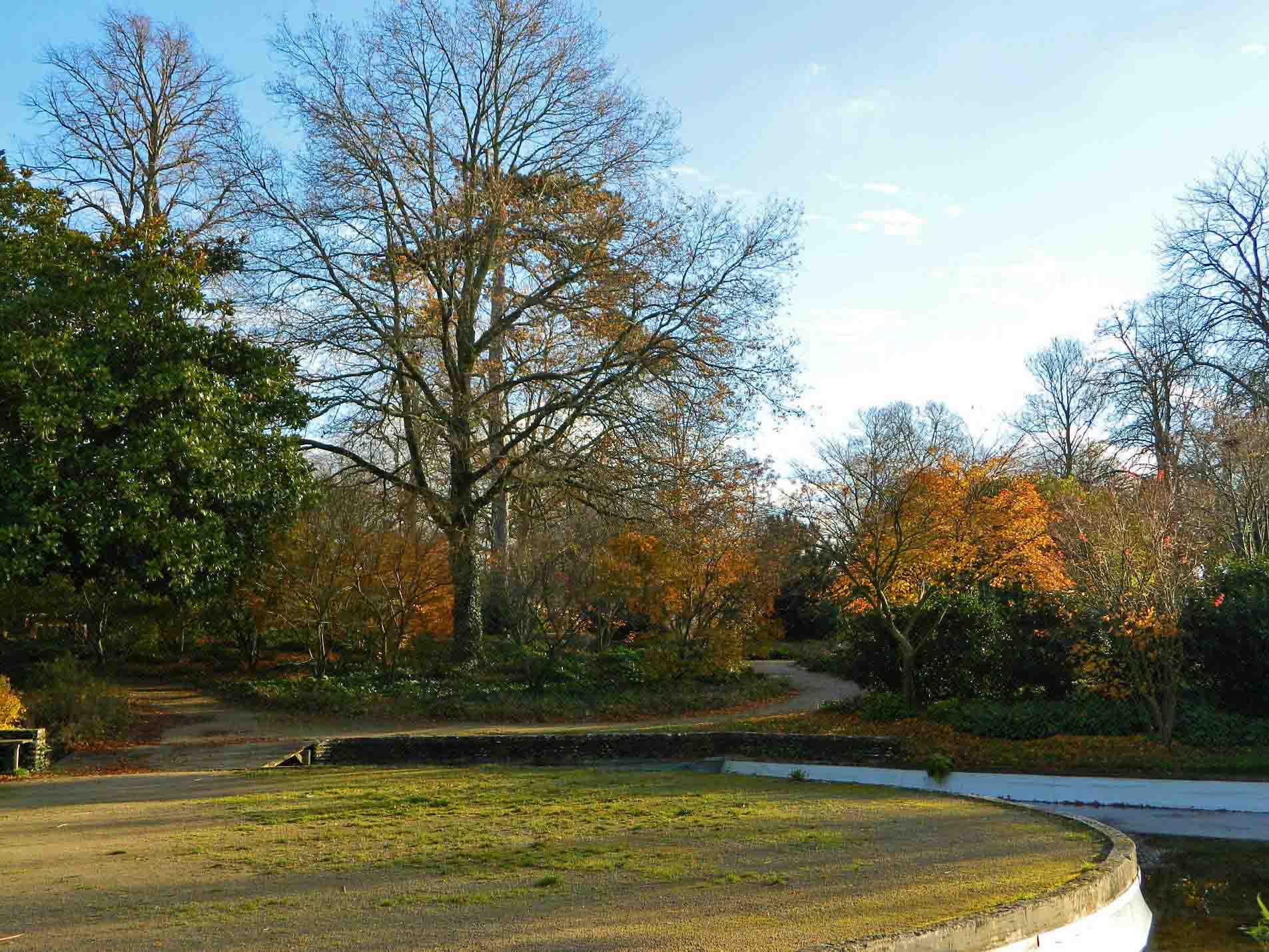
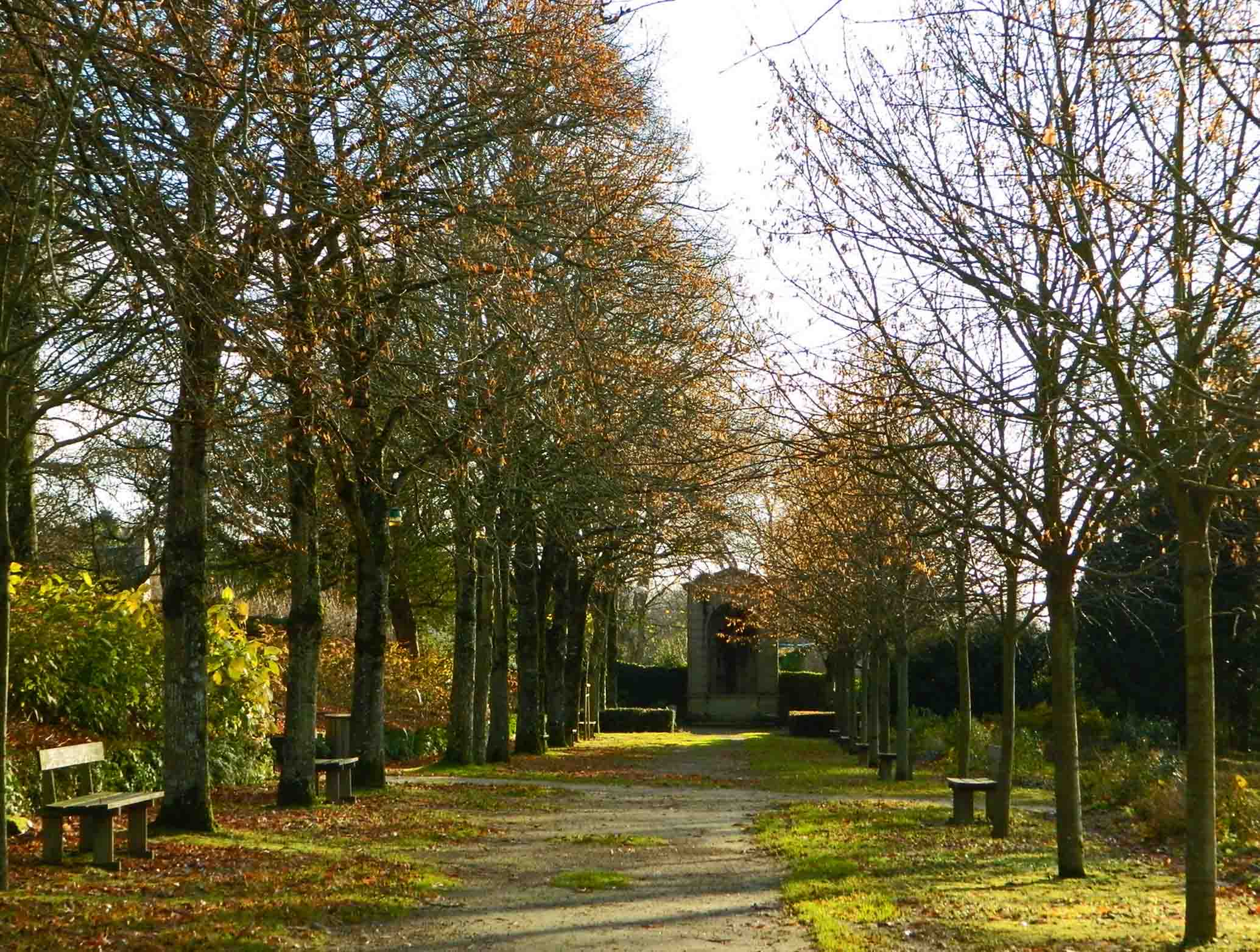
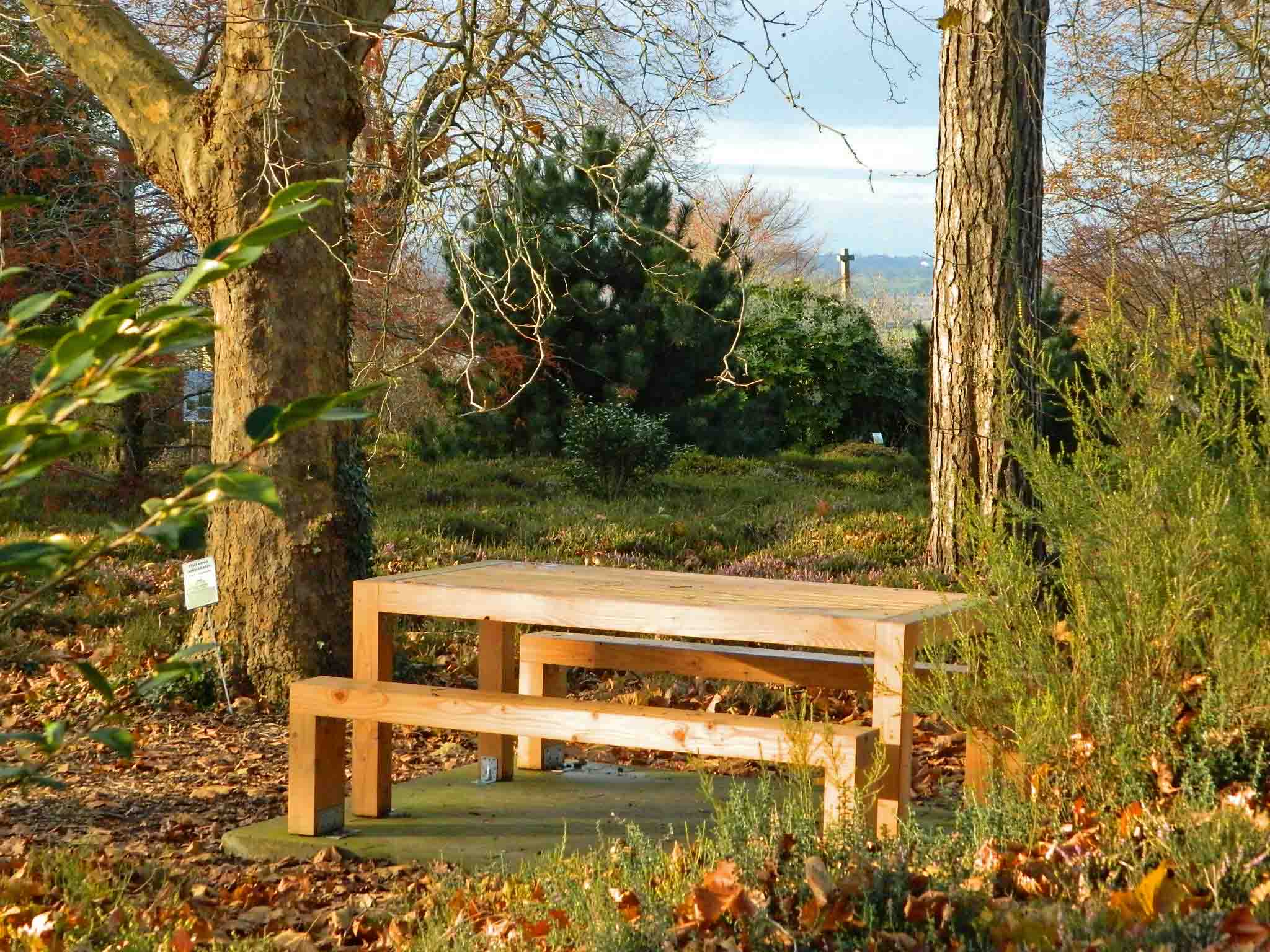
We’ve had a lot of rain since our visit and I’d like to see how it looks 3 weeks on – it’s definitely a flood plain (hence the very sensible lack of dwellings) and there’ll be a lot of ‘casual water’ lying around by now.

A few photos of views and a rather nice picnic table which would be lovely and shady in warmer weather.

decembre-07

decembre-02

decembre-03

OLYMPUS DIGITAL CAMERA

He (or she – I never did try to find out) seemed quite content with the daily rhythm of feed, weigh and cage and there were no more unexpected (scary) episodes. Continuing to take advice from the Hare Preservation Trust and Susan McClure, I followed feeding instructions relating to age and weight and approached weaning with some trepidation.

I introduced a wide variety of the right grasses, herbs and a few treats (pea pods turned out to be a real favourite) and began to reduce his milk. Feeding time was twice a day, at about 7am and 6-7pm because those are likely the times that hares will naturally feed in the wild.

OLYMPUS DIGITAL CAMERAHe objected strongly to the reduction in milk delivery – when I’d taken it down to about 25mls once a day, it disappeared so fast that his head was going backwards and forwards obviously wondering where the heck the rest was. When, within a day or two, I stopped the milk completely, he butted my hand as I took out the previous delivery of uneaten grass, clearly – even in a hare-y way – looking for his bottle. That only lasted a day or two and I assuaged his need (and my mild guilt) with a couple of pea pods treats on arrival.

OLYMPUS DIGITAL CAMERA

OLYMPUS DIGITAL CAMERA

Releasing him was now high on the To Do list. He was completely weaned, in a very large cage with lumps of wood to gnaw on and pieces of turf that I’d dug up from the garden to give him the right environment to hunker down during the day. Hares position themselves in a scrape or ‘form’ in a field, ideally near a few tussocks of grass so that their profile is less visible. When I arrived in the evening, if I could sidle up without him hearing me – he’d be up immediately and in his ‘dining area’ waiting for room service if he did – he’d be tucked down between two of these tussocks. If he’d been in a field, he’d have been very difficult to spot.

He was a good size – I’d stopped weighing him as I didn’t want to handle him at all – and I was confident he was good to go… but where? Happily, a few years earlier we’d met a British guy who had a stable of heavy horses about 30 minutes away. He made hay once a year with these horses, no silage (silaging particularly kills leverets because it scalps the ground and the leverets don’t know to get out of the way) and left wild field margins which weren’t cut. He used no pesticides and didn’t allow hunting. Hunting (locals, out every week, with dogs and guns) was the main reason that release at La Fosse wasn’t ideal – I wanted to give Grunty the maximum chance of a long life. And there were already hares on the land thus indicating it was a good environment for them.

OLYMPUS DIGITAL CAMERA

So one sultry August afternoon, we popped Grunty with some of his bedding (to give him a sense – and scent – of familiarity) into a cat carrier. He seemed entirely unperturbed by the unusual activity or the car journey itself and we drove him over to Richard’s. We walked across a couple of fields and while Patrick and Richard chatted, I walked on a bit further into the uncut field margin and opened the cat carrier several metres from a hedge. Grunty came out himself – with no particular urgency but looked around with interest. I gave him a peapod or two, put the straw and hay from the cat carrier in a dip under some bracken and left him to it.

As I packed up the cat carrier and walked away, he ambled away from me, snatching a mouthful of leaves as he went. He didn’t look back. It was an entirely uneventful release and I do feel that we prepared him for a life under the open sky as well as we could.

It was a fascinating exercise – it was one thing reading up about what I needed to do but it turned out Grunty hadn’t always read the same websites so, particularly for the first few weeks when I was trying to figure out the best feeding regime, it was difficult to get right… to do things in a way that a hare’s instincts told him he needed. I second-guessed myself a lot. It would have been very tempting to try and turn him into a semi-wild pet… so many books we read as children encourage us to do that with rabbits, otters, birds… But I was sure that the best way to equip him for the future was not to take away or dull his instincts – in particular his instinctive wariness of humans so I handled him and was around him as little as possible.

OLYMPUS DIGITAL CAMERA

Oh, and apparently, a leveret doesn’t become a hare till its first birthday, regardless of how big it is. 😉

Save

I’d been warned that it would not be an easy task as hares are animals that are easily stressed and if stressed, won’t eat. And then their surprisingly delicate digestive system packs up and they die.

It seemed logical to me to provide the leveret with the same sort of environment as it would have with its mother when feeding – open air, open skies… but it wasn’t very successful and if even a bird flew over, he would stop feeding from the syringe, freeze, and I wouldn’t be able to encourage him to start again.

Then, analysing further – channelling my inner hare – I guessed that leverets would certainly be in the open air but probably had their heads stuck under Mama Hare’s furry underparts so they could reach the milk dispensers. In which case they wouldn’t be able to see anything and even their hearing would be dulled. So I started feeding him inside one of the downstairs rooms at La Fosse – which was still under construction but unsurprisingly, your average leveret doesn’t care about half-finished plasterboarding or droopy insulation… or even a lack of the now mandatory “pops of colour”. Result: the feeding routine began to work perfectly. So perfectly that, when he graduated from syringe to bottle, he was so focussed and fast that I had to pull him off the teat momentarily so he could swallow and breathe, before he latched on again and finished the bottle.

OLYMPUS DIGITAL CAMERA

Letting him guzzle too quickly risked him inhaling milk which would lead to a lung infection – a really bad thing – so it was a balance between him getting the occasional controlled breath but not pausing long enough for him to lose interest. I believe that the mother will only stay with the leverets long enough to feed them before she’s off again so perhaps a leveret instinctively believes feeding time is over if the milk source is removed for more than a few seconds. He then cannot be persuaded to start again.

OLYMPUS DIGITAL CAMERA

The process at feeding time was to collect him from his dog crate in a piece of towelling that he’d used from day 1 so had all the right, familiar scents, carry him indoors in towel in a basket, feed him, weigh him, and return him back to his nest. This eventually took a maximum of 3-4 minutes each time so adhering to my principle of keeping him as unhandled and unaccustomed to humans as possible. I was the only one who fed him – again in an attempt to prevent him assuming all humans were a food source.

OLYMPUS DIGITAL CAMERA

There were a few hiccups along the way – although we put additional wire mesh around the dog crate so that, when tiny, he couldn’t nip out through the wire, when he was about 3 weeks old, one night he tried climbing the wire and pushing through the bars. He got stuck. When I went out to him the following morning, he was just hanging, head through the bars, eyes closed. Aaaagh. I forced the bars apart, popped his head back through and held him while he woke up. He’d rubbed the fur off his hind legs – scrabbling with them to get through and then, when that didn’t work, to get free but he took his bottle with great enthusiasm and appeared not to be any the worse for his experience. The chicken wire was extended up the crate during his breakfast. On another occasion he managed to slip underneath the bottom of the tray and out into the undergrowth but fortunately Patrick was on hand to capture him and pop him back. Gaps were plugged immediately.

OLYMPUS DIGITAL CAMERA

He continued to grow and then it was time to wean him off milk and onto grasses and other herbage. He was not amused.

Part III to follow.

Save

I suspect not.

I cannot believe that it is approaching two years since I blogged. How can the time have flown so fast? I was distracted by a tumblr site I started last year to enable me to post quick batches of photos of places we had been and things we had seen but even that has fallen into disuse. And it’s not as if I don’t have plenty of wildlife to blog about…

A friend has been having the fun and interest of watching hares – of various sizes – visit her garden since spring so in view of the fact that hares are on my mind, I’ll take the opportunity to write about Grunty the Leveret. That should also please a certain Madame Cardy…

It was a hot and sunny afternoon in early June about 7 years ago. I’d noticed Pepper the dog lying in full sun, looking hot and uncomfortable but intent on something in the long grass. I didn’t think much of it but about an hour later, noticed he was still there, panting hard and he’d been joined by several cats who were also looking down into the grass. Odd.

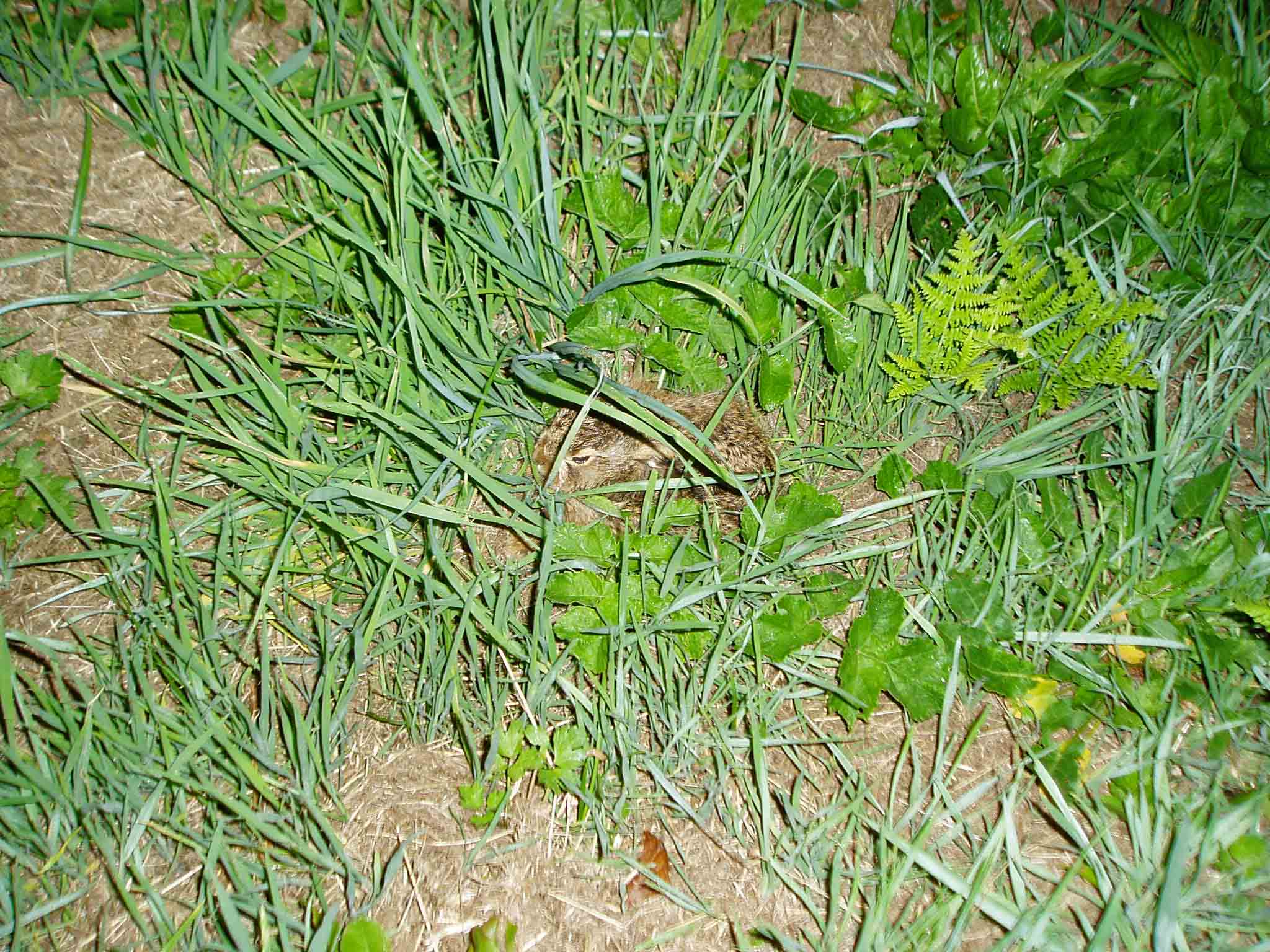
On closer inspection, a small creature sat up on its hind legs and grunted loudly and aggressively at me. The cats backed off, Pepper wagged his tail and I picked up what I assumed was a rabbit and then realised must be a leveret, a baby hare.

Oh blimey !

OLYMPUS DIGITAL CAMERA

OLYMPUS DIGITAL CAMERA

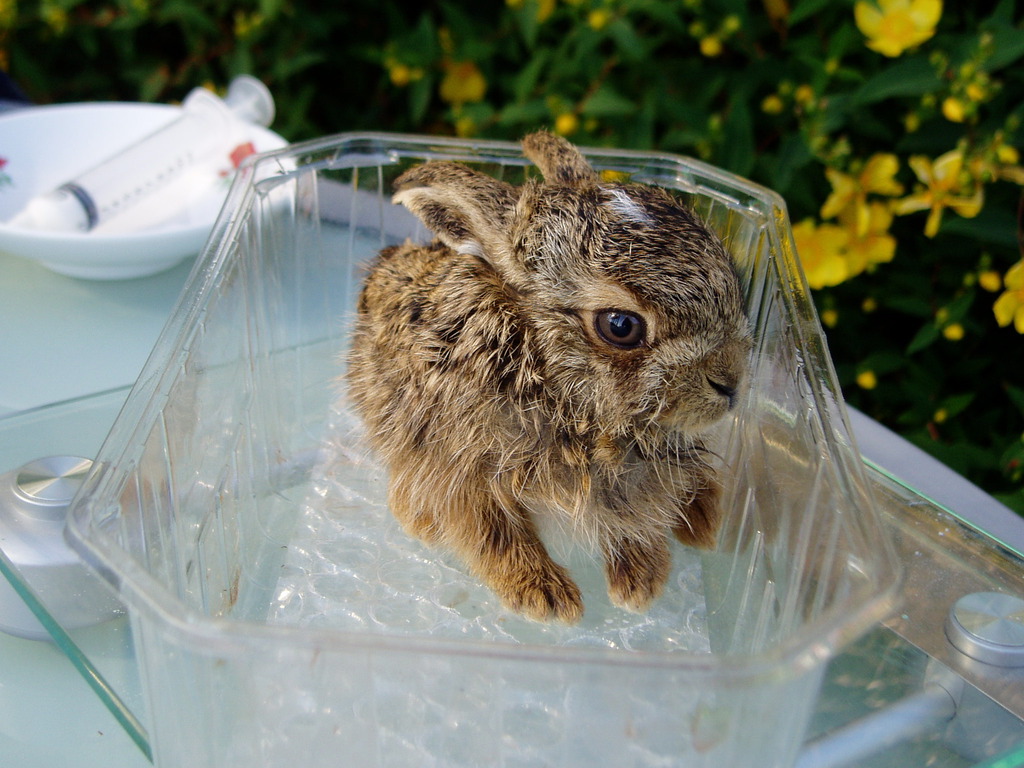
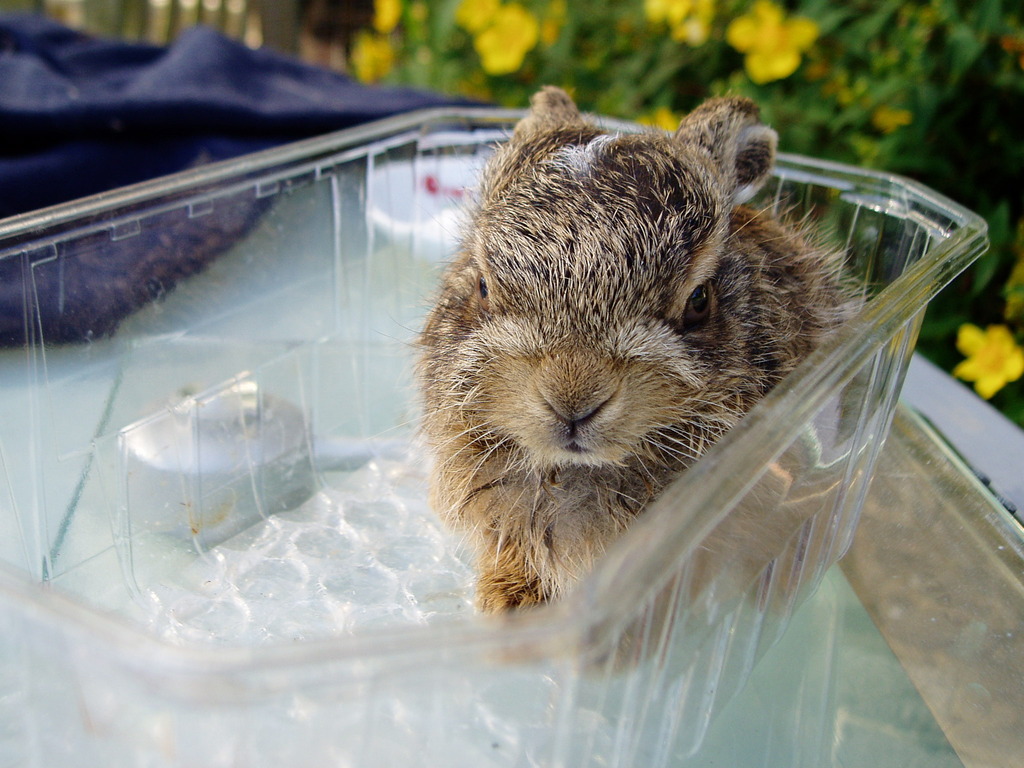
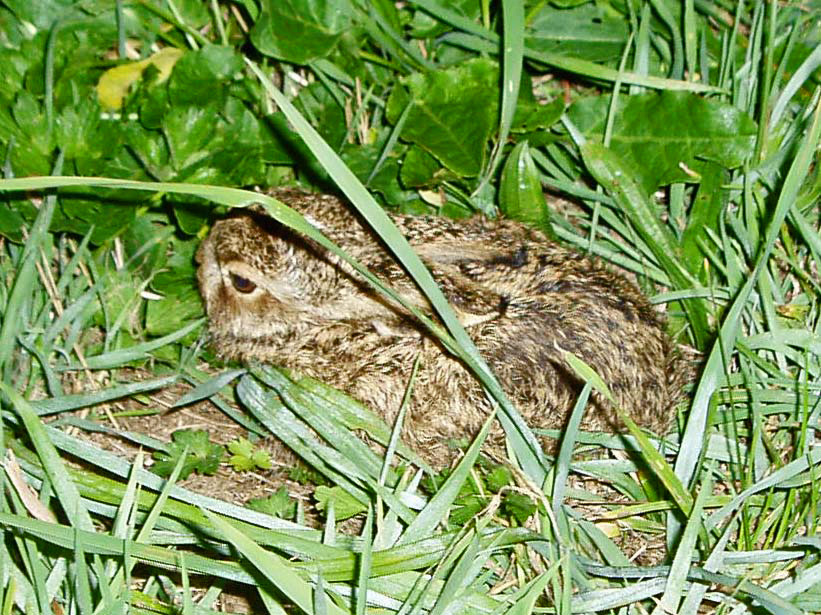
Leveret, estimated to be between 24 and 48 hours old

Young rabbits don’t emerge from the warren until they are well developed and mobile. This feisty little creature was too small and not sufficiently mobile to be a young rabbit so it must be a hare. And I’d picked it up. Having picked it up, I’d transferred my scent to the animal so even if I could figure out from where Pepper had found the leveret (which was not possible) Mama Hare would reject the leveret because it now smelt ‘wrong’.

OLYMPUS DIGITAL CAMERA

The unevenness to the round shape of the eyelid and the slightly crinkly ears are the clues as to his age established via photos by Susan McClure of Harebells in the UK

First step was to find out how to keep the animal alive. Google was my – and the leveret’s – friend. I found the wonderful Hare Preservation Trust’s website and also an exceptionally knowledgeable and helpful woman – Susan McClure – who patiently talked me through the first few days.

The site (at that time) recommended powdered kitten milk as being the product most easily available from a vet in sensible quantities for most people. However, the gold standard was ewe replacement milk for lambs – for reasons of high fat content, apparently. Happily, though we had no ewe replacement milk in the house, we knew where we could get it so while I got to work with some glucose solution in case the leveret was dehydrated, Patrick went off in search of a friendly neighbourhood farmer who was bottle-feeding lambs and therefore had a scoopful of powder available. And my mission to Grow A Leveret began…

…How to grow a leveret – part 2 to follow in a few days.


Well, the past few mornings and evenings, I’ve been out leveret spotting and the good news is… I have no news. There’s been no sign of them and I think their migration from the comparitive safety of the field was due to a herd of young cattle in that field, trampling around them. Patrick is fairly sure that, during the afternoon, the electric fence had been relocated to give the calves a new strip of grazing and that may have interfered with the leverets. I hope they went back, tucked themselves in close to the hedgerow (not ideal but out of the way of bovine feet) and were found and fed by their mother on schedule.

OLYMPUS DIGITAL CAMERA

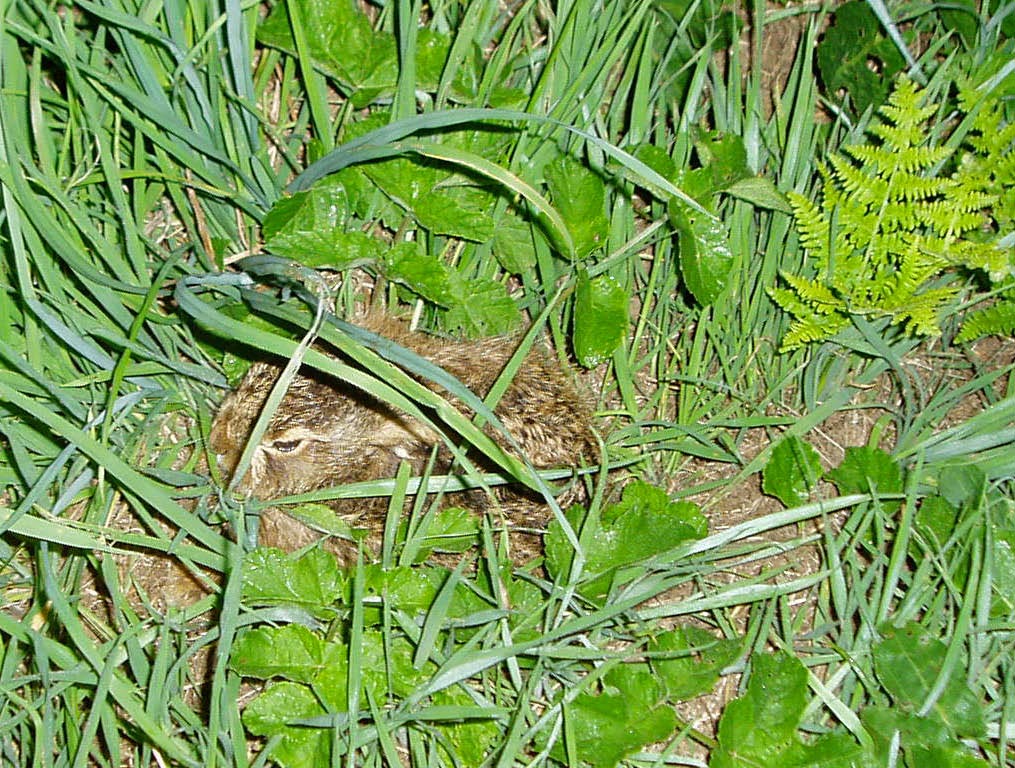
Hares prefer to give birth – and lie low themselves – in pasture which is either lightly managed (ignored!) or grazed by cattle. Sheep graze pasture closely which leaves no daytime cover for either adult hares or leverets whereas cattle ‘browse’ more and often leave tussocks of grass and weeds more or less untouched. This uneven ground is perfect cover for hares who scrape themselves a slight depression and hunker down, ears flat, to wait out the day. Though they do sit up occasionally to check out the lie of the land…

It occurs to me that I’ve never written about Grunty, a leveret brought home by Pepper, a yellow labrador X that we had till a few years ago. I’ve a lot of blog-worthy things to catch up with – mating moths, glow worms, Loose & Leafy Tree Following (which I’ve not got around to publishing this past two months) but I must also make time to post about The Leveret Summer – when we raised a 48 hour old leveret from a few hundred grams to a very healthy release weight. In October, when I have a little more time, I think. 🙂

Grunty the Leveret, post feed, aged 2 – 3 days old

As if I haven’t enough to fret about… this evening, just as it turned dark, I was driving back from the village to La Fosse when a small creature hopped across the road. At first glance, it was a young rabbit. At second glance…

…it was a leveret – a young hare.

OLYMPUS DIGITAL CAMERA

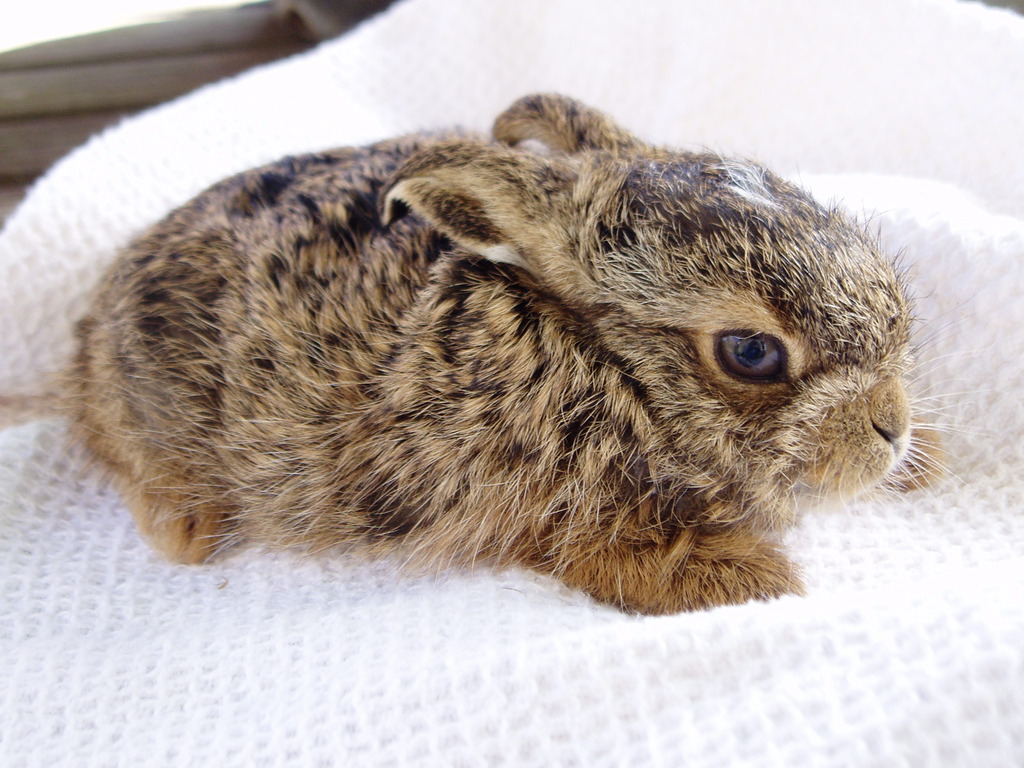
Hares are remarkable creatures. The female gives birth to eyes-open, fully furred, young. She parks them in a field or similarly suitable rough grass where they’ll blend into the foliage and earth colours.

OLYMPUS DIGITAL CAMERA

Depending on season and availability of food, she’ll give birth to between 2 and 4 leverets and they nestle into the ground, in the open, in all weathers from day one. Mother Hare returns morning and evening to feed the youngsters and the milk bar is open for about a minute before she is loping off again and leaving the leverets to wait until her next visit. They’ll wait through blazing sun, heavy Normandy rain, frosts and even snow.

Whereas young rabbits (born hairless and with eyes closed underground in the warren) will try and run away once they are old enough to be above ground, young hares rely on their camoflage to keep them safe. At this age, they try to avoid running – or even moving – they fold their ears back and hunker down in the hope that the danger – the predator – will pass them by. So as I’d established that the one I’d seen was a hare, I drove home to pick up a camera in case they were still there when I got back.

They were… two of them (but possibly a third further up the bank at the back of the verge) and judging by their size, they are about 4-5 weeks old. I’d expect them to still be on mother’s milk and am concerned that they were on and adjacent to the road. However, they are big enough to be mobile – though not fast – perhaps they sensed danger in the field (a marten, stoat or weasel?) and decided to move. Or perhaps something has happened to Mother Hare and they were moving in the hope of finding her. The timing, shortly after dusk, certainly fits with feeding time. Well, I can’t know but I am really hoping that these little leverets will survive.

I’ll look for them in the morning, of course, but doing the right thing is impossible to gauge. If I touch them, that’s it: as I have to assume they are still being fed milk, I would have to take them and finish raising them to release weight. If I touch them, Mother Hare – if she is still around – will smell my scent on them and will abandon them.

I hate these natural world conundrums… life is precarious for these little creatures but interfering if you don’t know the circumstances is not a good idea. If I’d seen a hare dead on the road I’d have no hesitation in making an assumption, scooping up these little creatures and helping them over the next few weeks with ewe replacement milk (richer in fats compared to, say, kitten milk) and then weaning them on to grass and herbs. But if Mother is still doing her thing, they’re better off with mum than going through the shock of adapting to being bottle fed.

And if I’m honest, even if they do continue to survive with or without mum, just as they get their legs – the powerful back legs which give them their speed and ability to change direction in a heartbeat – the hunting season will start and if a local gun spots these magical creatures, I can confidently predict the end of several short little lives.

I am not against hunting for the pot, but hares are fascinating, secretive animals and their behaviours are not fully understood even now and I’d really rather see them running wild at dawn and dusk than providing a few mouthfuls on a plate.

It started about two weeks ago. That irresistible (kidding) sweaty socks scent on the breeze. Yes… the chestnut flowers were out. The flowers really change the look of the tree – from a distance, it looks as if it has been dressed with lemon icing. The lemon male flowers are usually at the top of the clusters, the female being smaller, greener and, somewhat predictably, underneath.

DSCN4108

Sweet chestnut flowers – male and female are carried on the same tree though two (or more) trees are required for successful pollination

We had a lot of hot sun last week and the flowers have quickly been pollinated and begun to turn brown. Some of the spent catkins are beginning to fall and the scent is dissipating daily. Now the hard work starts: the tree has to convert the flowers into ripe fruit over the next few months.

The bees – and other pollinating insects – have had a wonderful time. Standing underneath it one afternoon last week, there was no man-made sound at all, just the deafening buzz of the insects amongst the flowers… and the crickets on the hillside.

A few years ago, the honey from our hives was very distinctly chestnut flavoured… the bees had a long and sustained period on the trees and the species is available in abundance in this area.

DSCN4112_edited-1

DSCN4111_edited-1


It will be interesting to see what sort of crop we get this year – sweet chestnuts apparently produce their best crops after a hard winter and last winter was notoriously mild. On the other hand, it’s been a good and settled year for the flowers to get well-pollinated so on that basis at least, we should be on course for a bumper crop. We’ll see.

DSCN3862

Chestnut tree in the early July landscape

A bit of a theme in my tree following posts has been the inclusion of a photo showing the full(-ish) moon at around the 7th of each month. I didn’t include one in the June post earlier because I thought it’s worth a brief extra post, to show the moon around midnight last night / this morning.

The June full moon occurs when the sun is furthest from the earth and the moon is closest. When the moon is close to the horizon, the ordinary atmospheric pollution causes the moon to have the golden (ish) halo, the colour of honey. Apparently, in the 1500s, June was a popular month for weddings and they often took place around the time of the ‘honey moon’.

This evening, wait until dusk and then go out to see if you can spot the moon hanging near the horizon. Does it look any more spectacular?

Take the opportunity of seeing whether the International Space Station is due over at the same time. Using this ISS site, you can put in your post code and country and get forecasts of when you’ll get sightings, the length of visibility and brightness. Sky needs to be clear and the reason you can see the ISS is because the sun is reflecting off it as it moves through the skies enabling it to be easily visible to the naked eye.

SLAMSEYS

Screen Printing

a french garden

Reflections on nature in a garden in France

Days on the Claise

Information: accommodation, location, region and wildlife and flowers | La Fosse - informations : hébergement, emplacement, région, faune et flore

Real Food Lover

Recipes (and rants) to remember

French wildlife and beekeeping

Information: accommodation, location, region and wildlife and flowers | La Fosse - informations : hébergement, emplacement, région, faune et flore

Pencil and Leaf

Information: accommodation, location, region and wildlife and flowers | La Fosse - informations : hébergement, emplacement, région, faune et flore

The Spinning Shepherd § La Bergère Filandière

Information: accommodation, location, region and wildlife and flowers | La Fosse - informations : hébergement, emplacement, région, faune et flore

LOOSE AND LEAFY in DORSET

Information: accommodation, location, region and wildlife and flowers | La Fosse - informations : hébergement, emplacement, région, faune et flore

Design a site like this with WordPress.com
Get started