Writer’s Workshop: Improve FLOW by Removing 3 Words

I love writing that flows. When I read a book, I like to feel as if I’m riding a wave or listening to a smooth melody where the notes come together in concert to create beautiful harmony. When writing flows, you don’t want to abandon it. In fact, you may re-read sentences just to appreciate the beauty.

How do writers combine words to create flow? One way is to follow a specific rule. Now, I know in the last Writer’s Workshop I told you to dismiss rules, but I should’ve added the word sometimes.

So, here’s the advice: Remove these three words as much as possible: that, adverbs ending in -ly, and the.


THAT is considered a filler word, meaning it just adds space on the page. As much as possible go through your writing and try to delete “that.” It will make your writing and message much cleaner. Here’s an example:

She had made Daddy promise that he would come straight home.

*She had made Daddy promise he would come straight home.

Do you see what I mean? The word “that” doesn’t add more meaning to this sentence. It just increases your word count. This isn’t to say you never need “that” in writing. Sometimes there’s no way around it. But if you can do without “that,” remove it.


ADVERBS ending in -ly can also be cumbersome. The rule here is to replace -ly words (i.e., quickly, smoothly, etc.) with actual descriptions of what you’re talking about. Here’s an example of replacing adverbs.

“Well, I guess I’ll sit out here and keep you company. You sure look pretty.” He smiled sheepishly and nodded approvingly.

*“Well, I guess I’ll sit out here and keep you company. You sure look pretty.” He smiled and nodded at approval of my dress.

Sheepishly and approvingly drag the sentence along. Here you have two choices: remove the adverb altogether or remove the -ly and add descriptions instead as this author did.


THE is a little trickier, which is why I’ve left it for the end. Although it is natural to use “the” when speaking, a lot of times this small word can bog down your writing. “The” is not always necessary. Don’t believe me? Go check out your favorite piece of writing. I bet “the” is used sparingly. Here’s an example of what I mean:

            We cut out the clothing we thought would look good on me.

            **We cut out clothing we thought would look good on me.

Here, “the” isn’t needed. If you can understand the sentence without using “the,” then ditch it.

I hope these three tips help to improve your writing, but I suggest trying one rule out at a time and only after you’ve written a draft. Editing and writing at the same time can oftentimes destroy your flow.


*The first two examples come from Mbinguni’s Looking for Hope, which I also recommend reading.

**The third example is from Sister Souljah’s A Deeper Love Inside.

Both were written perfectly in their books. I added the fake, bold first draft example.


If you’re interested in hearing more about my personal writing process and flow, then my talk with the Pasadena City College English Department may interest you: PCC Visiting Writer K. E. Garland.

Monday Notes: The Last 4 Things I Learned in 2025

#9: Some people don’t have foresight, and they proved it during the 2024 US election.

No one had to be Nostradamus to predict what was gonna happen when 47 re-entered. In fact, it was laid out for us in a 925-paged PDF. Still, some didn’t believe it. Or others knew, but didn’t think it would be so swift, with intermittent pockets of evil. Well, haha. Jokes on them. Or us. No, them. I mean, US.

Okay. Someone’s laughing, and it’s at our expense. One thing, I’ve noticed is that it doesn’t matter how loud you beat a drum and warn others about a storm, people won’t shelter until they feel raindrops on their head. And by then, it’s too late.

#10: We’ve been conditioned to not care.

It’s been pouring, but some think it’s only raining on others. We’ve watched a lot happen to a perceived them through executive orders:

  • Federal grants were frozen, impacting research, scholars, and academic jobs in ways the mainstream public may never fully understand.
  • Student protestors and foreign scholars have been deported, sometimes not to their home of origin.
  • ICE is physically pulling folks out of their cars, whether they are legal citizens or not.
  • Alleged drug dealers/innocent fishermen in the Caribbean Sea have died due to air strikes.
  • People lost their SNAP benefits.
  • Tariffs, no tariffs, some tariffs, no tariffs
  • DOGE

None of this is our problem, right? Wrong.

In the so-called West, we have been taught, for a very long time, to care about ourselves and only ourselves. Individualism, the belief and practice that every person is unique and self-reliant, has harmed us. Phrases like “pull yourself up by your bootstraps” implies you can rise through the ranks on your own. “Just go get a job, if you don’t want to be homeless” makes it seem like you’re lazy if you are unhoused. US citizens have mastered this mindset. However, it’s a little delulu to think we’ve done everything ourselves. Don’t ya think?

Individualism has created a level of selfishness that has normalized apathy.

Because of individualism, there seems to be a “that’s their problem” vibe. I hate to break it to you, if ICE shatters a guy’s car window and pulls him out because they suspect he’s an undocumented immigrant, even though he’s not, well, we’re all in danger. But it seems we must experience a situation for ourselves to truly see that.

And that’s a bit sad.

I hate to be cliché, but Pastor Niemöller tried to warn us about history repeating itself in his poem, First They Came. I’m not saying we must flood the streets in protest, but if we don’t speak out about what is blatantly absurd and morally wrong, one day there will be no one to speak up for you when you are the direct target of something blatantly absurd and morally wrong.

#11: I’m not setting myself on fire to save the world.

We should stand up for one another. But there must be balance.

This year was the first time I found myself actively resisting my upbringing. You see, I was raised in one of the largest democratic cities in the States. I attended a middle/high school named after a civil rights activist and was conditioned to follow his lead. Nearly everyone on my (adopted) mother’s side of the family committed their lives to fighting for a multitude of social justice issues. Thus, I learned to use my gifts and talents to literally improve the world, to prioritize making society better.

However, my ancestors and predecessors could not have conceived of the present times. So, I’ve had to find my own way, a sovereign citizen, if you will.

I’ve decided that, while I will continue to do good in the world, I damn sure am not going to set myself on fire to improve current conditions. I am no martyr. Life has shown me that people will half-heartedly thank you for your service, while leaving you to burn in the proverbial fire. They may not stoke the flames, but they also won’t offer a water hose. Enough of the analogies. I hope you get what I’m saying. There’s a fine line between caring for society and caring for oneself. This year, I learned where my boundary is, and I don’t intend to cross it again.

#12: Everything can be a lesson, if you are conscious and reflective.

“Most people just want to follow the leader,” my husband oftentimes reminds me. “Most people are not thinking about their lives at all, much less as much as you do.”

He’s right.

I think a lot. I analyze situations and people’s actions, not to ruminate, but rather, to be a better version of myself. I have no intention of encountering the same situations or types of people in 2026, because I’ve paid attention to the lessons of not only 2025, but also previous years.

This is not a superpower. You, too, can learn your own life lessons. You, too, can be conscious and reflective. But to do so, you must pay attention to yourself and how you function. Learning what your patterns of behavior are can be an integral step in improving your life. And any small change in yourself, will ripple outward toward your friends, family, and society at-large. But only if you want to.


Thanks as always for entertaining my thoughts. Cheers to the end of 2025. Pop the champagne y’all…we made it, kind of 🥴🙃🫠🤧

Sending light, love, and conscious living to the beginning of not just a new year, but a better one.


Monday Notes: The Next 4 Things I Learned in 2025

#5: A sovereign personality is possible.

Did you know there is something called a sovereign personality? A sovereign personality can be defined through three ways: (1) philosophy, (2) psychology and self-development, or (3) politics and ethics. Copilot summarized these ideas into one sentence:

A sovereign personality is an individual who lives with full autonomy and self-responsibility, making independent choices based on their own values rather than external control or societal pressure.

Some of you know that I have been living apart from my husband, yet remaining in relationship with him since January 2025. You can read about a lifestyle we chose called, live apart together (LAT) on Substack. This major decision helped me to practice creating a life separate from what society values, and to take responsibility for the decisions I make, while partially considering my husband’s opinion and desires. Consequently, I’ve developed a personal belief system—specifically about marriage and romantic relationships—that makes sense to my partner and me. To be honest, this is one of the first times I’ve felt good about how my husband and I are relating to one another. Standing firm in my decision feels good. I really wish we all could experience a sovereign existence in at least one area of our lives, an area where we can think about who we want to be and what type of life we want to live, as opposed to falling lockstep into pre-set values offered by religion or culture.

#6: No one tells the truth 100% of the time.

I know you’re probably like, “No, duh Kathy!” But I’ve really been thinking about the reality of expecting folks to tell the truth.

What I’ve found is that a small group of people tell lies because they are out of integrity with themselves. Subsequently, these people have little-to-no self-accountability, so they fabricate with ease. I also find that a large group of people lie to themselves. These folks aren’t bad, but anyone who will lie to themselves will most definitely lie to you and anyone else. I mean, how can you tell the truth to others if you’re not willing to face the truth about yourself?

Then, there are other types of lies that we accept as natural, human behavior, such as white lies or omission. Well, it seems people who tell white lies do so for the reasons above.

I’ve had several conversations where it is apparent that white liars think their behavior is okay. For example, what does it matter if I’m hiding candy bars in my car? As long as my spouse doesn’t find them, and I take Metformin, what’s the harm? Why would I tell my stepson his birth father has been in prison all his life, especially when I’ve been taking care of him as my own? Plus, it’s been so long now that he doesn’t even mention his father, so who cares? Both examples show how lying to oneself can lead to lying to others. Candy-bar person hasn’t accepted they have a problem, and step-parent hasn’t accepted the real reason they want to hide information from their child. Thus, so-called white lies brew and linger, without the liar realizing this can later be a much bigger problem.

I’ve also found that we lie because we think, as Jack Nicholson once said in a movie, “YOU CAN’T HANDLE THE TRUTH!” I’m not here to argue this opinion. I mean, some people really don’t fare well when they know all the things. Trust me. I’m not saying telling the truth 100% of the time to others is easy or necessary, but I do think we should be more truthful, first with ourselves. and then with one another.

#7: If it’s not an enthusiastic yes, it’s a no.

One way to lie to ourselves is saying “yes” when we wanna say, “no.” I learned this from Anna Linde, a certified sexologist. As soon as she said it, a proverbial lightbulb appeared over my head. If the answer isn’t yes, then it’s no, right? Although she was referring to this concept in terms of sex and romantic partnerships, she said that we can and should think about its function in our everyday lives.

For example, have you ever been at a restaurant, placed an order, then changed your mind? Well, Linde says this is the perfect opportunity to practice saying, “no”—don’t worry about if you’re going to piss off the waitstaff, the chef, or the people you’re dining with. Just ask for a different order. What’s the worst that can happen? Even if people will be mad at you, that’s perfectly okay, right?

I think this idea goes into the intuition basket. We talk ourselves into things we don’t want to do all the time! Now, I don’t wanna encourage you to be derelict in your duties and commitments. But there are activities that we do, which can take up unnecessary space in our days. There are activities that you have control over, activities you can decide to do or not do.

Linde says that learning how to say, “no” in regular degular, low-stakes situations will help us when stakes are higher, like during sex acts we really don’t like, for example. But I want to reiterate that practicing saying, “no,” even if it has nothing to do with intimacy or romance, will probably create a healthier shift in your life.

#8: Don’t chase people or experiences.

I’ll make this one short. Nearly everything I’ve done this year is because someone reached out to me or because I recognized my own value and sought collaborations that felt “right.” Similarly, I’ve learned that people are always watching me, and if I do what brings me joy and live in sovereignty or live in integrity as much as possible, then I will always be in right alignment with where I’m supposed to be.


Alrighty, it’s the final countdowwwnnn, in my Europe voice. Next week, I’ll share the last 4 things I learned this year. Warning: Ima get a little political, but not too much cause I don’t wanna be on nobody’s “naughty” list 😉


Monday Notes: The First 4 Things I Learned in 2025

#1: People are nutz.

I know it’s not politically correct to call people “nutz.” Really, I do. But this year, I’ve had a fair share of up-close-and-personal experiences that revealed the following: people are whole-ass crazy and walking around affecting others. Either folks don’t know they have mental health issues, or they know and don’t know how to manage. Mid-year, one person went off on me three separate times because they didn’t like what I said or didn’t like how I said it. Can y’all imagine somebody going off on me? Me either, but it happened. Another person accused me of being jealous because she thought I wouldn’t help her date a friend of mine. As my youngest daughter would say, my flabbers were gasted. I’ve never, in my entire life, been jealous of someone, and the friend in question simply wasn’t interested. A third person dismissed my emotions as I shared how hurt I was by her behavior—she didn’t apologize, offer support, or ask if I was okay. Instead, she stopped talking to me. Although each of these situations are completely different, they all have one thing in common: each person seemed to lack awareness of their own mental health and how it could affect others. Ultimately, I witnessed firsthand the importance of enacting healthy coping strategies. We must become self-aware and learn how our behavior impacts others.

#2: The old kg is still here, y’all.

Speaking of mental health and self-awareness, this year was a doozy. All year long, I’ve found myself saying, they must want the old kg to come back. Meaning, someone has pushed me so far that they must want me cuss them out, go off, or be a mean girl. But I refuse. I’d rather journal, blog, or burn someone in effigy, than return to my former ways. Similarly, through doing too much this year, I’ve learned that I am no different than any other recovering addict; I’m susceptible to all past behaviors, including relapse. While I’m aware that my addiction cycle begins with stress, sometimes, it is challenging for me to recognize when I am doing too much because my emotional set point is dysregulation. So, by the time I feel exhausted, it’s too late—traits of my behavioral disorder re-appear, like heavy drinking or sobbing when someone asks a simple question. Eventually, I slowed down and processed my emotions, which was good. Being conscious and aware means that I’m doing better. But being at the beginning of an addiction cycle was scary. In the process of recovering from burnout, I’ve learned how important it is to manage my stress levels every…single…day.

#3: Friends are not friends.

I wrote friends are not friends in my journal in 2021. I don’t know why, but I suspect it was about this high school group whose expiration date had long passed. Well, the theme returned. I learned that you can vibe with someone and they can call you “friend,” but that doesn’t make it true. This year, I learned why it’s important to vet people better. In the past (the past is 2024 lol), I met people and claimed friendship without knowing anything about them. This year taught me to take a beat, as my husband says, to get to know someone, and then to determine if they even deserve a “friend” title in my life. At first, I shamed myself for not having learned this lesson by now. But then, I gave myself grace. We all have our own journeys, and according to all the astrology apps, part of mine is to figure out relationships. For me, these trials are par for the course.

#4: I’m not going to be treated shitty, just so I can be in relationship with someone.

Aside from astrology apps telling me I’m here to work on relationships, doing a deep dive into the Seven Core Issues in Adoption and Permanency taught me that, due to early separation or abandonment, it is common for adopted people like me to have issues with romantic or platonic relationships. In my case, this has looked like clinging to lopsided relationships, so I can be connected to whomever wants to be connected to me. It has also looked like easily leaving relationships, just because someone pissed me off. The latter mirrored the abandonment I’d experienced with my birth mother and my adopted parents.

I’ve been actively working on these things since 2014, but it wasn’t until this year that I explicitly began to see where the Goldilocks spot is. It’s somewhere in between honoring my body’s response to how people act, while quietly taking note of who they show me to be. It’s recognizing when folks are dismissive, while they attempt to gaslight me if I bring up their behavior. And it’s trusting how I feel about people, instead of asking others for confirmation.


Okay, that’s it for today. I hope you’ll return on Monday for the next four things I learned in 2025. Until then, how did the year treat you?


Writer’s Workshop: Studying the Craft

There are many ways to study the craft of writing. You can earn a bachelor’s degree in English. You can attain an MFA in creative writing. You can even take a few classes here and there to learn from experts.

But what should you do if you’re like me and have no intention on setting foot in another university as a student?

Read. That’s what! Writers read, and it’s important to read books in the genre in which you intend to publish. For me, that’s memoir.

Writers read, and it’s important to read books in the genre in which you intend to publish.

So, in 2018, I read ten memoirs to learn what bestsellers are made of and to understand what the pulse of a “good” memoir is. Here’s what I found out.

A “good” memoir focuses on one theme. My favorite memoir that demonstrates this basic principle is Jesmyn Ward’s Men We Reaped. The overarching question is why have so many of the men in her community died? The quick answer is the interrelated nature of racism, poverty, and gender. The long answer is her 256-page memoir, where chapters are written in a seesaw fashion. One chapter is devoted to understanding one man’s in-depth story, while the next chapter reflects Ward’s life as it was related to each man. By the end of the memoir, Ward has clearly made a case for how systemic racism affects human beings.  

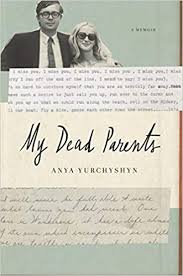
A “good” memoir has to present a bigger purpose. A bigger purpose doesn’t mean theme, necessarily, but it should answer the question: why is this author telling these stories? In My Dead Parents: A Memoir, Anya Yurchyshyn spends the first half of her book describing how much she disidentifies with her parents, how much she hates them, and how much their deaths don’t affect her. Part two digs deeper and explores who her parents really were prior to marriage and children and how this showed up in her life. This is ingenious. Anyone can write a book about why they dislike their parents. But she researches their histories as a way to see their identities, and then analyzes their lives outside of being her parents.

A “good” memoir weaves back and forth through time. This is a skill. Tara Westover’s Educated is superb at showing how to write a linear/not-linear story, which is important. While the overall story should be a cohesive narrative, it should travel back in time and then snap or slowly crawl back to the near present. For example, Westover remembers one of her brother’s violent acts from when she was an adolescent and then moves the story forward to a more recent memory of when she planned to visit home. The memory of the violence is important for how she will return and interact with her family in the book’s present.

A “good” memoir fits into a clear subgenre. Issa Rae uses humor for The Misadventures of Awkward Black Girl, which is a coming-of-age memoir. Kenan Trebinčević’s The Bosnia List: A Memoir of War, Exile, and Return is obviously a historical memoir, and so is The Girl Who Escaped Isis (Farida Khalaf and Andrea C. Hoffmann). Celebrity memoir is a thing, but more literary leaning ones, like Trevor Noah’s Born A Crime demonstrate sociocultural lessons. Finding Your Creative Muse explains more about these categories.

There’s nothing wrong with taking classes or seeking degrees; however, if you’d like to see what works for published authors, then I suggest reading in the genre you plan to write. I am also in no way advocating that you imitate the style of your favorite author. To me, that’s a no-no, but studying and learning about how others put words together? That’s a win for you and your growing body of work.

Are you intending to publish a book one day? Who’s your favorite author? What’s your favorite genre? What makes a book good?


Adoptee Awareness Month: From One Adoptee to Another: Let’s Develop Self-Awareness, Identity, and Empathy

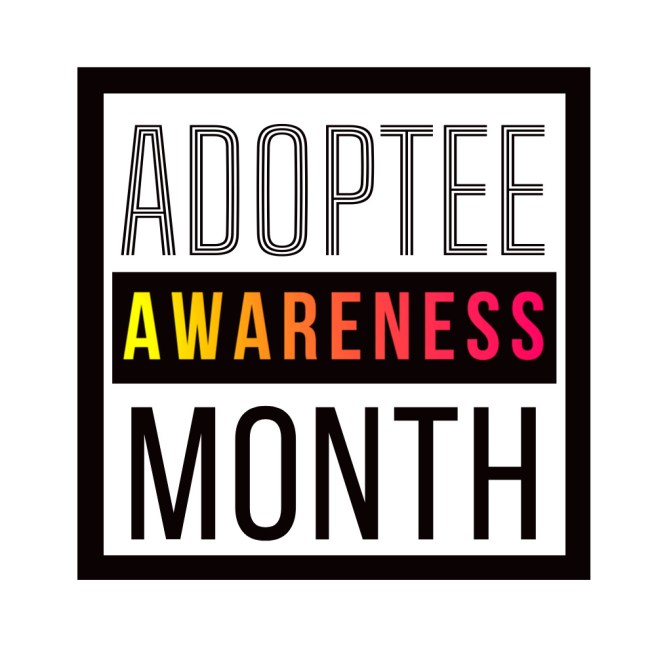
Ever since 1995, November had been Adoption Awareness Month. But two years ago, adoptees began reclaiming the month as a way to demarginalize our voices and to raise awareness. So, we celebrate ADOPTEE AWARENESS MONTH as way to reshape the narrative. I mean, adoption was supposed to be about us, right?

So, for Adoption Awareness Month, I’m sharing the latest piece I published, which shows what I learned about interacting with people who are adopted. In a lot of ways, it can be challenging because we sometimes lead with our pain, which can cause harm to those around us.

Please read From One Adoptee to Another: Let’s Develop Self-Awareness, Identity, and Empathy. I’ve turned off comments here, so you can share what you’d like on the Adoption Knowledge Affiliates site.

Adoptee Awareness Month: Acknowledging the Primal Wound: How Relinquishment Can Lead to An Intimacy Disorder

Ever since 1995, November had been Adoption Awareness Month. But two years ago, adoptees began reclaiming the month as a way to demarginalize our voices and to raise awareness. So, we celebrate ADOPTEE AWARENESS MONTH as way to reshape the narrative. I mean, adoption was supposed to be about us, right?

So, for Adoption Awareness Month, I’m sharing the first piece I published specifically about adoption. I’d had an AHA moment when I found out that research shows adoption is trauma.

Please read Acknowledging the Primal Wound: How Relinquishment Can Lead to An Intimacy Disorder. I’ve turned off comments here, so you can share what you’d like on Adoption Knowledge Affiliates site.


Adoptee Awareness Month: Letter From the Outside Daughter

Ever since 1995, November had been Adoption Awareness Month. But two years ago, adoptees began reclaiming the month as a way to demarginalize our voices and to raise awareness. So, we celebrate ADOPTEE AWARENESS MONTH as way to reshape the narrative. I mean, adoption was supposed to be about us, right?

So, for Adoption Awareness Month, I’m sharing the latest piece I published about interacting with my birth father and his family. I was hella triggered, and the best way I knew to deal with it was to write it out.

Please read Letter From the Outside Daughter. I’ve turned off comments here, so you can share what you’d like on the Adoption Knowledge Affiliates site.


Monday Notes: 5 Ways to Become a Writer

I’ve written since I was in elementary school, fifth grade to be exact. However, I didn’t consider myself a writer until 2014. Once I accepted this part of my identity, I started observing and listening to writers and “aspiring” writers. I’ve determined if you want to be a writer, then this is what you’ll have to do:

START WRITING

Now that my writing is public knowledge, people confide in me. Cousins, the man at the Florida Writers Association conference, and the woman who asked me to ghostwrite her novel each want to write. But when I ask them what they’ve written so far, the answer is nothing. I advise each of them the same. Start writing. Whether it’s a public blog or a private diary, the first step is to begin.

MAKE TIME TO WRITE

I often thought my job was getting in the way of writing. That wasn’t the truth. And because no one was going to offer me more time in the day, I had to shift my priorities. Instead of watching TV every morning, I wrote for two hours. Then, I began my regular day. Where could you shift your priorities so that you can make time to write?

TAKE TIME TO EDIT

After you’ve written something, consider that your first draft. All writers have first drafts, and second, and thirds, and … you get the picture. As a former English teacher, rarely have I seen a masterpiece written in one fell swoop. When you take time to write, that means you might find yourself pondering over the use of the word stroll, saunter, or walk because you know each one of those words will change the connotation and flow of your sentence. So take the time to think about the words you’ve written in a meaningful way.

YOU THINK YOUR STORIES HAVE ALREADY BEEN HEARD

Probably. I mean an infinite number of books have been written and read. But not yours and not the way you can write it. Comments about The Unhappy Wife validated this concept. Years ago, Story Teller Alley approved me to sell my book on their site. One of the reasons it was accepted is because of originality. A reviewer said,

Although stories of unhappy marriages have been told before, because these are all true stories and each person is different, the stories are all different.

In Search of a Salve reviews have been similar. A BookLife reviewer said this:

Stories of addiction and recovery are familiar, but Garland’s memoir shines in its willingness to expose the author’s darkest, ugliest moments: In Search of a Salve is uniquely unsparing and, ultimately, triumphant.

I’m glad the innovation of my words shines through. Sometimes people read titles and assume they know what’s inside. But it’s a false assumption. Likewise, if I would’ve thought these book concepts were trite narratives, then I might not have written either of these books. So my advice? Don’t worry about it. Somebody wants to read it the way you’ve written it.

YOU’RE WORRIED ABOUT WHAT OTHER PEOPLE THINK

On my blog, I write about many things that have happened in my life. Stories include family, friends, and people I barely know. I couldn’t write half of what you read here if I stopped to worry about someone’s hurt feelings and revisionists forms of history. Initially, an Anne Lamott quote helped me forge ahead with authentic writing. Lamott said, “If people wanted you to write warmly about them, they should have behaved better.” That quote changed my entire creative nonfiction writing life. The other part that has helped me write the truth is to separate fact from emotion. For example, it’s a fact that my dad packed up my belongings in the middle of the night while I slept. However, the emotion I experienced was abandonment. Stick to the facts and make clear when you’re describing an emotion.

I hope one of these sparks the writer in you. Trust me. Someone, somewhere is waiting to hear your voice, even if the someone is you.