

Auguste Marie Louis Nicolas and Louis Jean Lumière were pioneers of the film industry in the 1890s and La sortie de l’usine Lumière à Lyon (Workers Leaving the Lumière Factory, 1896) is considered to be the first film ever made. Though each of their films is only 40 to 50 seconds, showing candid portrayals of working class France, they’re the purest form of realism, referred to as actualités, or actuality films, and have a direct influence on the Italian Neorealism movement 40 years later.
Focusing on the harsh truths of life around them, during and post WW11, filmmakers including Visconti and Fellini often hired non professional actors, and made a point of using real settings rather than sets, with real people in the background, showing the collective anxiety of the time with unadulterated authenticity. Roberto Rossellini’s Roma città aperta (1945) is the first fully realized film of the genre and it’s shocking in its depiction of torture and life under an authoritarian regime; but Vittorio De Sica’s The Bicycle Thief from 1948 is perhaps the most well known.

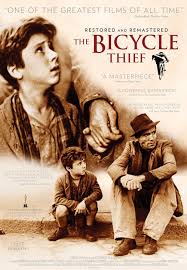
The story follows Antonio (Lamberto Maggiorani) as he gets a job hanging film posters, but for the job he must have a bicycle. He and his wife Maria (Lianella Carell) must first pawn the sheets from their beds to buy back the bicycle they have already pawned. The delight at at last having a steady income, the excitement over what this will mean for their family is shattered when the bicycle is stolen and Antonio loses his job. He searches the city with his son Bruno (Enzo Stajola), eventually finding the thief but without proof there’s nothing they can do.
The desperation of poverty is stark and the uneven distribution of wealth that we see as they chase through markets, a soup kitchen, and then their decision to stop at a trattoria, is shown through a politically charged mindset that doesn’t attempt to gloss over the reality. Their plight is desperate, but the relationship between father and son is full of warmth, not always in agreement, but they’re a team; there are no rosy answers but Antonio learns a lesson about dignity.




 Just Reading A Book