Women Warriors 362

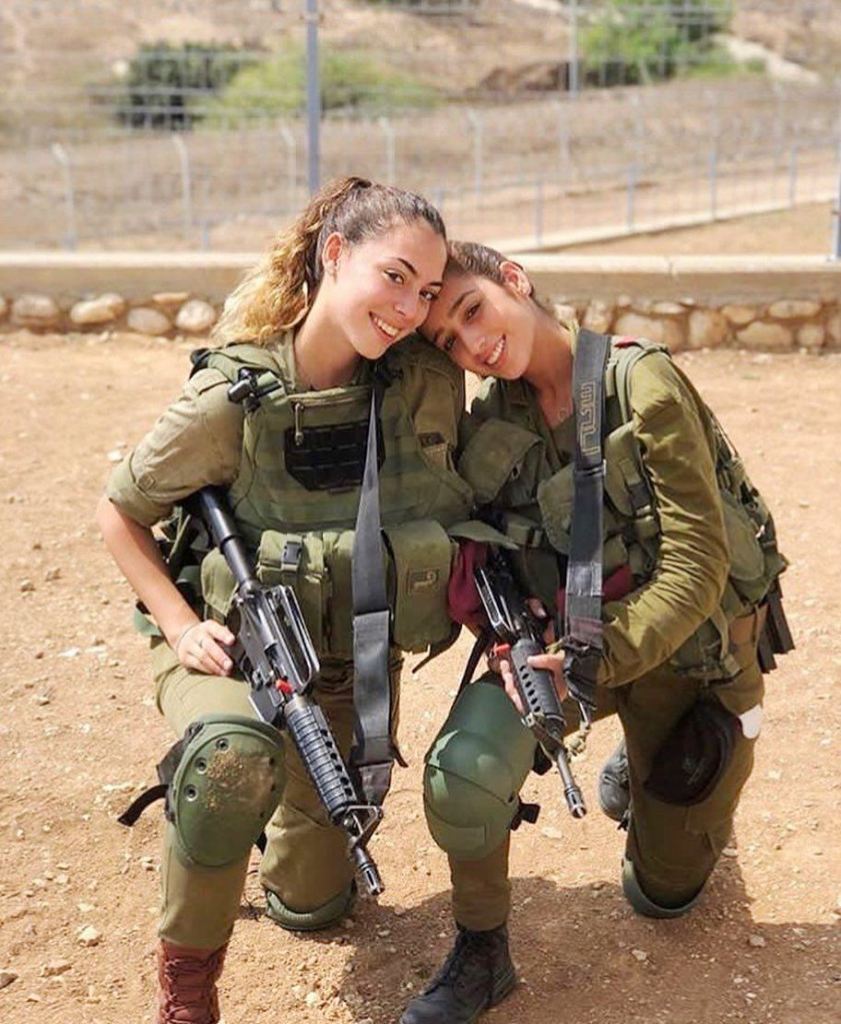
IDF
Chile
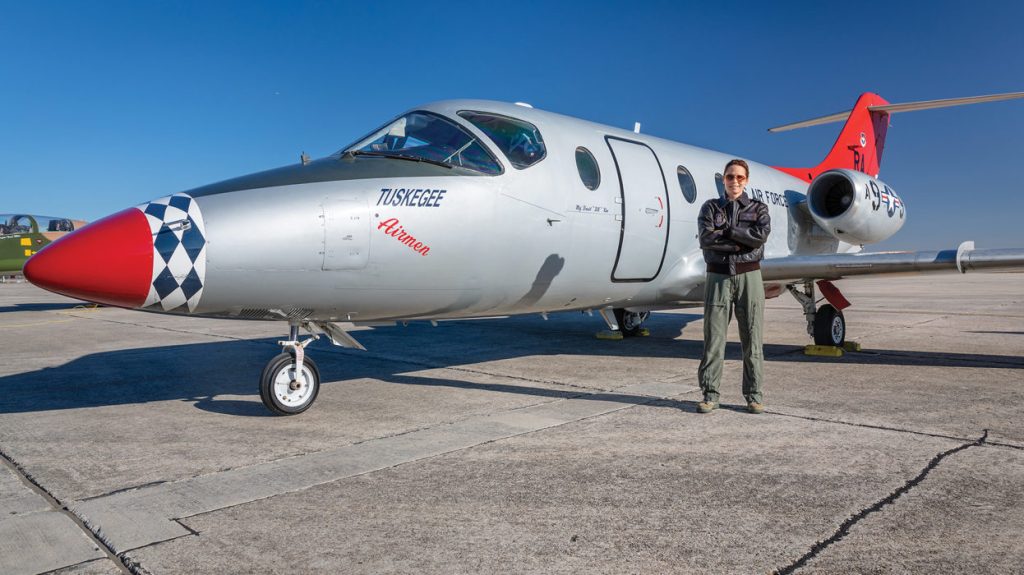
Lt. Col. Megan Pasierb USAF
Belgium
Norway
New Zealand
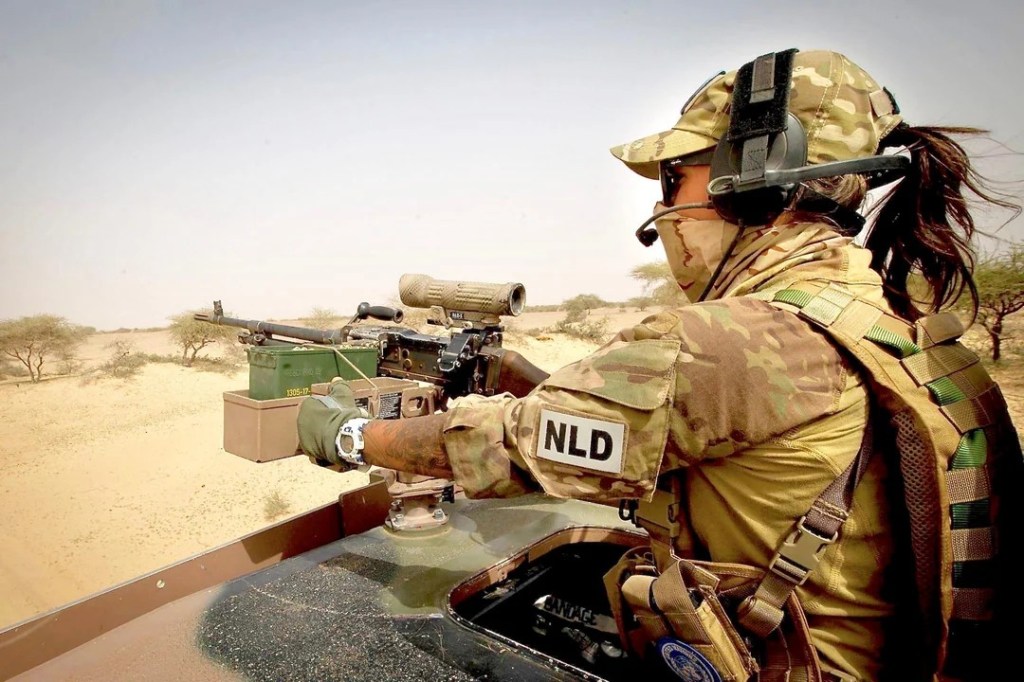
Netherlands
Danish Resistance WWII
USN
USMC
RAF Flt Lt Michelle Goodman DFC
Romania
IDF
USCG
Ukraine
WRENs armorers
IDF
Romania
USAF
CAPT Kacey Grannis, 721st Air Expeditionary Advisory Squadron, Mi-17 pilot, Iraq
IDF
US Navy
Germany
WASP Pilots WWII
IDF
Kurdistan volunteer Joanna Palani
Norway
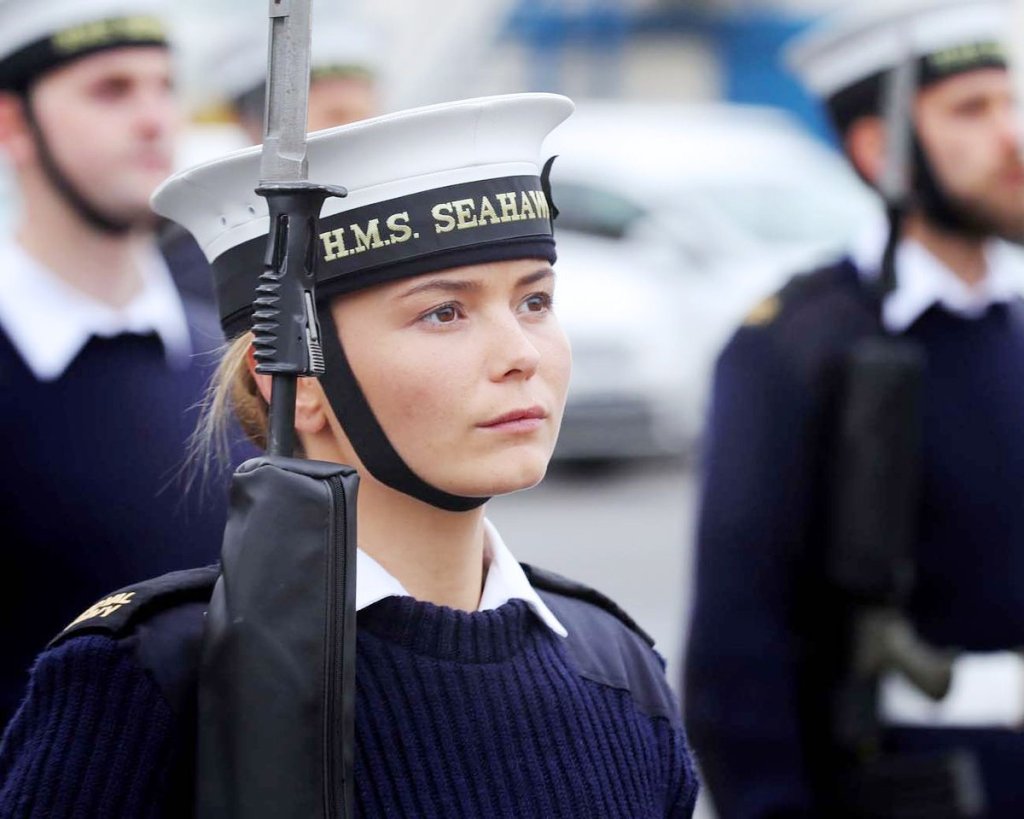
Royal Navy
Indian Air Force
YPJ with Moisen Nagant and Zagros 145
Czech Republic
Royal Air Force SAR pilot
WASP Nell Bright
Soviet Po-2 pilot
IDF
Ukraine
Ukraine
RAF
USAF Senior Airman Julie Breault, 97th Security Forces
Poland
Kurdish YPJ
U.S. Navy Pilot Madeline Swegle
Maj. Ashley Rolfe, Massachusetts Air National Guard 104th Fighter Wing
Soviet Maxim machinegunner
WASP Pilot Carol Elizabeth Wheeler
U.S. Army WAC
ww445_Russia
Russia
ww445_VFA83_CVN75
US Navy sailor from VFA-83 aboard the aircraft carrier USS Harry S. Truman (CVN-75)
ww445b_Kazakhstan_T80
Khazakhstain soldier with T-80
ww445c_USAF_AC130
US Air Force AC-130
ww445d_Georgia
Georgia
ww445e_Belgian_Navy
Belgian Naval Officer
ww446_IDF
IDF
ww447_USAF_Trena Savageau_F16
USAF F-16 pilot Trena Savageau
ww448_WASP
WASPS
ww448Poster
ww245
US Navy
ww246
IDF
ww247
Russian soldier with SVD Dragunov sniper rifle
ww248SPAR
US Coast Guard SPAR
Poster062
ww045
Russia
ww046
IDF
ww047
IDF
ww048wasp
WASPs with AT-6 Texan, Waco, Texas
poster012

To see more Women Warriors, click on the tags below:

Junkers Ju 88 and Mistel Conversion Builds in 1/72 Scale Part I

This is a construction thread which originally appeared on the 72nd Scale Aircraft forum as a series of posts.  I still get questions about these builds to this day, particularly regarding the “stretchy” Ju 88s.  The original posting was marred by the problems wrought by Photobucket and is difficult to find in any case.  Fortunately, I backed up the original photos and text, so I am able to update the original material and present it here, augmented with some additional information to answer the most common questions.

My original intention was to use old AMT kits for the Ju 88 components, but the more I looked at them the more I realized just how much there was to be corrected.  The AMT kits are too small in the fuselage and engine nacelles, getting a good Ju 88 out of them looked like a lot of work, especially when compared with the quality of the new Hasegawa and Revell of Germany kits.  Fortunately, I was able to find a good deal on some Revell kits which were on sale at Squadron.  The Fw 190s which served as the upper components for the Mistel combinations are modified Hasegawa kits.

So, starting with five Revell Ju 88A-4s and six Hasegawa Fw 190A-8s and various spare & aftermarket components, my intention is to build a Mistel 2, a Mistel 3, a Ju 88H-4 Führungsmaschine long-range recon combination, a stretched Ju 88H-1, a Ju 88S-3, and three standard Fw 190A-7 / 8s.

Construction starts with the Fw 190 cockpits … and they’re done! At one point I found True Details resin cockpits on sale for less than a Dollar each, so I did the logical thing – bought two dozen each of the Bf 109 and Fw 190 sets, painted them up and put them away for future use.
The next job is to get rid of the shallow wheelwells on Hasegawa Focke Wulf kits. I like the cone-shaped cutter for the Dremel tool for this, working from the inside. Even though the idea is to remove material, it is better to think of using the Dremel to work down to what you want to leave in place. The left side wheel well shows the rough removal, the right shows it smoothed out before sanding. The Dremel can be used for this smoothing with a slow speed and very light pressure, using the flat of the cutter. Note that the gear leg attachment point remains in the wing for strength, and that the forward vertical face of the well was also left in place.
Here is a Sword resin wheelwell insert with added Evergreen details. The pieces in the center represent the bottoms of the ammunition boxes for the fuselage guns and the spent case chutes. The thin structures in the middle of each bay are the gear locks. These did not cast well when I duplicated this piece, so most of the models will have this cut down and replaced with card. Gun tubes and center bracing will be added individually later.
This is a casting of the replacement wheelwell being fitted working from the inside. The super glue fills any minor seams but time spent getting a good fit is well spent.
Here are two of the Hasegawa Focke Wulfs built up. All control surfaces have been cut off, and replaced with copies of Tamiya surfaces which have better detail. The armored nosepiece / engine insert is also a copy of a Tamiya part. The flaps are Eduard PE, the Doppelreiter tanks are from a Hasegawa A-7 boxing and are needed for the Führungsmaschine long-range recon combination.
Next some preliminary work on the Ju 88s. Three of these will have stretched fuselages so I’ll need to fabricate and cast some extension plugs. This is a sprue shot of the unique trees from the AMT Führungsmaschine boxing, the rest of the parts are all standard Ju 88 pieces. This will provide the fuselage plugs, drop tanks, nose radome, and a Mistel warhead.
Forsyth’s excellent reference on all things Mistel (Classic Publications 7) gives neues Rumpfteil (new fuselage part) measurements of 2740 mm aft and 3370 mm forward for the longest stretched Junkers, the Ju 88H-4. So, I’ll be making two fuselage plugs, an aft plug of 38 mm length and a forward one of 47 mm. This is an AMT fuselage being cut to length with an UMM saw. Masking tape is used to establish the measurement for the cut line and also serves as a guide for the saw.
The problem with splicing kits from two different manufacturers is the cross sections are often different. The AMT fuselage on the right is about 1.5 mm narrower at the bottom, and about 1 mm shorter than the Revell fuselage on the left.
Here’s the fix. The AMT sections are spaced wider along the bottom seam with Evergreen strip. The tops are filed flat and capped with resin copies of the Revell fuselage insert. This gives the proper contour and also duplicates the excellent Revell filler cap detail. The rear section of the Revell cockpit walls are mated with the forward fuselage plug. This will allow for a plug-in fit and also provides a contour for refining the shape of the AMT plastic to match the Revell fuselage.
After filing, filling, sanding, scribing, and a coat of Mr. Surfacer 1200, the fuselage extension plug masters are ready. The forward plug is posed inserted into the Revell fuselage. Not a perfect fit, but pretty close. I will cast copies of these, and cut them down as needed to make the smaller inserts.
None of the Ju 88s will have the gondolas under the nose installed. That’s OK with me, they are kind of fiddly to work with. This does mean that the hole under the fuselage will need to be blanked off and the crew access door will have to be fabricated. I tried the trick of filling the gondola opening with casting resin using 0.005″ plastic sheet to cap the opening. Success! Smooth on the bottom, smooth on the top, and a solid fill.
Here are the cockpit components built up. Pretty much stock, belts and cushions are masking tape, and wires were added to the control sticks. Radar repeaters were added to replace two of the bombsights, gizmo-ed up from Zero instrument panels and FM Bf 109 cowl gun breaches. Paint is Alclad lacquer primers mixed in four progressively lighter shades. I’m trying to artificially create the illusion of depth with shading. The final mist coats are much lighter than RLM 66 in an attempt to make some of the details more visible.
The most common questions I get about these builds concern the lengths of the various fuselage extensions. Part of the confusion can be traced back to conflicting information in references, some of which even contradict themselves! Friend Rolf Blattner sent me this photo of the Junkers factory drawing above, which ends any doubt about the proper dimensions for the Ju 88H-1 extensions – 1950 mm for the forward fuselage extension, 1350 mm aft. Forsyth reproduces German wartime drawings of the G-10 and H-4 Mistels on pages 189 & 190 of his book which show fuel cell locations and capacities with dimensions. These are 2740 mm for the aft insert for both the G-10 and H-4, and an additional 3370 mm forward extension for the H-4.
Major work on the fuselages is complete, here they are for comparison. From top to bottom these are the Ju 88H-4 Führungsmaschine, the Ju 88H-1, the Ju 88G-10 for the Mistel 3C, the Mistel 2, and the Ju 88S-3 on the bottom. The Mistel warheads do not mate well with the Revell fuselages right out of the box. The warhead from the AMT kit fits the AMT fuselage which has a different cross section, and the aftermarket Aires resin warhead is designed for the Hasegawa kit (which it test fit very well). I cut off the transition pieces from the warheads, and substituted short versions of the resin plugs. Cutting off the back ends of the Revell cockpits would also work.
Here’s the stock fuselage for the S-3 compared to the stretched fuselage for the H-4 Führungsmaschine. The Führungsmaschine will measure out to just under a foot long (300 mm) when the tail surfaces and nose radome are added.

Part II here: https://inchhighguy.wordpress.com/2026/03/27/junkers-ju-88-and-mistel-conversion-builds-in-1-72-scale-part-ii/

Nakajima B5N Type 97 “Kate” Part I

The Nakajima Type 97 Carrier Attack Bomber (kankō) made its first flight in January 1937. The B5N1 version was powered by a nine-cylinder Nakajima Hikari 2 radial engine which produced 700 horsepower for take-off. The prototype featured Fowler flaps and hydraulic wing-fold mechanisms, but these were removed at the request of the Imperial Navy to make the aircraft easier to maintain. Pictured is Ko-345 assigned to the Naval Air Technical Arsenal for trials.
Kankō B5N1 Ka-302 of the Kasumigaura Kokutai showing details of the wing fold and standard anti-glare paint on the cowling. The Kate was designed to carry either bombs or a torpedo. This aircraft is fitted with bomb racks for the level-bombing role.
Ka-310 being re-positioned by ground crewmen. The Type 97 was assigned to carrier air groups as well as land-based units.
Another Kasumigaura Kokutai B5N1, Ka-320 is seen climbing out while retracting her gear. Overall finish is natural Aluminum with black tail codes. The Kasumigaura Kokutai was a training command, these B5N1s are unusual for having unpainted tail surfaces.
Seen over the wing of another Type 97, Ka-310 now sports the more common red tail surfaces applied to uncamouflaged B5N1s.
Kasumigaura Kokutai B5N1s seen on 18APR42 in the immediate aftermath of the Dolittle Raid. The Kokutai had received orders to arm their aircraft and sortie to find the American carriers, but the orders were rescinded before the aircraft could launch.
Ie-312 is seen outside a hanger at Hiyakurigahara Air Base with a Yokosuka K5Y “Willow” trainer in the background.
This perspective shows the bomb racks fitted to the B5N1 to advantage, one loadout option was six 60 kg bombs. Yo-335 was assigned to the Yokosuka air group in 1939.
In 1938-39 the aircraft carrier Soryu participated in strikes against the Chinese mainland, her Kankō being very active in the level-bombing role. Here W-323 is seen from another Type 97 with her wheels and tailhook down, ready to recover aboard Soryu. The “shark fin” seen on the wing in the foreground is a gear down indicator which gave the pilot visual confirmation of the position of the landing gear.
Something which has caused much confusion is this photo of a B5N1 loaded with a torpedo, seen with a carrier island covered in crewmen’s hammocks in the background. The island is to port, indicating the ship is either Akagi or Hiryu, the hammocks were fitted to catch shell splinters when combat was expected. However, both carriers had replaced their B5N1s with the improved B5N2 Kankō in time for the Pearl Harbor raid and were lost in June 1942 at Midway, but the dark camo with yellow wing stripes on this B5N1 indicates a post-September 1942 time frame. While there are various claims regarding this photo in references and on the Internet, it is almost certainly a still from the wartime movie production “Hawaii / Battle of Malaya”.
A Type 97 over China with a pair of Yokosuka B4Y Type 96 “Jeans” in the background. The Kate is seen in a field-applied green and brown segmented camouflage scheme. For those interested in obscure trivia, the Jean is technically a Battle of Midway aircraft. Eight Jeans operated from the light carrier Hosho as part of the Main Body, and one of them took the famous photos of the damaged aircraft carrier Hiryu adrift after the battle.
B5N1 Kankō of the land-based 14th Air Group is seen over China. Shore-based units in China painted their Kates in green and brown segmented schemes and were used as level bombers. The limited Chinese opposition did not reveal the liabilities of the Type 97s limited defensive armament nor lack of self-sealing fuel tanks.
KaSu-315 is a B5N1 assigned to the Usa Naval Air Group during 1943-44. This Kankō wears dark green upper surface camouflage and yellow wing identification stripes. As the war dragged on Kates of all types were increasingly relegated to second-line duties such as anti-submarine patrol.
Ku-320 is an interesting aircraft and something of a mystery. Her paint and markings indicate she was photographed after September 1942. The inscription on her fuselage is illegible in this photo, but is most likely a Hokaku donation inscription. The significance white square background to her fuselage Hinomaru has been described in various ways. Most Japanese references just note its presence without attempting to assign a meaning.

Part II here: https://inchhighguy.wordpress.com/2026/03/25/nakajima-b5n-type-97-kate-part-ii-pearl-harbor-raid/

Hobby Boss Yakovlev Yak-3 of LCOL Anton Yakimenko HSU in 1/72 Scale

Anton Yakimenko was credited with 3 personal and 4 shared victories against the Japanese in 1939 in Khalkin Gol.  His total eventually reached 15 victories and he was awarded the Hero of the Soviet Union.  The model represents the Yakovlev Yak-3 of Lieutenant Colonel Anton Dmitrievich Yakimenko HSU, 151st GIAP in May 1945. The inscription on the banner reads, “To the Homeland with Victory”.

Construction here: https://inchhighguy.wordpress.com/2026/02/13/hobby-boss-yakolev-yak-3-build-in-1-72-scale/

Dragon Wagon Book Review

Dragon Wagon: A Visual History of the U.S. Army’s Heavy Tank Transporter 1941-1945

By David Doyle and Pat Stansell

Softcover, 120 pages

Published by The Ampersand Group Inc., 2013

Language: English

ISBN: 978-0-9895547-0-1

Dimensions: 11.0 x 8.5 x 0.3 inches

“Dragon Wagon” was the unofficial but widely used nickname for the U.S. Army’s M25 Tank Transporter.  Produced by Pacific Car and Foundry the Dragon Wagon was developed during the Second World War and served until 1955.  The M25 designation applies to the M26 armored tractor and M15 40-ton trailer combination, as well as the later unarmored M26A1 tractor and improved M15A1 trailer.

This book is aimed squarely at the scale modeler.  Authors David Doyle and Pat Stansell draw on U.S. Army technical manuals as well as period photos to show every detail of these interesting vehicles throughout every stage of their development and service lives.  Included are descriptions of a  bewildering array of tools and equipment issued to these vehicles to assist in their recovery operations, as well as how all this equipment was to be used and stowed.  Photos from the technical manuals are reproduced several to a page, while portraits of the vehicles in service are generally given full page spreads.  All are annotated and captions provide additional information.

This book presents numerous insights into how the Dragon Wagon was used in service and the wide variety of tasks which it could perform in the field.  There is ample information here for the modeler to depict any version on the M25 engaged in specific recovery or transport operations.  Details of the tools and equipment as well as the standard stowage are particularly useful.  This is a valuable reference for the military vehicle modeler, highly recommended.

Women Warriors 361

Denmark
Canada
Lieutenant Michaela Curtis NZ Sea Sprite Pilot
Finland
Netherlands Army in Mali
Major General Ingrid Gjerde of Norway
New Zealand Private Rachel Palmer
French Resistance WWII
IDF
Poland
Pfc. Tess Sandoval with AH-64 Apache
Princess Ingrid of Norway
Ukraine
US Army (U.S. Army)
IDF
WREN (IWM)
US Army
PLAAF
USAF
OPERATION ENDURING FREEDOM — (Clockwise from lower left) 1st Lt. Alison, Capts. Heather and Waynetta and, Senior Airman Lyndi, all from the 376th Expeditionary Air Refueling Squadron, flew an all-female KC-135 Stratotanker air refueling mission over Afghanistan on Jan. 31. (U.S. Air Force photo by Capt. Elizabeth Ortiz)
Kurdish YPJ
PTE Paula Pires Australia
ATS Dispatch Rider
Russia
Ukraine
Kosovo
IDF
Brazil with Mi-35
YPJ
Ukraine
Germany
WASPs with B-24
RCAF Corporal Richardson
IDF
Ukraine
Russian Paratrooper Yulia Kharlamova
IDF
USN Explosive Ordnance Disposal Technician 1st Class Petty Officer Nichole Robinette
IDF
A-10 Thunderbolt II pilot, Lt. Col. Martha McSally. She later became a US Senator.
Cpl Alexandra Roy, 430 Tactical Helicopter Squadron door gunner onboard CH-146 Griffon
West Indian Detachment ATS
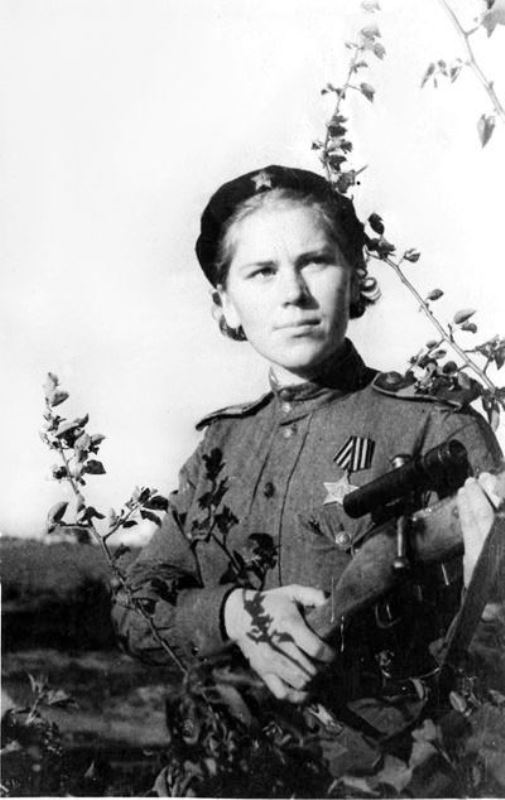
Roza Shanina, Soviet Sniper with 59 kills
Soviet Po-2 pilot Natalya Meklin
ww441_USAF
US Air Force security
ww441b_Ukraine
Ukraine
ww441CanadianHannaBohmanKurdishYPG
Canadian YPJ volunteer Hanna Bohman
ww441d_Britain
United Kingdom
ww441e_Poland
Poland
ww441f_LCC19_BlueRidge
US Navy sailor aboard USS Blue Ridge (LCC-19)
ww442_IDF
IDF
ww443_Poland_MiG29_Lt Katarzyna Tomiak-Siemieniewic
Polish MiG-29 pilot Lt. Katarzyna Tomiak-Siemieniewic
ww444_Stefania Cecylia Wojtulanis-Karpińska_Polish_ATA
Polish ATA pilot Stefania Cecylia Wojtulanis-Karpińska with Spitfire
ww444Poster
ww241
Chile
IDF
ww243
Serbia
ww244USCGSPARs
US Coast Guard SPARs, WWII
Poster061_SPARS
Ukraine
ww042
IDF
ww043
US Army Helicopter Pilot
ww044wasp
WASP mechanics work on a PT-22 trainer
poster011

To see more Women Warriors, click on the tags below:

Ilyushin IL-2 Stormovic Comparison Build in 1/72 Scale Part IV

Priming marks the last step of filling and sanding (boo!) and the first step of painting (yay!). Here is half the batch on sticks after a light coat of thinned Mr. Surfacer 1000. Given the size of the batch and poor fit of some of the kits there were a few more iterations of fill / sand / prime to go through before these were ready to paint.
The IL-2M3 Arrows all received three-tone camos in one of three different patterns. This example is getting the “puzzle” camo unique to Zavod 1, masked off with poster putty and tape.
Here is the paint photo showing the colors used for the green / black segmented schemes. The underside color is a mix as there is no direct match in the Mr. Color line, or most other paint brands for that matter. This is a problem with VVS colors in general.
This is the Tamiya kit in the three-color NKAP #2 scheme. I’m not going to claim to have the color mixes exactly right as the documentation is thin. You can use this as a starting point either way, if you think I’ve gotten it wrong you will have a better idea what not to do!
Two of the single-seat Stormovics were finished in a distressed temporary winter finish. I stippled on some liquid mask in high-wear areas over a glossy Future topcoat, then applied a light coat of white. When this had dried I pulled off the liquid mask with tape and thinned the rest of the finish down with fine sandpaper.
The Academy single-seat kit has an excellent decal sheet with ten marking options printed by Cartograph, which is almost worth the cost of the kit all by itself. I used decals from this sheet on the lower Stormovic in this photo. The upper aircraft is an IL-2M marked with the decals from the Hobby Boss IL-2M3, another miss match from the HB kit. For modelers looking for a good set of aftermarket decals I would recommend Foxbot sheet 72-035 which contains markings for nineteen Stormovics of all major versions.
After the decals were all settled in I applied another coat of Future and then Tamiya panel line wash. The excess will be removed with Q-Tips and standard paint thinner working in the direction of airflow, any remnants of the wash will form streaks which contribute to the final weathering effect. Before I start this process, I set aside all lacquer thinners, thin glues, and accelerators so I don’t dip my Q-Tip in them by mistake, I have learned this trick the hard way.
Most of the kits had the trim tab linkages molded on, a few used PE parts to represent them. I cut these off and replaced them with Evergreen rod.
The Hobby Boss IL-2M3 kit comes with underwing gondolas for the Nudelman-Suranov NS-37 37mm cannons, an armament option which was only carried by the straight-wing IL-2M. To make a standard IL-2M3 you will need to fill the locating holes under the wings and add the internal wing guns, here you can see the wing cannon barrel made from brass tube. The shell ejection ports are a bit harder as the HB wing is a solid piece so it would be very difficult to cut the slots into the wing. Here I have represented the ports with black decal film, something which I also did with the Zvezda kit.
The completed batch all in one shot. As I indicated in the first construction post, this batch grew bigger than I had intended and was made more difficult by the conflicting information in the references I had available. In many cases sources did not even agree on broad questions like camouflage colors or Stormovic version for the various marking options although these could often be sorted out, at least in broad terms. Some of these kits tested the limits of my mojo and others were excellent. In the end this batch took longer than anticipated so I am glad to finally get them into the case and move on to something completely different.

SUMMARY

SMER Single Seat IL-2

The SMER kit represents an early single-seat Stormovic, it has finely engraved surface details and the option for ski or wheeled undercarriage.  It comes with a small PE fret but I didn’t use much from this as the flat PE parts wouldn’t look right in many applications anyway.  Cockpit detail is sparse so plan on some extra work there if you want to open the canopy.  The kit fit together much better than I was anticipating and it looks good when complete.  Overall, I was pleasantly surprised with this kit!

Academy Single Seat IL-2

The Academy single-seat IL-2 is an excellent kit and just falls together.  The cockpit looks great right out of the box and the canopy can be posed open to show it all off.  It includes an excellent Cartograph decal sheet, just be careful using this as the camo color call-outs are erroneous. The one “gotcha” is the panels on the horizontal tail surfaces are represented as lap joints but this is easy to correct.  Academy also boxes an IL-2M two seat version of this kit which I have no doubt is equally good.  If you want a straight-wing Stormovic this is the kit to look for.

Dakoplast Kits

The Dakoplast kits have some good reviews online, they feature fine surface detail on the metal panels and different kits contain parts to build any major version of the Stormovic.  However, I do not like this kit.  The wing to fuselage joint is a dumpster fire and is located such that it makes it difficult to finish both the cockpit AND the exterior.  Repeated filling and sanding sessions kill the enjoyment of the build and eliminate the surface engraving, the best feature of the kit.  The cockpit needs work but the thickness and poor fit of the clear parts will hide most of this anyway.  There are better kits out there for all three Stormovic versions so save yourself a headache and give the Dakoplast kits a pass.

Zvezda Two Seat IL-2M

I was expecting more from the Zvezda Stormovic given it is a VVS subject from a Russian manufacturer, but then again Zvezda still has some older kits in their catalog.  This one has some simplifications of the contours under the fuselage as well as inaccuracies and gaps inside the ventral cooler, plus the cockpit is very crude and most modelers will want to put in some extra work to improve things there.  Fit is not the greatest and filler is needed on the major seams.  On the plus side Zvezda has done a good job molding the exhausts and the clear part is actually clear and fits well.  This kit really shows its age, go with the Academy kit instead if you can find it.

Eduard Two Seat Swept Wing IL-2M3

The Eduard kit is now almost thirty years old and is an earlier example of their Profipack line.  This one has a PE fret and several resin parts to enhance the appearance plus the plastic parts are excellent as well.  I skipped most of the PE fret as I preferred to scratch the details from plastic.  The kit has engraved metal wings and a wooden fuselage, but if you wanted to model a wooden-wing Arrow you could fill the panel lines on the wing.  This is a good place to start for an IL-2M3 Arrow.

Hobby Boss Two Seat Swept Wing IL-2M3

The Hobby Boss kit is from their easy assembly line and it is certainly easy to assemble.  Surface detail is excellent as is the fit but cockpit detail is sacrificed.  Clear parts are also excellent.  The Hobby Boss research team is very confused though, they have included parts for the 37mm gondolas under the wings which are wrong for the IL-2M3, plus one of the marking options is for a well-known IL-2M instead of an Arrow.  The internal wing guns are missing and the 12.7mm defensive gun in the rear position will need to be replaced.  Still, I like this kit.  If you are willing to correct the issues with the guns and put some extra work into the cockpit the HB kit can be made into an excellent Stormovic.

Tamiya Two Seat Swept Wing IL-2M3

Tamiya kits have a reputation for outstanding fit and excellent detail.  Their Shturmovik lives up to that reputation.  I enhanced this build with the Kelik cockpit set and some PE parts as well as various surface details.  I don’t think sales matched expectations as this kit was only issued once and is now hard to find.  If you have any interest in the IL-2, the Tamiya kit is the best one to get if you can find it.

Construction Part I here: Part I here: https://inchhighguy.wordpress.com/2026/02/20/ilyushin-il-2-stormovic-comparison-build-in-1-72-scale-part-i/