Picture of the Week 83

“Tubarao” was Consolidated B-24J Liberator 44-40101 assigned to the 491st Bomb Group. After flying twenty combat missions she was declared “War Weary” (hence the “WW” on the inside of her tail surfaces) and the Group used her as their assembly ship. She was given the high-visibility yellow and black stripes seen here, during a mission she was the first aircraft in the air and the other aircraft would take their places in formation around her. When the Group had formed they would proceed on their mission and the assembly ship would return to base.

Tamiya Tribute

I was greatly saddened to learn of the passing of Shunsaku Tamiya, Chaiman of the Board of Tamiya Corporation.  He was a giant in the hobby industry and by all accounts a true gentleman.  His work was a source of great joy to modelers around the world.  I have spent many happy hours building Tamiya kits over the years, here are photos of my Tamiya builds in his honor.  Fair winds and following seas Tamiya-san, you will be missed!

Italian Naval Camouflage Book Review

Italian Naval Camouflage of World War II

By Marco Ghiglino

Hardcover in dustjacket, 240 pages, bibliography, and index

Published by Seaforth Publishing, June 2018

Language: English

ISBN-13: 978-1-5267-3539-3

Dimensions:  10.3 x 8.0 x 0.8 inches

When Italy officially entered the Second World War in June, 1940 she possessed one of the largest fleets of any European nation.  The Italian warships were modern, well-balanced, and known for their speed.  They were very active in the Mediterranean Theater but were not aggressively led and often out-fought by their Royal Navy counterparts, although there were several notable successes.  Today there is a noticeable gap in books on Italian Naval subjects and it is among the more overlooked military services of the war.

This book goes a long way to addressing that deficit.  Author Marco Ghiglino is a serving Italian Naval Officer who has amassed a large collection of photographs and camouflage diagrams of Reginia Marina vessels from WWII.  From these he has been able to construct a history of Italian ship camouflage.  For this volume he has prepared over 700 color diagrams showing the camouflage patterns on nearly every type of vessel.  There are multiple profiles depicting the evolution of the patterns on the same ship, and often the patterns on both sides of the ship are identified.  This is carried one step further, as many Italian vessels which survived after the Armistice in 1943 were interred by the Allies or pressed into Kriegsmarine service and the author has also identified the changes in camouflage or markings applied by these services.  The vessels which the Italians incorporated from the French or Greek navies are also included.

This is a vey comprehensive work, and very engrossing to browse through.  The Italian camouflage schemes are not nearly as numerous or varied as those of the Royal Navy or the USN, being primarily confined to only the Mediterranean and mainly consisted of grey disruptive patterns.  One omission is the complete lack of plan views of any of these ships which would have added some color to the book in the form of the red and white aerial recognition stripes worn by the Reginia Marina.  Still, this book goes a long way to fill a significant gap in the documentation of the Italian Navy, and belongs in the library of anyone interested in the naval history of WWII.

Women Warriors 330

Latvia
Australia
USAF
USN
IDF
USN
Ukraine 38th Marine Brigade
Canadian WREN
IDF
Latvia
Netherlands
Staff Sgt. Erin McLoughlin, 4th Special Operations Squadron AC-130U Instructor Loadmaster
IDF
US Army
Belarus
WAAAF Joyce Gallen and Dorothy McIntosh
IDF
China
Czechoslovakia
Kurdish YPJ
1Lt Molly Frank, 3rd Airlift Squadron C-17 Globemaster III pilot
Austria
Norway
Holland
French Nurses in Italy WWII
WAVES Apprentice Seaman Frances Bates
U.S. Army
IDF
Russia
USAF
Poland
Flight Lieutenant Mohana Singh Indian Air Force
USAF F-16
Colonel Oveta Hobby, Commanding Officer, WACS
Spanish Civil War
WASP Lillian Yonally with USAAF Douglass A-24
Beautiful Women in Ukraine Army - Ukrainian Military Girls
Ukraine
20100728ran8440972_076.JPG
Royal Australian Navy
ww517c_Lian Kirton and Vigo UK
United Kingdom dog handler Lian Kirton and Vigo
ww517d_TurkishSpecialPolice
Turkish Special Police
ww517e_Russia
Russia
Norway
ww518_IDF
IDF
ww519_IDF
IDF
ww520_Millicent-Young_WASP
WASP pilot Millicent Young with AT-6 Texan
ww520Poster
ww317
Germany
ww318
Russia
ww319
Venezuela
ww320WASP
WASPs with B-26 Marauder
Poster080
ww121
IDF
Sweden

ww123
People’s Liberation Army Air Force
ww124SusieWinstonBain
WASP Susie Winston Bain
Poster031

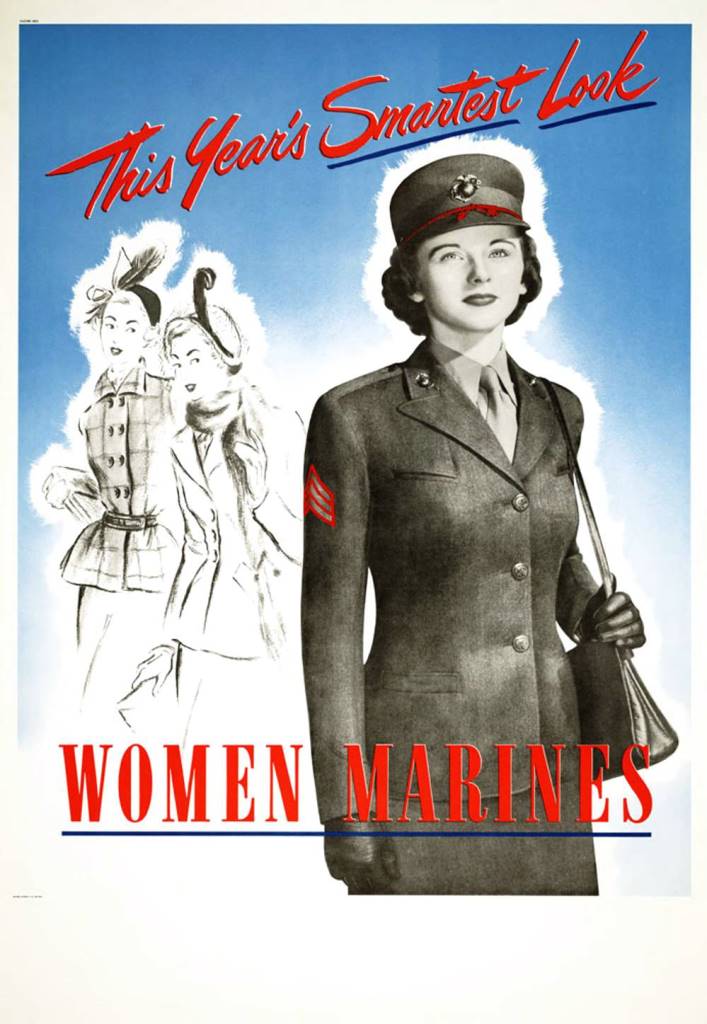
To see more Women Warriors, click on the tags below:

De Havilland Mosquito Comparison Build – Tamiya and Airfix Kits Part II

This is the cockpit assembly of the Tamiya kit after painting. I am building both theses kits OOB so no aftermarket or scratchbuilding here. The seatbelts are cut from the kit decal sheet with the paper backing painted to match. This gives them some thickness and allows them to be draped across the seat more convincingly than just using the decal alone.
Here is the Airfix cockpit for comparison. Both cockpits were drybrushed with silver and washed with black to bring out details. Seatbelts in this case are masking tape.
The Tamiya kit with major assembly complete. Fit was excellent throughout, the only area which needed some attention was at the rear of the nacelles on the upper wing where three parts came together.
The Airfix Mosquito also goes together well. The wingtips are molded on the clear sprue to incorporate the navigation lights, the lenses are separate pieces on the Tamiya kit. Each approach has its pros and cons.
I was able to locate a canopy mask set for the Tamiya kit but not for the Airfix. Both main canopy parts fit well. The bulged canopy side panels were molded separately on both kits and both are tricky to fit. The side windows on the nose were also tricky, the Tamiya transparencies just wouldn’t fit and one displayed quantum entanglement and pinged into another dimension, never to be seen again. That’s what the Micro KrystalKlear is for, boys & girls!
Interesting inclusions with the Airfix kit are these parts intended to mask off the wheel wells when painting. These press-fit in place and proved handy. There is also a template part for drilling out the identification lights under the fuselage.
Both kits under a coat of Mr. Surfacer 1000 to check the seams. Both kits needed a touch of Perfect Plastic Putty to blend the canopies, and you can see the seams at the rear of the Tamiya nacelles still had not given up the fight.
I don’t generally pre- or post- shade as the terms are conventionally used. This is the Airfix kit which will be in the PRU Blue scheme. The panel lines were painted with Intermediate Blue straight out of the bottle, the main paint coats will be thinned down and lightened with white.
The Tamiya kit was finished in Ocean Gray / Dark Green over black.
The Airfix kit is in the overall PRU Blue scheme with invasion stripes on the undersides and a red tail. USN Intermediate Blue is often called out for a faded PRU Blue scheme, the actual PRU Blue is a very complex paint and its own little rabbit hole to research. In any case the Airfix decal sheet includes a few decals which incorporate this shade and the Intermediate Blue is a very close match with that blue as well.
Both models were sprayed with Future thinned with Leveling Thinner and kit decals were used in both cases. The Airfix decals went on without any problems, and I was pleasantly surprised that the Tamiya decals also performed well given the well-known reputation of Japanese decals.
Both kits together at the end of the build after a flat coat and placement of the final fiddlybits. Both of these are quality kits, great fit, great engineering, and nicely rendered details. The Tamiya kit can be built as a Mosquito B Mk.IV or PR Mk.IV, the Airfix Mosquito is a PR.XVI. The ultimate decision here is which variant you would like to build, there is not a great deal to separate the quality of these kits. The only need for “sailor talk” (in which I am extensively trained) was when the nose window of the Tamiya kit pinged into oblivion, but fit of the nose windows were fiddly in both kits. If you like the Mosquito either of these kits are a great place to start!

Part I here: https://inchhighguy.wordpress.com/2025/07/18/de-havilland-mosquito-comparison-build-tamiya-and-airfix-kits-part-i/

Tamiya completed photos here: https://inchhighguy.wordpress.com/2025/08/05/tamiya-de-haviland-mosquito-b-mk-iv-in-1-72-scale/

Airfix completed photos here: https://inchhighguy.wordpress.com/2025/08/12/airfix-de-haviland-mosquito-pr-xvi-in-1-72-scale/

Picture of the Week 82

Soldiers from the US Army’s First Division (The Big Red One) are seen embarked aboard an LCT (Landing Craft, Tank) before D-Day. These men would be put ashore on Omaha Beach on June 6th, 1944 and faced one of the hardest fights of the Normandy Invasion. The landings were originally scheduled for June 4th, but were delayed because of foul weather. To maintain secrecy many of the troops were required to remain abord their landing ships for the next two days.

Petty Officer Setsuo Ishino’s Kamikaze Attack on USS Missouri (BB-63)

The battleship USS Missouri (BB-63) seen under Kamikaze attack off Okinawa, 11APR45. Missouri was operating as part of Task Force 58 and was screening the aircraft carrier USS Intrepid (CV-11), from which this photo was taken. A Kamikaze has been shot down and has crashed forward of Missouri, the black puffs are shell bursts from 5” rounds. Combat photograph taken by Michael Mancini.
A Kamikaze closes in on the starboard side of Missouri at 1442 on 11APR45, the aircraft can be seen low near the water just to the left of the shell splash in the upper center of the photo. Note the intense anti-aircraft barrage and the tracers being fired at the aircraft. Low flying aircraft are a challenge to detect both visually and on radar. Photo credit Harold “Buster” Campbell.
A well-known photo of the same Kamikaze the instant before impacting Missouri, taken from the 08 level bridge. The aircraft is an A6M Zero piloted by Petty Officer Second Class Setsuo Ishino, who had taken off with fifteen other Zeros from Kanoya Airport in Kagoshima Prefecture earlier in the day. Photo credit Harold “Buster” Campbell.
Fire on the deck caused by fuel from Ishino’s Zero. Missouri’s damage control parties soon had the fires under control.
Damage control personnel from Repair Party One stand on the wing of Ishino’s Zero. The Zero spread wreckage across Missouri’s decks but there were no casualties and damage to the ship was superficial.
Part of the wreckage was this 7.7mm Type 97 machine gun which became lodged in the flash suppressor of a 40mm quad Bofers mount. The machine gun was mounted forward of the cockpit over the engine on the Zero.
The pilot of the Zero was 19-year-old PO2 Setsuo Ishino, originally from Okayama Prefecture. His was one of sixteen Zero fighters which took off from Kanoya in Kagoshima Prefecture on 11APR45 to attack the US fleet near Okinawa. Unfortunately, I have been unable to identify the tail codes worn by Ishino’s Zero.
Missouri’s Captain, William Callaghan, ordered that Ishino was to be buried with full military honors the next morning. Missouri’s crew fashioned a Japanese Naval Ensign so Ishino could be buried under his own colors. Marines fired a gun salute, a bugler played taps, and Missouri’s Chaplain gave the invocation. This is the only known instance of U.S. forces performing honors for a Kamikaze pilot. What makes this funeral all the more poignant is Captain Callaghan’s father, Rear Admiral Daniel Callaghan, had been killed off Guadalcanal while on the bridge of the heavy cruiser USS San Francisco (CA-38) on 12NOV42 by gunfire from the Japanese battleship Hiei. (National Archives)
A contemporary view of the damage inflicted by Ishino’s Zero, a slight deformity in the top of the side plating which is marked here by strips of yellow tape. This is not part of Missouri’s armor plate as some sources suggest, but standard steel hull plating. The damage was not deemed to be worth repairing and can still be seen to this day.
USS Missouri (BB-63) is preserved as a museum ship in Pearl Harbor. These are fragments of Ishino’s Zero on display in Missouri’s Wardroom. (AP Photo Audrey McAvoy)
A lesser-known second Kamikaze hit Missouri on 16APR45. This one struck the aircraft handling crane on the fantail. Damage to the ship was again superficial, but three crewmen were wounded. This photo shows Missouri steaming away immediately after the impact and the smoke plume from the aircraft, photographed from the aircraft carrier USS Intrepid (CV-11).

WWII color photos of USS Missouri (BB-63) here: https://inchhighguy.wordpress.com/2022/08/31/uss-missouri-bb-63-wwii-color-photographs-part-i/