-
Unpacking Microsoft-Decision-1: when your agent needs a decision, not more text

Introduction For the last few years, most of the conversation about AI models has revolved around two kinds of tasks. The first is generation: large language models (LLMs) that write emails, summarize documents, draft code or chat with us. The second is reasoning: models that work through a problem step by step before answering, trading…
-
From Assistants to Autonomous Workers: What Manus AI Teaches Us About the Real AI Revolution
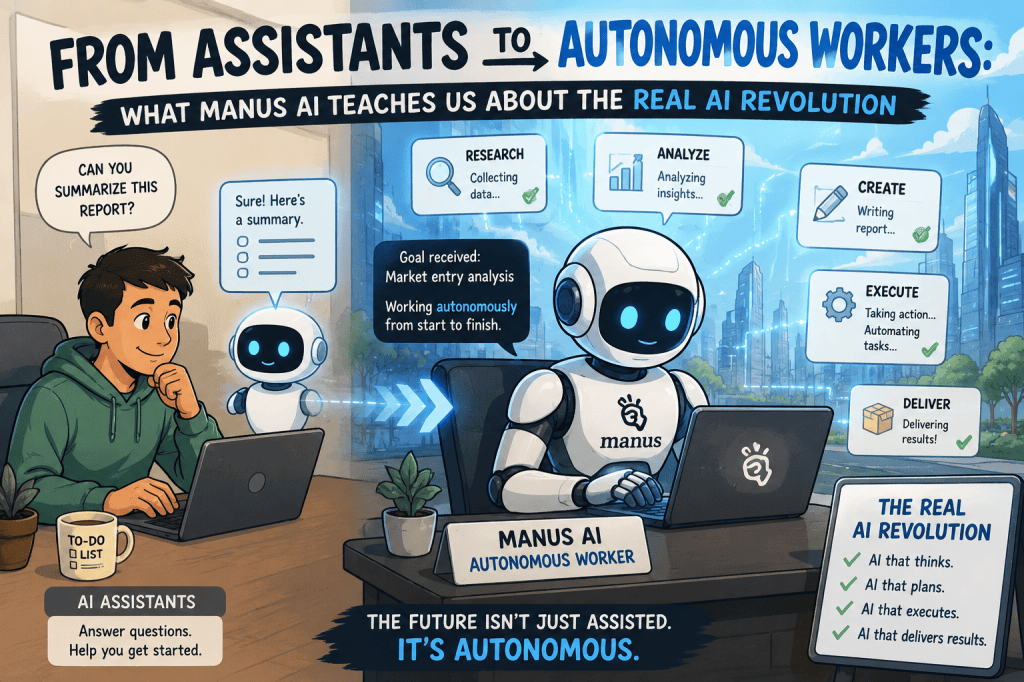
Disclaimer The views expressed in this article are my own and do not represent the views of my employer or any affiliated organization. Introduction In December 2025, Meta paid roughly $2 billion for a startup most people outside Silicon Valley had never heard of. In May 2026, Beijing told them to give it back. What…
-
Claude Cowork: The AI Agent That Does the Work, Not Just the Talking

⚠️ Disclaimer: The views expressed in this article are my own and do not represent the views of my employer or any affiliated organization. Claude Cowork: The AI Agent That Does the Work, Not Just the Talking There is a quiet but meaningful shift happening in how knowledge workers interact with AI. For the past…
-
Building an AI Agent for Grid Operations
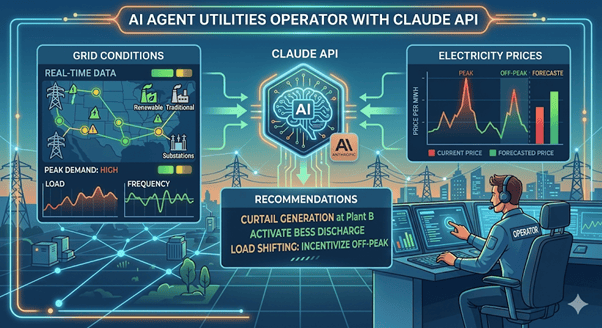
A practical introduction to Anthropic’s API and agentic reasoning Introduction I recently set out to explore the most talked-about AI technologies on the market, and Anthropic kept coming up — on LinkedIn, on X, and in conversations with colleagues. So I decided to dig in and see what the fuss was about. My starting point…
-
Zero‑ETL, Zero Public Internet: Mirror Azure SQL to OneLake via Private Endpoint + Fabric VNet Data Gateway
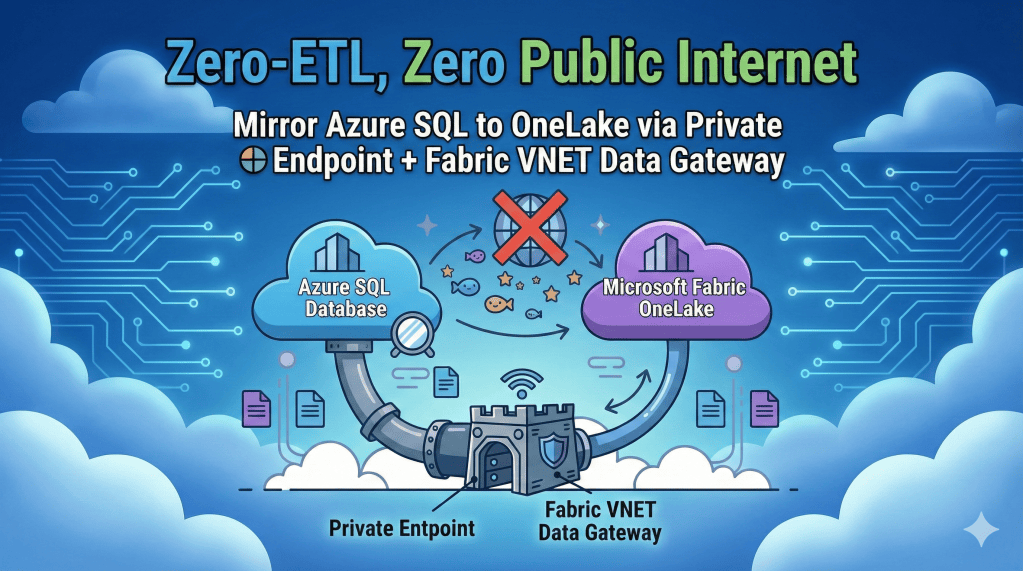
Introduction Mirroring has been a transformative technology for data integrations tasks since the early Microsoft Fabric days. Moreover, this feature has been called “pain killer as a service” in community posts. In many projects, data sources to be mirrored are behind private networking and for security reasons they are not accessible using public internet. If…
-
Interacting with Microsoft Graph API Using Microsoft Fabric

Introduction This article is an updated version of my 2022 post on using Synapse pipelines to retrieve security groups and their members through the Microsoft Graph API. Some customers recently asked for a Microsoft Fabric–based approach, and I also noticed that many developers are still defaulting to Python clients to interact with Graph. While Python…
-
Vector Search for AI Apps in Azure Databases
Introduction Vector databases and vector search are becoming increasingly important in modern applications due to their ability to handle complex and high-dimensional data efficiently. In today’s data-driven world, applications such as recommendation systems, image and video retrieval, natural language processing, and anomaly detection rely heavily on the ability to search and analyze large volumes of…
-
Microsoft Fabric and Databricks Unity Catalog integration using the mirrored Azure Databricks Catalog item, better together?

Introduction Databricks Unity Catalog has emerged as a popular choice in data platforms for access management and governance. It offers a unified governance solution that simplifies security and compliance by providing a single place to administer data access policies across all workspaces and personas. Unity Catalog’s security model is based on standard ANSI SQL, allowing…
-
Data Management Showdown: Azure Synapse Link for Cosmos DB vs. Microsoft Fabric Mirroring

In the ever-evolving landscape of data management and analytics, choosing the right tools and approaches is crucial for optimizing performance and achieving business goals. Two prominent solutions that have gained traction are Azure Synapse Link for Azure Cosmos DB and Mirroring in Microsoft Fabric. Both offer unique benefits and cater to different needs, making it essential to understand…
-
A simple Power App that consumes Azure OpenAI GPT models

Introduction Welcome to this tutorial on using Power Apps with Azure Open AI. In this quick start guide, I will walk you through the process of integrating Azure Open AI with Power Apps to create a chat application. By the end of this tutorial, you will have a functional Power App example that leverages the…


