
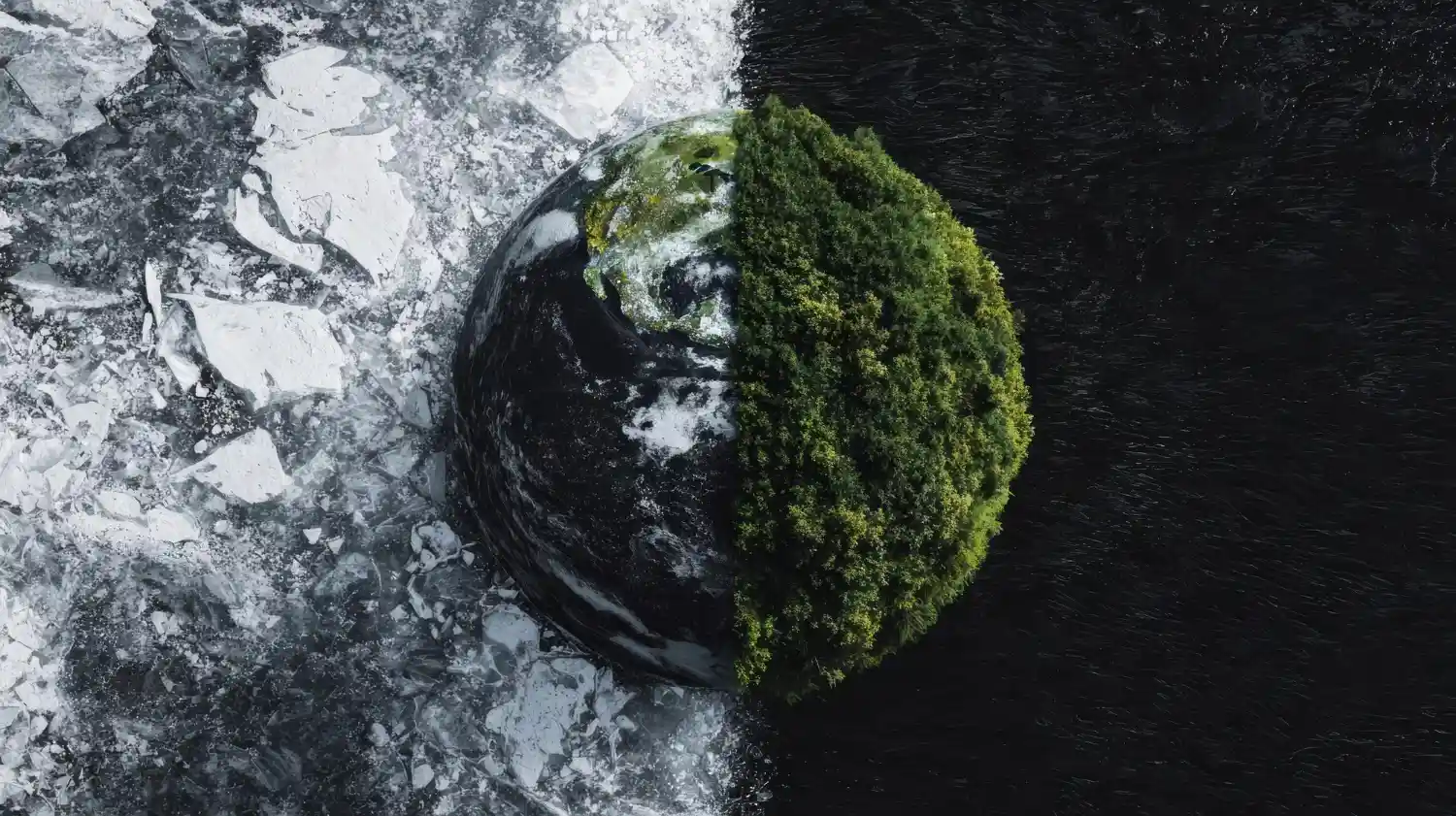
The carbon cycle is the continuous movement of carbon atoms through the atmosphere, oceans, soil, and living organisms. It regulates Earth’s climate, supports photosynthesis, and connects every organism on the planet to a shared biogeochemical process.
Understanding the carbon cycle is inseparable from understanding how ecosystems work. Every breath, every decaying leaf, and every fossil fuel burned alters the flow of carbon in ways that ripple across the biosphere.

Carbon in the Atmosphere and Biosphere
Carbon enters the atmosphere as carbon dioxide through respiration, decomposition, volcanic activity, and combustion. Plants and other photosynthetic organisms absorb this CO2 and convert it into organic matter using sunlight.
This exchange between living organisms and the atmosphere is the engine of the carbon cycle. When photosynthesis rates drop — due to habitat loss or deforestation — atmospheric carbon accumulates faster than ecosystems can absorb it.
How Ecosystems Work in the Carbon Cycle
Carbon moves through ecosystems along the same pathways that define a food web. Producers fix atmospheric carbon; consumers transfer it up the food chain; decomposers break organic matter down and return carbon to the soil and atmosphere.
The food web explained through a carbon lens reveals something important: energy and matter flow together but are not the same. Energy dissipates at each trophic level, while carbon cycles continuously. A single carbon atom may pass through a tree, a beetle, a bird, and a fungus within a single decade.

The Four Stages of the Carbon Cycle
Carbon moves through four interconnected processes that operate simultaneously across all ecosystems.
Photosynthesis
Plants absorb CO2 from the atmosphere and convert it into glucose using solar energy. This is the primary entry point for carbon into living systems.
Respiration
All living organisms release carbon back into the atmosphere through cellular respiration. This process is continuous and occurs in producers, consumers, and decomposers alike.
Decomposition
When organisms die, decomposers — bacteria and fungi — break down organic material. This releases stored carbon back into the soil and atmosphere, completing one of the cycle’s most critical loops.
Carbon Sequestration
Some carbon becomes locked in long-term storage: deep ocean sediments, peat bogs, permafrost, and fossil fuel deposits. Human extraction of fossil fuels releases this sequestered carbon on timescales far faster than nature deposited it.

Ecological Sustainability and the Carbon Cycle
Ecological sustainability depends on maintaining the natural balance of carbon flows. When that balance breaks down — through deforestation, wetland drainage, or industrial emissions — the carbon cycle loses its regulatory function.
What causes habitat loss directly accelerates this breakdown. Forests cleared for agriculture release decades of sequestered carbon in a single burn. Wetland destruction eliminates some of Earth’s most effective carbon sinks. Biodiversity threats compound the problem: fewer species means fewer redundant pathways for carbon to move through ecosystems, reducing the resilience of the entire cycle.