[RFC WIP] Apple whole dylib trampoline#621
Conversation


 jeremyhu
force-pushed
the
apple-whole-dylib-trampoline
branch
from
jeremyhu
force-pushed
the
apple-whole-dylib-trampoline
branch
from
fedfc7e to
d03a732
Compare

| /* Helpers for writing assembly compatible with arm ptr auth */ | ||
| #ifdef LIBFFI_ASM | ||
|
|
||
| #ifdef HAVE_PTRAUTH |

There was a problem hiding this comment.
this seems to be for generic code not just for apple which this is wrong:
- return address signing requires cfi annotation (toggle pac state)
- b key requires cfi annotation
- libffi should use nop-space instructions. armv8.3-a only asm can be added conditionally, but that's not relevant to most users: no linux distro would deploy binaries with armv8.3-a baseline any time soon.
- pauth and bti should go together in gcc target libraries: branch-protection requires both return address and indirect jump/call protection. at least that's the intended usage model. however bti support requires significant changes in the jump table as bti j does not fit there.
so if apple requires this then it should be apple only or changed such that it works for other targets too (at least aarch64*-linux-gnu), libitm aarch64/sjlj.S is an example how this was done in other target libraries.


Currently, upstream libffi doesn't support Apple Silicon.
However, there are several PRs from Apple employees:
* libffi/libffi#565
* libffi/libffi#621

Homebrew formulae for libffi contains patch that is based
on these pull requests. We use this patch here to build our
own version of libffi.


|
Will libffi have a |


|
See #633. Wouldn't it be cleaner to just use libffi itself as the trampoline dylib? That'll work on every platform too. |
jeremyhu
force-pushed
the
apple-whole-dylib-trampoline
branch
from
d03a732 to
8b612c3
Compare

It is no longer allowed to simply vm_remap code pages willy-nilly.  Only entire
signed executable segment of a dylib may be remapped.  Accordingly, we need a
helper dylib (called libffi-trampolines.dylib) to support our use of vm_remap
for trampolines.

Signed-off-by: Jeremy Huddleston Sequoia <[email protected]>
jeremyhu
force-pushed
the
apple-whole-dylib-trampoline
branch
from
8b612c3 to
4b7be51
Compare
|
Any news about upstreaming Apple Silicon support please? |
|
Sorry, no. I haven't had much time to circle back to this. Most of the work is here on this branch... mainly just need to get the build system changes in place to build the trampoline dylib. If you have time to help with that, it'd be great. The Xcode project can serve as reference. |


|
I would like to try getting this across the finish line. However, this is a little outside my comfort zone, and so I would like some help in creating a consistent failing reproducer that I can use to gauge how I am doing. /cc @jeremyhu |

|
@tjni 🎉 |


| * trampoline page | ||
| */ | ||
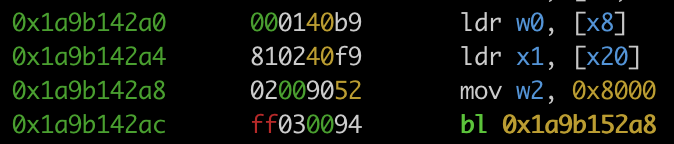
| kt = vm_allocate (mach_task_self (), &config_page, FFI_TRAMPOLINE_ALLOCATION_PAGE_COUNT * PAGE_MAX_SIZE, | ||
| VM_FLAGS_ANYWHERE); |

There was a problem hiding this comment.
Note that ffi_trampoline_table_free() needs to be updated to avoid leaking memory, as it deallocates PAGE_MAX_SIZE * 2.

|
Is there any news about this? |


Based on libffi#621 by @jeremyhu.

So we can support iOS 15 and beyond.

Co-authored-by: Jeremy Huddleston Sequoia <[email protected]>
Co-authored-by: Håvard Sørbø <[email protected]>
So we can support iOS 15 and beyond.

Based on libffi#621 by @jeremyhu.

Co-authored-by: Jeremy Huddleston Sequoia <[email protected]>
Co-authored-by: Håvard Sørbø <[email protected]>
So we can support iOS 15 and beyond.

Based on libffi#621 by @jeremyhu.

Co-authored-by: Jeremy Huddleston Sequoia <[email protected]>
Co-authored-by: Håvard Sørbø <[email protected]>
So we can support iOS 15 and beyond.

Based on libffi#621 by @jeremyhu.

Co-authored-by: Jeremy Huddleston Sequoia <[email protected]>
Co-authored-by: Håvard Sørbø <[email protected]>
So we can support iOS 15 and beyond.

Based on libffi#621 by @jeremyhu.

Co-authored-by: Jeremy Huddleston Sequoia <[email protected]>
Co-authored-by: Håvard Sørbø <[email protected]>
So we can support iOS 15 and beyond.

Based on libffi#621 by @jeremyhu.

Co-authored-by: Jeremy Huddleston Sequoia <[email protected]>
Co-authored-by: Håvard Sørbø <[email protected]>
So we can support iOS 15 and beyond.

Based on libffi#621 by @jeremyhu.

Co-authored-by: Jeremy Huddleston Sequoia <[email protected]>
Co-authored-by: Håvard Sørbø <[email protected]>


Trusts the libffi library inside of nixpkgs on Apple devices.

When Apple's fork of libffi is not detected, cffi assumes that libffi
uses a strategy for creating closures (i.e. callbacks) that is in
certain cases susceptible to a security exploit.

Based on some analysis I did:

  https://groups.google.com/g/python-cffi/c/xU0Usa8dvhk

I believe that libffi already contains the code from Apple's fork that
is deemed safe to trust in cffi.

It uses a more sophisticated strategy for creating trampolines to
support closures that works on Apple Silicon, while the simple approach
that cffi falls back on does not, so this patch enables code that uses
closures on M1 Macs again.

Notably, pyOpenSSL is impacted and will be fixed by this, reported in

  pyca/pyopenssl#873

Note that libffi closures still will not work on signed apps without the
com.apple.security.cs.allow-unsigned-executable-memory entitlement while

  libffi/libffi#621

is still open (which I haven't tested but is my best guess from reading).

I am hopeful that all of these changes will be upstreamed back into cffi
and libffi, and that this comment provides enough breadcrumbs for future
maintainers to track and clean this up.

(cherry picked from commit 4fc97dc)

Trusts the libffi library inside of nixpkgs on Apple devices.

When Apple's fork of libffi is not detected, cffi assumes that libffi
uses a strategy for creating closures (i.e. callbacks) that is in
certain cases susceptible to a security exploit.

Based on some analysis I did:

  https://groups.google.com/g/python-cffi/c/xU0Usa8dvhk

I believe that libffi already contains the code from Apple's fork that
is deemed safe to trust in cffi.

It uses a more sophisticated strategy for creating trampolines to
support closures that works on Apple Silicon, while the simple approach
that cffi falls back on does not, so this patch enables code that uses
closures on M1 Macs again.

Notably, pyOpenSSL is impacted and will be fixed by this, reported in

  pyca/pyopenssl#873

Note that libffi closures still will not work on signed apps without the
com.apple.security.cs.allow-unsigned-executable-memory entitlement while

  libffi/libffi#621

is still open (which I haven't tested but is my best guess from reading).

I am hopeful that all of these changes will be upstreamed back into cffi
and libffi, and that this comment provides enough breadcrumbs for future
maintainers to track and clean this up.
Trusts the libffi library inside of nixpkgs on Apple devices.

When Apple's fork of libffi is not detected, cffi assumes that libffi
uses a strategy for creating closures (i.e. callbacks) that is in
certain cases susceptible to a security exploit.

Based on some analysis I did:

  https://groups.google.com/g/python-cffi/c/xU0Usa8dvhk

I believe that libffi already contains the code from Apple's fork that
is deemed safe to trust in cffi.

It uses a more sophisticated strategy for creating trampolines to
support closures that works on Apple Silicon, while the simple approach
that cffi falls back on does not, so this patch enables code that uses
closures on M1 Macs again.

Notably, pyOpenSSL is impacted and will be fixed by this, reported in

  pyca/pyopenssl#873

Note that libffi closures still will not work on signed apps without the
com.apple.security.cs.allow-unsigned-executable-memory entitlement while

  libffi/libffi#621

is still open (which I haven't tested but is my best guess from reading).

I am hopeful that all of these changes will be upstreamed back into cffi
and libffi, and that this comment provides enough breadcrumbs for future
maintainers to track and clean this up.
Trusts the libffi library inside of nixpkgs on Apple devices.

When Apple's fork of libffi is not detected, cffi assumes that libffi
uses a strategy for creating closures (i.e. callbacks) that is in
certain cases susceptible to a security exploit.

Based on some analysis I did:

  https://groups.google.com/g/python-cffi/c/xU0Usa8dvhk

I believe that libffi already contains the code from Apple's fork that
is deemed safe to trust in cffi.

It uses a more sophisticated strategy for creating trampolines to
support closures that works on Apple Silicon, while the simple approach
that cffi falls back on does not, so this patch enables code that uses
closures on M1 Macs again.

Notably, pyOpenSSL is impacted and will be fixed by this, reported in

  pyca/pyopenssl#873

Note that libffi closures still will not work on signed apps without the
com.apple.security.cs.allow-unsigned-executable-memory entitlement while

  libffi/libffi#621

is still open (which I haven't tested but is my best guess from reading).

I am hopeful that all of these changes will be upstreamed back into cffi
and libffi, and that this comment provides enough breadcrumbs for future
maintainers to track and clean this up.
Trusts the libffi library inside of nixpkgs on Apple devices.

When Apple's fork of libffi is not detected, cffi assumes that libffi
uses a strategy for creating closures (i.e. callbacks) that is in
certain cases susceptible to a security exploit.

Based on some analysis I did:

  https://groups.google.com/g/python-cffi/c/xU0Usa8dvhk

I believe that libffi already contains the code from Apple's fork that
is deemed safe to trust in cffi.

It uses a more sophisticated strategy for creating trampolines to
support closures that works on Apple Silicon, while the simple approach
that cffi falls back on does not, so this patch enables code that uses
closures on M1 Macs again.

Notably, pyOpenSSL is impacted and will be fixed by this, reported in

  pyca/pyopenssl#873

Note that libffi closures still will not work on signed apps without the
com.apple.security.cs.allow-unsigned-executable-memory entitlement while

  libffi/libffi#621

is still open (which I haven't tested but is my best guess from reading).

I am hopeful that all of these changes will be upstreamed back into cffi
and libffi, and that this comment provides enough breadcrumbs for future
maintainers to track and clean this up.
Trusts the libffi library inside of nixpkgs on Apple devices.

When Apple's fork of libffi is not detected, cffi assumes that libffi
uses a strategy for creating closures (i.e. callbacks) that is in
certain cases susceptible to a security exploit.

Based on some analysis I did:

  https://groups.google.com/g/python-cffi/c/xU0Usa8dvhk

I believe that libffi already contains the code from Apple's fork that
is deemed safe to trust in cffi.

It uses a more sophisticated strategy for creating trampolines to
support closures that works on Apple Silicon, while the simple approach
that cffi falls back on does not, so this patch enables code that uses
closures on M1 Macs again.

Notably, pyOpenSSL is impacted and will be fixed by this, reported in

  pyca/pyopenssl#873

Note that libffi closures still will not work on signed apps without the
com.apple.security.cs.allow-unsigned-executable-memory entitlement while

  libffi/libffi#621

is still open (which I haven't tested but is my best guess from reading).

I am hopeful that all of these changes will be upstreamed back into cffi
and libffi, and that this comment provides enough breadcrumbs for future
maintainers to track and clean this up.


Trusts the libffi library inside of nixpkgs on Apple devices.

When Apple's fork of libffi is not detected, cffi assumes that libffi
uses a strategy for creating closures (i.e. callbacks) that is in
certain cases susceptible to a security exploit.

Based on some analysis I did:

  https://groups.google.com/g/python-cffi/c/xU0Usa8dvhk

I believe that libffi already contains the code from Apple's fork that
is deemed safe to trust in cffi.

It uses a more sophisticated strategy for creating trampolines to
support closures that works on Apple Silicon, while the simple approach
that cffi falls back on does not, so this patch enables code that uses
closures on M1 Macs again.

Notably, pyOpenSSL is impacted and will be fixed by this, reported in

  pyca/pyopenssl#873

Note that libffi closures still will not work on signed apps without the
com.apple.security.cs.allow-unsigned-executable-memory entitlement while

  libffi/libffi#621

is still open (which I haven't tested but is my best guess from reading).

I am hopeful that all of these changes will be upstreamed back into cffi
and libffi, and that this comment provides enough breadcrumbs for future
maintainers to track and clean this up.


10 participants


This pull request follows up upon #565 to finish providing support for Apple Silicon. These changes are from Apple's libffi-27 (with some additional cleanup).
TODO:
1. Don't hard code the path to the trampoline dylib
2. Build the trampoline dylib