Kitty Appeal

I should’ve gone with this for the title, but I try to make at least the first few lines SFW (even though if you’re reading this at work, you’re either self-employed, or check your mail at Quantico), so it’ll have to be music blog kayfabe:

I don’t know why “in Japan” strikes me as so funny, but it does. The hentai thing I guess. Used panties in vending machines and so on. One assumes Prince had a gold-plated panty vending machine in his basement…

…anyway, where was I? Ah yes, yesterday there was some discussion of the Kitties, the silliness thereof, and why nobody knows it. A lot of it comes down to what the TV Tropes nerds call “Cursed With Awesome” — they looked great, and the “worse” they got, the better they looked.

Well… there are of course exceptions:

There it is: Adolf Hitler’s sly, come-hither stare. Naughty Uncle asks “How you doin’?”

But for the most part,

Hugo Boss could’ve put that one on the cover of the catalog. I believe that undershirt is what Sterling Archer calls a “tactical turtleneck,” or “tactileneck.”

If that’s all you’re allowed to know — and here in the West, it pretty much is — then it’s no wonder the Left, being girls, always have their panties in a twist: Just being halfway fit and having a decent sense of style is enough to bring you right up to the line of Nazism. Which of course makes you a very Bad Boy, and therefore…

But that’s not all! I can’t bring myself to be too serious this morning — as if it weren’t obvious — but I do briefly want to explore the source of Kitty Appeal back then, in hopes of learning something we can use to Blutarsky That Shit.

Let us first dispense with misconceptions. Just as Marxism is the Joachimite Heresy masquerading as economics, so Nazism is a kind of vulgar Nietzscheanism masquerading as, sigh, “racism.”

Marx didn’t ACK-shully consider “capitalism” unjust, you know. Indeed, on Marxist principles it can’t be — it’s a necessary stage in the evolution of the means of production, that’s all. Yes yes, they’ll all need to die, but that’s eggs-to-omelets stuff. Indeed some of Lenin’s most entrenched opponents were fellow Marxists who wanted to strengthen capitalism in Russia — the prophecies declare that we shall not have Communism until Capitalism has been fulfilled; Capitalism has not been fulfilled; therefore we must, ourselves, fulfill it, to hasten our Salvation. Capitalists : Communism :: Judas : Jesus — a necessary evil, in every sense, to the point where I, at least, would forgive you for asking if necessary “evils” can actually be evil. I want to say there is, or at least was, a weird Christian denomination where both Judas and Pilate are regarded as saints, and I for one can’t see how they’re wrong…

…but whatever. The relevance is, the Jews were to the Kitties what “Capitalists” were to the Communists: They gotta go, but getting rid of them isn’t the end of the business, it’s the start. Nazism rests on the same goofy Hegelian junk as Marxism, but where Onkel Karl uses vulgar economic history to get where he longs to be, the Kitties used vulgar biologism.

So let us start where they started: with Hegel’s philosophy of History.

You’ll note that the Wiki section linked above starts with revisionism — some cat named Frederick Beiser excluding Hegel from “the German historicist tradition,” blah blah blah. Which is an odd way to start an explanation, no? Umpteen sentences on whether or not Hegel is a “historicist”? Indeed the entire Wiki section is awfully mealy-mouthed about what Hegel actually said. To be fair, some of that is down to the man himself — his prose is legendarily obscure. But you don’t have to dig too far to see why they’re a bit uncomfortable with the straight dope:

Hegel’s metaphysics of spirit supplies a telos, internal to history itself, in terms of which progress can be measured and assessed. This is the self-consciousness of freedom. The more that awareness of this essential freedom of spirit permeates a culture, the more advanced Hegel claims it to be.

Because freedom, according to Hegel, is the essence of spirit, the developing self-awareness of this is just as much a development in truth as it is in political life.

As Wiki acknowledges, that’s where Fukuyama got that “end of History” business:

Some commentators – most notably, Alexandre Kojève and Francis Fukuyama – have understood Hegel to claim that, having achieved a fully universal concept of freedom, history is complete, that it has reached its conclusion.

What Wiki does not acknowledge, for obvious ideological reasons, is that the Kitties and the Marxists thought so too. They too had a “fully universal concept of freedom,” and it was the same as Luther’s, and Calvin’s, and Hobbes’s: The recognition of necessity. Indeed it’s Nietzsche’s, and that’s how the Kitties tended to frame it, but it all boils down to this, which I have cited many times, and doubtless will cite many more:

What if some day or night a demon were to steal after you into your loneliest loneliness and say to you: ‘This life as you now live it and have lived it, you will have to live once more and innumerable times more’ … Would you not throw yourself down and gnash your teeth and curse the demon who spoke thus? Or have you once experienced a tremendous moment when you would have answered him: ‘You are a god and never have I heard anything more divine.’

You either get it or you don’t. I don’t, personally, but this idea — let’s use the blanket term “predestination,” small-p — seems to touch a chord somewhere deep in the soul of so many. There’s a neuroscientific version of it: I can’t find it with a five-second google search, but apparently a while back some MRI studies proved that the motor neurons actually fire before the brain neurons — in other words, we act before we “will;” our “will” is just a retcon in our “consciousness” of what our neurons are already doing. We start reaching out to grab the food, then we think “I’m hungry, I’m going to grab that food.”

Maybe it’s true, I dunno. Certainly so many people believe it’s true, or something very like it is true. Call it Will, or Spirit, or Geist, or God, or Fate, or whatever, it does what it does; “you” are just flotsam, carried along on the current. Recognizing this, bowing to it — saying to it, as Nietzsche does, “You are a god and never have I heard anything more divine” — just IS freedom; there’s no other possible kind.

I am not asking you to believe this; I’m only asking you to believe that they believe it.

In case the big, murderous problem with this isn’t obvious already, consider how Wiki addresses Fukuyama’s “end of history” deal:

Against this, however, it can be objected that freedom may yet be expanded in terms both of its scope and its content. Since Hegel’s day, the scope of the concept of freedom has been expanded to acknowledge the rightful inclusion of women, formerly enslaved or colonized peoples, the mentally ill, and those who do not conform to conservative norms with respect to sexual preference or gender identity, among others.

Because, as they said earlier,

In the Introduction to his Lectures on the Philosophy of World History, simplifying his own account, Hegel divides human history into three epochs. In what he calls the “Oriental” world, one person (the pharaoh or emperor) was free. In the Greco-Roman world, some people (moneyed citizens) were free. In the “Germanic” world (that is, European Christendom) all persons are free.

He means it quite literally: The political arrangements that existed in his time and place — the Prussia of Friedrich Wilhelm III — are the full instantiation of freedom. How can it be otherwise, given what he has already said? Freedom is the self-awareness of spirit; it is embedded within history; thus political arrangements are, of necessity, spiritual arrangements (Friedrich Wilhelm III was obsessed with unifying the practice of the German Protestant churches, under the leadership of himself). Hegel goes on to offer us what is quite openly a religion of the State — and not just any State, the State he was currently living in, Friedrich Wilhelm III’s Prussia.

See why the Leftoid weenies at Wikipedia are so desperate to deny that Hegel was a “historicist”? If he is — if he really means that stuff about Germanic Christendom having achieved total freedom — then the best possible State is, and must be, Prussia circa 1840. Hegel — that brown-nosing ass-suck — was perfectly ok with that, but the homos and the mentally ill and whatnot would object, which is why the Wiki article goes on to cite The United Nations, for Christ’s sweet sake, against Hegel:

As to the content of freedom, the United Nations’ International Bill of Human Rights (for example) expands the concept of freedom beyond what Hegel himself articulates. Additionally, although Hegel consistently presents his philosophical histories as East-to-West narratives, scholars such as J. M. Fritzman argue that, not only is this prejudice quite incidental to the substance of Hegel’s philosophical position, but that – with India now the world’s largest democracy, for instance, or with South Africa’s mighty efforts to transcend apartheid – the movement of freedom back to the East may already have begun.

I’m greatly oversimplifying for clarity, but roll with me here: Both the Kitties and the Marxists thought Hegel got the process right; he was just wrong on the details. I’m sure you’ve noticed that Hegel and Marx were contemporaries: Hegel was a generation or two older (born 1770, vs. 1818 for Marx) but Hegel was very much alive in Marx’s youth – Marx was born in Prussia, he entered the University of Bonn (which was in Prussia from 1815) in 1835; Hegel had died just four years prior. Hegel was the ornament of the University of Berlin, not Bonn, but you can imagine the influence he had on the entire Prussian university system; it was chock-a-block with people who had studied under him, corresponded with him, knew him personally.

Marx and Hitler don’t overlap (Marx died in 1883; Hitler was born in 1889), but Fascism was to Marxism what Marxism was to Hegelianism: A modification of the basic framework by a younger generation of intellectuals, who agreed on the mechanism but not on the details (Mussolini briefly overlapped with Marx — born 1883– and Giovanni Gentile was born in 1875; Benedetto Croce was born in 1865; both were educated by people who could have, and might well have, engaged personally with Marx and Engels (who lived until 1895). Incidentally, doesn’t Giovanni Gentile kinda look like Jonah Goldberg?

Liberal Fascism, forsooth!!)

This is already getting overlong, and is incoherent, so let me add one last thing and see where that takes us; we’ll pick up a Part II if there’s any interest.

Let us take as given the idea of secular salvation. Hegel gave us the framework: History is the self-organization of spirit; spirit is the self-recognition of freedom; therefore freedom can — will, must — be fully instantiated in actually existing political arrangements. The only question, then, for the Historian to answer is: How soon is now?

Say this for Mozzer, he had a great head of hair.

Be that as it may, that’s it, that’s the Historian’s task: To identify when we have arrived at History’s end; the rest is just details.

Marxism and Nazism both come down to a kind of Puritanism. They will argue that freedom can’t be fully — which by definition means politically — instantiated within the current arrangements; certain elements must be removed. Which of course means that they will be removed, because History is its own Necessity, but let’s leave that aside (you’ll recall one of my favorite quips, about how Marxists are like astronomers, who are mathematically certain from first principles that an eclipse is coming, but somehow feel the need to form a Party and start murdering people, to make sure it does).

That’s the appeal, right there: that the people you hate will be removed. That it is right and just that they be removed, even though “right” and “just” are like “evil” in that section about Judas: if it has to happen, how can it have any moral valence at all? It’s like saying that Gravity is good or bad, righteous or evil — a dropped object falls with constant acceleration; it can’t not. But again, see above about that Nietzsche bit. I don’t get it, on some fundamental level, but the Calvinists (or whatever) ye have always with you: For them, “freedom” just IS the recognition of necessity, and that colors everything they believe about “good” and “evil.”

It’s the same basic stuff. It all comes back to Hegel, and that’s why you’re not allowed to know anything about the Kitties: If you learn, you’ll see the appeal right away — it’s the exact same appeal as Marxism, because it’s the same fucking thing. They only disagree on the details.

Bad Romance

Music blog kayfabe (“music appreciation” is, after all, a perfectly cromulent kind of quality learing):

That’s a rough-looking woman, you know? Lady Gaga, the drag Madonna. There’s a lot for the Cultural Historian to work with there… and I wish them all the joy of it. I just can’t.

I’m also a bit pressed, work- and life-wise, so this will have to be brief.

We aren’t all reading the same “Wuthering Heights”

The renewed hype around Brontë’s book highlights Gen Z’s embrace of a safer kind of obsessive romance

Karen: The Website, of course, is the site; Andi Zeisler is the authorette.

The background here is that there’s a new movie version, or maybe it’s a miniseries or a show, of Wuthering Heights on HBO or Netflix or Hulu or one of them. Apparently it is, or is rapidly becoming, the One Pop Culture Thing for the desperately hep AWFuLs (I guess The Handmaid’s Tale got cancelled?).

I know I have read — or, at least, was assigned to read — Wuthering Heights at some point back in high school. I did not get it again in college, despite taking a class on “the Victorian novel,” because back the prof just assumed everyone had read it already (and if she had to soldier through Mrs. Humphrey Ward for her dissertation, then you were gonna soldier through Mrs. Humphrey Ward in her seminar). I remember pretty much nothing about it, other than that the Brooding Bad Boy is named “Heathcliff,” which I always thought was kind of a cool name, despite the only other “Heathcliff” in pop culture being “Dr. Heathcliff Huxtable.”

I guess what I’m saying is, I’m in no position to comment on the adaptation’s faithfulness to the source material. Or, really, on the adaptation – I haven’t seen it, and would probably go a long way to avoid it. But that shouldn’t be a problem — this is Karen: The Website we’re talking about, where their TV and movie reviews routinely give you the impression that the “reviewer” hasn’t seen it either, and we know Leftists don’t read.

Just to get us all up to speed on what’s happening with The Youth: The social trend most associated with Gen Z is declining to date, and instead dedicating themselves to romantic yearning.

Whooooo boy. That’s the first sentence. One of us looked up Andi Zeisler’s bio; she’s in her 50s.

Anyone want to take a guess as to what a 50 year old thinks a 20 year old means by “romantic yearning”?

Yearning is their common language; they yearn alone and they yearn together.

Uhhhh… ok.

The diffidence and unwillingness to risk putting themselves out there that older generations have already ascribed to them means that their desire to yearn is liable to be both ridiculed and catastrophized (will no one think about the birth rates?). Pop-psychology dispatches with ominous titles like “Gen Zers who romanticize yearning will likely learn these 5 things the hard way” suggest that there is perhaps too much yearning going on.

As so often, one could simply write “fucking editors, how do they work?” and move on… but since I feel like I’m not really giving y’all enough to work with here, I’ll do some music blog kayfabe, and remind everyone where that phrase comes from:

And also: “unwillingness to risk putting themselves out there.” The word you want is “timorousness,” hon. It’s one of several possible words, ACK-shully, because there’s this thing called a “dictionary,” and it has a companion volume called a “thesaurus,” and once again I’m baffled that these people get paid for this. So much so that I wonder if it isn’t deliberate, their marked preference for long compound clauses and excess words. It’s the German Engineering of syntax: why use five words when fifty will do?

Der Tiger says Jawohl!!, and isn’t “ambush camo” the tits?

More importantly, though, Orwell was right, all the way back in 1946. The puffiness of political prose is a feature, not a bug. All that verbiage serves to conceal the writer’s real meaning, even from xzyrzelf. Not that there’s anything inherently political in “unwillingness to risk putting themselves out there;” it’s just a hard habit to break.

Even if you want to, and of course she doesn’t want to.

Reading this as an Historian (and fisking as I read, per my usual policy), one hopes to see examples of this so-called “yearning.” It’s a strong word, and of course there was a lot of “yearning” in the the 19th century; those eggheads who site a lot of the Kitties’ worldview in Goethean Sturm und Drang aren’t wrong (of course they completely disregard the fact that some of the most obnoxious Sturm und Drang came out of England, and that the Germans themselves seem to have believed they were largely following the English example… that’s different, obviously, because reasons).

Skimming ahead… nope. Shit. I’m disappointed, but not surprised. Welcome to archival work, gang.

Hypotheses and presumed explanations mention the hyperconnectedness of their lives but also the gap created by both the COVID lockdown and the subsequent, lasting association of physical closeness and danger.

Hypotheses and presumed explanations, people. But I do have some sympathy for Gen Z here — I, too, remember a time when “physical closeness” and viruses were associated in pop culture. Some of us actually passed on ass back in the 1990s (or, at least, pursued opportunities less vigorously than circumstances would warrant) because of relentless AIDS propaganda, even though the evidence against it was Covidian in its obviousness.

But writing by actual members of this cohort suggests that embracing yearning is actually a healthy way to create space between who they are now and who they intend to be . . . you know, at some point. “In a landscape where dating apps encourage efficiency and optionality, longing becomes a way of resisting closure,” writes one, adding that yearning “allows feelings to exist without being immediately tested against reality.”

This would be cute, bordering on insightful, if you’ve never actually seen a dating app, or indeed any kind of “social media.” The part about “allow[ing] feelings to exist without being immediately tested against reality” used to be called “going through a phase,” and back when I was a kid [ties onion to belt], it was just expected that you’d “be” a lot of things over the course of a school year, or even just a summer. I myself was a jock, a metalhead, a nerd, a Goth, and a few other things, just during sophomore year. You know, as one does.

Or did. Because that’s the thing about social media: as ephemeral as it is, it reinforces Clown World’s signature pathology, the sense of the Endless Now. If it stayed on social media, then Facebook et al would be harmless, maybe even healthy — you can go through more phases faster, choosing and discarding “identities” as a way to drill down to your personal core — again, as one does, or did, back when “growing up” was both expected and desired. But people keep trying to bring that shit out into “real life,” to be “immediately tested against reality,” as it were. I have no doubt that both Rachel Good and Alex Pretti would still be alive if social media didn’t exist.

Gen Z yearns because nothing they see around them suggests that pursuing real-life love is something they should want to do. Older generations have messed it all up, cheapening dating and allowing reality shows and celebrities to frame love as unavoidably transactional.

See what I mean? That’s the very next sentence. Somehow we just forgot about that “landscape where dating apps encourage efficiency and optionality” stuff from literally one sentence ago. If you make your syntax puffy enough — if you dedicate yourself to using fifty words where five would do — you can forget shit you just said, even as you’re saying it. Short of an actual, no-shit slave market, there is nothing more “unavoidably transactional” than dating apps. I hate to break it to you, Sugar Tits, but while we “older generations” have our flaws — oh Lord, do we ever — that’s not our fault. That’s all on y’all.

Technology, meanwhile, has left the bar on the ground, what with the normalization of ghosting, the ever-present risk of catfishing and the promise that someone better is one swipe away, even if it’s not clear what “better” is. There’s no evidence that this generation intends to make pining their only romantic activity; it’s more that they are very content, at the moment, to luxuriate in the many conduits for yearning available to them.

Oh, I dunno. Didn’t you yourself just say that Gen Z isn’t out there getting married and having kids? Ah, wait, I see the problem now. You are, of course, ideologically committed to the lie that biology is optional. That “gender” is “just a social construction,” and therefore, by modus ponens or whatever, there’s no such thing as a “fertility window.”

Also, Conduits for Learning is a pretty good Indie band album title. If Exploding Vagina Candle got their own tribute act, and that tribute act got a record deal — that’s how “meta” shit got in the 1990s, y’all — that tribute act’s first album of original material might well be called Conduits for Learning. It sounds like outtakes from Decry the False Football Gods!

Generationally, the Zs don’t seem to share much common ground with “Wuthering Heights” author Emily Brontë. But the 1847 novel, her only published work, could be considered the ur-text of yearning. So it makes sense that members of Gen Z are among those most amped for “Saltburn” writer-director Emerald Fennell’s new adaptation of “Wuthering Heights,” which opened just in time, the trailer makes sure to note, for Valentine’s Day.

Huh. Emily’s only published work, you say. Wiki confirms. Wiki also says

initially published in 1847 under her pen name “Ellis Bell”

You’re just gonna leave that there?

….

Huh. Guess you are.

In the months leading up to the release, social media, and #booktok in particular, prepped for the deluge of yearning by picking up a copy of “Wuthering Heights” — and shortly afterward realizing that the book bears no relation to the trailer for Fennell’s film, in which images of lusting, open mouths (is that? — yep, that’s someone licking a door) alternate with scenes foregrounded by sweeping gowns and dramatic horseback riding. What the hell did I just read? Are we sure this is the source material? Shouldn’t the main character not die so early? Is this even supposed to be a romance? are among the sentiments shared in innumerable TikToks whose creators sometimes seem to be taking the discrepancy between their Jacob Elordi-fied imaginations and the raw anger and outright abusiveness of the novel’s leading man very personally.

It’s funny that Andi Zeisler and I are roughly the same age. And by “funny” I mean “annoying,” because if she were as young as she pretends to be, I could use that fun meme from 20 years ago, “Millennial discovers.” You know, some common-as-dirt thing from just a few years ago, but repackaged as “Xtreeem!” or whatever (that’s how old it is; they were pulling that crap back when I was a young whippersnapper; you could sell anything to “Gen X” circa 1994 by calling it extreeeeeeme!!!).

In this case, it’s “Millennial discovers the Hollywood adaptation.” Pick a book, any book. If there’s a movie of it, it’s a million to one that you’re going to walk away from it wondering if anyone involved even bothered reading the jacket copy. It’s such a common thing, The Simpsons made fun of it years after it was a live joke, as they so often did:

From the very little I remember about Wuthering Heights, it’s about social class. Or maybe I don’t “remember” that, maybe it’s a deduction, if that’s really the word, because c’mon man, Wuthering Heights is a 19th century British novel and they’re all about social class. Yeah no shit Heathcliff is “abusive” and full of “raw anger;” he’s a street urchin adopted by a gentry family. Again, Wiki’s got you covered:

Returning from a trip to Liverpool, Earnshaw brings home an orphan whom he names Heathcliff. Heathcliff’s origins are unclear but he is described as “like a gipsy”… Earnshaw treats the boy as his favourite and neglects his own children, especially after his wife dies. Hindley beats Heathcliff, who gradually becomes close friends with Catherine.

Hindley departs for university, returning as the new master of Wuthering Heights on the death of his father three years later. He and his new wife Frances force Heathcliff to live as a servant.

So…uhh… there it is. If you wanted to make a “faithful” film adaptation of this, it’d be dreary Socialist Realism, not whatever Andi thinks the Kids These Days think “romance” is.

For decades, there have been two distinct “Wuthering Heights” experiences. One is the dense, dialect-heavy Gothic novel, 400-plus pages of exposition told second- or even thirdhand. This version of “Wuthering Heights” is intense and slow and often one where readers find themselves having to take a break within the first few chapters to sketch out a couple of family trees — without them, it’s a challenge to follow a decades-spanning plot with a profusion of characters who in many cases share names with other characters. (There are dozens of different editions of the book; for best results, try an annotated one.) The unrelenting, full-tilt brutality of this “Wuthering Heights,” according to Brontë historian Samantha Ellis, led one critic to assert, “How a human being could have attempted such a book . . . without committing suicide . . . is a mystery.”

So… it’s a 19th century novel. We might profitably pause here to discuss “accidents of survival,” and/or “selection bias.” It’s a real problem for cultural critics; it’s an even bigger one for Cultural Historians. Put simply, we must ask ourselves: Who chooses what survives?

“Choice” is the right word, at least from the Late Middle Ages forward. It gets murky around the edges, thanks to force majeure and Acts of God, but in an age when book-copying was extremely labor- and resource-intensive, selection pressure was obviously heavy. The Historian must always ask himself, did this title survive because it was influential in the wider world, or was it a personal choice of the copyist’s community?

In later eras, when book reproduction was relatively and then absolutely cheap, selection pressure was no less heavy, but the parameters changed. Now the limiting factor was shelf space. By the time “Ellis Bell” entered the lists, British publishing houses were putting out hundreds if not thousands of new titles per year — here’s Wiki’s entry on “1847 in Literature;” the section on “new books” certainly doesn’t cover all of them, just the “notable” ones, and who but period specialists have ever heard of Eliza Lynn Linton, let alone read Azeth, The Egyptian?

Or consider Mrs. Humphrey Ward, mentioned above. Keep in mind that these are selected works; her collected works run 16 volumes, and those are Edwardian-sized volumes. One wonders how many copies of Daphne, or ‘Marriage à la Mode’ survive. Not because Mrs. Humphrey Ward wasn’t enormously popular in her day, but because she was – she wrote so much, and so many of her works were printed, that nobody thought they were worth saving. It’s like Joe Schmoe’s baseball card — it’s worthless, because he’s a nobody and they made millions, but if you actually try finding the thing, it’s extremely rare, because nobody cared to preserve it; it cost more to shelve it than a card shop could make by selling it.

All that’s in the background of any discussion of Wuthering Heights. No one who has read a “typical” Victorian novel would be at all surprised at all that stuff Andi’s complaining about… but who has? What we read is highly atypical.

Much Sturm und Drang follows about screen adaptations (and a Kate Bush song).

These adaptations, along with a 2009 BBC production starring Tom Hardy, have to halt where they do because the Heathcliff of the book’s second half is irredeemable — drunk, violent and passing intergenerational trauma down like it’s a gold pocket watch. “Emily Brontë’s Wuthering Heights,” released in 1992, is the sole screen adaptation that doesn’t ignore the second half of the book.

Funny, it’s almost as if page and screen are distinctly different media, each with its own imperatives. One can only imagine Andi’s befuddlement at various cinematic adaptations of Shakespeare. It’s not as if the BBC didn’t film the Royal Shakespeare Company stage productions back in the Sixties; it’s not as if you don’t have film of recent RSC productions sitting side by side with annotated texts, because the Internet isn’t all bad (though I’m sure the recent stagings are pozzed to hell and gone; I’m just pointing out that if you want word-for-word visual renditions of Shakespeare, there they are). If you know that, you also know that they’re four hours long, minimum, because that’s how the Jacobeans rolled. How long-winded were they? So long-winded that they called their era “Jacobean,” even though the King’s name is James, not Jacob, because fuck you that’s why.

One could, of course, do the same thing with a book like Dracula, which nobody in his right mind considers a literary classic. All the movie adaptations are very loosely based on the various stage plays, all of which took considerable liberties with the novel, because c’mon man, for one thing it’s epistolary, you can’t film it literally, and… you know what? Let’s just move on.

The fact that the book is canonically the favorite of “Twilight’s” Bella Swan is a nod to the generations of pop-culture texts that inculcated The Youth with a certainty that nothing but the most glorious and tempestuous friction is worth striving for — the kind that once made The Crystals’ “He Hit Me (and It Felt Like a Kiss)” an unremarkable bit of 1960s girl-group sentiment. Heathcliff might have been the most overtly unhinged boyfriend adolescent girls encountered in their assigned reading list, but he was far from the only one, even within the extended Brontë universe. (Kate Beaton’s comic “Dude Watchin’ with the Brontës” will never not be funny.) “Wuthering Heights” knew what it was about, and Brontë, despite her lack of firsthand experience in love, had the scripts of normative femininity dead to rights with the book’s relentless conflation of love and torment. She knew humans tend to make the same mistakes in love again and again and somehow never learn from them.

Ooooooookay. Thanks to long academic training, I could translate this for y’all, but I’m not going to (you already know what it says anyway, because K:TW). I just want to point out the fact — the astonishing fact; the fact that still floors me, after all these years and endless examples — that she has no idea she’s contradicting herself. Yo, beeyatch: You said it yourself, normative femininity. Normative means that Emily Bronte herself considered Heathcliff’s antics to be normal. And, by extension, so did her readers.

(It’s an open question whether or not they ACK-shully did. I have no way of knowing; I am not Expert. But if you assert that something is normative, then by definition it is the typical, the standard, the normal. He’s supposed to act like that, and so is she. In PoMo, the opposite of “normative” is, of course, “subversive” — see what I mean?).

I’m running short on time, and I don’t know how much more of this I can take, so let’s just have a look at this:

That’s the real reason they’re putting Wuthering Heights on screen. “Regency” fashion (to use a slight anachronism for clarity) is flattering to zaftig girls. It has to be — they liked ’em with some junk in the trunk in the 1840s, because again, it’s all about social class and only a certain class of woman could afford to be a bit chunky. Not to mention that thin = consumptive in their world, and… well, you get the point.

More to the point, Regency fashion is extremely flattering to a certain kind of male physique. Pickle Rick can tell you the technical names for what Heathcliff is wearing, I’m sure – if it’s a waistcoat or a frock coat or whatever; what the boots are called. The point is, you have to be both trim and fit to pull off that look; it’d look similarly ridiculous on the fat, the skinny-fat, and the overly muscular. In short, it’s the kind of physique you just don’t see too much of anymore, even among fit men (who tend to be overtly muscular). Moreover, it’s tailored in such a way that it requires a certain kind of carriage, an almost but not quite military bearing.

Yearning? Yeah, I guess. But it mostly comes down to fashion, and what’s under the fashion.

As always, thanks for reading. Have a good one, comrades.

Friday Mailbag

Thanks as always for the questions. You truly strive diligently to increase quality outputs.

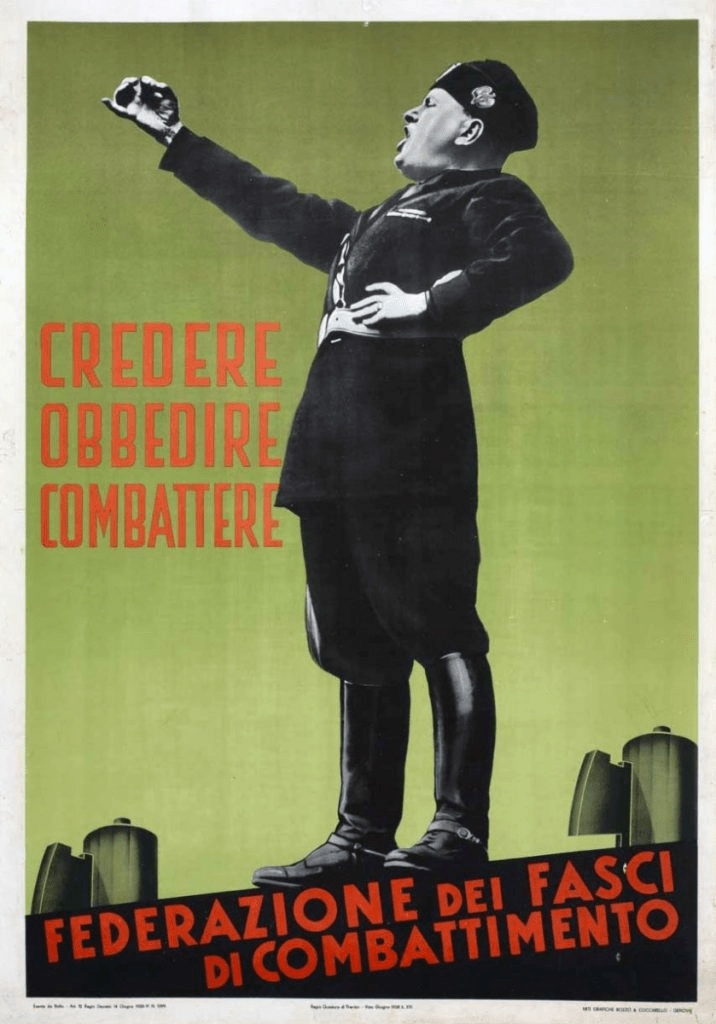
Il Duce sings Fiiiiii-garo!!!!

Does anybody know what that hat is called? And, more to the point, where to get one? It’s halfway between a ushanka and a fez, with shades of the old garrison cap. I think I’d look great in one, and I won’t even have to worry about a sudden desire to invade East Africa, because East Africa has already invaded us.


Andrew brings us a link of note:

How far back in time can you understand English?

With the comment

This is about the only comment section on the Internet where I feel confident that most readers would find this interesting, being at the intersection of etymology and history. I’d bet most people here could easily read 1500s English without much issue.

Ehhhh…. yes and no. Nehushtan covered some of it in a comment:

My experience is that after a few hours of Shakespeare or the KJV you get it, though sometimes the meanings of words have changed a bit. Chaucer took about a week to get used to it and it helped to read it aloud.

I did okay until 1300, I started to really slow down, and 1200 was too hard.

Chaucer is an inflection point, and a good example of our old friend, Information Velocity.

Because I went to a third-rate school in one of our less intellectual states, I got the closest thing to a decent all-around education still on offer in the early Clinton Era. (Because nobody wanted to teach there — there’s no status in it — the only profs they could get to stay were the crusty old fellows who actually believed in the bullshit in the school’s Latin motto). I picked up a double major in English, and they meant English, all of it — we had to read Chaucer in the original. Mostly the Canterbury Tales, but a pretty good sampler of his other stuff too.

You will definitely need a dictionary. Reading aloud does help, especially in the most ridiculous ‘Enry ‘Iggins fake cockney you can manage. You will learn a few things straight away:

Word survivals are weird. For instance, we still have “ruthless,” but “routhe,” meaning “pity” or “mercy,” is long gone.

English was once much more inflected. I can’t recall examples off the top of my head — c’mon man, it was going on 40 years ago — but you see a lot more of those weird Germanic plurals, like “children” for “child.” The Middle English plural of “sheep” isn’t “sheepen” (I believe it’s “sheep,” then as now), but that kind of thing.

You’ll also get an idea where some of our weird spellings come from. The infamous “silent e” that trips up so many English learners, for instance, wasn’t silent back then. It’s part of the inflexion somehow, or at least can be (again, 30-odd years ago), such that when you see those weird extra e’s in Ye Olde Tyme Writing, you’re seeing how it was pronounced. Which also ties in with fewer diphthongs, such that if you’re reading a document from c. 1400 and the scribe writes “greate” (meaning “large;” it’s not a superlative), it’d be pronounced something like “grr-ay-tah;” three syllables, not one, as now.

But that’s just Chaucer. He was well-connected; he wrote in the London dialect that was spoken by the court (but not for preference; they still spoke French); and he was popular, so his manuscripts are well-preserved and were rapidly disseminated — it’s an exaggeration, but not a huge one, to say that Chaucer is largely responsible for what we think of as “Middle English.” But unless you keep in mind that it was confined to not just London, but a certain socioeconomic and geographic part of London….

…well, you’re welcome to have a go at something like Mirk’s Festial, which is almost exactly contemporary with Chaucer (the Internet Archive is just the tits, isn’t it?). You’ll have to start by learning some new letters, like thorn (that’s the “y” in “ye,” by the way. Nobody actually said “ye Olde Pub,” where “ye” is pronounced like a Chinese name: yee. The thing that looks like a y is actually a superscript; it’s an early printer’s version of thorn; it is, and always was, pronounced “th.” So “ye olde whatever” is ACK-shully the olde whatever).

It’s not hard, exactly, but you’ll have to do the same read-aloud technique as with Chaucer. And you’ll need a dictionary, but a different dictionary, because although Mirk too wrote in “Middle English” it wasn’t quite Chaucer’s “Middle English, and hey, if you don’t want eyestrain at the Internet Archive, that Wiki article on Mirk gives you a transcription, have at it:

This byschop had wyth hym of his clerkys þat beleuet not perfitly in þe sacrament of þe auter, and sayde þat þai myȝt not beleue þat Crist schedd his blod in þe masse. Then was þis bischop sory for her mysbeleue and prayed to God ȝorne for her amendement. And so, on a day, as he was at his masse, when he had made þe fraction as þe maner is, he saȝe þe blod drop doun from þe ost fast into þe chalice. Þen he made syne to hem þat mysbeleuet, to come and se. And whew þei saue his fyngurys blody and blod rane of Cristis body into þe chalis, þai weron agryset þat for veray fer þai cryet and sayd : Be þow blesset, man, þat has þis grace þus to handul Cristis body! We beleue now fully þat þis is verray Godis body, and his blod þat dropet þer into þe chalis. But now pray to hym þat þou hast þer in þi hondys, þat he sende no vengauwce vpon vs for oure mysbeleue! and so þe sacrament turnet into his forme of bred as hit was beforn; and þai weren good men and perfyte alway aftyr in þe beleue.

I’m not going to blockquote that, for ease of reading.

A word-for-word rendition of the first sentence would be something like:

This bishop had with him of his clerks that believed not perfectly in the sacrament of the altar, and said that they might not believe that Christ shed his blood in the mass.

Not too tough, right? Except for that weird “with him of his clerks” (note the inflection — not “clerks” (we’d say “clerics,” like D&D), but “clerk-is”). But hard to sight-read. The second sentence, though, would really start tripping you up. A literal word for word:

Then was þis bischop sory for her mysbeleue and prayed to God ȝorne for her amendement

Then was this bishop sorry for her misbelief and prayed to God ?? for her amendment…

Wait, her? Is he genderfluid or something? And what the fuck is ȝorne? I’m not seeing ȝ in this list of Old English letters; the Wiki translation gives ȝorne as “constantly,” but there’s no synonym for “constantly” I can think of that sounds anything close to “ȝorne”…

See what I mean? It doesn’t take too long to figure out that “her” means “their,” but I don’t remember seeing that in Chaucer, I have no idea what “ȝorne” is supposed to be, and so on. And that’s before you get to the vocabulary. “Amendment” is an odd synonym (to us) for “reform,” but you can see it. But what is “fraction,” in the next sentence?

And so, on a day, as he was at his masse, when he had made þe fraction as þe maner is, he saȝe þe blod drop doun from þe ost fast into þe chalice.

And so, on a day, as he was at his mass [saying mass], when he had made the fraction [?] as the manner is, he saw [?] the blood drop down from the ost [?] fast [?] into the chalice.

The point, comrades, is that this is supposed to be vernacular. Very plain, simple language, for country priests of kinda dubious literacy to use in preaching to a completely unlettered populace. It’s more or less the Middle English equivalent of rap lyrics, and do you see what I mean?

Now consider that every part of England had its own dialect. Just because you can read Chaucer doesn’t mean you can read Mirk; just because you can read Mirk doesn’t mean you can read William Langland, though Piers Plowman is almost exactly contemporary with both of them… see what I mean?

By 1500, though, “English” was a lot more standardized. William Caxton set up England’s first printing press in the 1476; the first book he printed was The Canterbury Tales. Wiki gives a decent summary of Caxton’s influence on written English:

The English language was changing rapidly in Caxton’s time, and the works that he was given to print were in a variety of styles and dialects. Caxton was a technician, rather than a writer, and he often faced dilemmas concerning language standardisation in the books that he printed….Caxton is credited with standardising the English language through printing by homogenising regional dialects and largely adopting the London dialect. That facilitated the expansion of English vocabulary, the regularisation of inflection and syntax and a widening gap between the spoken and the written words.

Blame Caxton for the silent e, I guess — he reproduced London dialect as it was written, not as it was spoken. So you get a word like “knight,” which naturally occurs a lot in Chaucer. He — Chaucer — would’ve pronounced it something like “ka-nigg-et” or “ka-nicht.” And that’s how Caxton wrote it, but even then (I believe) pronunciation was more like “night” (which by extension Chaucer would’ve pronounced like “nicht”); which of course really should be “nite” or just “nyt,” where the letter y represents the long i sound, just like it did — Alanis-level irony alert — when all this got started in the first place (as you can see in the Mirk excerpt… except that in Mirk, y is used for a whole bunch of vowel sounds, because this shit be complicated, yo).

In case you wondered why I’m not a Medievalist, consider that that’s one dialect of one vernacular language, and it’s transcribed — you also have to learn how to read the bastard’s fucked-up handwriting, too. Yeahhhhh medievalists spend a LOT of time in grad school.

Hey, just for fun, if you want to hear what the “Prologue” to the Canterbury Tales probably sounded like, here’s a phonetic transcription, because the Internet is just the tits:

Oh, and all this is before you get to the vocabulary. Words in Middle English often didn’t mean what they mean in even Modern English, let alone American. I’ve written a zillion words on the Latinate English of Thomas Hobbes, for instance — you will seriously misunderstand him if you take “corporate” to mean what it means now, rather than what it meant then. Even now, dipshits who rail against “corporate personhood” do so because they have no idea what it ACK-shully means, and that goes double for people who should know better, because they’re technically law professors, like Elizabeth Warren…

…but that’s by the bye.


Zorost brought us this, and it’s funny

but I mention it here to once again recommend P.D. James’s phenomenal novel The Children of Men. James writes veddy proper English mysteries, old sock — her full style is Phyllis Dorothy James White, Baroness James of Holland Park, and she writes like Baroness James of Holland Park, savvy? Except for Children of Men, her lone foray into “science fiction.”

It’s Orwellian in a whole bunch of ways — Eric Blair wasn’t a sci-fi writer either, far from it; his other novels are straight up “Socialist Realism” a la Gorky, and they’re good as far as that goes (Derb called him second-rate), but he caught lightning in a bottle with 1984. I assume C.S. Lewis was the same way — isn’t he primarily a Christian apologist? What’s he doing writing sci-fi? For whatever reason, she did it, and it’s great. The devil’s in the details, and the animal “baptism” absolutely breaks your heart. It’s a gut-wrenching story. How hardcore sci-fi fans will feel about it, I don’t know, but the “world-building” is wonderful, just a masterclass.


There was some discussion yesterday about the weirdness of cheerleading injuries. As in, why is “cheer” so insanely competitive, and why are the injuries so catastrophic? We talked about the competitive stuff. As to the injuries, I’d bet pretty good money that all women’s sports have injury rates much higher than men’s, and that the injuries are generally worse. Muscle is joint armor; female athletes are putting much greater strain on much weaker joints. I’m not sure that’s right, but I’d put money on it. Of course, not being a biologist, I’m not even sure what a “woman” is…


BileJones brings us a tweet of note:

and an excerpt:

Finally got to read Rubio’s speech in Munich: it is one of the most revisionist and imperialist speeches I’ve ever seen a senior American official make, and that’s saying something. The man literally laments the outcome of WW2 because it marked the end of the era during which “the West had been expanding”, a “path” he “hopes [the US and Europe] walk together again.” And just to ensure you’re clear about what he means: he wants to restore the building of “vast empires extending across the globe” and blames “anti-colonial uprisings” for what they did to “the great Western empires.”

There’s a lot one could say to this — it should be its own post — but it’s all fucking depressing, so while we’re on the verge of yet another War for Israel ™ (shall we resume calling it “Operation Iranian Irrumatio”?), let’s pause to savor the Alanis-level irony. Trump 2.0 is approaching Covid territory as the biggest own goal in political history.

Trump is nowhere near Serious, despite them trying to kill him at least twice (and coming within a millimeter once), but he’s maybe 1/8th Serious, and that’s as Serious as an American politician has been since WWII. Had they not stolen 2020, he would’ve cruised to victory… and Second-Consecutive-Term Trump would’ve been all bluster. The Left would still have “X;” Elon would be on a trip to Mars right now. But they stole it, and Nonconsecutive Trump wised up as far as he’s capable of, and got 1/8th Serious, and put some real hurt on them — the Left took some real losses in 2025; that’s the first time they’ve lost anything of consequence in more than a century.

That’s Alanis-ironic enough, but the hits just keep on coming. They won’t let him have his domestic agenda, so they forced him into going big on the world stage. He tried being a peacemaker, but they won’t let him have that either, so now he’s going to start bombing Muzzies again, and even Hawaiian Judges haven’t figured out how to injunction a war. The man is determined to leave his mark on the world; if at any point they could just “post the L” he’d be perfectly happy, and none of this would be happening. Hell, they probably could’ve gotten him to call the dogs off if they’d just agreed to “The Gulf of America” — good idea, Donny, it’s about time we snagged it from the beaners!

But they can’t, because they are what they are, and so here we are, gearing up for another round of Operation Endless Occupation. Hope you enjoy it, Bibi — nobody under age 50 gives a shit, and nobody non-White gives a shit, and AINO demographics are what they are…


Pickle Rick brings us Tweet of note:

And yeah, in case you’re wondering, that thing on that thing’s arm is exactly what you think it is:

How about that? Lotta that going around on the Left these days. We all had fun with that candidate from, what was it, Maine? Who just happened to get himself all inked up with the Totenkopf on deployment somewhere, completely unawares.

As Pickle Rick points out, the likes of Ace of Normies are giving this a spectacular leaving-alone. He’s literally calling Tucker Carlson a Nazi for getting chummy with Qatar, but this? Never mind!

The Left of course are in total omerta mode, which I guess we can use to our advantage. Clearly “troon” trumps “Nazi” when it comes to the Progressive Stack, so if your AWFL neighbor tries to unperson you because of your retrograde opinions on, say, the OFE, just tell her you identify as a girl. There’s nothing she can do about it — see above.


Quotulatiousness brings us a link of note:

Can Stephen A. Smith Fix the Democrats—by Breaking Them?

And a question:

We’ve often noted that the Democrats have a gerontocracy problem and there aren’t many viable young up-and-comers on their bench (because groovy fossils, dead hands, etc.). How about a media personality (like Trump) to slide in and grab the nomination (like Trump), but … diverse?

Well, however it goes, we know he’s already got a catchy campaign song:

The Dinks are in a real pickle, that’s for sure. Remember how they spent a few weeks in early 2025 pretending to “reach out” to young men? How’d that work out?

I will confess up front that I haven’t read this article. I might save it for a rainy day, but frankly I don’t have the strength this morning. I will say, sight unseen, that ESPN and the rest of the Dinosaur Media surely have the same problem the Dinks have: zero bench, because they’re still chained (holla, Stephen A.!) to the old paradigm. Who watches sports yak anymore?

That’s not a rhetorical question; I honestly don’t know. I remember watching SportsCenter back in college, which is where I think he got his start. But back in college — you know, the early 1990s — that made sense. If you lived in, say, Atlanta, and you wanted to know how, say, the Dodgers did last night, you had three options: You could catch the scores on your local news when they did sports; you could pick up a copy of the local newspaper and check the box score; or you could tune in to SportsCenter. As they’d be the only ones guaranteed to have the video highlights, due to copyright restrictions or whatever, it was a no-brainer. If you wanted to watch Barry Bonds or Mark McGwire or the rest of the steroid monkeys blast home runs, and you didn’t live in the city where they were currently playing, such that the local news could show the highlights, that was pretty much your only option.

Same way, you had syndicated sports radio, like Jim Rome. Back then, it was possible that Jim Rome really did have some kind of insight you couldn’t get, because he was coast-to-coast. It was a big deal for players to be guests on Rome’s show, because that was the only way to reach a national audience. If you didn’t live in Oakland and wanted to hear what Mark McGwire thought about being a homer-blasting steroid monkey, well… there it was.

But now, though? The only people I ever see watching the sports yak shows are old people at the gym… and the sound is off. And that tells you something else, the fact that the sports yak shows are on at 10 in the morning on weekdays.

I guess what I’m saying is, back in the 90s, it made sense to go all-in on personality-driven sports “journalism,” because pro athletes generally aren’t long on personality in the first place, and even if they were, there was no way for you to know it. Further, sports “journalism” is all the same in its fundamentals — you don’t have to be an ace investigative reporter to say that Mark McGwire hit a home run, or ask Brett Favre if he shouldn’t have thrown that interception. If you wanted eyeballs back then, in other words, you had to build it around personalities, basically professional fanboys who’d say things like “Of course Brett Favre shouldn’t have thrown that interception that cost his team the game, but it’s ok when he does it, because he’s a gunslinger.

But now you don’t need professional fanboys like Sports Center. LeBron James is perfectly capable of sharing his profound mindthoughts all over Twitter, and — this is the point — you don’t need Stephen A. Smith to scream “racism!!” as an excuse whenever a black quarterback proves niggardly about throwing the ball to his own team; there are literally millions of morons on Twitter doing that the minute it happens.

So…. yeah. Stephen A. Smith, if he’s “famous” today, is famous for having been famous in the early Aughts — that is, when SportsCenter and the like were still just barely viable, because Twitter hadn’t fully taken off yet. Which I suppose is recent enough to qualify as a young gun by Donk standards, but given how all-in they are on the “youth” vote, is it going to be enough?

He’s got the black thing going for him, though, which is something. I tell you this, I wouldn’t want to be Hairgel Gavin right now. I just don’t see how they can possibly justify putting a White male at the top of the ticket — at least, not a straight one, so he’d better start taking it up the ass, or explore “transitioning.” Someone like Stephen A. Smith really will take a goodly portion of your “base” away otherwise. And can you imagine that egomaniac agreeing to a veep slot? I can’t, especially as someone like Smith at the top of the ticket is your best-case scenario; most likely he’d end up playing second banana to AOC or Gretchen Whitmer.

Of course, three years is a lifetime in politics, so I bet the eventual nominee is someone few of us have heard of. Someone like Wes Moore, for instance, whose name has been trial-ballooned here a bit. He got “caught” in a plagiarism “scandal,” and that’s the kind of thing a Democrat candidate does a year or two in advance to clear the decks — it was 2025 when that came out, shouts The Media in union; it’s 2028 now; it has Already Been Debunked ™, time to move on dot org.

But hey, good luck to Stephen A. Smith. It looks like my dream of having Cornel West on a main debate stage is never going to happen, but Stephen A. would be ok as a consolation prize.


And finally, the thingie de résistance, Pickle Rick asks:

So how Serious is the arrest of “King” Chuckles’s shitbag chomo brother Andrew? If I’m guessing, its a desperate move by Queer Starmer to somehow salvage his position as Prime Minister, but this is probably going to not stop that at all, and probably might cause Chuckles to abdicate. However that shakes out, I do believe this is unprecedented, arresting the King’s brother is not something that’s happened for centuries. That is indeed Serious, and now I wonder if it is not a harbinger of BOM finally arresting a big American fish, finally.

I think it’s potentially extremely Serious. I would love to see it portend the arrest of a big American fish, but I still doubt it’s going to happen. You’d have to get Ka$h Money and Inaction Barbie to get off their worthless fucking asses, for one, and I see no indication of that ever happening. Gosh, golly, gee, we were gonna file charges, but the statute of limitations ran out. Yesterday. We did everything we could, swearsie realsies.

For another, even if they did manage to get off their worthless fucking Vichy asses, whatever they did would immediately be injunctioned by every judge in Hawaii. What good would it do to arrest, I dunno, Anthony Weiner (just because it would be funny), only to have him freed on his own recognizance 0.000023 seconds later? Trump has yet to have his Andrew Jackson Moment, and I think we all have to make our peace with the fact that he never will. We’re about to go to war with Iran because of it — it’s the one bit of Presidentin’ he can actually do, without some traffic court judge in Toad Lick, Nebraska proclaiming it null and void.

And as for that ridiculous pretender, Chuckles von Saxe-Coburg-Gotha, actually abdicating… be careful what you wish for. My bet is that if he actually does feel the need to step down, he’ll ask for a referendum on abolishing the monarchy, and given that the United “Kingdom” is really the Democratic Republic of Far West Pakistan, he’d get it, too. It would make him a legend among Juggalos — the Last King of England, who laid down his crown in the name of Social Justice. How could that fucking faggot resist?


Damn. Now I’m mad. I’m going to have to call it a wrap, gang. Thanks as always for reading, and have a great weekend.

Klosterman’s “Football” [guest post by yknowthatguy]

[note: Tomorrow’s Friday, so please send mailbag questions! RCseverian at protonmail dot com or in the comments below. Thank you for your diligent striving to increase quality outputs].

mmack wrote:

>You will be happy that your favorite hipster goofball…[h]as written a book on football.

So I had to check it out.

I went into this book thinking “I wonder if this doofus even knows what the line of scrimmage is,” and I must say that I was happily surprised at Klosterman’s knowledge of the Xs and Os. He played QB in high school and has retained no small amount of knowledge from that time. Unfortunately, he also has a QB’s tendency to just see Xs and Os without realizing that certain schemes better fit a certain set of players. If you can believe it, these guys are not just interchangeable hunks of meat. “Players, not plays.” -Vic Ketchman

Unfortunately for me, the name of the book is “Football”, so it does not solely focus on the NFL. In fact, Klosterman happily admits to being more of a fan of the college version because he is a football junkie and he gets to watch more games that way. That’s fine – he still talks about the pro game enough that I wasn’t out of my depth.

The book starts out telling you what it’s going to be: a pre-obituary for the entire sport. It then wanders around various topics before finally returning to this thesis towards the end. Klosterman’s style is immediately apparent: he’s a PoMo navel-gazer who can’t help but preemptively imagine how his work will be received by critics. He sometimes gets away from this and just writes, but it always returns, and while the self-crit can be amusing at times, it mostly just induces eyerolls. The parts where he forgets that critics exist are better.

Chapter one focuses on the relationship between football and television and how they have mutually benefited from their relationship with each other. This is fairly uncontroversial, except he misses a trick: it’s the relationship between football and color television that started the snowball really rolling downhill. You can watch baseball in black and white and not miss a lot, since those are mostly the colors the players wear. Not so football where the uniforms are colorful and evoke passions in the fan that black pinstripes on a white uniform simply cannot. He also does not touch upon Pete Rozelle’s famous leaguethink concept (pooling the TV revenue and splitting it evenly among all teams) here, although he alludes to it later. Rather, his focus is on how the fan experience is seen almost exclusively through the camera’s eye, even if that fan is at the stadium watching the game live. This is a fair point – I’ve noticed myself doing it. Noodly PoMo aside, I’m not going to argue too strenuously against seeing football as mainly a media product now.

Then we get a short essay about how the game is managed has turned it into a hierarchical, industrial product almost entirely divorced from the men playing it and their talents. As I’ve already said, his experience playing the game almost makes this a non-starter. Who is calling the plays matters far less to the average fan than if the play was executed. In fact, fans’ favorite plays are usually the ones that go off-script to some degree, like last season’s Moment of the Year. Overall, he’s trying to make a deeper point about capitalism, one he’ll return to later on.

Klosterman then takes us to Texas and how the idea of Texas (especially Roger Staubach and the deep love they have for the high school game) persists in his mind to this day. Honestly, this reads so much like a transcript from a psychotherapy session, I wanted to charge him $150 and tell him to schedule his next appointment with the receptionist.

Next up: Who’s the real GOAT? That’s Greatest Of All Time and spoiler: it’s Jim Thorpe. Of course, he can’t help but harp on Thorpe’s native ancestry while simultaneously being annoyed at other authors harping on it even more than he does. He constructs a decent framework for determining the ultimate GOAT, but GOAT discussions are inevitably boring as hell. Everyone’s got their pick and the discussions always devolve into tearing down the other guy’s pick. This is where one begins to suspect that our author doesn’t actually have any friends, or he’d know this by now.

Then we move on to the various simulations around the sport, including video games, fantasy football, and gambling. However, the real point is football itself is a simulation of war – hah, gotcha! If you couldn’t tell this guy is a Liberal by now, you’re at least starting to have some suspicions.

A quick chapter on the mentality of coaches, and we get to the thing he really, really wants you to read: The Black Chapter. See, 60% of pro football players are black and isn’t he such a good person for apologizing if it looks like he’s JAQing off when in fact he’s just JAQing off and…snore. I am in no way kidding about this – he disappears so far up his own ass in this chapter that I fell asleep reading it. Anyway, his point eventually ends up being that a controversy started by some one-trick pony mulatto QB on the downslope of his career should somehow land said mulatto in the Hall of Fame because he got people talking about race ‘n shit. If this is what our betters think is important, then I agree with him: the sport should die and take all of our betters along with it.

There’s a little palate-cleanser on why the CFL will never catch on in the US (three downs good, four downs better), and we’re on to The Serious Chapter: Should we allow people to play a sport that we know causes brain damage? Tellingly, he can’t come up with a good example of this from the past decade or from when the player-safety movement really took off. Perhaps those rule and equipment changes have helped? Nah – why dwell on that when we can use ancient data instead?

We then get into his argument about why the sport is already dying and will be dead within 50 years. DID YOU KNOW: horse racing was once a super-popular sport in the US, but now it’s not because nobody knows what a horse looks like anymore? Well, just like that, nobody wants violence or sexism or ethnocentrism or blah blah blah anymore, so football is doomed to go the way of horse racing.

Denouement is why we call football “football” but everyone else in the world calls soccer “football”. Again, this is a man who has no friends or even a basic concept of how these conversations happen on the Internet. He doesn’t even know enough to call it handegg. Our Liberal angle here is that soccer is beloved because it can be played by the poors.

So there’s your basics: half the book is why football is awesome and how it’s intertwined with American life, but always with some little aside about how maybe this is Problematic. He knows he shouldn’t love it, but gosh darn it, he just can’t help himself!

But for someone who claims to deeply love the game, he seemingly has no idea of how it works. I keep returning to his reducing everything to Xs and Os, and this doesn’t just apply to the action on the field. He has zero knowledge of the business of football or even how it is viewed by non-eggheads.

One anecdote he tells in the GOAT chapter is about kids at his son’s school playing football at recess. When a kid would sky over another to snag a high pass, he’d turn around and taunt the kid he just burned with “You got mossed!” He was amazed that children their age would know who Randy Moss is, so he asked if they did. They did not. This, he concludes, is the impact Moss had on the sport even a generation later.

Except that “You got mossed!” is a segment on ESPN’s Monday Night Football pre-game show with co-host Randy Moss.  It’s a highlight reel of amazing, Moss-like catches from the day before and each highlight concludes with the presenter exclaiming “You got mossed!” with the graphic of same placed over a freeze-frame.  These kids aren’t old enough to stay up and watch the whole Monday night game, but they damned sure are watching the pre-game show, and that’s how they know the phrase.

Our author has no idea that this is even a thing. One gets the feeling that he would consider such entertainment beneath him, so if kick-off is scheduled for 8:05, he is tuning in precisely at 8:00. Why bother with highlights before the game?  They’ll just show them at halftime anyway.

Other tells: He mentions the combine, but not the draft. Both of these events are things the NFL hypes to the sky because they help prevent the league from being a half-year affair. They are not as popular as the games themselves. No woman who is happy to just spend time with her husband during the season instead of becoming a football widow would watch either.  But that’s not the point.  The point is that these events keep football in the news long after the season is over.

He does not mention the league’s International Series which a desperate attempt to spread the game’s popularity overseas.

And most damning of all, he does not once mention the salary cap. One cannot understand anything about the business of football without understanding the salary cap and how player compensation counts towards it. The meatiest of meat-head Internet commentators all understand the cap. They’re often dead wrong about how salaries and bonuses are structured to count against it, but they know it’s a thing and that thing makes everything else tick. For Klosterman, it’s not even a thing that exists.

So when I say his prediction of how the game will die is not just wrong, but laughably so, this is what I mean.

A summary of his position: Pop Warner and high school participation is dwindling because suburban moms are afraid of little Johnny getting hurt. College football is dying because now there’s money in it and the NCAA can’t do anything right when it comes to the sport. And the NFL will die (Not soon! Certainly not before he does!) because the culture will pass it by and it won’t be worth the money anymore.

He’s not entirely wrong about the first two, but at the kids’ levels, his discussion about Texas’s love of high school football misses that every other part of the country also has a deep love for high school football. Not to the extent of Texas, but the folks who are grabbing coffee in the diner before work on Monday and talking about the game on Friday night? Certainly not confined to Texas.

I think he has a better grasp on what will happen to the college game. Eventually a few dozen of the top programs are going to have enough juice to pool their resources and tell the NCAA to get bent. They’ll create their own minor league system and that will effectively kill college football and the wide talent pool the NFL draws from. Instead of 35,000 players to choose from a year, the NFL will be down to about 4,000.

Even if this were true, the NFL only needs about 250 new players a year. And it overlooks a core tenet of NFL scouting: You find players where you find players. As an example: there are always a handful of players from North Dakota State University in the league. NDSU is not a Division I program. They are a consistently dominant Division II program, and they always attract players who would be good enough to play for one of the big boys but decided they would rather chase championships than get stuck as a third stringer at an SEC school. The program doesn’t send as many players to the NFL as Alabama or Ohio St., but even a couple a year is enough to attract more top-enough talent to the program.

And Klosterman should know this! He grew up and played high school football right down the road from NDSU. He drove through Fargo on his way between home and college in Grand Forks. He was a journalist in Fargo. But he doesn’t understand that you find players where you find players, and even if 170 of those new NFL players will come from the new College Super League, that still leaves 80 draft spots available for players found elsewhere.

His thoughts on how the NFL will die sum up all his Liberal attitudes all in one. The NFL is hyper-capitalist. Its main job now is to continue expanding revenue for the league and its member clubs. The main way it does this is via selling the rights to televise the games. In fact, one can roughly estimate the salary cap by taking the sum of the current TV rights contracts and dividing it by the number of member clubs. But because it’s hyper-capitalist, the clubs (and players) expect that sum will always grow, and the moment it stops growing is when player salaries stagnate or even start to fall. The league will explain that there’s not enough TV cash for a higher cap this year, and the players will walk out, but the clubs will not relent to spend more because the money just isn’t there, guys.

And this will be intractable and then there won’t be any more football, and no one will really care because who actually watched that icky sport anyway?

Here we see at least three Liberal fallacies in one argument. The first is thinking that the rest of the country takes their moral cues from the New York Times. You can (and they have!) blather on and on about toxic masculinity and playing through pain and structural fascism, and I’m sure that will resonate with the cat ladies who don’t have kids anyway, but those aren’t the women the game wants to attract anyway. And they don’t have little sons who want to sky over someone on the playground and shout “You got mossed!” at them.

The second is assuming that hyper-capitalism will somehow drive the sport past the point where it can sustain itself where “sustain” means “line always goes up”. The line goes up because player expectations for salary goes up and nobody is going to take a haircut if they can help it. But what about the 1980 NFL lockout when the clubs said “Suck it” to the top-rated players, hired on scabs, and played games anyway? What was the end result of that action? The players tucked tail and got back to the negotiating table.  Sure, $25M a year isn’t as good as $30M a year, but it beats $0 a year and watching Uncle Rico playing under center instead of you.

And the third is more basic: assuming that the line can’t always go up. Eventually, the TV/streaming rights cash has to have a top end, and that’ll be Peak Football. This overlooks the multitude of other ways clubs make money. Not just stadium naming rights and luxury box sales, but merchandising, vendor rights contracts, charging admission to the entertainment districts around the stadium, etc. TV rights are the biggest source of revenue now, but there are tons of ways to augment that number if it looks like it’s not going to meet expectations. And the clubs already make that money. They just don’t share it with the players. Yet.

In the end, I think he’s kinda right. Football will contract eventually, but expecting it to go away before we’re colonizing Mars or the world is engulfed in a nuclear fireball is Marxist wishcasting.  Even in the latter case, I bet some mutant kids will draw a grid in the ashes and start calling plays again.

WNF: Recruiting

Let’s make a pitch for Our Thing. Or, alternately — because it’d be zany fun — a recruiting pitch for the Naked Base Commando. Come join us, and…?

We’ll have to do something like this eventually, of course (or the Collapse will do it for us, but let’s be optimists). Make a positive case. I used to say “have an ideology,” but now I don’t think it rises to that. The 20th century was the Age of Ideology; the 21st will be the Age of Identity. So not “we believe X or Y,” but “we are X or Y.”

I confess I have a hard time doing it. There are some fun jokes to be made — please do! — but when it comes to a serious pitch… well, it’s the penitential season, and my mind is naturally melancholic anyway, so I am reminded that the problem with “conservatism” is that it reminds us there’s no hope short of heaven. Not all problems have solutions. Indeed, most of the “problems” we’d like solved aren’t actually problems; they’re aspects of the human condition. To be a “conservative,” then, is to acknowledge, deep down in your bones, that while you might be extraordinary in some area — in which you have invested enormous effort — you’re still just some guy in the other 99% of your life…

…and most of us don’t even rise to that. There’s no end goal to life, no Final Boss to defeat, no One Weird Trick that fixes everything. The point of life is living it — the little disappointments and tiny struggles, those are life. But how hard that is to hear, in a world full of such ease!

Same way, the fundamental problem with “capitalism” is that it turns human weakness into “common sense.” I sometimes imagine becoming an “influencer.” Not because this is something I want to do — I would work very hard to avoid it — but because it’s an interesting thought experiment. It’s a lesson in the FNG “attention economy.” What if George Soros offered me $50,000 for this blog? $500,000? $5,000,000? (In this thought experiment, I don’t have to write for Soros — he just cuts me a check, I hand him the keys, it’s done).

At some point you take the money, right? It’s just “common sense.” Once you hit a certain number of zeroes, counterarguments fail.

“It’s my life’s work.” No it isn’t, it’s a silly hobby, and besides, even if it were your life’s work, congratulations! Your work is done. You got paid, bigtime. What else were you working for? What else does anyone work for? Retire and enjoy it.

“It’s my name.” No it isn’t. Obviously so. Getting mad that “Severian” is now some flaming Leftard would be like an actor getting mad that a different actor is playing Hamlet wrong. The Internet is not real life (hey, there’s a pitch line for the NBCs — over here, we appreciate the Alanis-level irony of reminding ourselves via the Internet that the Internet is not real life).

If the offer is fifty bucks, or five hundred bucks, then fuck you, George, that’s my life’s work you’re trying to buy. If it’s five thousand… damn, dude, that’s my name you’re asking me to give up. If it’s fifty thousand… well, 50K is real money to me. But it’s chump change to him, and that’s where they get you. You start thinking in terms of product. I made this site, I built it up, all that took real work, and now I’ll finally get paid for all of it. It’s not “generational wealth,” $50K, but my life would immediately, markedly improve. Doesn’t that alone make it worth doing?

They’ll understand. I’ll write a big long post explaining it. Hell, most of them will not only understand, they’ll cheer me on. It’s just common sense, right? Especially if it’s five hundred thousand, or five million. Make your last act at FQ some music blog kayfabe:

Right?

Arguments fail, because some things are outside the realm of argument. You either have honor, or you do not have honor, and there are no arguments for honor. There are only arguments against honor, and “capitalism” makes them for you. “Capitalism” does it every day, in a thousand ways, until — again — they don’t even seem like arguments anymore, just “common sense.”

So… let’s start making some arguments for some of the things that approach to honor, see where that takes us.

Your thoughts?

Design a site like this with WordPress.com
Get started