
Robotics at NC State
Robotics at the College of Engineering brings together control, AI, human interaction and systems integration from fundamentals to application.
NC State University’s College of Engineering aims to be a national leader in robotics innovation, focusing on AI-enabled, hands-on and collaborative robotics.
Robotics Research Areas
NC State currently has faculty working in robotics across multiple departments. Their work is summarized across core disciplines and research thrusts.
Advanced and Safe Autonomy, Perception and Control for Robotics

Control, Autonomy & Learning
Focused on foundational theories and algorithms for intelligent, safe and adaptive autonomous robots. Includes advanced control algorithms, reinforcement learning, deep learning for control, game theory, multi-agent coordination, cyber-physical security, safe autonomy, and adaptive control and locomotion control for legged and humanoid robots and embodied AI for robots acting as intelligent physical agents.
Sensing & Perception for Robotics
Core technologies enabling robots to understand, interpret and navigate the world. Includes computer vision, multimodal sensing, SLAM, perception for manipulation, acoustic sensing, tactile sensing, sensor fusion, and perception for field environments.
Trustworthy, Safe & Resilient Robotics
Ensuring robots operate reliably, transparently and securely in high-stakes settings. Includes explainable robotics, formal verification, dependable multi-robot systems, adversarial robustness and cybersecurity of robotic platforms and networks. Includes ethical frameworks for responsible robotic decision-making and deployment.
Application-Focused Robotics
Human Health, Interaction & Rehabilitation Robotics
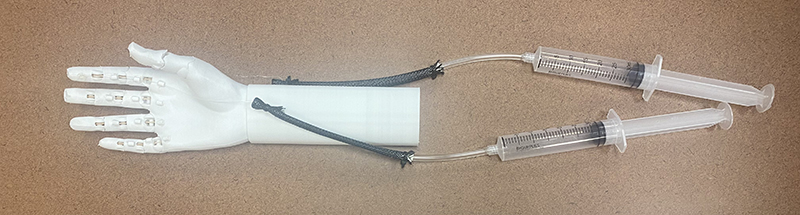
Robotics that augment, restore, or enhance human capability. Includes wearable exoskeletons, soft/hybrid assistive devices, neurorobotics, neuromorphic interfaces, medical robotics, rehabilitation robotics, robotic prosthetics, haptic robotics and physical human robot interaction. includes robots designed for human environments, such as humanoid robots, social robots, and collaborative legged systems built for shared physical spaces.
Field, Agricultural & Environmental Robotics
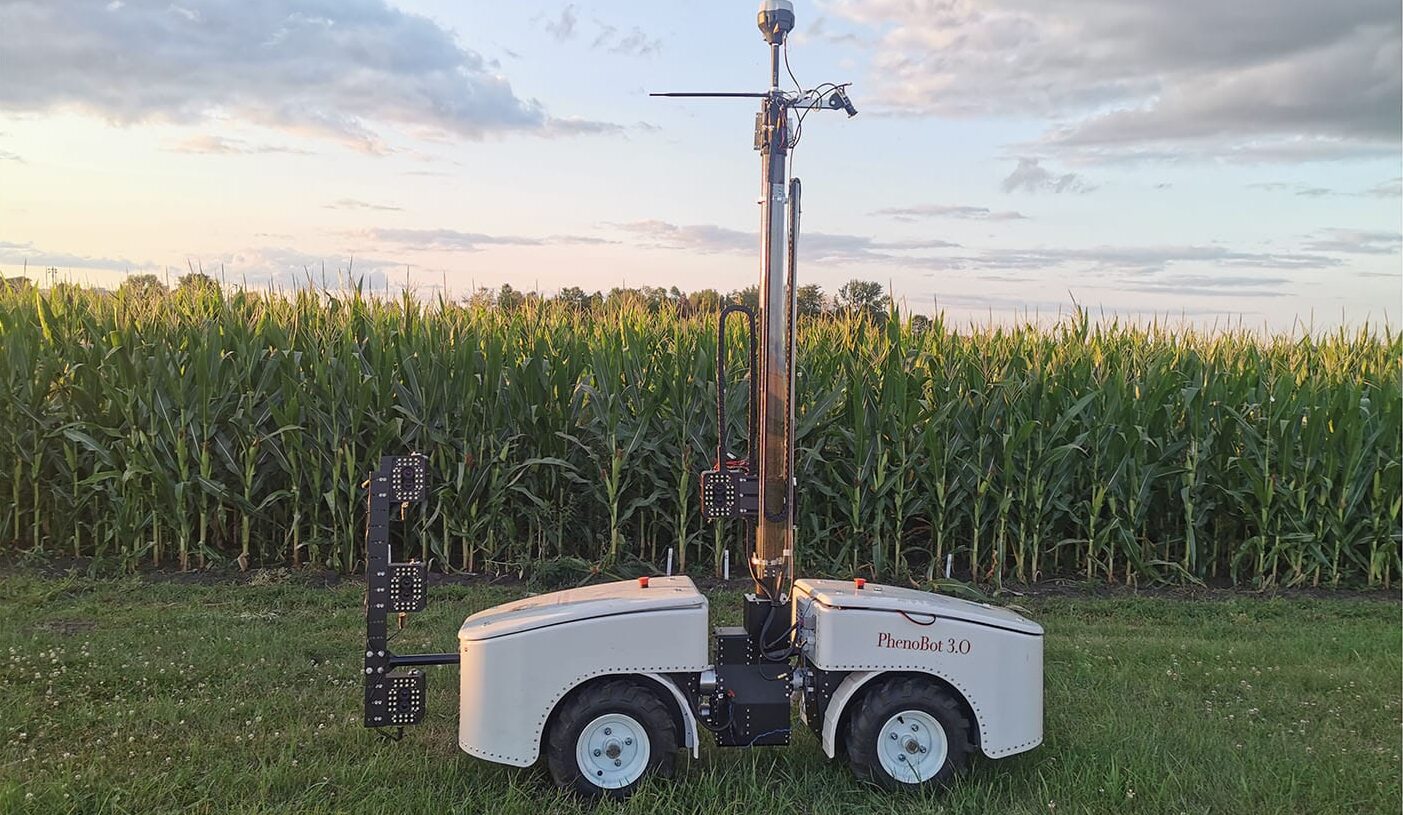
Robots that operate in natural, outdoor, controlled or unstructured environments. Includes agricultural robotics, livestock monitoring, environmental sensing platforms, field autonomy, resilient locomotion, legged robots and quadrupeds for uneven terrain, and weather-robust aerial/ground systems.
Aerial, Connected & Networked Robotic Systems
Autonomous aerial vehicles and robots that rely on advanced communication networks. Includes UAVs, multi-robot swarms, networked autonomy, V2X/IoBT, collaborative sensing, multi-agent robotics systems and large-scale trajectory planning (e.g., AERPAW).
Robotics for Manufacturing, Automation & Logistics
Robots that support high-precision manufacturing, supply chain efficiency and human-robot collaboration in industrial settings. Includes warehouse automation, last-mile delivery robotics and robotics for advanced manufacturing workflows.
Human-Centered Robotics
Human-Centered Robotics and Human-Robot Interaction
Robotic systems intentionally designed around human needs, capabilities, and behavior. Includes human-robot interaction (HRI), shared autonomy, human trust, cognitive engineering, ergonomics, robots designed for human environments such as humanoid systems, and collaborative or assistive robots operating in workplaces, homes and public spaces.
Humanoid, Legged & Bio-Inspired Mobility
Focused on robots designed for human-scale interaction and robust mobility. Includes humanoid robots, bipeds, quadrupeds, bio-inspired locomotion, compliant legs, dynamic balancing and high-mobility platforms for human environments and complex terrain.
Education, Materials and Manufacturing for Robotics

Micro, Nano, Soft Robotics
Focused on small-scale perception and actuation, soft interfaces, and new material paradigms. Robots and mechanisms leveraging new materials and mechanically intelligent structures. Includes micro/nanorobots, biologically inspired actuators, ultrasoft polymers, hydrogel actuators, physical AI and soft robotic systems for delicate interaction.
AI-Driven Materials Discovery & Self-Driving Labs
Robotics-enabled autonomous experiments and high-throughput scientific discovery. Includes self-driving labs, AI-orchestrated multi-robot workflows, autonomous synthesis platforms and closed-loop materials optimization.
Robotics Education, Software & Workforce Development
Develops reliable software tools and training programs for future robotics engineers. Includes software engineering for robotics, formal testing and verification, hands-on curriculum development, and statewide robotics workforce pipelines.
Launch Director

Helen Huang
Jackson Family Distinguished Professor, Lampe Joint Department of Biomedical Engineering
Helen Huang, Jackson Family Distinguished Professor in the Lampe Joint Department of Biomedical Engineering at NC State University and UNC-Chapel Hill, is the launch director of the College of Engineering’s Robotics Initiative.
Under Huang’s leadership, the Robotics Initiative will continue its work to guide NC State to becoming a national leader in robotics innovation, focusing on AI-enabled, hands-on and collaborative robotics. With an interdisciplinary team, she will drive robotics excellence across research, education and innovation; strengthen interdisciplinary collaborations; and guide the strategic growth of robotics in our college and at NC State. Since its launch in 2025, the initiative has connected NC State faculty who are advancing robotics in both cutting-edge research as well as key applications, including rehabilitation, agriculture, and accelerating research and manufacturing.
Huang is the director of the Closed-Loop Engineering for Advanced Rehabilitation (CLEAR) Core. An accomplished researcher in the field of rehabilitation robotics and human-robot interaction, her primary research goal is to create breakthroughs in human-machine symbiotic (HMS) systems that empower people with physical disabilities to lead more active and productive lives. Using AI and neural interfaces, she is working to transform robotic prosthetics into seamless extensions of the human body.
She is a Fellow of the Institute of Electrical and Electronics Engineers (IEEE) and the American Institute for Medical and Biological Engineering (AIMBE). She holds a joint faculty appointment in the Department of Electrical and Computer Engineering and the Department of Mechanical and Aerospace Engineering.
Dean’s Pilot Awards Program
The College of Engineering (COE) at NC State University is committed to fostering research and development in the field of robotics. Toward this end, the Dean’s COE Robotics Initiative Pilot Awards Program is designed to initiate and grow new projects, providing them with seed funds to foster novel research leading to future grant applications, particularly targeting large-scale and collaborative grant opportunities.
Details and Deadline
Requests for funding of up to $50,000 per team for a duration of one year will be considered for calendar year 2027. The program expects to fund 3-4 such research projects. These pilot awards are intended to enable development and data collection for new concepts that form the basis for large, collaborative grant proposals in robotics.
Applicants should have a concrete plan for future grant applications based on this work. As separate funding mechanisms are available through the COE for AI research, applications featuring AI should emphasize specific robotics components.
Proposals are due on or before December 1, 2026.
Eligibility
All proposals must be led by a principal investigator (PI) who is a faculty member within COE and must include a co-PI from a different program/discipline (e.g., mechanical engineering PI and aerospace engineering co-PI) to be considered.
Applicants may submit only one proposal as PI, but they may serve as co-PI on a second application (or co-PI on two applications if not serving as a PI). The co-PI does not have to have an appointment within COE.
Proposal Requirements
The required formatting is 12-point Arial font with 0.75” margins all around.
The following components must be included:
- Cover page (1 page)
- Project title
- Names and departments of PI, co-PIs and key personnel
- 5 keywords describing project
- 250-word abstract
- Project description (4 pages)
- Significance and Motivation
- Include possible translations to industry/government/other fields as applicable.
- Innovation
- Include discussion of how interdisciplinary team will enable novel approaches.
- Approach
- Include description of hypothesis testing/validation/outcomes.
- Plan for follow-up external funding
- Include a list of targeted solicitations for large-scale programs along with their deadlines.
- Significance and Motivation
- Facilities and other resources (2 pages)
- Relevant to proposed project
- Budget with justification
- Indirect costs are not applicable. Faculty members’ salary charges are not permitted. Support of graduate students is strongly encouraged – funds may be used to cover tuition. Allocation of funds outside of COE will be considered on a case-by-case basis.
- References
- 2 pages
- Biosketches
- 2-page biosketches following the NIH or NSF format are required for PI and Co-PI
Submission Portal
Submit complete proposal as a single *.pdf document to the Google Form link below.
Proposals are due on or before December 1, 2026.
Questions? Contact Derek Kamper at [email protected].
Minor in Robotics
The Robotics Minor gives undergraduates in any major a structured pathway into one of today’s fastest-growing technical fields. As the first robotics educational program in the UNC system, the minor draws on NC State’s faculty expertise, specialized facilities, and strong industry ties to give students hands-on experience with how robots perceive, move, and make decisions.


