


pet
English
[edit]Pronunciation
[edit]Etymology 1
[edit]Originally northern dialectal, from Scots pet (“an animal that has been tamed and is kept as a pet; a darling or favourite; a petted or spoiled child”), probably from Scottish Gaelic peata (“pet, tamed animal, spoiled child”), from Middle Irish petta, peta (“pet, lap-dog”), of uncertain origin, possibly from a pre-Indo-European substrate.[1] Compare also peat (“pet, darling, woman”), which is likely not related.
The verb is derived from the noun.
Noun
[edit]


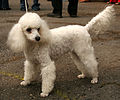


pet (plural pets)
- An animal kept as a companion or otherwise for pleasure, rather than for some practical benefit or use.
- (by extension) Something kept as a companion, including inanimate objects (pet rock, pet plant, etc.).
- 2015 September 15, Toby Fox, Undertale, Linux, Microsoft Windows, OS X:
- Papyrus: This is my brother's pet rock. He always forgets to feed it. As usual, I have to take responsibility.
- One who is excessively loyal to a superior and receives preferential treatment.
- Any person or animal especially cherished and indulged; a darling.
- 1847 December, Ellis Bell [pseudonym; Emily Brontë], chapter XIX, in Wuthering Heights: […], volume (please specify |volume=I or II), London: Thomas Cautley Newby, […], →OCLC:
- At first she sat silent; but that could not last: she had resolved to make a pet of her little cousin, as she would have him to be; and she commenced stroking his curls, and kissing his cheek, and offering him tea in her saucer, like a baby.
- 1711 January 1 (Gregorian calendar), Isaac Bickerstaff [et al., pseudonyms; Richard Steele et al.], “Thursday, December 21, 1710”, in The Tatler, number 266; republished in [Richard Steele], editor, The Tatler, […], London stereotype edition, volume III, London: I. Walker and Co.; […], 1822, →OCLC:
- the love of cronies, pets, and favourites
Synonyms
[edit]Derived terms
[edit]- antipet
- crazy as a pet coon
- cyberpet
- digital pet
- housepet
- pelfie
- petcare
- pet carrier
- pet cemetery
- petcock
- pet cone
- pet door
- pet flap
- petfluencer
- petfood
- pethood
- pet hotel
- pet humanization
- pet insurance
- petiquette
- petkeeper
- petkeeping
- petkin
- pet lamp-shade
- petless
- petlike
- petling
- petnap
- petplay
- pet play
- petship
- pet shop
- petsit
- petsitter
- pet stain
- pet store
- pet tag
- pet therapy
- pettish
- pocket pet
- robopet
- teacher's pet
- tea pet
- virtual pet
Translations
[edit]
|
|
|
Verb
[edit]pet (third-person singular simple present pets, present participle petting, simple past pet or (childish) petted, past participle petted or pet)
.jpg)
- (transitive) To stroke or fondle (an animal).
- I really love to pet cute puppies.
- (transitive, intransitive, informal) To stroke or fondle (another person) amorously.
- We started petting each other the moment we were alone.
- 1970-1975, Lou Sullivan, personal diary, quoted in 2019, Ellis Martin, Zach Ozma (editors), We Both Laughed In Pleasure
- We kissed & petted for about 15 mins & he still wasn't hard, altho he acted like he was enjoying himself.
- (dated, transitive) To treat as a pet; to fondle; to indulge.
- His daughter was petted and spoiled.
- 1919 August, P. G. Wodehouse, “Prohibition and the Drama”, in Vanity Fair, page 21:
- […] the American dramatist has had to waste most of his first act elaborately planting the information that his Mister Quex is rich, petted by Society, and altogether more spectacular than the common run of men.
- (archaic, intransitive) To be a pet.
- (archaic, intransitive) To be peevish; to sulk.
- 1623, Owen Feltham, Resolves: Divine, Moral, Political:
- He sure is queasie stomach't that must pet, and puke, at such a trivial circumstance
Synonyms
[edit]- (to stroke or fondle an animal): pat, smooth
- (to stroke or fondle amorously): feel up, grope, touch up; see also Thesaurus:fondle
- (to treat as a pet): coddle, cosset; see also Thesaurus:pamper
- (to be peevish): mope, pout
Derived terms
[edit]Translations
[edit]
|
|
Adjective
[edit]pet (not comparable)
- (figurative) Favourite; cherished; the focus of one's (usually positive) attention.
- a pet project
- a pet child
- The professor seemed offended by the criticism of her pet theory.
- 1886, Frederic Harrison, The Choice of Books:
- Some young lady's pet curate.
- 1875, William Conant Church, The Galaxy, page 141:
- Major Butler has a pet grievance and a pet aversion, which he forces on the reader in every chapter, and which becomes at last very wearisome.
- 1991, Deborah G. Douglas, United States Women in Aviation, 1940-1985, page 9:
- In an interview with Flying magazine, Heberding commented that her pet annoyance was "the reluctance of people generally to accept a woman whether as a pilot or a preflight inspector."
- 2002 August 2, Geoffrey Macnab, “'The rape had to be disgusting to be useful'”, in The Guardian[2], →ISSN:
- Discussing a favourite book, JW Dunne's An Experiment with Time—a 1927 study by an English aeronautical engineer who developed his own pet theories about dreams, perception and reality—he [Gaspar Noé] sounds like an earnest young philosophy student.
- 2025 July 5, Philip Stafford, Akila Quinio, “Stablecoins begin to enter the mainstream with backing from Trump administration”, in FT Weekend, page 11:
- But these digital currencies […] have now become a pet project of the US administration and a hot topic in corporate boardrooms.
- (literally) Kept or treated as a pet.
- (obsolete) Good; ideal.
- 1881–1882, Robert Louis Stevenson, Treasure Island, London; Paris: Cassell & Company, published 14 November 1883, →OCLC:
- “Now,” said Hands, “look there; there’s a pet bit for to beach a ship in. Fine flat sand, never a cat's paw, trees all around of it, and flowers a-blowing like a garding on that old ship.”
Derived terms
[edit]Translations
[edit]
|
References
[edit]- ^ Schrijver, Peter (2000), “Non-Indo-European Surviving in Ireland in the First Millennium AD”, in Ériu[1], volume 51, →JSTOR, pages 195-199
- Douglas Harper (2001–2026), “pet”, in Online Etymology Dictionary.
- “pet”, in Merriam-Webster Online Dictionary, Springfield, Mass.: Merriam-Webster, 1996–present.
- “pet”, in Dictionary.com Unabridged, Dictionary.com, LLC, 1995–present.
Etymology 2
[edit]Noun
[edit]pet (plural pets)
- A fit of petulance, a sulk, arising from the impression that one has been offended or slighted.
- 1848 November – 1850 December, William Makepeace Thackeray, chapter 3, in The History of Pendennis. […], volume (please specify |volume=I or II), London: Bradbury and Evans, […], published 1849–1850, →OCLC:
- His genius at this time was of a decidedly gloomy cast. He brought his mother a tragedy, in which, though he killed sixteen people before the second act, it made her laugh so, that he thrust the masterpiece into the fire in a pet.
- 1891, Mary Noailles Murfree, In the "Stranger People's" Country, Nebraska, published 2005, page 105:
- There was something ludicrous, even more, unbecoming a gentleman, in leaving a friend's house in a pet, with the host's reproaches sounding in his ears, to be matched only by the bitterness of the guest's sneering retorts.
- 1922 February, James Joyce, “[Episode 1]”, in Ulysses, Paris: Shakespeare and Company, […], →OCLC:
- Buck Mulligan sat down in a sudden pet.
Verb
[edit]pet (third-person singular simple present pets, present participle petting, simple past and past participle petted)
- To be petulant or upset; to have a problem with.
- 2019, “Going Through It” (track 6), in Ignorance Is Bliss, performed by Skepta:
- Got suttin' in the glove compartment and I won't pet to use it
Etymology 3
[edit]Noun
[edit]pet (plural pets)
- Abbreviation of petition.
Etymology 4
[edit]Noun
[edit]pet (plural pets)
- (Ireland, Geordie) A term of endearment usually applied to women and children.
References
[edit]- Bill Griffiths, editor (2004), “pet”, in A Dictionary of North East Dialect, Newcastle upon Tyne, Tyne and Wear: Northumbria University Press, →ISBN.
See also
[edit]- pet coke (etymologically unrelated)
- pet-en-l'air (etymologically unrelated)
- red vet pet (etymologically unrelated)
Anagrams
[edit]Ainu
[edit]Noun
[edit]pet (Kana spelling ペッ)
Catalan
[edit]Etymology
[edit]Inherited from Latin pēditum. Compare Occitan pet, French pet, Spanish pedo.
Pronunciation
[edit]- IPA(key): (Central) [ˈpɛt]
- IPA(key): (Balearic) [ˈpət]
- IPA(key): (Valencia) [ˈpet]
Audio (Barcelona): (file)
Noun
[edit]pet m (plural pets)
Derived terms
[edit]See also
[edit]- llufa f
References
[edit]- “pet”, in Diccionari de la llengua catalana [Dictionary of the Catalan Language] (in Catalan), second edition, Institute of Catalan Studies [Catalan: Institut d'Estudis Catalans], April 2007
- “pet” in Diccionari català-valencià-balear, Antoni Maria Alcover and Francesc de Borja Moll, 1962.
Chuukese
[edit]Etymology
[edit]Noun
[edit]pet
- bed
- 2010, Ewe Kapasen God, United Bible Societies, →ISBN, Luke 5:24, page 110:
- Iwe upwe pwȧr ngeni kemi pwe mi wor an ewe Noun Aramas manamanen omusano tipis won fonufan. Iwe a apasa ngeni ewe mwan mi mwök, 'Upwe erenuk, kopwe uta, kopwe eki om na pet o feinno non imwom!"
- Therefore I will show you that the Son of Man has the power of forgiving sins on earth. So he said to the sick man, 'I tell you, stand, grab your bed and go to your house!"
Dutch
[edit]Etymology
[edit]of uncertain origin, perhaps from french toupet[1]. earliest examples from 1806
Pronunciation
[edit]Noun
[edit]pet m (plural petten, diminutive petje n)
- cap (headwear with a peak at the front)
Derived terms
[edit]Descendants
[edit]- → Caribbean Javanese: pèt
- → Indonesian: pet, peci (from the diminutive)
- → Papiamentu: pèchi, petsje (from the diminutive)
Adjective
[edit]pet (comparative petter, superlative petst)
Declension
[edit]| Declension of pet | ||||
|---|---|---|---|---|
| uninflected | pet | |||
| inflected | pette | |||
| comparative | petter | |||
| positive | comparative | superlative | ||
| predicative/adverbial | pet | petter | het petst het petste | |
| indefinite | m./f. sing. | pette | pettere | petste |
| n. sing. | pet | petter | petste | |
| plural | pette | pettere | petste | |
| definite | pette | pettere | petste | |
| partitive | pets | petters | — | |
Derived terms
[edit]French
[edit]Etymology 1
[edit]Inherited from Old French pet, inherited from Latin pēditum.
Pronunciation
[edit]Noun
[edit]pet m (plural pets)
- (colloquial) fart
- Synonym: vesse
Derived terms
[edit]Related terms
[edit]Etymology 2
[edit]See the main lemma.
Pronunciation
[edit]Noun
[edit]pet m (plural pets)
- (colloquial, nonstandard) clipping of pétard
Further reading
[edit]- “pet”, in Trésor de la langue française informatisé [Digitized Treasury of the French Language], 2012
Friulian
[edit]Etymology
[edit]Noun
[edit]pet m (plural pets)
See also
[edit]Indonesian
[edit]Etymology
[edit]From Dutch pet, probably from French toupet. Doublet of peci.
Pronunciation
[edit]- (Standard Indonesian) IPA(key): /ˈpɛt/ [ˈpɛt̪̚]
- Rhymes: -ɛt
- Syllabification: pet
Noun
[edit]pèt (plural pet-pet)
Further reading
[edit]- “pet”, in Kamus Besar Bahasa Indonesia [Great Dictionary of the Indonesian Language] (in Indonesian), Jakarta: Agency for Language Development and Cultivation – Ministry of Education, Culture, Research, and Technology of the Republic of Indonesia, 2016
Javanese
[edit]Romanization
[edit]pet
- romanization of ꦥꦼꦠ꧀
Middle French
[edit]Noun
[edit]pet m (plural pets)
- (vulgar) fart, gas, flatulence
Mizo
[edit]Etymology
[edit]From Proto-Kuki-Chin *pet (“to bite”).
Verb
[edit]pet (stem II peh)
Polish
[edit]
Etymology
[edit](This etymology is missing or incomplete. Please add to it, or discuss it at the Etymology scriptorium.)
Pronunciation
[edit]Noun
[edit]pet m inan (diminutive pecik)
- (colloquial) cigarette butt
- Synonyms: kiep, niedopałek, ogarek
- (colloquial, derogatory) cigarette
Declension
[edit]Further reading
[edit]- pet in Wielki słownik języka polskiego, Instytut Języka Polskiego PAN
- pet in Polish dictionaries at PWN
Portuguese
[edit]Etymology
[edit]Unadapted borrowing from English pet.
Pronunciation
[edit]
Noun
[edit]pet m (plural pets)
- (Brazil) pet (animal kept as a companion)
- Synonyms: animal de estimação (much more common), mascote
Derived terms
[edit]Related terms
[edit]Romansh
[edit]Alternative forms
[edit]Etymology
[edit]Noun
[edit]pet m (plural pets)
Related terms
[edit]Serbo-Croatian
[edit]| 50 | ||
| ← 4 | 5 | 6 → |
|---|---|---|
| Cardinal: pet Ordinal: peti Multiplier: petostruk Collective: petoro, petorica Fractional: petina | ||
Etymology
[edit]Inherited from Proto-Slavic *pętь.
Pronunciation
[edit]Numeral
[edit]pȇt (Cyrillic spelling пе̑т)
- five (5)
Usage notes
[edit]- Nouns following the numbers 5-20 are in genitive plural.
Related terms
[edit]Slovene
[edit]| 50 | ||
| ← 4 | 5 | 6 → |
|---|---|---|
| Cardinal: pet Cardinal prefix: pet- Ordinal: peti Latinate ordinal: kvintaren Ordinal prefix: peto- Number: pet Digit: petka Digit place: petica Adverbial: petič Krat adverbial: petikrat Multiplier: peteren Krat multiplier: petkrat Fixed multiplier: petkraten Adverbial multiplier: peterno Multiplier verb: popeteriti Multiplier prefix: petern- Krat multiplier prefix: petkratn- Krat adverbial multiplier: petkratno Collective: petero Separable collective: peter Greek or Latinate collective: pentada Greek collective prefix: penta- Latinate collective prefix: kvinkve- Fractional: petina Fractional multiplier: petinski Elemental: peterica Number of musicians: kvintet | ||
Etymology 1
[edit]From Proto-Slavic *pętь
Pronunciation
[edit]Numeral
[edit]pẹ̑t
Declension
[edit]| First declension (hard), fixed accent | ||
|---|---|---|
| masculine, feminine and neuter | following adjectives and nouns | |
| nom pl | pẹ̑t | + genitive |
| plural | ||
| masculine, feminine and neuter | following adjectives and nouns | |
| nominative imenovȃlnik |
pẹ̑t | + genitive |
| genitive rodȋlnik |
pétih | + genitive |
| dative dajȃlnik |
pétim | + dative |
| accusative tožȋlnik |
pẹ̑t | + genitive |
| locative mẹ̑stnik |
pétih | + locative |
| instrumental orọ̑dnik |
pétimi | + instrumental |
| (vocative) (ogȏvorni imenovȃlnik) |
pẹ̑t | + circumflex genitive |
- less common
| Second declension (no endings), fixed accent | ||
|---|---|---|
| masculine, feminine and neuter | following adjectives and nouns | |
| nom pl | pẹ̑t | + genitive |
| plural | ||
| masculine, feminine and neuter | following adjectives and nouns | |
| nominative imenovȃlnik |
pẹ̑t | + genitive |
| genitive rodȋlnik |
pẹ̑t | + genitive |
| dative dajȃlnik |
pẹ̑t | + dative |
| accusative tožȋlnik |
pẹ̑t | + genitive |
| locative mẹ̑stnik |
pẹ̑t | + locative |
| instrumental orọ̑dnik |
pẹ̑t | + instrumental |
| (vocative) (ogȏvorni imenovȃlnik) |
pẹ̑t | + circumflex genitive |
Noun
[edit]pẹ̑t n
- number five
Declension
[edit]| Third neuter declension (no endings) , fixed accent (singularia tantum) | |||
|---|---|---|---|
| nom. sing. | pẹ̑t | ||
| gen. sing. | pẹ̑t | ||
| singular | |||
| nominative imenovȃlnik |
pẹ̑t | ||
| genitive rodȋlnik |
pẹ̑t | ||
| dative dajȃlnik |
pẹ̑t | ||
| accusative tožȋlnik |
pẹ̑t | ||
| locative mẹ̑stnik |
pẹ̑t | ||
| instrumental orọ̑dnik |
pẹ̑t | ||
| (vocative) (ogȏvorni imenovȃlnik) |
pẹ̑t | ||
To express dual and plural, the phrase število pet 'number five' is used, e.g. dve števili pet sta napisani, or, informally, also petka.
Etymology 2
[edit]See the etymology of the corresponding lemma form.
Pronunciation
[edit]Noun
[edit]pȇt
Further reading
[edit]- “pet”, in Slovarji Inštituta za slovenski jezik Frana Ramovša ZRC SAZU, portal Fran
- “pet”, in Termania, Amebis
- See also the general references
- English 1-syllable words
- English terms with IPA pronunciation
- English terms with audio pronunciation
- Rhymes:English/ɛt
- Rhymes:English/ɛt/1 syllable
- English terms borrowed from Scots
- English terms derived from Scots
- English terms derived from Scottish Gaelic
- English terms derived from Middle Irish
- English terms with unknown etymologies
- English terms derived from substrate languages
- Visual dictionary
- English lemmas
- English nouns
- English countable nouns
- English terms with quotations
- English verbs
- English transitive verbs
- English terms with usage examples
- English intransitive verbs
- English informal terms
- English dated terms
- English terms with archaic senses
- English adjectives
- English uncomparable adjectives
- English terms with collocations
- English terms with obsolete senses
- English clippings
- English abbreviations
- Irish English
- Geordie
- English 3-letter words
- en:People
- Ainu lemmas
- Ainu nouns
- ain:Water
- Catalan terms inherited from Latin
- Catalan terms derived from Latin
- Catalan terms with IPA pronunciation
- Catalan terms with audio pronunciation
- Catalan lemmas
- Catalan nouns
- Catalan countable nouns
- Catalan masculine nouns
- Catalan colloquialisms
- ca:Bodily functions
- Chuukese terms borrowed from English
- Chuukese terms derived from English
- Chuukese lemmas
- Chuukese nouns
- Chuukese terms with quotations
- Dutch terms with IPA pronunciation
- Dutch terms with audio pronunciation
- Rhymes:Dutch/ɛt
- Rhymes:Dutch/ɛt/1 syllable
- Dutch lemmas
- Dutch nouns
- Dutch nouns with plural in -en
- Dutch masculine nouns
- Dutch adjectives
- Dutch slang
- nl:Headwear
- French terms inherited from Old French
- French terms derived from Old French
- French terms inherited from Latin
- French terms derived from Latin
- French 1-syllable words
- French terms with IPA pronunciation
- French terms with audio pronunciation
- French terms with homophones
- French lemmas
- French nouns
- French countable nouns
- French masculine nouns
- French colloquialisms
- French nonstandard terms
- French clippings
- Friulian terms inherited from Latin
- Friulian terms derived from Latin
- Friulian lemmas
- Friulian nouns
- Friulian masculine nouns
- fur:Anatomy
- Indonesian terms borrowed from Dutch
- Indonesian terms derived from Dutch
- Indonesian terms derived from French
- Indonesian doublets
- Indonesian 1-syllable words
- Indonesian terms with IPA pronunciation
- Rhymes:Indonesian/ɛt
- Rhymes:Indonesian/ɛt/1 syllable
- Indonesian lemmas
- Indonesian nouns
- Javanese non-lemma forms
- Javanese romanizations
- Middle French lemmas
- Middle French nouns
- Middle French masculine nouns
- Middle French countable nouns
- Middle French vulgarities
- Mizo terms inherited from Proto-Kuki-Chin
- Mizo terms derived from Proto-Kuki-Chin
- Mizo lemmas
- Mizo verbs
- Polish 1-syllable words
- Polish terms with IPA pronunciation
- Polish terms with audio pronunciation
- Rhymes:Polish/ɛt
- Rhymes:Polish/ɛt/1 syllable
- Polish lemmas
- Polish nouns
- Polish masculine nouns
- Polish inanimate nouns
- Polish colloquialisms
- Polish derogatory terms
- pl:Smoking
- pl:Tobacco
- Portuguese terms borrowed from English
- Portuguese unadapted borrowings from English
- Portuguese terms derived from English
- Portuguese 1-syllable words
- Portuguese 2-syllable words
- Portuguese terms with IPA pronunciation
- Portuguese terms with homophones
- Portuguese lemmas
- Portuguese nouns
- Portuguese countable nouns
- Portuguese masculine nouns
- Brazilian Portuguese
- Romansh terms inherited from Latin
- Romansh terms derived from Latin
- Romansh lemmas
- Romansh nouns
- Romansh masculine nouns
- Puter Romansh
- Vallader Romansh
- rm:Anatomy
- Serbo-Croatian terms derived from Proto-Balto-Slavic
- Serbo-Croatian terms inherited from Proto-Balto-Slavic
- Serbo-Croatian terms derived from Proto-Indo-European
- Serbo-Croatian terms inherited from Proto-Indo-European
- Serbo-Croatian terms inherited from Proto-Slavic
- Serbo-Croatian terms derived from Proto-Slavic
- Serbo-Croatian terms with IPA pronunciation
- Serbo-Croatian terms with audio pronunciation
- Serbo-Croatian lemmas
- Serbo-Croatian numerals
- Serbo-Croatian cardinal numbers
- Slovene terms derived from Proto-Balto-Slavic
- Slovene terms inherited from Proto-Balto-Slavic
- Slovene terms derived from Proto-Indo-European
- Slovene terms inherited from Proto-Indo-European
- Slovene terms inherited from Proto-Slavic
- Slovene terms derived from Proto-Slavic
- Slovene 1-syllable words
- Slovene terms with IPA pronunciation
- Rhymes:Slovene/eːt
- Slovene terms with homophones
- Slovene lemmas
- Slovene numerals
- Slovene hard adjectives
- Slovene adjectives with no endings
- Slovene nouns
- Slovene neuter nouns
- Slovene neuter nouns with no endings
- Slovene neuter nouns with no infix
- Slovene uncountable nouns
- Slovene neuter nouns with no endings with fixed accent
- Rhymes:Slovene/ɛːt
- Slovene non-lemma forms
- Slovene noun forms
- Slovene cardinal numbers