


Portal:Physics

The Physics Portal


Physics is the scientific study of matter, its fundamental constituents, its motion and behavior through space and time, and the related entities of energy and force. It is one of the most fundamental scientific disciplines. A scientist who specializes in the field of physics is called a physicist.
Physics is one of the oldest academic disciplines. Over much of the past two millennia, physics, chemistry, biology, and certain branches of mathematics were part of natural philosophy, but during the Scientific Revolution in the 17th century, these natural sciences branched into separate research endeavors. Physics intersects with many interdisciplinary areas of research, such as biophysics and quantum chemistry, and the boundaries of physics are not rigidly defined. New ideas in physics often explain the fundamental mechanisms studied by other sciences and suggest new avenues of research in these and other academic disciplines, such as mathematics and philosophy.
Advances in physics often enable new technologies. For example, advances in the understanding of electromagnetism, solid-state physics, and nuclear physics led directly to the development of technologies that have transformed modern society, such as television, computers, domestic appliances, and nuclear weapons; advances in thermodynamics led to the development of industrialization; and advances in mechanics inspired the development of calculus. (Full article...)
 Featured article -


Chicago Pile-1 (CP-1) was the first artificial nuclear reactor. On 2 December 1942, the first human-made self-sustaining nuclear chain reaction was initiated in CP-1 during an experiment led by Enrico Fermi. The secret development of the reactor was the first major technical achievement for the Manhattan Project, the Allied effort to create nuclear weapons during World War II. Developed by the Metallurgical Laboratory at the University of Chicago, CP-1 was built under the west viewing stands of the original Stagg Field. Although the project's civilian and military leaders had misgivings about the possibility of a disastrous runaway reaction, they trusted Fermi's safety calculations and decided they could carry out the experiment in a densely populated area. Fermi described the reactor as "a crude pile of black bricks and wooden timbers".
After a series of attempts, the successful reactor was assembled in November 1942 by a team of about 30 that, in addition to Fermi, included scientists Leo Szilard (who had previously formulated an idea for non-fission chain reaction), Leona Woods, Herbert L. Anderson, Walter Zinn, Martin D. Whitaker, and George Weil. The reactor used natural uranium. This required a very large amount of material in order to reach criticality, along with graphite used as a neutron moderator. The reactor contained 45,000 ultra-pure graphite blocks weighing 360 short tons (330 tonnes) and was fueled by 5.4 short tons (4.9 tonnes) of uranium metal and 45 short tons (41 tonnes) of uranium oxide. Unlike most subsequent nuclear reactors, it had no radiation shielding or cooling system as it operated at very low power – about one-half watt; nonetheless, the reactor's success meant that a chain reaction could be controlled and the nuclear reaction studied and put to use. (Full article...)
Did you know -

- ... the mirage of astronomical objects is an optical phenomenon, which produces distorted or multiple images of astronomical objects such as the Sun, the Moon, the planets, bright stars and very bright comets
- ... that your watch would run slower when orbiting a black hole than it would on Earth?
- ... that homing pigeons wouldn't be able to navigate on Mercury because the planet has no magnetic field or atmosphere?
Selected image -
Archimedes' screw, also called the Archimedean screw or screwpump, is a machine historically used for transferring water from a low-lying body of water into irrigation ditches. The screw pump is commonly attributed to Archimedes on the occasion of his visit to Egypt, but this tradition may reflect only that the apparatus was unknown to the Greeks before Hellenistic times and introduced in his lifetime by unknown Greek engineers. Some writers have suggested that the device may have been in use in Assyria some 350 years earlier.
-
 Archimedes' screw was operated by hand and could raise water efficiently
 -
 An Archimedes' screw in Huseby south of Växjö Sweden
 -
![Archimedes' screw]](//upload.wikimedia.org/wikipedia/commons/thumb/8/82/Archimedes_screw.JPG/330px-Archimedes_screw.JPG) Archimedes' screw]
Archimedes' screw] -
 Roman screw used to dewater mines in Spain
 -
 Modern Archimedes' screws which have replaced some of the windmills used to drain the polders at Kinderdijk in the Netherlands
 -
 Archimedes' screw as a form of art by Tony Cragg at 's-Hertogenbosch in the Netherlands


![Archimedes' screw]](/wiki/File:Archimedes_screw.JPG)


Related portals


 Good articles -

-


A near infrared time lapse of the upper atmosphere of Uranus, taken by the James Webb Space Telescope. Blue represents the planet's lower atmosphere, while red represents higher altitudes.
The atmosphere of Uranus is composed primarily of hydrogen and helium. At depth, it is significantly enriched in volatiles (dubbed "ices") such as water, ammonia, and methane. The opposite is true for the upper atmosphere, which contains very few gases heavier than hydrogen and helium due to its low temperature. Uranus's atmosphere is the coldest of all the planets, with its temperature reaching as low as 49 K.
The Uranian atmosphere can be divided into three main layers: the troposphere, between altitudes of −300 and 50 km and pressures from 100 to 0.1 bar; the stratosphere, spanning altitudes between 50 and 4000 km and pressures of between 0.1 and 10−10 bar; and the hot thermosphere (and exosphere) extending from an altitude of 4,000 km to several Uranian radii from the nominal surface at 1 bar pressure. Unlike Earth's, Uranus's atmosphere has no mesosphere. (Full article...) -

A glass building facade
Glass is an amorphous (non-crystalline) solid. Because it is often transparent and chemically inert, glass has found widespread practical, technological, and decorative use in window panes, tableware, and optics. Some common objects made of glass are named after the material, e.g., a "glass" for drinking, "glasses" for vision correction, and a "magnifying glass".
Glass is most often formed by rapid cooling (quenching) of the molten form. Some glasses such as volcanic glass are naturally occurring, and obsidian has been used to make arrowheads and knives since the Stone Age. Archaeological evidence suggests glassmaking dates back to at least 3600 BC in Mesopotamia, Egypt, or Syria. The earliest known glass objects were beads, perhaps created accidentally during metalworking or the production of faience, which is a form of pottery using lead glazes. (Full article...) -
Albert Francis Birch (August 22, 1903 – January 30, 1992) was an American geophysicist. He is considered one of the founders of solid Earth geophysics. He is also known for his part in the atomic bombing of Hiroshima and Nagasaki.
During World War II, Birch participated in the Manhattan Project, working on the design and development of the gun-type nuclear weapon known as Little Boy. He oversaw its manufacture, and went to Tinian to supervise its assembly and loading into Enola Gay, the Boeing B-29 Superfortress tasked with dropping the bomb. (Full article...) -
Hugh Bradner (November 5, 1915 – May 5, 2008) was an American physicist at the University of California who is credited with inventing the neoprene wetsuit, which helped to revolutionize scuba diving and surfing.
A graduate of Ohio's Miami University, he received his doctorate from California Institute of Technology in Pasadena, California, in 1941. He worked at the US Naval Ordnance Laboratory during World War II, where he researched naval mines. In 1943, he was recruited by Robert Oppenheimer to join the Manhattan Project at the Los Alamos Laboratory. There, he worked with scientists including Luis Alvarez, John von Neumann and George Kistiakowsky on the development of the high explosives and exploding-bridgewire detonators required by atomic bombs. (Full article...) -
In mathematical physics, Gleason's theorem shows that the rule one uses to calculate probabilities in quantum physics, the Born rule, can be derived from the usual mathematical representation of measurements in quantum physics together with the assumption of non-contextuality. Andrew M. Gleason first proved the theorem in 1957, answering a question posed by George W. Mackey, an accomplishment that was historically significant for the role it played in showing that wide classes of hidden-variable theories are inconsistent with quantum physics. Multiple variations have been proven in the years since. Gleason's theorem is of particular importance for the field of quantum logic and its attempt to find a minimal set of mathematical axioms for quantum theory. (Full article...)
-

The state of a vibrating string can be modeled as a point in a Hilbert space. The decomposition of a vibrating string into its vibrations in distinct overtones is given by the projection of the point onto the coordinate axes in the space.
The mathematical concept of a Hilbert space generalizes the notion of Euclidean space. It extends the methods of Euclidean geometry and calculus from the two-dimensional Euclidean plane and three-dimensional space to spaces of any finite or infinite dimension. A Hilbert space is an abstract vector space, and it has the additional structure of an inner product that allows length and angle to be measured. Finally, Hilbert spaces are required to be complete, a property that stipulates the existence of enough limits in the space to allow the techniques of calculus to be used.
Hilbert spaces were studied beginning in the first decade of the 20th century by David Hilbert (after whom they are named), Erhard Schmidt, and Frigyes Riesz. They are indispensable tools in the theories of partial differential equations, quantum mechanics, Fourier analysis (which includes applications to signal processing and heat transfer), and ergodic theory (which forms the mathematical underpinning of thermodynamics). John von Neumann coined the term Hilbert space for the abstract concept that underlies many of these diverse applications. The success of Hilbert space methods ushered in a very fruitful era for functional analysis. Apart from the classical Euclidean vector spaces, examples of Hilbert spaces include spaces of square-integrable functions, spaces of sequences, Sobolev spaces consisting of generalized functions, and Hardy spaces of holomorphic functions. (Full article...) -
John Archibald Wheeler (July 9, 1911 – April 13, 2008) was an American theoretical physicist. He was largely responsible for reviving interest in general relativity in the United States after World War II. Wheeler also worked with Niels Bohr to explain the basic principles of nuclear fission. Together with Gregory Breit, Wheeler explored positron-electron pair production from the collision of two photons, now known as the Breit–Wheeler process. He is known for popularizing the term "black hole" to describe the gravitationally completely collapsed objects predicted by general relativity. He also coined "quantum foam", "neutron moderator", "wormhole" and "it from bit", and hypothesized the "one-electron universe". Stephen Hawking called Wheeler the "hero of the black hole story".
At 21, Wheeler earned his doctorate at Johns Hopkins University under the supervision of Karl Herzfeld. He studied under Breit and Bohr on a National Research Council fellowship. In 1939 he collaborated with Bohr on a series of papers using the liquid drop model to explain the mechanism of fission. During World War II, he worked with the Manhattan Project's Metallurgical Laboratory in Chicago, where he helped design nuclear reactors, and then at the Hanford Site in Richland, Washington, where he helped DuPont build them. He returned to Princeton after the war but returned to government service to help design and build the hydrogen bomb in the early 1950s. He and Edward Teller were the main civilian proponents of thermonuclear weapons. (Full article...) -

Floating Clouds (sometimes called Flying Saucers by the artist) is a work of art by American sculptor Alexander Calder, located in the Aula Magna of the University City of Caracas in Venezuela. The 1953 work comprises many 'cloud' panels that are renowned both artistically and acoustically. The piece is seen as "one of Calder's most truly monumental works" and the prime example of the urban-artistic theory of campus architect Carlos Raúl Villanueva.
Originally intended as only an art piece, the panels were moved inside the Aula Magna to resolve the poor acoustics caused by the hall's design; the hall has since been said to have some of the best acoustics in the world. The Floating Clouds are named specifically in the UNESCO listing of the campus as a World Heritage Site, and are greatly renowned in Venezuela. (Full article...) -
Heraclitus (/ˌhɛrəˈklaɪtəs/; Ancient Greek: Ἡράκλειτος, romanized: Hērákleitos; fl. c. 500 BC) was an ancient Greek pre-Socratic philosopher from the city of Ephesus, which was then part of the Persian Empire. He exerts a wide influence on Western philosophy, both ancient and modern, through the works of such authors as Plato, Aristotle, the Stoics, Georg Wilhelm Friedrich Hegel, Friedrich Nietzsche, and Martin Heidegger.
Little is known of Heraclitus's life. He wrote a single work, of which only fragments survive. Even in ancient times, his paradoxical philosophy, appreciation for wordplay, and cryptic, oracular epigrams earned him the epithets "the dark" and "the obscure". He was considered arrogant and depressed, a misanthrope who was subject to melancholia. Consequently, he became known as "the weeping philosopher" in contrast to the ancient atomist philosopher Democritus, who was known as "the laughing philosopher". (Full article...) -
A Type Ia supernova (read: "type one-A") is a supernova that occurs in binary systems (two stars orbiting one another) in which one of the stars is a white dwarf. The other star can be anything from a giant star to an even smaller white dwarf.
Physically, carbon–oxygen white dwarfs with a low rate of rotation are limited to below 1.44 solar masses (M☉). Beyond this "critical mass", they reignite and in some cases trigger a supernova explosion; this critical mass is often referred to as the Chandrasekhar mass, but is marginally different from the absolute Chandrasekhar limit, where electron degeneracy pressure is unable to prevent catastrophic collapse. If a white dwarf gradually accretes mass from a binary companion, or merges with a second white dwarf, the general hypothesis is that a white dwarf's core will reach the ignition temperature for carbon fusion as it approaches the Chandrasekhar mass. Within a few seconds of initiation of nuclear fusion, a substantial fraction of the matter in the white dwarf undergoes a runaway reaction, releasing enough energy (1×1044 J) to unbind the star in a supernova explosion. (Full article...) -

Hurricanes Imelda (left) and Humberto (right) displaying the Fujiwhara effect during the 2025 Atlantic hurricane season.
The Fujiwhara effect, sometimes referred to as the Fujiwhara interaction or binary interaction, is a phenomenon that occurs when two nearby cyclonic vortices move around each other and close the distance between the circulations of their corresponding low-pressure areas. The effect is named after Sakuhei Fujiwhara, the Japanese meteorologist who initially described the effect. Binary interaction of smaller circulations can cause the development of a larger cyclone or cause two cyclones to merge into one. Extratropical cyclones typically engage in binary interaction when within 2,000 kilometres (1,200 mi) of one another, while tropical cyclones typically interact within 1,400 kilometres (870 mi) of each other. Fujiwhara described the effect in a 1921 paper which was based in an 1889 paper by a Japanese researcher and eventually gained popularity in the United States after World War II. (Full article...) -
Arne Edwin Slettebak (August 8, 1925 – May 20, 1999) was an American astronomer who served as chair of the astronomy department at the Ohio State University from 1962 to 1987 and director of the Perkins Observatory from 1959 to 1978.
Slettebak was born in the Free City of Danzig before emigrating to the United States at a young age. He obtained a degree in physics in 1945 and his doctorate in astronomy in 1949, the latter under the supervision of William Wilson Morgan with a thesis on O-type and B-type stars. Slettebak joined the Ohio State University shortly after graduating and was instrumental in re-establishing a separate astronomy department there. His principal research interests were in stellar rotation and Be stars, and he published over 90 papers, abstracts and articles. (Full article...) -
Luis Walter Alvarez (June 13, 1911 – September 1, 1988) was an American experimental physicist, inventor, and professor who was awarded the Nobel Prize in Physics in 1968 for his discovery of resonance states in particle physics using the hydrogen bubble chamber. In 2007 the American Journal of Physics commented, "Luis Alvarez was one of the most brilliant and productive experimental physicists of the twentieth century."
After receiving his PhD from the University of Chicago in 1936, Alvarez went to work for Ernest Lawrence at the Radiation Laboratory at the University of California, Berkeley. Alvarez devised a set of experiments to observe K-electron capture in radioactive nuclei, predicted by the beta decay theory but never before observed. He produced tritium using the cyclotron and measured its lifetime. In collaboration with Felix Bloch, he measured the magnetic moment of the neutron. (Full article...) -
Leo James Rainwater (December 9, 1917 – May 31, 1986) was an American physicist who shared the Nobel Prize in Physics in 1975 for his part in determining the asymmetrical shapes of certain atomic nuclei.
During World War II, he worked on the Manhattan Project that developed the first atomic bombs. In 1949, he began developing his theory that, contrary to what was then believed, not all atomic nuclei are spherical. His ideas were later tested and confirmed by Aage Bohr's and Ben Mottelson's experiments. He also contributed to the scientific understanding of X-rays and participated in the United States Atomic Energy Commission and naval research projects. (Full article...) -
Donald William Kerst (November 1, 1911 – August 19, 1993) was an American physicist who worked on advanced particle accelerator concepts (accelerator physics) and plasma physics. He is most notable for his development of the betatron, a novel type of particle accelerator used to accelerate electrons.
A graduate of the University of Wisconsin–Madison, Kerst developed the first betatron at the University of Illinois at Urbana Champaign, where it became operational on July 15, 1940. During World War II, Kerst took a leave of absence in 1940 and 1941 to work on it with the engineering staff at General Electric, and he designed a portable betatron for inspecting dud bombs. In 1943 he joined the Manhattan Project's Los Alamos Laboratory, where he was responsible for designing and building the Water Boiler, a nuclear reactor intended to serve as a laboratory instrument. (Full article...)


July anniversaries
- July 1654 – Blaise Pascal's letters to Pierre de Fermat on the "Problem of Points"
- July 1820 – Hans Christian Ørsted published pamphlet about the relation between electricity and magnetism
- July 1849 – Fizeau publishes results of speed of light experiment.
- July 1914 – AT&T tested the first working transcontinental telephone line when the president of the company spoke from one coast to the other. Months later Alexander Graham Bell repeated his famous statement over the phone in New York City which was heard by Dr. Watson in San Francisco.
- July 1957 – John Bardeen, Leon Cooper and Robert Schrieffer submit detailed research report, "Theory of Superconductivity" to the Physical Review (it was published in December).
- July 1994 – Comet Shoemaker–Levy 9 collides with Jupiter.
- 16 July 1945 – Trinity test, named by J. Robert Oppenheimer.
- 16 July 1969 – Apollo 11 launched.
- 20 July 1969 – Apollo 11 landed on the Moon.
- 23 July 1995 – Comet Hale-Bopp discovered.
- 2 July 1876 - Harriet Brooks was born; noted for research in nuclear transmutations and for discovering the Atomic recoil.
General images
-
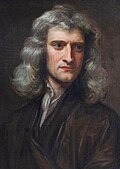 Sir Isaac Newton (1642–1727) (from History of physics)
 -
 The Standard Model (from History of physics)
 -
 Leonardo da Vinci (from History of physics)
 -
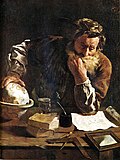 The ancient Greek mathematician Archimedes, developer of ideas regarding fluid mechanics and buoyancy. (from History of physics)
 -
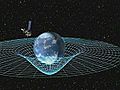 Einstein proposed that gravitation results from masses (or their equivalent energies) curving ("bending") the spacetime in which they exist, altering the paths they follow within it. (from History of physics)
 -
-
 Chien-Shiung Wu worked on parity violation in 1956 and announced her results in January 1957. (from History of physics)
 -
 A Feynman diagram representing (left to right) the production of a photon (blue sine wave) from the annihilation of an electron and its complementary antiparticle, the positron. The photon becomes a quark–antiquark pair and a gluon (green spiral) is released. (from History of physics)
 -
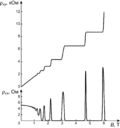 The quantum Hall effect: Components of the Hall resistivity as a function of the external magnetic field (from Condensed matter physics)
 -
 Composite montage comparing Jupiter (left) and its four Galilean moons (from top: Io, Europa, Ganymede, Callisto) (from History of physics)
 -
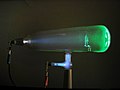 Crookes tube used to study cathode rays. It led to the discovery of the electron by J. J. Thomson. (from History of physics)
 -
 Image of X-ray diffraction pattern from a protein crystal (from Condensed matter physics)
 -
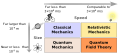 Classical physics is usually concerned with everyday conditions: speeds are much lower than the speed of light, sizes are much greater than that of atoms, yet very small in astronomical terms. Modern physics, however, is concerned with high velocities, small distances, and very large energies. (from Modern physics)
 -
 An engraving of Benjamin Franklin's kite experiment used to study lightning. (from History of physics)
 -
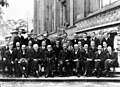 1927 Solvay Conference included prominent physicists Albert Einstein, Werner Heisenberg, Max Planck, Hendrik Lorentz, Niels Bohr, Marie Curie, Erwin Schrödinger, Paul Dirac (from History of physics)
 -
 Hydrogen emission spectrum is discrete (here in log scale). The lines can only be explained with quantum mechanics. (from History of physics)
 -
 Albert Einstein (1879–1955), ca. 1905 (from History of physics)
 -
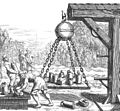 Magdeburg hemispheres, an experiment by Otto von Guericke where two metal hemispheres are held together by vacuum and cannot be separated even if large forces are applied. (from History of physics)
 -
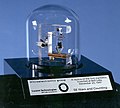
-
 James Prescott Joule's apparatus for measuring the mechanical equivalent of heat which the "work" of the falling weight is converted into the "heat" of agitation in the water. (from History of physics)
 -
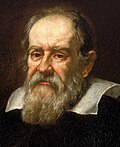 Galileo Galilei (1564–1642), early proponent of the modern scientific worldview and method (from History of physics)
 -
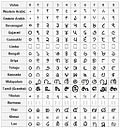 The Hindu-Arabic numeral system. The inscriptions on the edicts of Ashoka (3rd century BCE) display this number system being used by the Imperial Mauryas. (from History of physics)
 -
 Newton's cannonball, a though experiment by Newton relating the motion of a projectile and orbiting of planets. (from History of physics)
 -
 Christiaan Huygens (1629–1695) (from History of physics)
 -

-
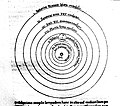
-
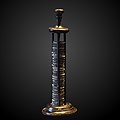 The Voltaic pile, the first battery was invented by Alessandro Volta in 1800 (from History of physics)
 -
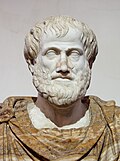
-
 One possible signature of a Higgs boson from a simulated proton–proton collision. It decays almost immediately into two jets of hadrons and two electrons, visible as lines. (from History of physics)
 -
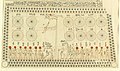 Ancient Egyptian astronomy is evident in monuments like the ceiling of Senemut's tomb from the Eighteenth Dynasty of Egypt. (from History of physics)
 -
 Classical physics (Rayleigh–Jeans law, black line) failed to explain black-body radiation – the so-called ultraviolet catastrophe. The quantum description (Planck's law, colored lines) is said to be modern physics. (from Modern physics)
 -
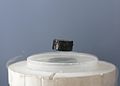 A magnet levitating above a high-temperature superconductor. Today some physicists are working to understand high-temperature superconductivity using the AdS/CFT correspondence. (from Condensed matter physics)
 -
 Maxwell's demon, thought experiment by James Clerk Maxwell to describe the kinetic theory of gases and describe how a microscopic creature could lead to violations of the second law of thermodynamics. (from History of physics)
 -
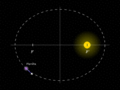 Johannes Kepler's first law of planetary motion states that planets move in elliptical orbits about the Sun. (from History of physics)
 -

-
 Richard Feynman's Los Alamos ID badge (from History of physics)
 -
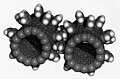 Computer simulation of nanogears made of fullerene molecules. It is hoped that advances in nanoscience will lead to machines working on the molecular scale. (from Condensed matter physics)
 -
 Torricelli's experiment (from History of physics)
 -
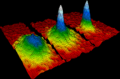 The first Bose–Einstein condensate observed in a gas of ultracold rubidium atoms. The blue and white areas represent higher density. (from Condensed matter physics)
 -
 Star maps by the 11th century Chinese polymath Su Song are the oldest known woodblock-printed star maps to have survived to the present day. This example, dated 1092, employs the cylindricalequirectangular projection. (from History of physics)
 -
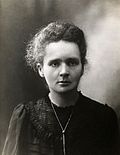 Marie Skłodowska-Curie
(1867–1934) received Nobel prizes in physics (1903) and chemistry (1911). (from History of physics) -
 Heike Kamerlingh Onnes and Johannes van der Waals with the helium liquefactor at Leiden in 1908 (from Condensed matter physics)
 -


_(cropped).jpg)


_in_1958.jpg)


.png)


.png)


.png)


Categories

Fundamentals: Concepts in physics | Constants | Physical quantities | Units of measure | Mass | Length | Time | Space | Energy | Matter | Force | Gravity | Electricity | Magnetism | Waves
Basic physics: Mechanics | Electromagnetism | Statistical mechanics | Thermodynamics | Quantum mechanics | Theory of relativity | Optics | Acoustics
Specific fields: Acoustics | Astrophysics | Atomic physics | Molecular physics | Optical physics | Computational physics | Condensed matter physics | Nuclear physics | Particle physics | Plasma physics
Tools: Detectors | Interferometry | Measurement | Radiometry | Spectroscopy | Transducers
Background: Physicists | History of physics | Philosophy of physics | Physics education | Physics journals | Physics organizations
Other: Fiction about physics | Physics lists | Physics software | Physics stubs
Physics topics
Classical physics traditionally includes the fields of mechanics, optics, electricity, magnetism, acoustics and thermodynamics. The term Modern physics is normally used for fields which rely heavily on quantum theory, including quantum mechanics, atomic physics, nuclear physics, particle physics and condensed matter physics. General and special relativity are usually considered to be part of modern physics as well.
More recognized content

Associated Wikimedia
The following Wikimedia Foundation sister projects provide more on this subject:
-
 Commons
Free media repository -
 Wikidata
Free knowledge base -
 Wikiquote
Collection of quotations -
 Wikisource
Free-content library -
 Wikiversity
Free learning tools -
 Wikivoyage
Free travel guide -
 Wiktionary
Dictionary and thesaurus


Sources
Portals on Wikipedia


