


Portal:Computer programming

The Computer Programming Portal

Computer programming or coding is the composition of sequences of instructions, called programs, that computers can follow to perform tasks. It involves designing and implementing algorithms, step-by-step specifications of procedures, by writing code in one or more programming languages. Programmers typically use high-level programming languages that are more easily intelligible to humans than machine code, which is directly executed by the central processing unit. Proficient programming usually requires expertise in several different subjects, including knowledge of the application domain, details of programming languages and generic code libraries, specialized algorithms, and formal logic.
Auxiliary tasks accompanying and related to programming include analyzing requirements, testing, debugging (investigating and fixing problems), implementation of build systems, and management of derived artifacts, such as programs' machine code. While these are sometimes considered programming, often the term software development is used for this larger overall process – with the terms programming, implementation, and coding reserved for the writing and editing of code per se. Sometimes software development is known as software engineering, especially when it employs formal methods or follows an engineering design process. (Full article...)
Selected articles -
-


A Blender screenshot displaying Suzanne, a 3D test model
Computer graphics (CG) deals with generating images and art with the aid of computers. Computer graphics is a core technology in digital photography, film, video games, digital art, cell phone and computer displays, and many specialized applications. A great deal of specialized hardware and software has been developed, with the displays of most devices being driven by computer graphics hardware. It is a vast and recently developed area of computer science. The phrase was coined in 1960 by computer graphics researchers Verne Hudson and William Fetter of Boeing. It is often abbreviated as CG, or typically in the context of film as computer generated imagery (CGI). The non-artistic aspects of computer graphics are the subject of computer science research.
Computer graphics is responsible for displaying art and image data effectively and meaningfully to the consumer. It is also used for processing image data received from the physical world, such as photo and video content. Computer graphics development has had a significant impact on many types of media and has revolutionized animation, movies, advertising, and video games in general. (Full article...) -
Programming languages are used for controlling the behavior of a machine (often a computer). Like natural languages, programming languages follow rules for syntax and semantics.
There are thousands of programming languages and new ones are created every year. Few languages ever become sufficiently popular that they are used by more than a few people, but professional programmers may use dozens of languages in a career.
Most programming languages are not standardized by an international (or national) standard, even widely used ones, such as Perl or Standard ML (despite the name). Notable standardized programming languages include ALGOL, C, C++, JavaScript (under the name ECMAScript), Smalltalk, Prolog, Common Lisp, Scheme (IEEE standard), ISLISP, Ada, Fortran, COBOL, SQL, and XQuery. (Full article...) -
Mya was an intelligent personal assistant under development by Motorola in the year 2000. Proposed features for the program included the ability to read emails and answer questions 24 hours a day. Mya was intended to work with an internet service Motorola was developing called Myosphere, and was planned to be a paid service that would eventually be used by other mobile carriers. A female computer-generated character was created to represent Mya in advertising. While the quality of the character's animation was praised, it received criticism for being over sexualised.
Both the character and the program were announced to the public via an advertisement in March 2000, though the program was not ready for use at that time. Despite the announcement generating a considerable amount of attention, little was heard regarding the project in subsequent months. The program was never officially released nor cancelled, though the trademarks for both Myosphere and Mya were abandoned by Motorola in 2002. The name Mya was believed to be a play on the words 'My assistant'. (Full article...) -
Object Pascal is an extension to the programming language Pascal that provides object-oriented programming (OOP) features such as classes and methods.
The language was originally developed by Apple Computer as Clascal for the Lisa Workshop development system. As Lisa gave way to Macintosh, Apple collaborated with Niklaus Wirth, the author of Pascal, to develop an officially standardized version of Clascal. This was renamed Object Pascal. Through the mid-1980s, Object Pascal was the main programming language for early versions of the MacApp application framework. The language lost its place as the main development language on the Mac in 1991 with the release of the C++-based MacApp 3.0. Official support ended in 1996.
Symantec also developed a compiler for Object Pascal for their Think Pascal product, which could compile programs much faster than Apple's own Macintosh Programmer's Workshop (MPW). Symantec then developed the Think Class Library (TCL), based on MacApp concepts, which could be called from both Object Pascal and THINK C. The Think suite largely displaced MPW as the main development platform on the Mac in the late 1980s. (Full article...) -
The Antikythera mechanism (/ˌæntɪkɪˈθɪərə/ AN-tik-ih-THEER-ə, US also /ˌæntaɪkɪˈ-/ AN-ty-kih-) is an ancient Greek hand-powered orrery (model of the Solar System) built in the 2nd century BC and discovered in 1901. It is the oldest known example of an analogue computer. It could be used to predict astronomical positions and eclipses decades in advance. It could also be used to track the four-year cycle of athletic games similar to an olympiad, the cycle of the ancient Olympic Games.
The artefact was among wreckage retrieved from a shipwreck off the coast of the Greek island Antikythera in 1901. In 1902, during a visit to the National Archaeological Museum in Athens, it was noticed by Greek politician Spyridon Stais as containing a gear, prompting the first study of the fragment by his cousin, Valerios Stais, the museum director. The device, housed in the remains of a wooden-framed case of (uncertain) overall size 34 cm × 18 cm × 9 cm (13.4 in × 7.1 in × 3.5 in), was found as one lump, later separated into three main fragments which are now divided into 82 separate fragments after conservation efforts. Four of these fragments contain gears, while inscriptions are found on many others. The largest gear is about 13 cm (5 in) in diameter and originally had 223 teeth. All these fragments of the mechanism are kept at the National Archaeological Museum, along with reconstructions and replicas, to demonstrate how it may have looked and worked.
In 2005, a team from Cardiff University led by Mike Edmunds used computer X-ray tomography and high resolution scanning to image inside fragments of the crust-encased mechanism and read faint inscriptions that once covered the outer casing. These scans suggest that the mechanism had 37 meshing bronze gears enabling it to follow the movements of the Moon and the Sun through the zodiac, to predict eclipses and to model the irregular orbit of the Moon, where the Moon's velocity is higher in its perigee than in its apogee. This motion was studied in the 2nd century BC by astronomer Hipparchus of Rhodes, and he may have been consulted in the machine's construction. There is speculation that a portion of the mechanism is missing and it calculated the positions of the five classical planets. The inscriptions were further deciphered in 2016, revealing numbers connected with the synodic cycles of Venus and Saturn. (Full article...) -
Computer programming or coding is the composition of sequences of instructions, called programs, that computers can follow to perform tasks. It involves designing and implementing algorithms, step-by-step specifications of procedures, by writing code in one or more programming languages. Programmers typically use high-level programming languages that are more easily intelligible to humans than machine code, which is directly executed by the central processing unit. Proficient programming usually requires expertise in several different subjects, including knowledge of the application domain, details of programming languages and generic code libraries, specialized algorithms, and formal logic.
Auxiliary tasks accompanying and related to programming include analyzing requirements, testing, debugging (investigating and fixing problems), implementation of build systems, and management of derived artifacts, such as programs' machine code. While these are sometimes considered programming, often the term software development is used for this larger overall process – with the terms programming, implementation, and coding reserved for the writing and editing of code per se. Sometimes software development is known as software engineering, especially when it employs formal methods or follows an engineering design process. (Full article...) -
Linus Benedict Torvalds (born 28 December 1969) is a Finnish and American software engineer who is the creator and lead developer of the Linux kernel since 1991. He also created the distributed version control system Git.
Torvalds was one of the recipients of the 2012 Millennium Technology Prize "in recognition of his creation of a new open source operating system for computers leading to the widely used Linux kernel". He is also the recipient of the 2014 IEEE Computer Society Computer Pioneer Award and the 2018 IEEE Masaru Ibuka Consumer Electronics Award. (Full article...) -
Lisp (historically LISP, an abbreviation of "list processing") is a family of programming languages with a long history and a distinctive, fully parenthesized prefix notation.
Originally specified in the late 1950s, it is the second-oldest high-level programming language still in common use, after Fortran. Lisp has changed since its early days, and many dialects have existed over its history. Today, the best-known general-purpose Lisp dialects are Common Lisp, Scheme, Racket, and Clojure.
Lisp was originally created as a practical mathematical notation for computer programs, influenced by (though not originally derived from) the notation of Alonzo Church's lambda calculus. It quickly became a favored programming language for artificial intelligence (AI) research. As one of the earliest programming languages, Lisp pioneered many ideas in computer science, including tree data structures, automatic storage management, dynamic typing, conditionals, higher-order functions, recursion, the self-hosting compiler, and the read–eval–print loop.
The name LISP derives from "List Processor". Linked lists are one of Lisp's major data structures, and Lisp source code is made of lists. Thus, Lisp programs can manipulate source code as a data structure, giving rise to the macro systems that allow programmers to create new syntax or new domain-specific languages embedded in Lisp. (Full article...) -
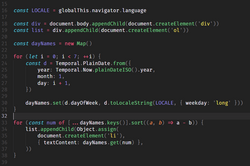
Source code for a computer program written in the JavaScript language. It demonstrates the appendChild method. The method adds a new child node to an existing parent node. It is commonly used to dynamically modify the structure of an HTML document.
A computer program is a sequence or set of instructions in a programming language for a computer to execute. It is one component of software, which also includes documentation and other intangible components.
A computer program in its human-readable form is called source code. Source code needs another computer program to execute because computers can only execute their native machine instructions. Therefore, source code may be translated to machine instructions using a compiler written for the language. (Assembly language programs are translated using an assembler.) The resulting file is called an executable. Alternatively, source code may execute within an interpreter written for the language.
If the executable is requested for execution, then the operating system loads it into memory and starts a process. The central processing unit will soon switch to this process so it can fetch, decode, and then execute each machine instruction. (Full article...) -
Steven Paul Jobs (February 24, 1955 – October 5, 2011) was an American businessman, inventor, and investor. A pioneer of the personal computer revolution of the 1970s and 1980s, Jobs co-founded Apple Inc. with his early business partner Steve Wozniak as Apple Computer Company in 1976. After the company's board of directors fired him in 1985, he founded NeXT the same year and purchased Pixar in 1986, becoming its chairman and majority shareholder until 2007. Jobs returned to Apple in 1997 as CEO, where he was closely involved with the creation and promotion of many of the company's most influential products until his resignation in 2011.
Jobs was born in San Francisco in 1955 and adopted shortly afterward. He attended Reed College in 1972 before withdrawing that same year. In 1974, he traveled through India, seeking enlightenment before later studying Zen Buddhism. He and Wozniak co-founded Apple in 1976 to further develop and sell Wozniak's Apple I personal computer. Together, the duo gained fame and wealth a year later with the production and sale of the Apple II, one of the first highly successful mass-produced microcomputers.
Jobs saw the commercial potential of the Xerox Alto in 1979, which was mouse-driven and had a graphical user interface (GUI). This led to the development of the largely unsuccessful Apple Lisa in 1983, followed by the breakthrough Macintosh 128K in 1984, the first mass-produced computer with a GUI. The Macintosh launched the desktop publishing industry in 1985 (for example, the Aldus PageMaker) with the addition of the Apple LaserWriter, the first laser printer to feature vector graphics and PostScript. (Full article...) -

Block diagram of a basic computer with uniprocessor CPU. Black lines indicate the flow of control signals, whereas red lines indicate the flow of processor instructions and data. Arrows indicate the direction of flow.
In computer science and computer engineering, a computer architecture is the conceptual design and operational structure of a computer system that define how component parts are organized and interact to execute programs efficiently. It is often a general description that ignores precise implementation details. It covers the instruction set architecture, CPU microarchitecture, memory, and input/output systems.
Computer architecture also considers tradeoffs between performance, cost, power, reliability, and security. (Full article...) -
Forth is a stack-oriented programming language and interactive integrated development environment designed by Charles H. "Chuck" Moore and first used by other programmers in 1970. Although not an acronym, the language's name in its early years was often spelled in all capital letters as FORTH. The FORTH-79 and FORTH-83 implementations, which were not written by Moore, became de facto standards, and an official technical standard of the language was published in 1994 as ANS Forth. A wide range of Forth derivatives existed before and after ANS Forth. The free and open-source software Gforth implementation is actively maintained, as are several commercially supported systems.
Forth typically combines a compiler with an integrated command shell, where the user interacts via subroutines called words.
Words can be defined, tested, redefined, and debugged without recompiling or restarting the whole program. All syntactic elements, including variables, operators, and control flow, are defined as words. A stack is used to pass parameters between words, leading to a Reverse Polish notation style. (Full article...) -
Eiffel is an object-oriented programming language designed by Bertrand Meyer (an object-orientation proponent and author of Object-Oriented Software Construction) and Eiffel Software. Meyer conceived the language in 1985 with the goal of increasing the reliability of commercial software development. The first version was released in 1986. In 2005, the International Organization for Standardization (ISO) released a technical standard for Eiffel.
The design of the language is closely connected with the Eiffel programming method. Both are based on a set of principles, including design by contract, command–query separation, the uniform-access principle, the single-choice principle, the open–closed principle, and option–operand separation.
Many concepts initially introduced by Eiffel were later added into Java, C#, and other languages. New language design ideas, particularly through the Ecma/ISO standardization process, continue to be incorporated into the Eiffel language. (Full article...) -

Ruby is a general-purpose programming language designed with an emphasis on programming productivity and simplicity. In Ruby, everything is an object, including primitive data types. Development of the language began in the mid-1990s by Yukihiro "Matz" Matsumoto in Japan.
Ruby is interpreted, high-level, and dynamically typed; its interpreter uses garbage collection and just-in-time compilation. It supports multiple programming paradigms, including procedural, object-oriented, and functional programming. According to the creator, Ruby was influenced by Perl, Smalltalk, Eiffel, Ada, BASIC, and Lisp. (Full article...) -

The source code for a computer program in C. The gray lines are comments that explain the program to humans. When compiled and run, it will give the output "Hello, world!".
A programming language is an engineered language for expressing computer programs, typically allowing software to be written in a human readable manner.
Execution of a program requires an implementation. There are two main approaches for implementing a programming language – compilation, where programs are compiled ahead-of-time to machine code, and interpretation, where programs are directly executed. In addition to these two extremes, some implementations use hybrid approaches such as just-in-time compilation and bytecode interpreters.
The design of programming languages has been strongly influenced by computer architecture, with most imperative languages designed around the ubiquitous von Neumann architecture. While early programming languages were closely tied to the hardware, modern languages often hide hardware details via abstraction in an effort to enable better software with less effort. These languages are known as high-level languages. (Full article...)


.jpg)

.jpg)


Selected images
-
 A view of the GNU nano Text editor version 6.0
 -
 GNOME Shell, GNOME Clocks, Evince, gThumb and GNOME Files at version 3.30, in a dark theme
 -
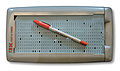 An IBM Port-A-Punch punched card
 -
-
 Output from a (linearised) shallow water equation model of water in a bathtub. The water experiences 5 splashes which generate surface gravity waves that propagate away from the splash locations and reflect off of the bathtub walls.
 -
 Stephen Wolfram is a British-American computer scientist, physicist, and businessman. He is known for his work in computer science, mathematics, and in theoretical physics.
 -
 Partial view of the Mandelbrot set. Step 1 of a zoom sequence: Gap between the "head" and the "body" also called the "seahorse valley".
 -
 A head crash on a modern hard disk drive
 -
 A lone house. An image made using Blender 3D.
 -

-
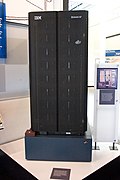 Deep Blue was a chess-playing expert system run on a unique purpose-built IBM supercomputer. It was the first computer to win a game, and the first to win a match, against a reigning world champion under regular time controls. Photo taken at the Computer History Museum.
 -
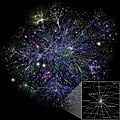 Partial map of the Internet based on the January 15, 2005 data found on opte.org. Each line is drawn between two nodes, representing two IP addresses. The length of the lines are indicative of the delay between those two nodes. This graph represents less than 30% of the Class C networks reachable by the data collection program in early 2005.
 -
 This image (when viewed in full size, 1000 pixels wide) contains 1 million pixels, each of a different color.
 -
 Margaret Hamilton standing next to the navigation software that she and her MIT team produced for the Apollo Project.
 -
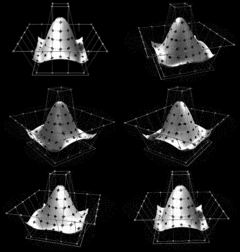 Animation of a Non-uniform rational B-spline surface. Modeled and rendered in Cobalt.
 -
 Bill Gosper's Glider Gun in action
 -
 Ada Lovelace was an English mathematician and writer, chiefly known for her work on Charles Babbage's proposed mechanical general-purpose computer, the Analytical Engine. She was the first to recognize that the machine had applications beyond pure calculation, and to have published the first algorithm intended to be carried out by such a machine. As a result, she is often regarded as the first computer programmer.
 -
 Grace Hopper at the UNIVAC keyboard, c. 1960. Grace Brewster Murray: American mathematician and rear admiral in the U.S. Navy who was a pioneer in developing computer technology, helping to devise UNIVAC I. the first commercial electronic computer, and naval applications for COBOL (common-business-oriented language).

_in_Dark_theme.png)


Did you know? -

- ... that Tennyson once quoted Catullus 96 to Thackeray while they dined?
- ... that the Gale–Shapley algorithm was used to assign medical students to residencies long before its publication by Gale and Shapley?
- ... that Perfectly Imperfect's social media platform has a main feed that is presented in reverse chronological order and is not algorithmically curated?
- ... that the 2024 psychological horror game Mouthwashing utilises non-diegetic scene transitions that mimic glitches and crashes?
- ... that it took a particle accelerator and machine-learning algorithms to extract the charred text of PHerc. Paris. 4 without unrolling it?
- ... that Hans-Joachim Hacker worked at a state-owned food processing plant before joining the Volkskammer and Bundestag?
Subcategories

WikiProjects

- There are many users interested in computer programming, join them.
Computer programming news
- 3 May 2026 –
- The Russian Ministry of Industry and Trade will restrict supplies of popular computers starting 27 May 2026. (Reporter)
Topics


| Fields |
| ||||||
|---|---|---|---|---|---|---|---|
| Concepts |
| ||||||
| Orientations | |||||||
| Models |
| ||||||
| Related fields | |||||||


Related portals


Associated Wikimedia
The following Wikimedia Foundation sister projects provide more on this subject:
-
 Commons
Free media repository -
 Wikidata
Free knowledge base -
 Wikiquote
Collection of quotations -
 Wikisource
Free-content library -
 Wikiversity
Free learning tools -
 Wiktionary
Dictionary and thesaurus


