

What market are you really in?
Before jumping into solutions, understand what market you’re really in. Learn how market research reduces risk, builds empathy, and drives impact.

Zoom In on Your Organisational Context
Map the external forces, trends, and patterns impacting your business model with a context analysis. Fresh insights to design solutions your customers love.

Share Your Story
Sharing your story is an important part of any change journey. A good story will resonate with your audience, engage their curiosity, and generate conversation. What’s your story?
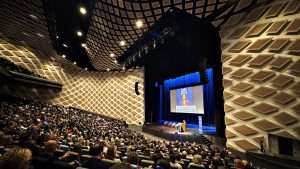
AICD Essential Director Update 2024
The AICD Essential Director Update 2024 with a strong focus on genAI, cybersecurity, mandatory climate reporting, company culture, and NFP financial resilience.

Take a Position
We’re always working with incomplete, inaccurate, and inconsistent information. But we need to take a position on the best available evidence to prototype like we’re right.

Making Sense
How do we make sense of what’s going on? There are also many different perspectives, contexts, and ways of seeing the world. Mental models, cognitive biases, reasoning, and Integral Theory.

Adaptive Challenges
We live and work in a dynamic and adaptive world – full of dynamic and adaptive systems and people. We need to recognise adaptive challenges and take the right approach to meet them.

Focus on People & Problem
The purpose of using the People/Problem Canvas is to focus your thinking on the people involved and the problems as they experience them. To help you start building empathy with the people you hope to create value with and for.

Bridge the Gap Between Tech & Human Experience
I spent a couple of days with 130 leaders facilitating four interactive workshops on desirability, viability, feasibility to get beyond the hype of tech… bridge the gap between tech and human experience.

SydDT #93: Designing Resilient Business Models in a VUCA World with Michael Wilkens
Michael Wilkens from Strategyzer shared his insights on designing resilient business models in a VUCA world at Sydney Design Thinking #93.

AICD Essential Director Update 2023
The AICD Essential Director Update 2023 with a strong focus on Company Climate Policy & Reporting, Psychosocial Risks, and Stakeholder Engagement.

SydDT #86: World Interaction Design Day 2023: Ethics, Equity, +Responsibility
Happy World Interaction Design Day! The theme this year is Ethics, Equity, +Responsibility. Another Sydney Design Thinking in collaboration with IxDA Sydney. I got to talk about one of my favourite things: Regenerative Design & Innovation… for Happier Communities. How do we design for regeneration, be financially successful, and increase our wellbeing while we do it?

Regenerative Design & Innovation… for Happier Communities – UXA 2023
Let’s collaborate to solve problems that matter for our teams, customers, and life on our planet – with regenerative business models, products, and services that are financially successful and increase our wellbeing while we do it.

SydDT #80: Community-Based Design
Sydney Design Thinking #80 was in collaboration with our friends at SECNA. ThinkPlace shared lessons from three community-based design projects to highlight the principles of self-determination and co-design.

SydDT #77: Designing for Inclusion with Kate Linton & Agnes Abelsen
A great to start to 2023 with Sydney Design Thinking #77. Kate Linton shared insights designing for increased inclusivity and accessibility with Thoughtworks’ new brand identity. Agnes Abelsen had a fireside chat with Ben Pecotich and shared her lessons starting Travengers to help young people who are neurodivergent connect through travel experiences and social events.

Business for Good: The Size & Economic Contribution of Social Enterprise in Australia
12,000 social enterprises contribute $21.3 billion to the Australian economy and employ 206,000 people.

SECNA Meetup #3: Demystifying Business for Good
Plenty of great energy and conversation in the room as we explored the theme of demystifying business for good – in collaboration with our friends at B Corp and Fair Trade Association of ANZ – for NSW Small Business Month at SECNA Meetup #3.

SydDT #74: Design Thinking in Social Enterprise Startups
Naomi Tarszisz (Founder & CEO of rePlated), Andrew Akib (Co-founder & CEO of Maslow), and Frances Atkins (Co-founder & Director of givvable) shared a bit about their social enterprise startup journeys with key insights and lessons at Sydney Design Thinking #74.

The Little Book of Design Research Ethics by IDEO
We have a responsibility to collect, store, and use our design research in ethical ways. IDEO’s The Little Book of Design Research Ethics as a simple and very practical guide.

Design Feeling Podcast – Solving Problems That Matter
In June 2022 I had the pleasure of being a guest on Nirish Shakya’s Design Feeling podcast. We spoke about happiness habits, design frameworks for creating our purpose and happiness… and solving problems that matter.

Perspective & Context. Dynamic4: The 20th Year
Perspective & Context is the third of Dynamic4’s core values and guiding principles. An active reminder to be mindful of how we look at and see things, and the meaning we make – all through the lens of our purpose.

People First. Dynamic4: The 20th Year
When I wrote out Dynamic4’s values over a decade ago – which I frame as our guiding principles – People First was number one. This is the driving principle and core approach to everything we do.

Market Signals for More Ethical & Sustainable Business
I often talk about what running a good business means now. Operating ethically and sustainably is the minimum baseline and increasingly the expectation is that businesses include a clear social and environmental purpose – and ideally embed impact in their business model. Why?