-
Logo
-
Tech Stack
-
UI
-
more UI
-
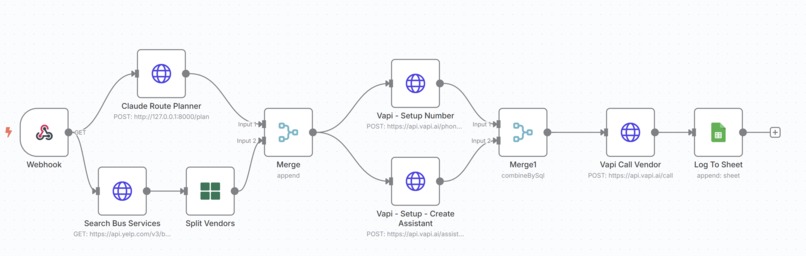
AI Agents 1
-

AI Agents 2


Inspiration
As hackathon organizers ourselves, we know firsthand how overwhelming and chaotic planning can get. Finding sponsors, booking venues, managing transportation, designing websites, ordering swag, handling outreach, and running logistics, all while keeping everything on schedule, requires hundreds of emails, calls, and spreadsheet updates. Inspired by the theme of this hackathon, we asked: Why not build an AI system that can do most of this for us? That’s how Plannr was born: an intelligent AI-powered assistant that automates the hardest parts of organizing hackathons.
What it does
Plannr is an AI Hackathon Organizer Assistant powered by a system of specialized agents that automate and streamline every stage of hackathon planning.
It helps you:
- Find and reach out to sponsors, write contextual emails, follow up, and log progress
- Search for venues, call vendors with Vapi, negotiate pricing, and track details
- Coordinate bussing and catering, automatically call around for quotes and log everything
- Generate a content calendar with posts, reels, and emails using Claude and Gemini
- Schedule and log Instagram posts, with AI-generated visuals
- Manage outreach for mentors, speakers, and communities
- Auto-generate websites, hackathon applications, and answer FAQs
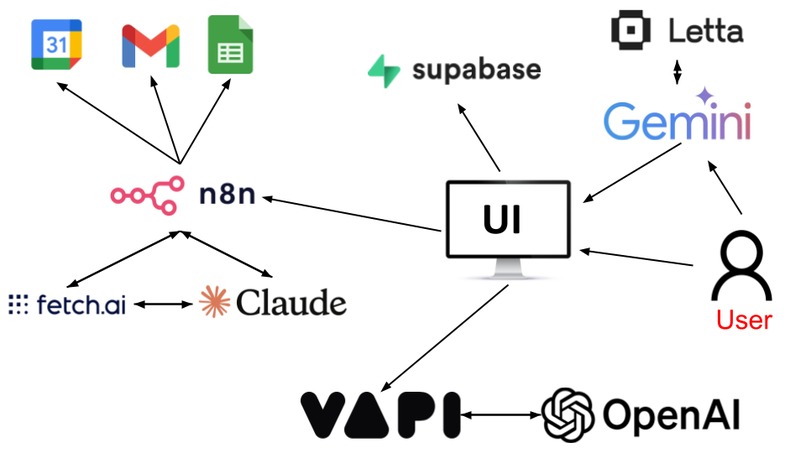
Everything is coordinated through a central spreadsheet system and connected via n8n workflows that use agents from Claude, Gemini, Fetch.ai, Unify, Orkes, Groq, Vapi, and letta.ai.
How we built it
- Claude (via Fetch.ai uAgents): Content generation, email writing, route suggestions, sponsor research
- Gemini: Generated visuals (posts, reels), swag design, website copy
- Vapi: Outbound voice calls for bus quotes, venue calls, meal vendor outreach
- n8n: Our orchestration layer; we built a suite of agent-based workflows across outreach, logistics, and marketing
- Google Sheets API: All metadata is logged to editable and synced spreadsheets
- Groq, Orkes: Integrated to power backend services, real-time decisioning, and scalable processing
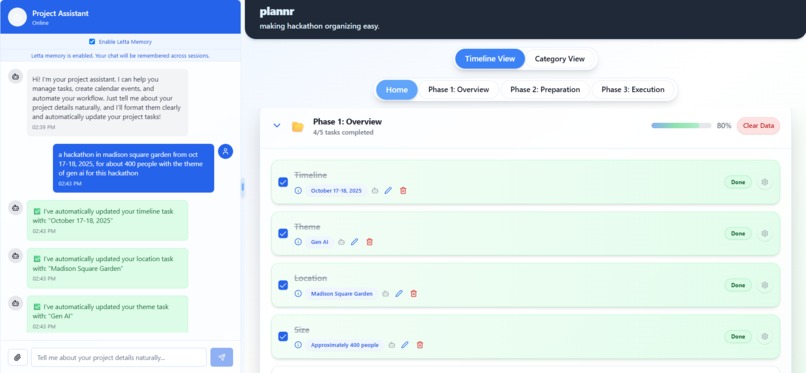
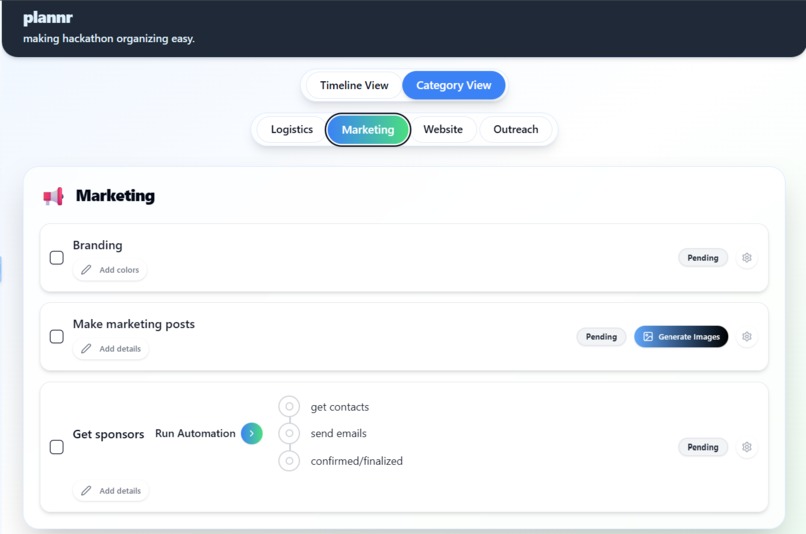
- Frontend: Simple interface to add and edit hackathon metadata (in progress)
Challenges we ran into
- Workflow explosion: Managing over 10 parallel n8n workflows with asynchronous agents was messy
- Voice API hiccups: Setting up Vapi assistants and linking IDs dynamically in n8n required a lot of debugging
- LLM agent coordination: Syncing Claude with Fetch.ai agents and letting Gemini handle visual generation within time constraints
- Rate limits and APIs: Many services had undocumented rate limits or unstable behavior
- Time constraints: Trying to ship a multi-agent production system in under 24 hours with only two people.
Accomplishments that we're proud of
- Built a modular, multi-agent automation system for planning events
- Designed workflows that can run independently or in sequence
- Used voice agents to actually call real vendors (bus, venue, catering)
- Auto-generated a full week of Instagram content (posts and reels)
- Created our own Claude sponsor research and outreach agent
- Integrated multiple AI platforms together in one cohesive system
What we learned
- How to orchestrate multi-agent workflows using n8n, Claude, and Fetch.ai
- How to integrate voice automation using Vapi and parse responses
- How to structure event metadata centrally for agents to read and write from
- That AI can reduce hours of planning into minutes with the right system design
- That even the best agents need solid UX, traceability, and logging
What's next for Plannr
- Let student hackathon teams onboard and use our planner assistant
- One-click snack, merch, and bus ordering with pre-filled AI quotes
- Improve location-based planning with map integration
- Deploy a chat interface so users can ask for tasks like "find me 3 venues"
- Offer integrations with Devpost, Luma, Vercel, and Slack
- Create a public library of reusable AI workflows for event organizers
Built With
- claude
- fetch.ai
- gemini
- letta
- react
- supabase
- typescript
- vapi


Log in or sign up for Devpost to join the conversation.