-
-
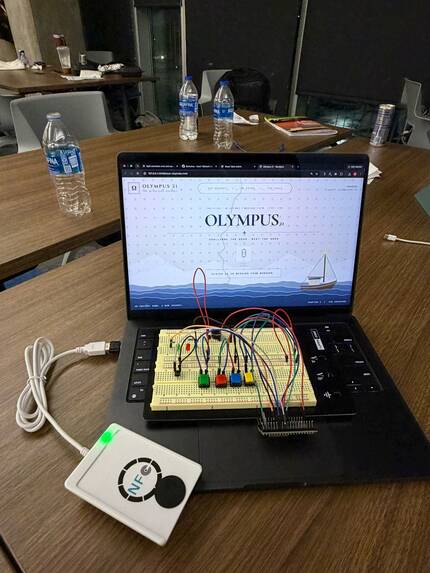
Main components used: ESP32, breadboard, NFC
-
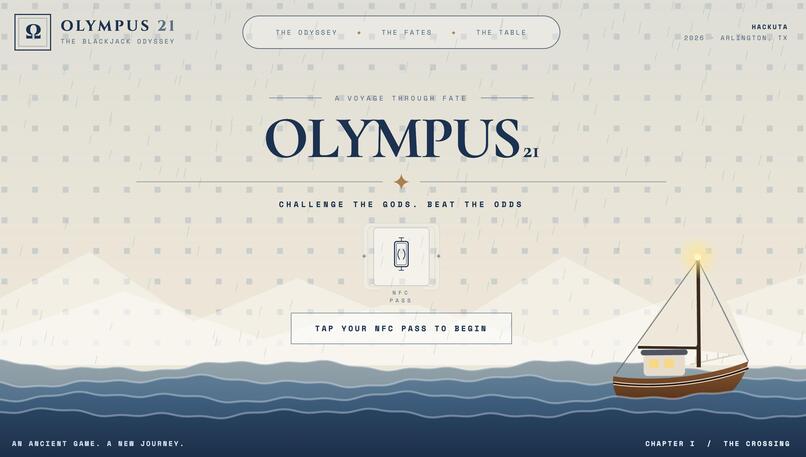
Interactive frontend


Inspiration
Coming from a place where QR code payments are a big part of everyday life, whether buying groceries or paying at a local shop, we were used to simply scanning a QR code to make payments.
When we moved to the United States, we noticed something different: "NFC technology was everywhere." From tapping credit cards at stores to using student IDs to access buildings, we were using NFC almost every day. It made us curious: "How does this technology actually work, and what else could we do with it?"
During a weekend trip to WinStar Casino, we noticed how players still relied on traditional chips to place their bets. That's when an idea clicked: "What if we could use NFC technology to manage casino chips digitally instead?"
We started exploring how we could combine the convenience of NFC with the excitement of a physical casino experience. When HackUTA came around, we finally had the perfect opportunity to turn that idea into a real project.
And that's how "Olympus 21" was born.
What It Does
Olympus 21 is an interactive blackjack system that combines NFC technology, physical controls, and real-time software.
Players tap their NFC cards to access their accounts and virtual chip balances. They select their bets using four physical buttons representing $10, $20, $50, and $100. Once the bet is confirmed, those same buttons become "Hit, Stand, Double, and Split" controls.
A digital dashboard displays the game, while LEDs and custom winning and losing sounds add to the experience.
How We Built It
We connected multiple technologies to create a complete hardware-software experience.
Hardwares Used:
- ESP32: Controller with four dual-mode buttons that switch between placing bets and controlling blackjack gameplay. Integrated LEDs, transistor, button debouncing, and PWM powered sounds with passive buzzer.
- NFC Reader (ACR122U): Identifies players through their NFC cards.
- NFC Tags (NTAG215): Stores user's id and name, not the balance. Associated balance is created in the database to prevent self creation of chips
Tech Stacks Used:
- Python Backend: Bridges the communication between (NFC chip to reader), read from and write to database, and live update in the frontend using websockets
-WebSockets:One handshake opens a persistent, two-way pipe between the Python server and the browser. Both sides can send at any time, so taps and button presses reach the game instantly, and balance updates and LED/buzzer commands go back with no polling.
- MongoDB : Manages player information, virtual chip balances, and game records.
-pyscard: A python library build around to work with smart card readers. MacOs has PC/SC so ACR122U shows up as 'smart card reader'. Reads bytes/packets read and send by the reader
-pyserial: A python library for talking over a serial port, a simple line where two devices exchange bytes one after another. Your ESP32 plugs into the Mac by USB, and the Mac sees it as a serial device. pyserial lets Python read from and write to that device like a file.
Challenges We Faced
Our first attempts with nfcpy and pyserial didn't workout: the OS’s PC/SC service takes over the ACR122U, so those libraries couldn’t reach it, and finding the cause cost us time. Switching to pyscard, which works through MacOs PC/SC, solved it, and we read the chip data with raw read commands.
What We Learned
-Match the library to how the OS exposes the device. The NFC reader is managed by PC/SC, so it needs pyscard. The ESP32 appears as a serial port, so it uses pyserial. -Keep the money in the database, not on the chip. The chip only identifies the player. Atomic, versioned and idempotent balance updates in MongoDB prevent double spends and stale writes, even with retries.
Our Presentation: https://www.canva.com/design/DAHa_Uatoj8/jY38H8kshzCHj7HGs1v7Ng/edit
What's Next?
We believe this concept has potential beyond casinos. The same NFC-based digital credit system could be adapted for arcades, amusement parks, campus services, and events that rely on physical tokens.
Our long-term vision is to make everyday interactions more seamless by combining NFC technology with accessible hardware and software.

