-
-
-
-
-
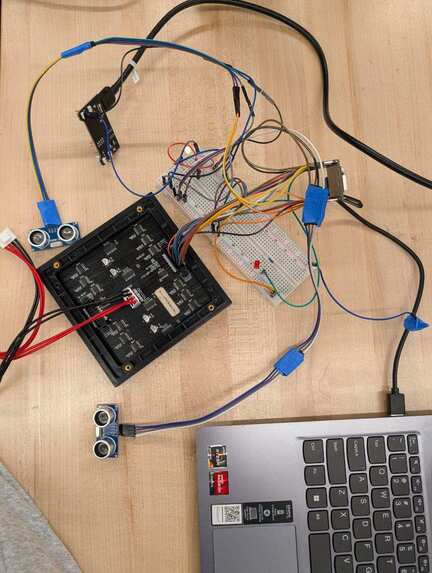
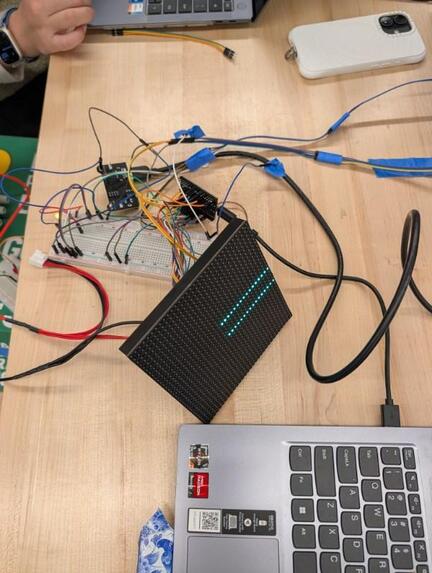
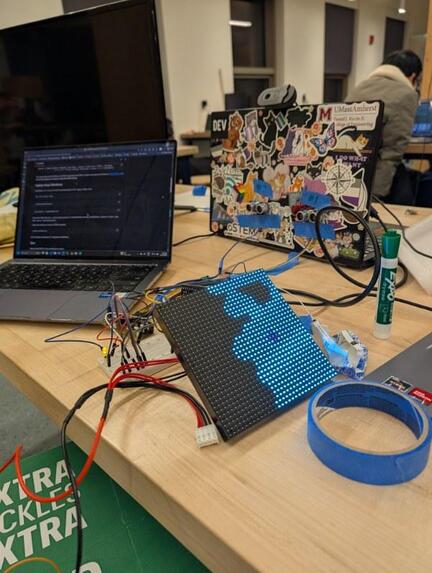
Wiring of components
-
-
-
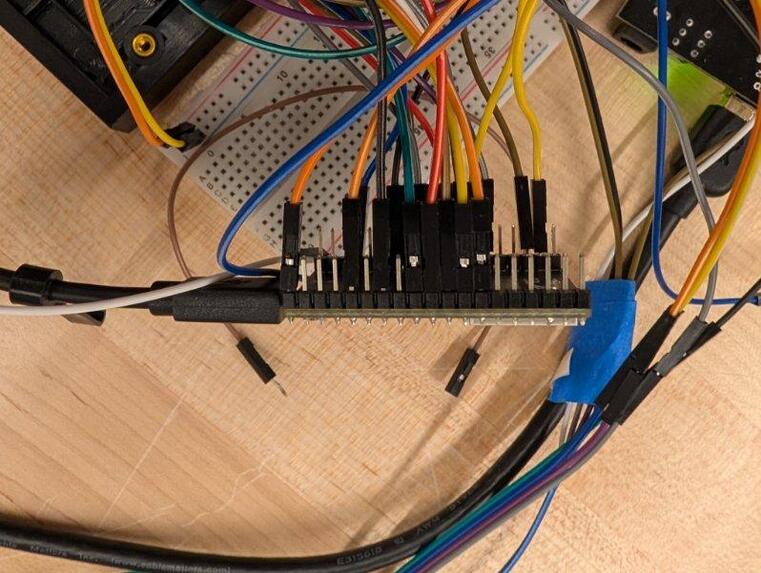
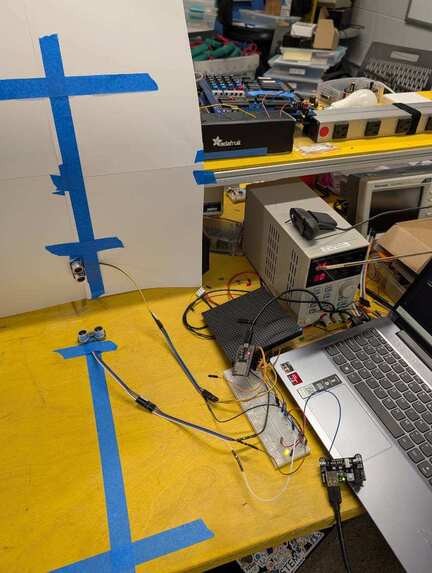
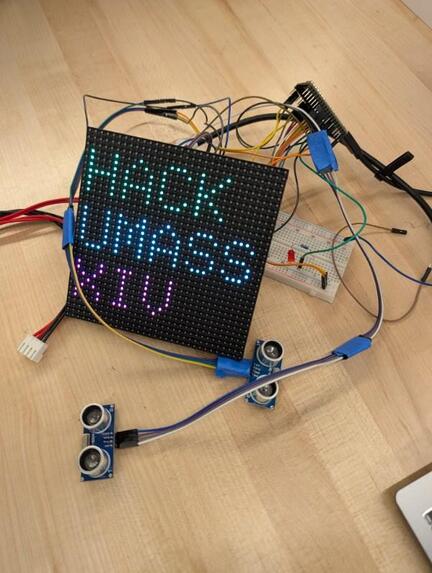
Wiring: we had to ensure each wire was on the correct PORT and pin.
-


Inspiration## Inspiration
Communication shouldn't always require a screen, keyboard, or controller. Everything is voice based in this world.
Communication shouldn't always require a screen, keyboard, or controller. Too often, asseccible things are simply voice-based, but not everyone wants or can use that. We wanted to allow people to organically express creativity through motion in a way that can be used by everyone.
What it does
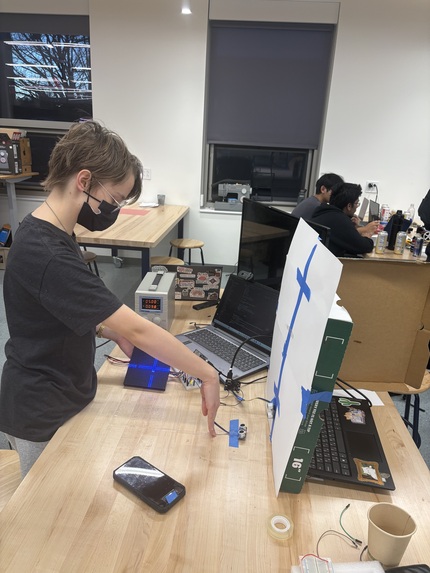
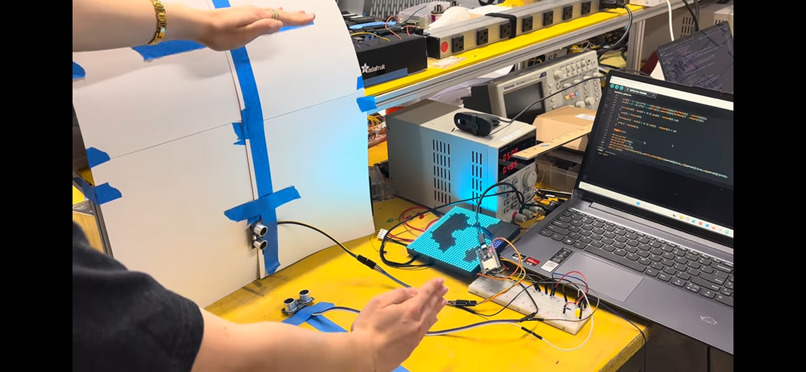
Motion Light is an interactive, gesture-controlled LED matrix system that translates mid-air hand movements and ASL signs into live visual light displays.
How we built it
We started from the idea of using matrix LED, arduino, and sometthing with IR distance , motion sensor, and ultrasonic sensor to build an ASL translator. After running into errors during testing, we aborted some of our sensors and decide to stick with a dual ultrasonic sensor approach combined with computer vision, where the sensor can act as the Z axis of motion, with esp32 since the uno's limited RAM doesn't suport it.
We started with basic wiring by checking the datasheet, setting the enveiroment, and connecting the esp 32 to a breadboard, using laptop as power source. The prototype, which can be seen in the video, was working great. So we decided to scale it (also meantime we changed some parts in our initial plans and trasnferred it into an interacative drawing device which gives the greatest degree of creative freedmon.)
We then created the machine learning model to recognize hand gestures and ASL, which we trained ourselves. We connected this to the hardware to create the final product.
Challenges we ran into
power source, wiring problems, hardware infrastructure of a new board(esp32), latency, model accuracy, hardware limitation of RAM on arduino(changed to esp32), version control with AI, computer confurations, USB communication protocols, OS system port permissions, different voltages of each components
Accomplishments that we're proud of
fixed firmware problems, figured out ALL the problems, full set of functionality (significantly beyond basic functionality!), managed to integrate many complicated and different components (vision, hardware, etc.)
What we learned
We learned about ESP32 hardware architecture, cross language signal transmission over USB, modularly prototyping (splitting up and scaling), communication, time management, optimized debugging workflow, troubleshooting, and machine learning for computer vision.
What's next for Motion Light
Bigger board, more customized colors (full custom RGB inputs), brushes and Z axis, shape recognition/more drawing tools, more voiceless assistance techonology (list, timer), pixel art.


